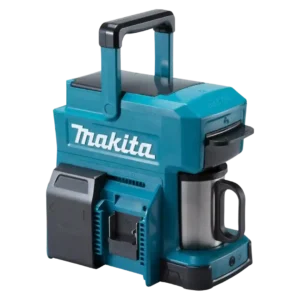
Makita Cordless Coffee Maker (18 V)
Where It Has the Edge
- Build quality and durability is 4.3 vs 3.1. Build quality is one of the stronger points, with several reviewers describing the machine as durable, solid, and...

Scorata scores summarize analyzed review evidence on a 1–5 scale; they are not laboratory measurements or a simple average of customer star ratings. Feature scores summarize the reviews covering that feature. The overall score averages feature scores within each review, then combines review averages. When both expert and customer evidence are available, those two groups receive equal weight. Products can have different review coverage, so small score gaps do not establish a winner.
Recommendations prioritize important features for the category, with a score of at least 3.5, a gap of at least 0.25 points and at least two supporting reviews per product. Features with widely varying scores or broad connectivity contexts are excluded from recommendations. These safeguards do not establish statistical significance.
Quick verdict
The review evidence points to a tradeoff: Build quality and durability versus Capacity and Heating-element power. Choose according to which strengths matter more to you; the overall score alone does not settle that choice.
Choose Makita Cordless Coffee Maker (18 V) for Build quality and durability.
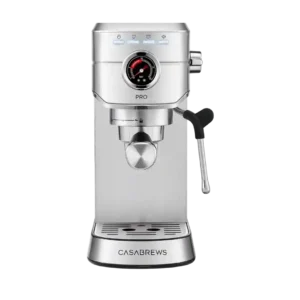
Choose CASABREWS 5418 Pro Espresso Machine for Capacity and Heating-element power.
Scores are out of 5. Missing scores mean missing review evidence, not a missing feature.
Capacity is a repeated limitation because servings are small and battery charge limits how many cups can be made.
Capacity was judged sufficient for the machine size, with reviewers saying the reservoir is plenty for multiple cups or a small machine.
Heating performance is acceptable but not universally strong; 18V improves results, while some reviewers found warm-up or efficiency lacking.
Heating-element performance is a major strength, with reviewers praising very fast heat-up and quick steam readiness.
Accessories are useful but uneven: the included cup and lid earned praise in some reviews, while another reviewer found the small cup limiting.
Accessories are mixed to weak: useful small items are included, but reviewers repeatedly criticized the portafilter and plastic pieces as flimsy or cheap.
Cup and handling feedback is mixed, from praise for splash protection to complaints about low clearance, a weak lid, and occasional mess.
Cup and tray handling drew positive notes for an easy-removable drip tray and enough room in the tray area.
Beverage quality divides reviewers: some found clean or pleasant coffee, while coffee-focused reviewers called it weak, bland, or just fine.
Drink quality ranges from under-extracted in one review to full-flavored, great, or surprisingly strong when dialed in with better beans and prep.
Speed is mostly viewed positively for a cordless brewer, with several reviewers calling the brew time quick or acceptable.
Speed is a standout strength, with reviewers praising near-instant heat-up and very quick transitions from brewing to steaming.
Portability is the core appeal, especially for jobsites, camping, trucks, or off-grid use, but battery weight tempers that benefit.
Portability evidence is positive because reviewers stressed the machine is small, light, and easy to fit where space is tight.
Overall experience depends heavily on use case, ranging from delight for Makita users to confusion about the product’s narrow niche.
Overall experience trends positive for beginners and milk-drink users, though one longer TechRadar review found the compromises more noticeable over time.
The automatic shutoff/protection behavior was praised for reducing hassle during work breaks.
Automation features earned positive notes for configurable shot volume, pre-infusion, and useful cleaning or flushing programs.
Cleaning and maintenance are mostly easy, though clogging and retained moisture mean the machine still needs basic care.
Water handling and maintenance were viewed positively through the easy-lift tank, removable drip tray, and liked flushing program.
Hot-water-style use is a secondary strength, with reviewers saying it works decently for tea or hot drinks.
The hot-water dispenser was mentioned positively as a handy extra for tea.
Value depends on already owning Makita batteries; reviewers are less positive when batteries, charger, or alternatives are factored in.
Value is one of the strongest areas, with multiple reviewers calling it very affordable or a tremendous value around the sub-$200 to $200 range.
Setup is consistently described as simple, with reviewers finding the single-serve workflow straightforward.
Reviewers generally found setup and operation beginner-friendly, helped by physical controls, clear tips, guides, and a simple workflow.
Build quality is one of the stronger points, with several reviewers describing the machine as durable, solid, and tool-like.
Build quality splits by component: the updated heating block drew praise, while the portafilter and budget construction felt lightweight or compromised.
Design flaws cluster around battery drain, missing storage or AC flexibility, loose accessories, condensation, and drips.
Design flaws cluster around the clipless basket, continued dripping after the pump stops, and the lack of a solenoid valve.
The physical design is usually praised for being compact, easy to handle, and visually cohesive with Makita tools.
The footprint and ergonomics were consistently praised: reviewers called it tiny, compact, helpful, and intuitive for small kitchens.
One performance claim was tested favorably, with the brewer exceeding the advertised cup output in that review.
Marketing accuracy evidence is favorable where reviewers checked the fast-heat claims and found the few-second warm-up claim accurate.
Brewing performance is mixed: some reviewers got hot, quick, clean coffee, while others found the brew weak or merely adequate.
Brewing performance is divided: several reviewers got stable or excellent shots, while TechRadar found good results possible but not consistent.
The reusable filter is generally seen as convenient, though reviewers note grind choice matters and clogging can happen.
Filter-basket evidence is positive for beginners, especially because the pressurized baskets are forgiving and can create crema despite less exact grinding.
Heating-system evidence is mixed but leans positive: TechRadar suspected boiler-related inconsistency, while others praised the efficient thermoblock and temperature stability.
Pod support is useful but specialized, with limited pod selection offset by cheap and accessible Senseo-style options in one review.
The included tamper is usable but limited; reviewers said it can form a puck, yet sturdier tampers help achieve better pressure and density.
Used-puck cleanup is a weak spot, with reviewers citing hot basket issues, wet pucks, and water left on top after brewing.
Milk steaming is one of the most consistently praised traits, with reviewers highlighting power, speed, creamy texture, and latte-art potential.
Popularity evidence is limited but strong from one reviewer, who described Casabrews as outselling a named budget rival by a long shot.
Pump-pressure evidence is mixed, with useful pressure feedback and strong pressure in some tests but inconsistent pressure in TechRadar’s longer review.
Scoop storage is praised as thoughtful and convenient, reducing the chance of losing a small accessory.
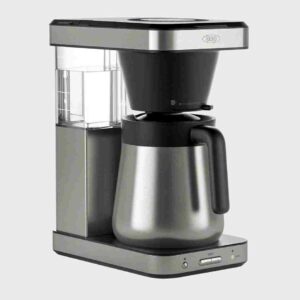
Choose the OXO Brew 8-Cup if you want fast, consistent drip coffee in small or full batches. Skip it if you need programming, app controls, a larger pot, or the...
Pros: Brewing performance and consistency, Overall user experience
Cons: Design flaws
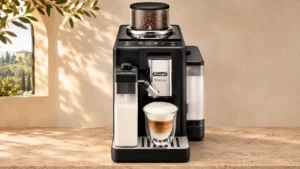
Swappable bean hoppers, intuitive controls and silky automatic milk foam make the Rivelia unusually convenient for varied coffee routines. The premium price, grinder-clearing step and optional cold-foam upgrade are worth...
Pros: Grinder, hopper and dosing system, Espresso and beverage quality
Cons: Iced / cold-brew function quality, Capacity
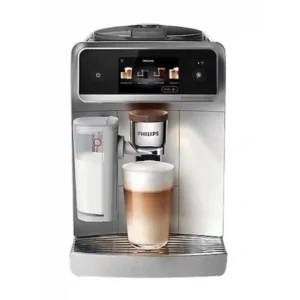
Best for effortless, highly personalized hot and cold coffee in a busy multi-drinker home. Skip it if counter space is tight, you demand silky adjustable microfoam, or the premium price...
Pros: Automation and sensors, Overall user experience
Cons: Design flaws, Mess-free used-puck disposal
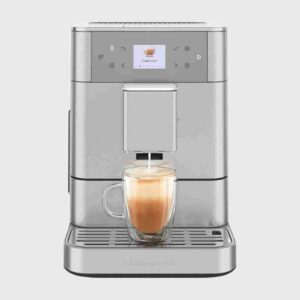
Choose the KitchenAid KF6 for rich espresso, quiet operation, easy cleaning, and strong value in a super-automatic. Skip it if dense cappuccino foam, plant-milk presets, touchscreen controls, or an included...
Pros: Water system, maintenance and descaling, Overall user experience
Cons: Accessories, Design flaws