Scorata scores summarize analyzed review evidence on a 1–5 scale; they are not laboratory measurements or a simple average of customer star ratings. Feature scores summarize the reviews covering that feature. The overall score averages feature scores within each review, then combines review averages. When both expert and customer evidence are available, those two groups receive equal weight. Products can have different review coverage, so small score gaps do not establish a winner.
Recommendations prioritize important features for the category, with a score of at least 3.5, a gap of at least 0.25 points and at least two supporting reviews per product. Features with widely varying scores or broad connectivity contexts are excluded from recommendations. These safeguards do not establish statistical significance.
Quick verdict
What each product is best for
The review evidence points to a tradeoff: rewatch value and production design versus editing quality and scares. Choose according to which strengths matter more to you; the overall score alone does not settle that choice.
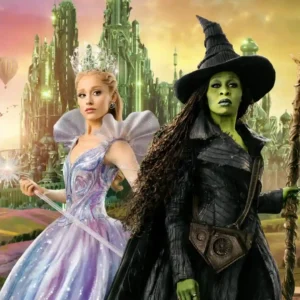
Choose Wicked: For Good for rewatch value and production design.
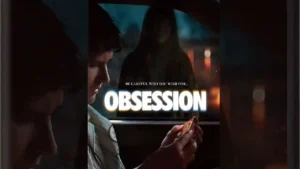
Choose Obsession for editing quality and scares.
Why these recommendations?
Wicked: For Good
Where It Has the Edge
rewatch value is 5.0 vs 4.3. The most enthusiastic reviewers see the two-film adaptation as something they will revisit for years, especially for the...
production design is 4.6 vs 4.3. Production design is among the strongest consensus positives. Oz is repeatedly described as elaborate, colorful, detailed, sumptuous, and...
score quality is 5.0 vs 4.7. The orchestral score is praised for giving the darker story weight and for carrying musical themes effectively through...
Obsession
Where It Has the Edge
editing quality is 4.8 vs 1.3. Editing is praised for economy, sharp rhythm, and knowing when to linger versus strike suddenly. Reviewers credit the...
scares is 4.4 vs 3.8. Most reviewers find the film genuinely scary, praising its dread, sudden shocks, and unsettling behavior over routine jump-scare...
genre satisfaction is 4.8 vs 4.5. Genre satisfaction is extremely strong. Horror-focused reviewers repeatedly call it a standout, favorite, or top-tier modern horror film,...
Wicked: For Good3.5 overall score
Obsession4.3 overall score
Compare features
Scores are out of 5. Missing scores mean missing review evidence, not a missing feature.
Scored on both products
Other features
Editing quality
Wicked: For Good
1.3
Obsession
4.8
Details and evidence for editing quality
Wicked: For Good
Editing is one of the clearer weaknesses, with complaints about choppy musical staging, awkward transitions, and material that feels in need of substantial trimming.
Editing is praised for economy, sharp rhythm, and knowing when to linger versus strike suddenly. Reviewers credit the cutting with helping the slow burn stay destabilizing.
One review raises a pointed concern about how the film’s romance and language may reinforce troubling ideas around desirability and skin tone. That criticism is specific rather than broadly echoed.
Reviewers value how the film connects its horror to contemporary loneliness, gender anxiety, and modern relationship dynamics, giving the old wish premise a distinctly current social frame.
Reworking familiar Wizard of Oz events can be clever and fun, but some critics see the second half as overly dependent on inherited plot machinery. A few appreciate the creative connections as a fresh spin.
The romance is sharply mixed. Some find Elphaba and Fiyero moving or passionate, while others call their physical relationship rushed, hollow, awkward, or disruptive to the stronger friendship story.
One review directly praises the film’s treatment of love as curdled, self-centered possession, finding the relationship horror effective precisely because it rejects conventional romance.
Details and evidence for chemistry between characters
Wicked: For Good
Erivo and Grande’s shared chemistry is repeatedly described as electric and central to the movie’s emotional pull. Romantic chemistry draws more mixed reactions, especially around Elphaba and Fiyero.
The central friendship remains compelling, but the story is widely regarded as weaker than Part One. Critics repeatedly point to Act II’s rushed turns, Wizard of Oz overlap, and strained connective plotting.
The story is usually praised as an efficient, compelling use of a simple premise, though one mixed review regards the overall movie as merely okay rather than transformative.
Some reviewers feel the digital sheen and greenscreen-like environments make the world look artificial. The most positive comments come when physical sets and grounded textures overcome that effect.
Several reviewers value how grounded the characters and relationship dynamics feel despite the supernatural premise. One major dissent argues the characters feel artificial and unrelatable.
Special-effects reactions are mixed: one violent effect looks weak enough to draw criticism, while another review finds the exaggerated effects cartoonish in an enjoyable way.
The screenplay draws substantial criticism for disjointed structure, underexplained turns, repetitive ideas, and additions that do not justify the expanded runtime.
The screenplay is divisive. Supporters praise tight, memorable writing and thematic intelligence, while detractors flag repetition, missing connective tissue, weak character logic, and incomplete ideas.
Pacing is the most persistent complaint. Reviewers repeatedly describe a strange combination of dragging scenes and rushed plot turns, with the two-film split often blamed for making Act II feel both padded and hurried.
Pacing is one of the clearest tradeoffs. Some praise a deliberate slow burn and tight editing, while others find the second act uneven, the progression insufficiently signposted, or the film somewhat drawn out.
Camera movement and a few musical sequences are praised, but the dim, washed-out, heavily backlit look is a persistent complaint. Reviewers are split between admiring inventive framing and wishing the imagery were easier to see.
Cinematography is strongly praised for shadow-heavy compositions, claustrophobic framing, and precise lighting. Even a mixed visual assessment acknowledges clever tricks within the low-budget presentation.
The political and moral messaging is one of the most debated elements. Some reviewers find the warnings about propaganda, authoritarianism, prejudice, and complicity timely and powerful; others find the treatment shallow or muddled.
Reviewers praise the film’s message about coercion, objectification, selfish desire, and the difference between love and possession, often noting that the ideas emerge through the horror rather than lectures.
Dialogue receives limited but negative attention, mainly for repetitive wording and lines that feel clunky or overused. These complaints reinforce broader concerns about the script.
Dialogue reactions are split: one reviewer praises believable natural delivery, while another dismisses the writing as shallow TV-writers’-room cleverness.
Jon M. Chu’s direction splits reviewers sharply. Some celebrate the scale, musical staging, and visual ambition, while others criticize conventional blocking, overstuffed frames, or a lack of cinematic spark.
Barker’s direction is widely praised for confidence, timing, restraint, and command of dread. A sharply dissenting review finds the visual direction banal and aesthetically thin.
The sequel’s darker themes can be potent, especially around propaganda, prejudice, power, complicity, and moral compromise. Reviewers disagree on whether the film explores those ideas deeply enough or only gestures toward them.
The themes around consent, agency, loneliness, entitlement, and distorted ideas of love are widely viewed as substantial and resonant. Some reviewers wish the film followed those ideas further.
The film’s strongest original touches come from how it expands or reframes familiar Oz material, but some reviewers feel too much of the adaptation simply repeats established beats or adds material without enough payoff.
Originality is debated: several reviewers call the execution fresh and distinctive, while others stress that the Monkey’s Paw foundation is familiar or not groundbreaking.
The film keeps most violence restrained or implied, which some reviewers appreciate, though darker threats, beatings, and body-horror transformations still give the sequel a more intense edge.
The violence is generally praised when it arrives suddenly and earns its shock, but one critic finds a prolonged murder more cartoonish than nauseating. The brutality is a feature for gore-friendly viewers, not a neutral content count.
The story becomes harder to follow as it intersects with The Wizard of Oz. Reviewers criticize abrupt character turns, missing connective tissue, and an expectation that viewers will fill gaps from prior knowledge.
Plot clarity is a recurring weakness around timing and supernatural rules. Reviewers cite confusing chronology, overly explained moments, and wish mechanics that are never fully laid out.
Details and evidence for practical effects quality
Wicked: For Good
The practical craft receives favorable notice, especially when tactile sets and in-camera elements help Oz feel physically realized rather than purely digital.
Practical effects are praised for being gnarly, committed, and tactile, with gore that makes the film’s bursts of violence feel immediate rather than polished away.
The shorter runtime is appreciated compared with Part One, but many still consider the film overlong for the amount of story it contains. Several reviewers argue substantial trimming would improve it.
The runtime is a recurring weakness in the direct assessments, with critics calling the film overlong and arguing that its tension does not always justify the full length.
The finale is divisive: some reviewers find it bittersweet, moving, and satisfying, while others call it rushed, contrived, anticlimactic, or tonally mismatched with the story’s darker implications.
Ending reactions lean positive, with several reviewers calling the finale satisfying, brutal, smart, or perfect. Dissenters criticize indecision, rushed denouement, or a failure to fully stick the landing.
A few darker sequences generate real tension, particularly around transformations, political danger, and the build toward Glinda’s wedding and the witch hunt.
The film’s slow-building dread and claustrophobic tension are among its most consistently praised qualities. Reviewers often highlight framing, pacing, and sound as working together to keep the pressure rising.
The darker transformations and body-horror touches are effective for some reviewers, who find them creepy and memorable. Others note that the intensity may be unsettling for younger viewers.
Most reviewers find the film genuinely scary, praising its dread, sudden shocks, and unsettling behavior over routine jump-scare mechanics. A minority report that some early scares play as silly or unintentionally funny.
Glinda’s expanded arc earns substantial praise, while several supporting characters are criticized as rushed or underdeveloped. The result is strong growth at the center but uneven attention around the ensemble.
Character work earns praise when the friend group and Bear’s flaws feel lived-in and revealing, but some critics find Nikki’s arc too linear or the ensemble underwritten.
Humor is noticeably reduced from Part One, and some critics miss the comic spark that balanced its sentimentality. Others still find Glinda’s reactions, Jeff Goldblum’s Wizard, and isolated comic beats genuinely funny.
Dark comedy generally complements the horror and gives the film a wicked, uncomfortable energy. Some reviewers, however, find certain laughs unintentional or the humor cruel rather than controlled.
The synth-heavy score is repeatedly praised as haunting, gorgeous, atmospheric, and crucial to the film’s escalating dread. Reviewers often describe it as one of the production’s standout elements.
As a movie musical, the film works best for viewers already receptive to the form and the source. The leads, spectacle, and musical presentation satisfy genre fans even when the second-act songs are considered weaker.
Genre satisfaction is extremely strong. Horror-focused reviewers repeatedly call it a standout, favorite, or top-tier modern horror film, especially for its blend of dread, gore, comedy, and psychological discomfort.
The more consistently somber tone works better for some reviewers than Part One’s abrupt shifts, but others find the seriousness at odds with Oz’s inherent whimsy or disrupted by misplaced comedy and romance.
The horror-comedy balance works very well for some reviewers, who admire the jarring shifts and control. Others experience tonal whiplash or need much of the runtime before the humor and horror feel balanced.
The emotional payoff is one of the strongest areas of agreement. The Elphaba-Glinda relationship, especially the title duet and final stretch, is repeatedly described as moving, tear-inducing, and cathartic.
Reviewers repeatedly describe the film as sad, haunting, upsetting, or emotionally bruising, with the trapped-Nikki material giving the horror unusual emotional weight.
Overall enjoyment is mixed but generally respectable. Devoted fans and viewers swept up by the performances often have a good time, while others find the long, uneven second act a slog.
Entertainment value is very high for most reviewers, who call the film a blast, a crowd-pleaser, or a morbid joy even when the experience is deliberately uncomfortable.
The most enthusiastic reviewers see the two-film adaptation as something they will revisit for years, especially for the performances, musical moments, and return to Oz.
Rewatch interest is mostly positive, with viewers wanting to revisit the film or buy it, though one second viewing made its repetitive structure more noticeable.
The reviewers who discuss the theatrical or home-media value directly find the spectacle, technical presentation, and extras substantial enough to justify the experience.
Fans of the stage musical are widely expected to get more from the film than newcomers or viewers lukewarm on Part One. Several reviews frame it as a satisfying fan experience even when broader appeal feels less certain.
Audience appeal is strongest as a communal horror experience: reviewers describe it as a must-see crowd movie that invites discussion, repeat attendance, and watching with friends.
The music is one of the most divided areas. The title song and No Good Deed are frequent highlights, but reviewers repeatedly say Act II lacks Part One’s memorable songs and find the new additions forgettable or merely serviceable.
The performances are one of the film’s safest strengths, with the central cast repeatedly praised for carrying material that many reviewers found structurally weaker. Even mixed reviews often single out the acting as a reason the sequel still works.
Performances are one of the film’s clearest strengths: most reviewers praise the cast’s commitment and control, though a few find some early or supporting work awkward.
Cynthia Erivo and Ariana Grande receive overwhelming praise, often described as the reason the film survives its weaker plotting and pacing. Their vocals, dramatic work, and shared scenes are consistently highlighted.
The central performances draw exceptional praise, especially the volatile, physically expressive work around Nikki and the anxious, compromised portrayal of Bear. Even mixed reviews often single out the leads.
Details and evidence for supporting cast performance
Wicked: For Good
The supporting ensemble is generally well regarded, with praise for performers such as Jonathan Bailey, Ethan Slater, Marissa Bode, and Jeff Goldblum. Michelle Yeoh’s singing and several underused roles draw the main reservations.
Supporting performances are generally seen as grounding the central nightmare, with particular praise for Megan Lawless and Cooper Tomlinson. A few critics find parts of the ensemble rough or wooden.
Visually, the film is a major point of division. Sets, costumes, scale, and color can look sumptuous, but dim lighting, desaturation, backlighting, and artificial-looking CGI repeatedly blunt the intended wonder.
The visual approach is usually praised for muted palettes, deep shadows, retro texture, and unnerving compositions. A notable dissent calls the look aesthetically flat and uninteresting.
Production design is among the strongest consensus positives. Oz is repeatedly described as elaborate, colorful, detailed, sumptuous, and richly built even by critics who dislike the lighting or CGI layered over it.
Production design earns positive notices for small, convincing details and a tactile low-budget look that supports the film’s strange, decaying atmosphere.
Sound design is a major strength, with reviewers describing the audio as masterful, immersive, and precisely timed to make quiet scenes and shocks physically tense.
Oz’s physical design remains rich, but reviewers differ on whether the film makes the society feel truly lived-in. Some praise the detailed environment; others say crowds and digital landscapes keep the world emotionally distant.
The One Wish Willow mythology divides reviewers. Some like its spare, suggestive rules, while others find the supernatural logic underexplained, inconsistent, or frustratingly underdeveloped.
The action earns positive notices when it arrives, especially broom-flight chases and heavier physical set pieces. Reviewers describe these moments as clever, energetic, and more forceful than expected.
Digital effects are a recurring visual weak spot. Reviewers call out uncanny de-aging, artificial animals, and conspicuous digital environments, though a few felt the effects integrated well enough with the practical sets.
The darker dramatic mode generally lands well when the film focuses on friendship, sacrifice, and political pressure. Reviewers who respond to it describe the sequel as more human, serious, and emotionally potent.
Details and evidence for faithfulness to source material
Wicked: For Good
The film is widely seen as a faithful translation of Act II, which pleases established fans but also preserves many of the stage version’s structural weaknesses. Several reviewers explicitly treat that faithfulness as both strength and limitation.
Families may appreciate the restrained violence and PG approach, but darker themes, frightening transformations, and an implied intimate scene make the sequel less universally comfortable for younger viewers.
The implied intimacy between Elphaba and Fiyero is mild by adult standards but drew criticism for feeling awkward, prolonged, or potentially uncomfortable for families expecting a straightforward PG musical.
The PG-friendly restraint works for some families, but the darker second half, body-horror transformations, and mature themes made several reviewers question suitability for younger children.
Costumes are a standout craft element, repeatedly described as lavish, imaginative, character-rich, and visually striking. Even reviews critical of the movie’s lighting tend to praise the wardrobe itself.