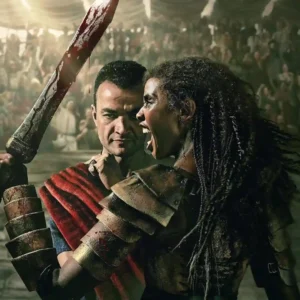
Spartacus: House of Ashur
Where It Has the Edge
- plot twists is 4.5 vs 3.5. Unpredictability is a recurring strength for positive reviewers, who praise the way the show sets up expected outcomes...

Scorata scores summarize analyzed review evidence on a 1–5 scale; they are not laboratory measurements or a simple average of customer star ratings. Feature scores summarize the reviews covering that feature. The overall score averages feature scores within each review, then combines review averages. When both expert and customer evidence are available, those two groups receive equal weight. Products can have different review coverage, so small score gaps do not establish a winner.
Recommendations prioritize important features for the category, with a score of at least 3.5, a gap of at least 0.25 points and at least two supporting reviews per product. Features with widely varying scores or broad connectivity contexts are excluded from recommendations. These safeguards do not establish statistical significance.
Quick verdict
The available evidence supports the recommendation below, but does not establish an overall winner. Check the remaining features against your priorities.
Choose Spartacus: House of Ashur for plot twists.
There is not enough comparable review evidence to recommend Star Trek: Strange New Worlds, Season 4 over the other product.
No clear scored advantage over the other product.
Scores are out of 5. Missing scores mean missing review evidence, not a missing feature.
One highly positive critic explicitly says the series is fun enough to deserve a second viewing.
A strongly negative commenter says the season lacks enough substance to inspire a rewatch.
Even reviewers who acknowledge excess often find the series extremely entertaining, fun, or addictive. The strongest positive coverage treats its unapologetic spectacle as a feature rather than a flaw.
Despite major disagreements about individual episodes, reviewers frequently describe Season 4 as fun, entertaining, or enjoyable when its experiments click.
The premiere’s recreation of the ludus and familiar world is so seamless for one longtime fan that it feels as if the franchise never left.
Continuity is a recurring concern, particularly when genre episodes appear to ignore earlier rules or when legacy connections feel forced.
CGI is one of the weaker production areas in the negative coverage, with critics objecting to over-the-top effects and conspicuous green-screen use.
CGI is generally praised as polished and ambitious, with occasional shots criticized for looking unconvincing.
The deeper focus on Capua’s politics and social hierarchy expands the franchise world beyond arena combat and gives the revival a broader canvas.
Lore use is contentious: callbacks can enrich the Trek setting, but some reviewers feel canon and legacy references are mishandled or used without enough purpose.
Ashur’s characterization is a major fault line: some see a believable alternate-timeline evolution, while harsher reviews say he behaves far less cunningly and consistently than the original character.
One positive assessment says the episodic format still preserves consistent character arcs across episodes.
Direction is praised for maintaining craft across the production and, in later episode coverage, for delivering a focused and driven installment even without arena games.
Direction ranges from nimble comic staging to choices some reviewers call uninspired, making the execution as variable as the season’s concepts.
One enthusiastic video review singles out the script writing as a major strength, praising the franchise’s distinctive verbal style.
Screenplay reactions are mixed, with some scripts faulted at the concept level while stronger episodes benefit from clearer structure and sharper character turns.
Several negative reviews feel too much attention goes to combat or selected leads while other gladiators and supporting characters remain thin, creating an uneven ensemble.
Character balance improves when neglected pairings receive attention, but some reviewers still think legacy characters can pull focus away from Pike’s crew.
The faux-Latin, Shakespearean cadence is a signature pleasure for many reviewers, who enjoy its poetic vulgarity and distinctive rhythm. Others find the syntax overly elaborate, difficult for newcomers, or distracting.
Dialogue draws some of the harshest criticism in weaker episodes, where it is called shallow, forced, ridiculous, or overly melodramatic.
Physical spectacle gets mixed reactions: one critic praises realistic gore, while another finds explicit prosthetics distractingly fake.
Practical work is well received, including creatures and the puppet execution, which several reviewers say looks excellent.
Achillia’s role, queer relationships, and the show’s treatment of race and gender earn strong praise from many professional critics for adding depth and historical texture. Several YouTube reviewers reject the same choices as forced or implausible, making representation one of the most polarized aspects.
One critic is disappointed that LGBT representation has receded since the first season, especially while heterosexual relationships remain prominent.
For viewers seeking a pulpy sword-and-sandal drama, the show is described as an enticing, exciting entry likely to satisfy diehard genre and franchise fans.
Genre-hopping is the season’s biggest divide: some reviewers love the fearless variety, while others find the fantasy, puppet, soap, and parody swings exhausting or un-Trek-like.
Most positive critics praise the writing as dynamic, tightly constructed, or even better than the original in places. The major dissent is a long-form full-season review that finds consistency deteriorates badly despite some strong episodes.
Writing quality is sharply divided: reviewers praise inventive standalone ideas and character beats, but repeatedly criticize thin plotting, gimmicks, and weak resolutions.
Relationship-driven developments and character losses give later episodes potent melodrama, with one episode review praising how effectively evolving bonds drive the story.
Drama is inconsistent: performers can sell emotional material, but soap-opera framing and weak character drama sometimes undercut otherwise serious ideas.
Professional critics frequently call the revival a fitting, dynamic, or triumphant return, but several full-season and YouTube reviews question why the spinoff exists at all. The result is a genuine split between successful reinvention and unnecessary retread.
One critic thinks the prequel function is becoming too eager to position the series for a hypothetical Kirk-era continuation.
Ashur remains intentionally difficult to root for, and that limits emotional investment for several reviewers. Others find his corruption magnetic, while later episode coverage shows strong affection for characters such as Celadus.
Una is described as solid, charismatic, and capable of making difficult situations feel manageable.
The show’s cheerfully hedonistic identity feels confident to supporters, but one long-form critic argues comic slow-motion spectacle can undercut scenes meant to feel serious or heroic.
Tone is a major weakness for detractors, especially when serious grief or character work is paired with broad parody or comedy.
Effects are uneven across the coverage: some VFX and set work look artificial, while the combat-injury effects receive strong praise for shockingly realistic detail.
Effects are usually impressive, from dragons and creatures to large-scale space imagery, though a few reviewers call out weaker CGI moments.
Reviewers who connect with the show repeatedly describe it as addictive, hooked them by the first half, or left them eager to continue.
One reviewer says the season leaves viewers hungry for more even after a binge.
Dramatic lighting and the restored visual atmosphere are singled out as part of the revival’s polished, instantly recognizable look.
Camera work and cinematography are consistently among the better-regarded craft elements, especially when episodes adopt distinct visual identities.
Episode 7 is praised for concentrating its many storylines around a clear emotional center, producing a focused and driven hour.
The episodic, mission-of-the-week structure is frequently praised, although some reviewers think the short streaming format gives the standalone approach too little room.
Unpredictability is a recurring strength for positive reviewers, who praise the way the show sets up expected outcomes and then redirects the story.
Twists receive mixed reactions, from a clever dinosaur-time-travel turn to character resolutions that some viewers found telegraphed.
Several negative YouTube reviews reject the physical logic of Achillia’s rapid success against experienced men and criticize other characters’ strength as plot-dependent.
One reviewer finds it odd that fantasy magic can function aboard the Enterprise, weakening the internal power rules.
Arena fights and combat choreography are widely praised as creative, brutal, and thrilling, with several reviews calling them a major reason to watch. A small number of critics question the physical credibility of some matchups.
Action ranges from tense, effective disaster storytelling to sequences some reviewers see as empty spectacle.
The alternate-history premise divides reviewers almost completely: supporters call it fresh, clever, and audacious, while detractors see an unnecessary retread or fan-fiction-style resurrection.
The season earns credit for inventive time-bending and genre concepts, though some later riffs are described as derivative or insufficiently fresh.
Chemistry is strongest in selected pairings, especially Ashur with Achillia and Korris with Opiter, while some reviewers find other romances or ensemble bonds shallow or inconsistent.
The crew’s chemistry is a major asset, especially when new pairings and alternate-character dynamics let familiar cast members play off each other differently.
Sex and nudity are intentionally extreme. Supportive critics argue the eroticism serves character, power, and atmosphere, while content-focused and negative reviews find it gratuitous, excessive, or less effectively handled than before.
One reviewer welcomes the reduced emphasis on characters being sexually or romantically fixated on Spock.
The sweeping score is praised for instantly transporting the viewer back into the ludus and restoring the franchise atmosphere.
The score is a strong craft element, including praise for Nami Melumad’s symphonic work, even if not every episode’s musical support lands equally well.
Many critics see substantive themes about class, enslavement, power, consent, exclusion, race, and survival beneath the gore. A smaller group misses the original rebellion’s moral purpose and finds this season thematically thinner.
The season can reach meaningful themes about identity, grief, ethics, and self-acceptance, but several reviewers think its genre conceits sometimes leave those ideas underexplored.
One full-season critic felt the revival avoids seriously confronting Ashur’s past crimes, leaving his potential redemption underdeveloped.
One critique says past experiences do not meaningfully change current behavior, weakening the sense that characters face lasting consequences.
The recurring slow-motion action style is a nostalgic franchise hallmark, but one longtime fan now finds it dated.
One review criticizes an important emotional scene for being cut too short.
Pacing varies by reviewer and episode: some early non-action stretches invite fast-forwarding, while later coverage praises focused momentum and brisk movement.
Episode pacing varies widely: the real-time disaster story uses relentless momentum effectively, while weaker episodes are said to sag or rush their final acts.
Professional reviews often praise the emphasis on class, power, exclusion, and Roman political maneuvering, describing it as sharp and relevant rather than decorative.
One reviewer finds worthwhile political themes in the season’s more overtly political material and sees room for deeper interpretation.
Some critics appreciate the patient build because developments feel earned, but others find the first half slow or believe major character milestones arrive too quickly relative to their setup.
The season’s rhythm feels compressed and uneven to several reviewers, with back-to-back gimmick episodes creating fatigue and serialized arcs feeling disrupted.
Achillia, Korris, Tarchon, and Ashur receive substantial praise for growth and added depth, especially as the season progresses. Critics who dislike the show argue some arcs arrive too quickly or leave too many supporting characters underdeveloped.
Character development is uneven: some arcs and spotlight episodes land well, while other reviewers find major threads underdeveloped or insufficiently lasting.
Graphic violence is among the show’s defining pleasures and strongest action selling points for many reviewers. Others find the gore nauseating, excessive, or far beyond what they want to watch.
The darker episodes use violence and body horror effectively for some reviewers, while others feel gore becomes spectacle without enough story support.
The show is intentionally stylized, and some critics accept that bargain completely. Others strongly object to combat physics, historical behavior, and Achillia’s accelerated fighting credibility.
Some episodes ask for a heavy suspension of disbelief, and reviewers are less satisfied when emotional stories lack a grounded framework.
Story response is mixed. Supporters praise sturdy storytelling, political intrigue, character-driven plotting, and meaningful consequences; detractors see thin purpose, repetition, weak investment, or outright bad plotting beneath the spectacle.
Stories are the main fault line: strong standalone adventures can be compelling, but several gimmick-heavy episodes are criticized as thin, pointless, or weakly resolved.
One negative review feels the prolonged epic approach does not fit the miniseries-style format well.
The 10-episode season is widely seen as too short for this many tones, characters, and ideas, leaving several reviewers wanting a longer traditional TV run.
Most professional critics say the revival recaptures the Spartacus look, language, action, and pulpy energy with impressive fidelity. Dissenting reviewers argue it copies the aesthetics without restoring the original’s soul or heroic purpose.
Franchise connections are split between praise for the Original Series feel and concern that existing canon is beginning to dominate the show.
Performances are one of the clearest strengths, with many critics calling the cast spectacular, top-notch, or phenomenal. A few dissenters find the style unsubtle or uneven, but the overall acting response is strongly positive.
Acting is broadly praised even when the surrounding episode is disliked, though a few reviewers object to deliberately hammy or exaggerated performances.
Political maneuvering, betrayals, and high stakes keep the show tense even away from the arena, with several reviewers praising its unpredictability.
The season’s suspense works best in its disaster and horror modes, where reviewers praise real tension, unease, and edge-of-your-seat momentum.
The alternate-history setup and stylized world can be difficult for newcomers, and one long-form critic also objects to convoluted or incoherent information delivery.
Clarity is a recurring weakness in the more fantastical episodes, where reviewers question unexplained rules, hand-waved setups, and shaky internal logic.
The series is often more entertaining than moving in its early stretch, but later deaths—especially Celadus and Opiter-related material—land with considerably stronger emotion.
Emotional impact peaks when grief, identity, or loss receives room to breathe, though several reviewers say those moments are weakened by surrounding gimmicks.
The opening earns mostly positive reactions for re-establishing the world, characters, and conflicts quickly, though one recap calls it flashy and hollow and another dislikes the resurrection mechanism.
The season premiere is generally viewed as a strong return to classic Trek-style adventure, with a few dissenting reactions to its execution.
The lighter, deliberately silly register works for at least one critic, who enjoys the show’s refusal to take its lizard-brain pleasures too seriously.
Comedy is often a highlight, from Spock and Pike’s fantasy doubles to the stoner-style episode, but some parody-heavy installments are described as painfully unfunny.
Every review that directly addresses future viewing is enthusiastic: several critics want the next episodes immediately, and full-season viewers express clear interest in season two.
Interest in continuing is strong in the positive season reviews, with critics expressing excitement for what comes next and sadness that so few episodes remain.
Ashur’s toxic charisma and Cossutia’s scheming make villainous or antihero figures highly watchable even for reviewers who dislike them morally.
Trelane and other antagonistic figures are generally enjoyed, with praise for personality and the way they support the episode’s conflict.
Costuming draws sharply different reactions: one review calls it lush and highly crafted, while a historically focused trailer critique objects to specific armor and wardrobe choices.
Costumes are repeatedly singled out as a strength, especially the elaborate fantasy looks and the show’s playful genre-specific wardrobe.
The gritty Roman look and lighting earn praise, but green-screen use, variable sets, and limited open-air scale draw criticism from several reviews.
Production design earns strong praise for giving wildly different episodes their own identity while keeping the Enterprise polished and recognizable.
Moving deeper into Roman politics while rebuilding Capua’s social and gladiatorial ecosystem is praised for expanding the franchise without abandoning its familiar foundations.
One reviewer highlights a small world-building detail as a fun addition to the setting.
The gritty lighting, stylized blood, scenery, and operatic presentation are widely praised for restoring the franchise identity, though a few critics find individual shots or effects visibly fake.
The season is visually ambitious and often striking, though isolated effects shots and some heavily stylized episodes draw criticism.
The lead performance is seen as capable of anchoring the narrative, though one mixed review feels the conception of Ashur as central hero remains difficult to embrace.
The main ensemble is one of the season’s clearest strengths, with repeated praise for the cast’s range across comedy, drama, horror, and adventure.
The music is included among the elements one enthusiastic reviewer calls phenomenal.
Music is usually regarded positively, with praise for the season’s genre-shifting sound, though one critic feels a droning score sometimes carries weak material.
The supporting ensemble is a major asset, with Korris, Cossutia, Achillia, and the gladiator group often described as increasingly compelling and sometimes stronger than the central lead.
A supporting performance receives standout praise, especially Joe Morton’s guest turn.
Longtime Spartacus fans are often described as the natural audience, while newcomers may find the lore, dialogue, or excess difficult to enter. Several YouTube reviewers were sharply resistant to the revival’s premise, making broader appeal unusually divisive.
Audience appeal looks polarized: some see broad, accessible fun and familiar TOS flavor, while others think the gimmick-heavy direction alienates viewers.
One commenter strongly dislikes Pelia’s stylized accent and considers it unnecessary to the character.
One critic sees the return to The Elysian Kingdom as an unnecessary sequel and questions why that story needed revisiting.
One commenter describes the approaching end as bittersweet, simultaneously sad to lose more Trek and ready for this series to conclude.
One commenter strongly criticizes Pelia’s casting, calling the character and casting choice a poor fit.
One critic specifically praises the patient plotting for letting developments feel earned instead of forcing artificial cliffhangers.
Runtime works when an episode has enough story to fill the hour, but thinner comedy installments are criticized for stretching limited plots.
Ethical themes can feel authentically Trek-like, but reviewers also criticize how some mental-health and relationship material is handled.
Several reviewers feel the season recaptures classic or traditional Star Trek structure and spirit, while one fantasy episode is criticized as barely feeling like Trek.
Graphic violence, explicit sex, full-frontal nudity, and pervasive profanity make this a very poor fit for family viewing.
One strongly positive full-season reviewer enjoyed the finale enough to immediately look forward to the next season.
One commenter feels the Princess Bride-style fourth-wall reference makes the fantasy episode less immersive.
Profanity is extremely frequent, and multiple reviews warn that the combination of f-bombs, sexual vocabulary, and stylized syntax can be challenging or excessive.
One YouTube critic strongly dislikes Achillia’s wig and styling, calling it distracting and unflattering.
Historical plausibility is contested. One article defends female gladiators and mixed matchups as grounded enough for the period, while a history-focused video strongly objects to dialogue, equipment, and combat presentation.
Romance is divisive: some pairings have chemistry, but other reviewers dislike the Kirk/La’An direction or feel existing romantic arcs have run their course.
Finale response is split. One full-season fan is highly satisfied and eager for season two, while detractors call parts of the ending melodramatic or, in the harshest case, an unmitigated disaster.
The content-focused review considers the series emphatically adult, citing graphic gore, explicit sex, full-frontal nudity, and harsh profanity.
The critical response is described as exceptionally strong, even as audience reaction is much more divided.
One commenter misses Star Trek’s older reputation for inspiring scientific and professional curiosity and feels this season offers less of that quality.
Sound work is mixed: atmospheric design receives praise, while one fantasy episode is criticized for conspicuous ADR.

Best for sharp adult humor, magnetic chemistry and a deeply satisfying farewell. Skip it if familiar will-they-won’t-they plotting or deliberately messy leads are dealbreakers.
Pros: season pacing, episode structure
Cons: none
Choose Season 15 for warm, character-driven comedy, meaningful growth, and a finale that rewards longtime fans. Skip it if the short binge format, uneven replacement voices, or occasional clumsy commentary...
Pros: episode structure, season finale quality
Cons: release schedule, bingeability
Choose The Pitt Season 2 for a gripping, realistic medical drama with superb acting and emotional depth. Skip it if graphic procedures, unresolved arcs, or slower character-driven pacing bother you.
Pros: episode structure, main cast performance
Cons: age appropriateness, plot clarity

Best for powerhouse performances, thorny character work, and a tense revenge mystery that grows richer as it goes. Skip it if abuse, trafficking, graphic violence, or deliberately messy moral questions...
Pros: episode structure, supporting cast performance
Cons: cinematography, sexual content level