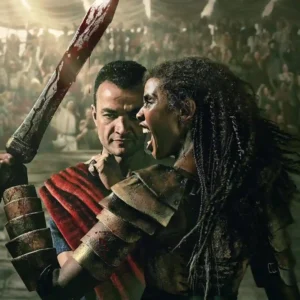
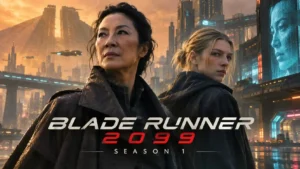
Spartacus: House of Ashur
Where It Has the Edge
No clear scored advantage over the other product.

Scorata scores summarize analyzed review evidence on a 1–5 scale; they are not laboratory measurements or a simple average of customer star ratings. Feature scores summarize the reviews covering that feature. The overall score averages feature scores within each review, then combines review averages. When both expert and customer evidence are available, those two groups receive equal weight. Products can have different review coverage, so small score gaps do not establish a winner.
Recommendations prioritize important features for the category, with a score of at least 3.5, a gap of at least 0.25 points and at least two supporting reviews per product. Features with widely varying scores or broad connectivity contexts are excluded from recommendations. These safeguards do not establish statistical significance.
Quick verdict
There is not enough consistent, comparable evidence for a clear recommendation. Use the feature details and supporting reviews to weigh the tradeoffs.
There is not enough comparable review evidence to recommend Spartacus: House of Ashur over the other product.
There is not enough comparable review evidence to recommend Blade Runner 2099 – Season 1 over the other product.
No clear scored advantage over the other product.
No clear scored advantage over the other product.
Scores are out of 5. Missing scores mean missing review evidence, not a missing feature.
Graphic violence is among the show’s defining pleasures and strongest action selling points for many reviewers. Others find the gore nauseating, excessive, or far beyond what they want to watch.
Frequent graphic fights and bleak violence are criticized for overwhelming the drama rather than adding meaningful depth.
CGI is one of the weaker production areas in the negative coverage, with critics objecting to over-the-top effects and conspicuous green-screen use.
Many effects look convincingly integrated with physical sets, but occasional digital backgrounds and lower-budget shots stand out.
The lighter, deliberately silly register works for at least one critic, who enjoys the show’s refusal to take its lizard-brain pleasures too seriously.
The tone is exceptionally solemn, with little comic relief. Some find that consistent with the franchise, while others miss moments of levity.
Direction is praised for maintaining craft across the production and, in later episode coverage, for delivering a focused and driven installment even without arena games.
The directors establish a striking sun-baked noir palette, but uneven staging and some stiff performances or unclear fight coverage prevent the direction from matching the films.
Episode 7 is praised for concentrating its many storylines around a clear emotional center, producing a focused and driven hour.
The extended episodic canvas offers room for new settings and mysteries, but not everyone thinks the story takes full advantage of television’s structure.
Unpredictability is a recurring strength for positive reviewers, who praise the way the show sets up expected outcomes and then redirects the story.
The mystery offers ambitious revelations for some viewers, but others find its twists predictable or insufficiently established.
Professional critics frequently call the revival a fitting, dynamic, or triumphant return, but several full-season and YouTube reviews question why the spinoff exists at all. The result is a genuine split between successful reinvention and unnecessary retread.
The transition to television is praised for retaining the original cinematic story’s humanity while opening up new territory.
Finale response is split. One full-season fan is highly satisfied and eager for season two, while detractors call parts of the ending melodramatic or, in the harshest case, an unmitigated disaster.
The finale can deliver a satisfying, poetic sense of closure, but its resolution strikes some as too neat or unexplained.
Ashur’s toxic charisma and Cossutia’s scheming make villainous or antihero figures highly watchable even for reviewers who dislike them morally.
Some antagonists bring effective menace or psychotic energy, while others are too familiar, flat or slow to emerge.
The premiere’s recreation of the ludus and familiar world is so seamless for one longtime fan that it feels as if the franchise never left.
The distant setting avoids forcing answers to earlier character fates, but the films’ reproductive revelations and changes to society are not always convincingly carried forward.
Achillia, Korris, Tarchon, and Ashur receive substantial praise for growth and added depth, especially as the season progresses. Critics who dislike the show argue some arcs arrive too quickly or leave too many supporting characters underdeveloped.
Olwen’s mortality and Cora’s struggle to survive give the leads intriguing material, but thin backstories and underdeveloped supporting characters frequently blunt the drama.
Pacing varies by reviewer and episode: some early non-action stretches invite fast-forwarding, while later coverage praises focused momentum and brisk movement.
Several early and middle episodes meander or introduce unnecessary side stories before the investigation gains focus.
Effects are uneven across the coverage: some VFX and set work look artificial, while the combat-injury effects receive strong praise for shockingly realistic detail.
Effects can make the large-scale dystopian settings genuinely impressive, though the quality is not uniform across every sequence.
The alternate-history premise divides reviewers almost completely: supporters call it fresh, clever, and audacious, while detractors see an unnecessary retread or fan-fiction-style resurrection.
The reversed human-replicant hierarchy is either a bold new angle or an unimaginative swap of familiar roles, depending on how convincingly its consequences land.
The alternate-history setup and stylized world can be difficult for newcomers, and one long-form critic also objects to convoluted or incoherent information delivery.
The mystery asks viewers to follow convoluted plotting and opaque motivations, especially early on. Several critics found the later episodes more rewarding once the pieces came together.
One enthusiastic video review singles out the script writing as a major strength, praising the franchise’s distinctive verbal style.
The scripts sometimes find inventive new angles on identity and mortality; detractors find the plotting labored, exposition heavy and characters underwritten.
Chemistry is strongest in selected pairings, especially Ashur with Achillia and Korris with Opiter, while some reviewers find other romances or ensemble bonds shallow or inconsistent.
The guarded, gradually evolving partnership is a major attraction, with the leads often praised for their chemistry and mutual suspicion.
Arena fights and combat choreography are widely praised as creative, brutal, and thrilling, with several reviews calling them a major reason to watch. A small number of critics question the physical credibility of some matchups.
The fights benefit from Yeoh’s physical skills and Schafer’s desperate energy, but some are poorly lit, choppily edited or feel out of place in the slow-burn mystery.
One negative review feels the prolonged epic approach does not fit the miniseries-style format well.
The eight-episode length gives the visuals room to breathe, but many find the central investigation better suited to a shorter format.
The series is often more entertaining than moving in its early stretch, but later deaths—especially Celadus and Opiter-related material—land with considerably stronger emotion.
The relationship between the two women and Olwen’s approaching death can be poignant, but several critics feel the philosophical and visual ambitions overshadow genuine human connection.
The faux-Latin, Shakespearean cadence is a signature pleasure for many reviewers, who enjoy its poetic vulgarity and distinctive rhythm. Others find the syntax overly elaborate, difficult for newcomers, or distracting.
The philosophical dialogue can carry the franchise’s grand noir tradition, yet it sometimes becomes too blunt, cryptic, or utilitarian.
The recurring slow-motion action style is a nostalgic franchise hallmark, but one longtime fan now finds it dated.
Shaky camera work and choppy cuts make some otherwise well-choreographed fights difficult to follow.
For viewers seeking a pulpy sword-and-sandal drama, the show is described as an enticing, exciting entry likely to satisfy diehard genre and franchise fans.
The ambitious philosophical mystery is enthusiastically received as a strong example of contemporary science fiction.
Dramatic lighting and the restored visual atmosphere are singled out as part of the revival’s polished, instantly recognizable look.
Carefully composed shadows and scorching sunlight give the future a distinctive look, although shaky camera work in fights can reduce clarity.
One strongly positive full-season reviewer enjoyed the finale enough to immediately look forward to the next season.
The conclusion is generally appreciated for wrapping up the central journey while leaving room for interpretation, although one critic found its last-minute resolutions too convenient.
Many critics see substantive themes about class, enslavement, power, consent, exclusion, race, and survival beneath the gore. A smaller group misses the original rebellion’s moral purpose and finds this season thematically thinner.
Identity, memory, mortality and empathy provide rich philosophical material. Critics differ over whether the series meaningfully develops those ideas or merely repeats the films.
Story response is mixed. Supporters praise sturdy storytelling, political intrigue, character-driven plotting, and meaningful consequences; detractors see thin purpose, repetition, weak investment, or outright bad plotting beneath the spectacle.
The investigation and role reversal can be gripping, particularly when the two leads are together. Others find the MacGuffin hunt stretched thin, predictable, or hollow.
The sweeping score is praised for instantly transporting the viewer back into the ludus and restoring the franchise atmosphere.
Leopold Ross’s synths, jazz and expressive saxophone are among the most consistently praised elements. Some find the repeated musical swells or jazzy emphasis distracting.
Political maneuvering, betrayals, and high stakes keep the show tense even away from the arena, with several reviewers praising its unpredictability.
The tension of Cora’s undercover identity and her uneasy partnership creates compelling suspense, though repeated tests and encounters can diminish its impact.
Several negative reviews feel too much attention goes to combat or selected leads while other gladiators and supporting characters remain thin, creating an uneven ensemble.
The two leads dominate the drama, leaving much of the supporting ensemble with comparatively little depth or narrative weight.
The deeper focus on Capua’s politics and social hierarchy expands the franchise world beyond arena combat and gives the revival a broader canvas.
The time jump expands the established mythology and introduces new settings and ideas, though some find the additional details superficial.
Ashur’s characterization is a major fault line: some see a believable alternate-timeline evolution, while harsher reviews say he behaves far less cunningly and consistently than the original character.
Abrupt allegiance shifts and inconsistent rules about replicant behavior can make character decisions feel contrived.
Some critics appreciate the patient build because developments feel earned, but others find the first half slow or believe major character milestones arrive too quickly relative to their setup.
The deliberate tempo feels faithful and absorbing to some, but many find the middle stretch padded and the mystery slow to develop.
Most professional critics say the revival recaptures the Spartacus look, language, action, and pulpy energy with impressive fidelity. Dissenting reviewers argue it copies the aesthetics without restoring the original’s soul or heroic purpose.
Faithful noir aesthetics and familiar philosophical questions make this recognizable as part of the saga, but critics disagree on whether it evolves beyond homage.
Reviewers who connect with the show repeatedly describe it as addictive, hooked them by the first half, or left them eager to continue.
The propulsive mystery and visual world can keep viewers watching across the full run.
The gritty Roman look and lighting earn praise, but green-screen use, variable sets, and limited open-air scale draw criticism from several reviews.
Tactile interiors, brutalist buildings and lived-in cityscapes make the setting unusually immersive, even for critics who are disappointed with the story.
Moving deeper into Roman politics while rebuilding Capua’s social and gladiatorial ecosystem is praised for expanding the franchise without abandoning its familiar foundations.
The retrofuturistic world looks expansive and richly detailed. Some critics nonetheless wanted more insight into everyday society, politics and the consequences of the uprising.
Costuming draws sharply different reactions: one review calls it lush and highly crafted, while a historically focused trailer critique objects to specific armor and wardrobe choices.
The distinctive oversized jackets and inventive costumes attract attention, though Cora’s bulky silhouette is divisive.
The gritty lighting, stylized blood, scenery, and operatic presentation are widely praised for restoring the franchise identity, though a few critics find individual shots or effects visibly fake.
Neon, ruined architecture, orange sunlight and textured retro technology earn widespread praise. A minority find the look derivative, muddy or less impressive than the films.
The lead performance is seen as capable of anchoring the narrative, though one mixed review feels the conception of Ashur as central hero remains difficult to embrace.
Yeoh’s restraint and Schafer’s urgency anchor the season for many critics, though others find their stoicism exaggerated or their emotional range limited.
The supporting ensemble is a major asset, with Korris, Cossutia, Achillia, and the gladiator group often described as increasingly compelling and sometimes stronger than the central lead.
The supporting ensemble includes memorable flashes of menace and eccentricity, especially Matthew Needham, though many secondary roles are too thinly drawn to leave much impression.
Performances are one of the clearest strengths, with many critics calling the cast spectacular, top-notch, or phenomenal. A few dissenters find the style unsubtle or uneven, but the overall acting response is strongly positive.
The leads frequently bring intensity and vulnerability to otherwise stoic roles. Some critics find the performances too wooden or repetitive, particularly when the writing gives them little to express.
Even reviewers who acknowledge excess often find the series extremely entertaining, fun, or addictive. The strongest positive coverage treats its unapologetic spectacle as a feature rather than a flaw.
Several critics were absorbed by the detective story and its setting, while others found the long, somber journey tedious.
One highly positive critic explicitly says the series is fun enough to deserve a second viewing.
The dense franchise connections reward a second look for clues and details that may have gone unnoticed.
Longtime Spartacus fans are often described as the natural audience, while newcomers may find the lore, dialogue, or excess difficult to enter. Several YouTube reviewers were sharply resistant to the revival’s premise, making broader appeal unusually divisive.
The series has considerable appeal for established fans, but its familiar sensibilities and slow pace may not bring many new viewers aboard.
Ashur remains intentionally difficult to root for, and that limits emotional investment for several reviewers. Others find his corruption magnetic, while later episode coverage shows strong affection for characters such as Celadus.
Cora’s constant anxiety can make her difficult to connect with when the story gives her little room to reveal other sides of her personality.
One full-season critic felt the revival avoids seriously confronting Ashur’s past crimes, leaving his potential redemption underdeveloped.
The expanded format feels justified to those impressed by the world and new themes, while skeptics would have preferred another film or no sequel at all.
The oppressive sunshine noir, smoky interiors, retro technology and jazz create a distinctive immersive mood; its relentless gloom is not for everyone.
A brief appearance by Freddie Fox is a welcome addition to the prologue.
Some supporting figures are introduced too briefly or too late for their storylines to build much impact.
The reversed hierarchy and the loneliness created by capitalism bring class and inequality into the story’s central concerns.
One critic specifically praises the patient plotting for letting developments feel earned instead of forcing artificial cliffhangers.
Regular action beats and twists keep the series moving for some viewers, at the cost of the more meditative quality of the films.
Achillia’s role, queer relationships, and the show’s treatment of race and gender earn strong praise from many professional critics for adding depth and historical texture. Several YouTube reviewers reject the same choices as forced or implausible, making representation one of the most polarized aspects.
Relationship-driven developments and character losses give later episodes potent melodrama, with one episode review praising how effectively evolving bonds drive the story.
The expanded geography and environmental damage give the future’s ecological concerns a concrete sense of scale.
The prologue helps orient newcomers, though familiar character backstories can feel less necessary when the actors already convey their emotions.
The series draws on philosophical elements of the original novel, including material left out of the films; some critics feel those nods remain superficial.
Graphic violence, explicit sex, full-frontal nudity, and pervasive profanity make this a very poor fit for family viewing.
The two female leads bring a fresh perspective to the traditionally male-centered detective story.
The show is praised for being a self-contained expansion instead of an endless exercise in franchise management.
The investigation blends science fiction, noir thriller and political resistance imagery.
Making replicants the ruling class gives the familiar premise an intriguing new perspective for many critics. Others find the swap unimaginative because society seems largely unchanged.
Profanity is extremely frequent, and multiple reviews warn that the combination of f-bombs, sexual vocabulary, and stylized syntax can be challenging or excessive.
The premise of passing as another identity briefly opens a thought-provoking connection to transgender experience, but the show does not develop it far.
Grate-filtered light, neon shadows and dramatic sunlight help create an immersive noir atmosphere.
The depiction of loneliness and its corrosive effect on empathy provides a poignant dimension to the dystopian society.
One YouTube critic strongly dislikes Achillia’s wig and styling, calling it distracting and unflattering.
Striking doomsday imagery and philosophical questions can linger long after the season ends.
The series explores the relationship between memories, trauma and personhood, with some critics finding the approach sophisticated and others wishing it went further.
Professional reviews often praise the emphasis on class, power, exclusion, and Roman political maneuvering, describing it as sharp and relevant rather than decorative.
Olwen’s approaching expiration gives the series a moving way to examine mortality and the desire for more time.
Ambiguity is part of the series’ noir appeal, with an elliptical mood and questions that can encourage interpretation.
Repeated test sequences and flights through the city can become time-filling devices instead of advancing the story.
The existential stakes and character motivations can be difficult to parse, weakening investment in the central mystery.
A relatively simple mystery becomes needlessly laborious when the storytelling structure delays clarity.
Michelle Yeoh retains impressive physical authority in an action role centered on aging and mortality.
The prologue recreates the earlier film’s aesthetic with striking accuracy while providing useful franchise context.
Historical plausibility is contested. One article defends female gladiators and mixed matchups as grounded enough for the period, while a history-focused video strongly objects to dialogue, equipment, and combat presentation.
The opening earns mostly positive reactions for re-establishing the world, characters, and conflicts quickly, though one recap calls it flashy and hollow and another dislikes the resurrection mechanism.
Several negative YouTube reviews reject the physical logic of Achillia’s rapid success against experienced men and criticize other characters’ strength as plot-dependent.
Physical spectacle gets mixed reactions: one critic praises realistic gore, while another finds explicit prosthetics distractingly fake.
Cora’s scrappy determination to survive makes her an engaging action heroine.
The show is intentionally stylized, and some critics accept that bargain completely. Others strongly object to combat physics, historical behavior, and Achillia’s accelerated fighting credibility.
The all-at-once rollout disappointed critics who felt this material deserved a longer weekly release.
Every review that directly addresses future viewing is enthusiastic: several critics want the next episodes immediately, and full-season viewers express clear interest in season two.
New environments beyond Los Angeles make the universe feel expansive rather than confined to familiar streets.
The unflinching seriousness suits viewers seeking solemn science fiction, but the unrelieved bleakness can be exhausting.
The change from rainy streets to hypnotic sunlight gives this incarnation a distinct sense of place.
Sex and nudity are intentionally extreme. Supportive critics argue the eroticism serves character, power, and atmosphere, while content-focused and negative reviews find it gratuitous, excessive, or less effectively handled than before.
One critic found the picture muddy but acknowledged that screener compression might have contributed.
The symbolism can be cryptic enough to obstruct emotional engagement.
The relationship between engineered life and humanity remains the season’s core, with some finding its new questions profound and others finding them underdeveloped.
The show’s cheerfully hedonistic identity feels confident to supporters, but one long-form critic argues comic slow-motion spectacle can undercut scenes meant to feel serious or heroic.
Questions about replaceability, human identity and technology are particularly timely in the age of AI.
Yeoh’s clipped delivery and careful vocal modulation convey an alien reserve with flashes of vulnerability.
The content-focused review considers the series emphatically adult, citing graphic gore, explicit sex, full-frontal nudity, and harsh profanity.
The critical response is described as exceptionally strong, even as audience reaction is much more divided.
The iconic flying cars retain their futuristic appeal.
Darkly lit fights and dim visuals can make parts of the action unnecessarily difficult to follow.
The music is included among the elements one enthusiastic reviewer calls phenomenal.
Lavish sets and a large-scale production make the future convincingly tangible, although budget differences from the films sometimes show.

Best for sharp adult humor, magnetic chemistry and a deeply satisfying farewell. Skip it if familiar will-they-won’t-they plotting or deliberately messy leads are dealbreakers.
Pros: humor, writing quality

Choose Widow’s Bay for its dark laughs, richly haunted island and memorable ensemble. Skip it if you need straightforward scares, rapid answers to every mystery or a completely resolved finale.
Pros: humor, genre satisfaction
Cons: ending satisfaction, season pacing

Choose Season 15 for warm, character-driven comedy, meaningful growth, and a finale that rewards longtime fans. Skip it if the short binge format, uneven replacement voices, or occasional clumsy commentary...
Pros: franchise connection, character development

Best for sharply acted, compassionate, high-pressure hospital drama. Skip it if graphic procedures unsettle you or you need a neatly resolved season finale.
Pros: character development, acting performance
Cons: character consistency, dialogue quality