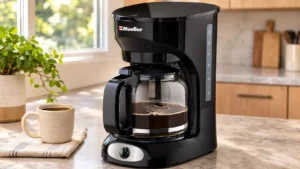
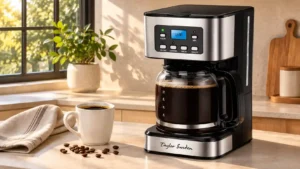
Mueller 12-Cup Coffee Maker
Where It Has the Edge
- Overall user experience is 5.0 vs 4.1. A one-switch workflow makes everyday brewing easy to understand without menus or a learning curve. That simplicity is...

Scorata scores summarize analyzed review evidence on a 1–5 scale; they are not laboratory measurements or a simple average of customer star ratings. Feature scores summarize the reviews covering that feature. The overall score averages feature scores within each review, then combines review averages. When both expert and customer evidence are available, those two groups receive equal weight. Products can have different review coverage, so small score gaps do not establish a winner.
Recommendations prioritize important features for the category, with a score of at least 3.5, a gap of at least 0.25 points and at least two supporting reviews per product. Features with widely varying scores or broad connectivity contexts are excluded from recommendations. These safeguards do not establish statistical significance.
Quick verdict
The review evidence points to a tradeoff: Overall user experience versus Drink variety and customization. Choose according to which strengths matter more to you; the overall score alone does not settle that choice.
Choose Mueller 12-Cup Coffee Maker for Overall user experience.
Choose Taylor Swoden Programmable 12-Cup Coffee Maker for Drink variety and customization.
Scores are out of 5. Missing scores mean missing review evidence, not a missing feature.
Its no-frills operation avoids complicated menus but offers little or no brew-strength and heat adjustment. Some competing budget models provide richer programming options.
Regular and strong settings allow easy adjustment from a lighter cup to a bolder brew. The control is useful but does not replace a proper grind and dose or provide specialist settings.
One comparison raises a concern about conflicting voltage information; checking the exact unit label before connecting it is prudent.
The standard 120V supply works with normal North American kitchen outlets, without needing a special circuit.
The fixed reservoir is usually straightforward, but lid access and internal water markings can make refilling trickier than expected.
The dedicated CLEAN function and reminder indicator make descaling easier to remember. Routine hand-washing remains straightforward, although the narrow fill opening adds inconvenience.
The glass carafe often pours cleanly and feels easy to handle, especially compared with ordinary budget glass. Occasional complaints involve leakage around the lid or condensation after brewing.
The glass pot makes remaining volume easy to see, and some find pouring clean and comfortable. Other owners report spills from the spout, especially with a full carafe.
The plain on/off switch is widely appreciated for simplicity, but the inexpensive-feeling controls can lack the polish of costlier machines.
The LCD, separate time buttons, and familiar layout are repeatedly described as simple to understand and program. Owners can prepare the timer without navigating menus.
Most coffee is delivered hot enough for enjoyable everyday drinking. Several tests measured brewing temperatures near the lower end of recommended ranges, potentially weakening extraction.
Fresh coffee is reported as hot, and the warming plate holds serving heat for a normal breakfast window. It is less effective for extended holding.
The warming plate generally keeps coffee pleasantly hot for a couple of hours without a burnt taste. Some owners and testers report stale or scorched coffee when it sits too long, and shutoff claims are inconsistent.
The warming plate is handy for a leisurely breakfast, and automatic shutoff provides reassurance. However, reported keep-warm durations differ, continuous heat dulls the flavor, and some mention plate or handle issues.
The two-hour shutoff is welcomed as a way to conserve power after brewing, with less worry about a forgotten hot plate.
Automatic shutoff limits unnecessary warming-plate operation after breakfast, adding some peace of mind and avoiding continuous energy use.
The permanent filter can yield a richer, fuller-bodied cup, especially for conventional drip drinkers. More demanding palates may find the flavor merely decent, with lighter roasts losing some complexity.
Many drinkers enjoy its smooth, hot, full-flavored drip coffee, particularly with Strong selected when more body is wanted. It does not make espresso or milk-based café drinks.
Many find brewing brisk and convenient for a full pot, although one test took about 13 minutes and found it slower than some rivals.
The brewer is described as reasonably quick and convenient, particularly with the timer doing the work before waking. One controlled comparison measured about eight minutes for a tested batch.
A one-switch workflow makes everyday brewing easy to understand without menus or a learning curve. That simplicity is central to its appeal, even though users who want more controls will find it limiting.
Positive experiences focus on a clean look, easy programming, and good coffee for the price. More critical owners report spilling, early electronics failures, and defective units.
A two-hour automatic shutoff is praised as reassuring where it works as described, but accounts conflict: some report missed shutoffs or say their units never switch off automatically.
Scheduled start and automatic shutoff simplify busy mornings, allowing a pot to brew unattended and cutting off heating afterward. The control set avoids more complex smart-home features.
The roughly 60-ounce carafe makes enough for multiple drinkers in one batch. Keep in mind that 12 coffee-maker cups are smaller than typical mugs.
The 1.8-liter glass carafe makes it easy to serve several people from one batch without brewing repeatedly. Its standard coffee-maker cup markings are smaller than typical large mugs.
Pulling out the carafe midway through brewing usually stops the drip cleanly, letting you grab an early cup without soaking the warming plate.
Pulling the carafe partway through brewing usually stops the drip cleanly, letting impatient drinkers pour a first mug. For best flavor, waiting for the full batch to mix is still preferable.
The heat-resistant borosilicate carafe draws praise for its resistance to sudden temperature changes. The main machine is more divisive: some find it solid, while others report early failure and lightweight construction.
Initial impressions of the light, modern construction are often positive, but some owners report cracked warming-plate coating, failed indicator lights, and complete early failures.
The water-tank or filter-basket lid can be stiff, fiddly to seat, or prone to opening and splashing. It becomes easier with practice, but some units have more troublesome fit issues.
Water-reservoir lid alignment, awkward filling, and carafe spillage are recurring design irritations that detract from otherwise simple operation.
The compact, unobtrusive design and straightforward appearance work well on typical kitchen counters. The basic plastic finish feels less premium to some buyers.
A full-size 12-cup carafe fits into a relatively compact, attractive body that is especially appealing on crowded counters. The top-opening lid still needs some clearance.
The water-level markings are useful for measuring the batch, but one account finds them hard to read under low lighting.
The large, clear gauge makes checking water levels much easier and helps avoid guessing while filling. This is a recurring small convenience.
Most cups are described as good, hot everyday drip coffee with respectable extraction. Some measurements and taste comparisons find the brew less nuanced or weaker than pricier alternatives.
Coffee generally earns praise for consistent, flavorful extraction, including a good showing in a comparative extraction test. It is reliable for ordinary drip batches, not a precision specialty machine.
The included permanent mesh filter saves recurring paper-filter purchases and can add body to the coffee. Fine sediment and a cleaner-tasting paper-filter option are the main tradeoffs.
The included permanent filter saves money and paper and is easy to rinse or remove. Some owners still prefer paper filters, and brewing loose tea may be less convenient.
The reusable filter is easy to dump and rinse, and the glass carafe is simple to wash. Everyday cleanup requires little effort compared with more elaborate machines.
The removable basket and permanent filter can be rinsed easily, and the cleaning alert is welcome. A few maintenance tasks are still manual.
The machine generally brews quietly, with a steady hum rather than distracting beeps. It can work in a noise-sensitive kitchen without creating much disturbance.
Brewing is generally described as quiet and unobtrusive, with no intrusive mechanical grind.
An unusually low purchase price combines with a reusable filter and generously sized carafe to make this an attractive bargain. Long-term breakdown reports keep the value case from being risk-free.
Most positive impressions center on obtaining full-pot programmability and adjustable strength without paying for a premium brewer. Durability complaints and stronger-priced competitors keep the value case from being universal.
A limited warranty provides some reassurance, though coverage and the risk of early failure are worth checking before purchase.
A one-year warranty is promoted as reassurance, though actual repair or service experiences are not described.
The filter and measuring scoop are useful included accessories, so buyers can start using ordinary ground coffee without buying filter paper.
Non-slip feet hold the machine stable, including on a wet counter and when the carafe is full.
There is no integrated grinder, so overnight scheduling usually requires grinding the beans the evening before. Buyers seeking bean-to-cup automation need another machine.
The heating element is credited with making a full pot reasonably quickly and bringing water to useful brewing temperatures.
Regular and strong presets provide simple control, but there is no direct brew-temperature setting or advanced extraction adjustment.
A substantial volume of generally positive owner feedback helps support its reputation as a worthwhile basic brewer.
ETL safety certification contributes to confidence in its basic appliance safeguards.
Its short, fairly narrow body can fit below typical cabinets, making it easier to store in a compact counter setup.
The finished coffee can lose heat faster than on pricier machines, so freshly poured cups fare better than prolonged holding.
The top/rear reservoir opening is a frequent frustration: its narrow access invites spills and is awkward beneath cabinetry. A carefully placed pitcher helps, but filling is not as easy as with wide or removable reservoirs.
An account that found no functioning auto-shutoff challenges the implied safety promise, so the shutoff behavior deserves confirmation.
It has no native app interface, but the mechanical switch can cooperate with a smart plug for scheduled brewing. That workaround is helpful, though it is not built-in smart control.
Some buyers received units with an ill-fitting lid or a machine that would not switch on, creating serious first-use disappointment.
Some owners report the blue power indicator burning out quickly, making it difficult to tell at a glance whether the brewer is on.
The conventional glass carafe is described as relatively simple and inexpensive to replace, unlike more specialized insulated pots.
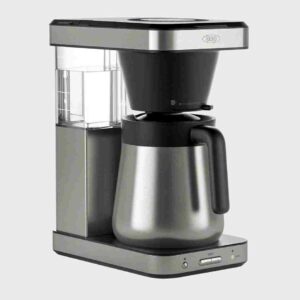
Choose the OXO Brew 8-Cup if you want fast, consistent drip coffee in small or full batches. Skip it if you need programming, app controls, a larger pot, or the...
Pros: Brewing performance and consistency, Overall user experience
Cons: Design flaws
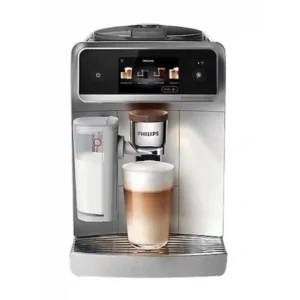
Best for effortless, highly personalized hot and cold coffee in a busy multi-drinker home. Skip it if counter space is tight, you demand silky adjustable microfoam, or the premium price...
Pros: Automation and sensors, Overall user experience
Cons: Design flaws, Mess-free used-puck disposal
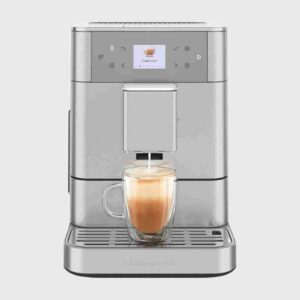
Choose the KitchenAid KF6 for rich espresso, quiet operation, easy cleaning, and strong value in a super-automatic. Skip it if dense cappuccino foam, plant-milk presets, touchscreen controls, or an included...
Pros: Water system, maintenance and descaling, Overall user experience
Cons: Accessories, Design flaws
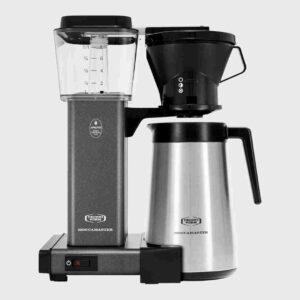
Choose the Moccamaster KBT for fast, excellent drip coffee, durable build, and a thermal carafe that keeps coffee hot. Skip it if you need programmability, a compact footprint, or a...
Pros: Brewing performance and consistency, Espresso and beverage quality
Cons: Automation and sensors, Design flaws