
Amadeus
Where It Has the Edge
- cast chemistry is 4.8 vs 4.3. The central Mozart–Salieri pairing is one of the series’ clearest strengths, with multiple critics praising the tension and...

Scorata scores summarize analyzed review evidence on a 1–5 scale; they are not laboratory measurements or a simple average of customer star ratings. Feature scores summarize the reviews covering that feature. The overall score averages feature scores within each review, then combines review averages. When both expert and customer evidence are available, those two groups receive equal weight. Products can have different review coverage, so small score gaps do not establish a winner.
Recommendations prioritize important features for the category, with a score of at least 3.5, a gap of at least 0.25 points and at least two supporting reviews per product. Features with widely varying scores or broad connectivity contexts are excluded from recommendations. These safeguards do not establish statistical significance.
Quick verdict
The review evidence points to a tradeoff: cast chemistry versus story quality and production design. Choose according to which strengths matter more to you; the overall score alone does not settle that choice.
Choose Amadeus for cast chemistry.
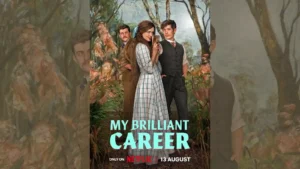
Choose My Brilliant Career for story quality and production design.
Scores are out of 5. Missing scores mean missing review evidence, not a missing feature.
Cultural and casting choices are highly contentious. Some reviewers accept the modernization, while others strongly reject the casting and representation as historically or culturally inauthentic.
First Nations, Chinese-Australian, gay, and female perspectives expand the period setting in ways many critics found thoughtful and resonant, though a few wanted some side stories developed further.
Historical realism is one of the weakest areas for accuracy-minded viewers. Several sources flag major inventions and liberties even when they accept them as deliberate historical fiction.
Despite its hopeful tone, the story’s economic pressures and difficult tradeoffs are praised for giving Sybylla’s choices a practical grounding.
The story can be compelling and ambitious, but detractors argue that the expanded plot becomes sparse, repetitive, or uneven across five episodes.
The coming-of-age story is usually praised as witty, bold, and satisfying, though detractors argue the romance can dilute the sharper ambition-and-independence focus.
Period authenticity is contested. Some reviewers find the locations and atmosphere convincing, while others feel the modern-looking cast, grooming, and historical liberties break the illusion.
Sets, costumes, landscapes, and much of the dialogue create a convincing Australian period world, while anachronistic music and deliberately modern sensibilities make the authenticity selective rather than strict.
The tonal mixture of bawdy comedy, gritty drama, satire, and tragedy is adventurous but does not feel fully unified to every critic.
At its best, the show balances intelligence, lightness, and messy youthful energy; the syrupier finale and heightened modern touches can make the tone feel less controlled for some viewers.
Writing gets sharply mixed reactions: some praise exquisite exchanges and big swings, while harsher reviews call the script banal or less substantial than earlier versions.
The writing is often praised as sharp, witty, polished, and thematically smart, though occasional exposition and reduced subtlety draw criticism.
Pacing is one of the most recurring concerns: several critics point to lag or rushed beats in the middle episodes, although others find the series fast and bingeable.
Pacing is often praised as brisk and engaging, though the premiere’s rhythm and some structural choices receive occasional criticism.
The strongest emotional moments—family tragedy, resentment, and the second episode’s later scenes—land deeply for admirers, though other critics feel the series remains emotionally shallow.
The coming-of-age journey earns strong emotional investment, with the gradual relationships and Sybylla’s self-discovery repeatedly described as moving.
The finale earns some of the series’ strongest praise, particularly for its powerful landing and self-aware closing ideas.
The ending is broadly seen as purposeful and satisfying, but not unanimously: some find it syrupy, bittersweet, or slowed by its structure.
The series deliberately uses contemporary attitudes and framing. Some reviewers see that as timely and effective, while others condemn the perceived modern ideological overlay.
The show’s overt feminist framing will not suit every viewer; one values-based review found its celebration of rebellion too forceful and at odds with that outlet’s worldview.
The five-hour expansion is a major tradeoff. Some appreciate the added room for character, while several critics find the story padded, repetitive, or exhausting.
Opinions split on pace. Some find the progression brilliant and thematically intentional, while others complain of sluggish stretches or a finale that drags.
Modern profanity and anachronistic language are divisive: some find them witty and playful, while others think the swearing is excessive or adds little.
The language is not universally family-friendly; suggestive phrasing and TV-14 content warnings prompted caution from family-focused outlets.
The sharpest dialogue—especially between Mozart and Salieri—is repeatedly praised as sparkling, venomous, and one of the adaptation’s best-written elements.
The language often lands as sharp, witty, authentic, and restrained, but one episode review criticizes moments that over-explain characters instead of trusting the subtext.
Opinions split sharply on the need for another Amadeus: some praise the fresh perspective and bold adaptation choices, while others see an unnecessary or infuriating reworking of already-mastered material.
The Australian setting and heroine give the series personality, but several critics think the love triangle and familiar modern-period-drama formulas blunt its originality.
The central Mozart–Salieri pairing is one of the series’ clearest strengths, with multiple critics praising the tension and chemistry even when they disagree about the adaptation overall.
Several pairings click immediately, especially Sybylla’s key relationships and the Nell-Charlie dynamic, though one mixed review found some chemistry forced or underdeveloped.
The old-age confession framing adds a metafictional layer, but some reviewers find the bookends flatter and less tense than the central story.
The premiere’s format feels organic and engaging overall, but its time jumps are a noticeable source of friction.
The series wrestles with genius, envy, faith, creative insecurity, and power. Admirers find those ideas timeless; detractors think spectacle sometimes replaces genuine depth.
Ambition, independence, gender expectations, money, race, and creative identity give the series substantial thematic material, though a few critics think the feminist message is either too blunt or overshadowed by romance.
The sexual content is deliberately provocative and often very explicit. Some reviewers think it meaningfully exposes character flaws, while others call it gratuitous and limiting for family viewing.
Reactions depend heavily on expectations: family-oriented sources dislike the suggestive and explicit material, while other critics think the show is comparatively restrained and usefully frank.
The expanded format gives Mozart, Constanze, and Salieri more psychological space, but critics disagree on whether the supporting characters receive enough depth.
Sybylla and many supporting characters gain meaningful nuance, although a few critics find the suitors comparatively shallow or wish the heroine’s internal insecurity were explored more deeply.
At its fastest, the series has enough narrative thrust and energy to encourage a one- or two-day binge despite complaints about slower middle episodes.
The six-episode run is easy to keep watching, helped by strong relationships, lively pacing in the most positive takes, and a compact format.
As an adaptation, the series gets sharply divided marks: supporters value its new routes and fuller characterization, while detractors believe it diminishes or fails to equal earlier versions.
The adaptation preserves the novel’s rebellious core for many critics while freely modernizing characters, romance, and tone; a minority argues those changes weaken the original feminist emphasis.
This is not a family-friendly take on Mozart: profanity and explicit sexual material make it unsuitable for younger viewers according to one reviewer.
Family-oriented sources advise caution, mainly because of sexual material, suggestive language, substances, and the show’s adult themes.
The bawdy humor, jokes, and irreverence work well for viewers who embrace the show’s deliberately messy, modern energy.
Its irreverent comedy and Sybylla’s chaotic energy give the period setting a light, modern pulse that several viewers found refreshing.
Some critics struggle to empathize with the leads, especially when the characters’ egos and cruelty dominate the drama.
The cast of characters is easy to become attached to, with Sybylla, Nell, and the broader women’s ensemble singled out as especially appealing.
Critical reception is broadly favorable but clearly mixed, with strong praise for performances and craft countered by concerns about pacing, depth, and comparison with the 1984 film.
Critical reception is described as exceptionally strong, with one article explicitly calling the series a hit with critics.
Costumes are widely admired as lavish and beautiful, although one pre-release critic strongly disliked the fit and styling shown in promotional material.
The period wardrobe is a standout: lavish, beautiful, and carefully balanced between historical silhouettes and a slightly modern edge.
Visual presentation is a major strength across many reviews, with lavish frames, colorful period atmosphere, and sumptuous styling; a few critics object to washed-out grading or trailer lighting.
Australian landscapes, sun-drenched estates, and bold period styling make the series visually striking, even for critics who find some modern flourishes excessive.
Production design is consistently admired for opulent settings, detailed locations, lavish sets, and an immersive sense of courtly spectacle.
The locations and interiors are repeatedly praised as gorgeous, vibrant, and richly differentiated, with the library and estates standing out as especially considered spaces.
Overall entertainment value ranges from enthusiastic praise to outright rejection. Several critics find the series lively and compelling, while the harshest detractors say they actively despise the remake.
Most takes find the series lively, fun, and highly watchable, even when they criticize its romance-heavy or modernized choices.
The music divides critics more than expected. Some say it comes alive thrillingly, while others argue Mozart’s work is pushed into the background when it should dominate the series.
The anachronistic pop soundtrack is one of the clearest taste splits—often praised as energetic and cleverly reworked, but sometimes called jarring or damaging to period immersion.
Lead acting is among the strongest points of consensus, especially for Paul Bettany and Will Sharpe, even in otherwise negative reviews.
Philippa Northeast is the clearest consensus strength, repeatedly called magnetic, radiant, convincing, high-voltage, and perfectly suited to Sybylla.
The acting is consistently one of the series’ safest strengths, with reviewers praising the ensemble and repeatedly singling out the principal cast.
Performances are a major strength, with the ensemble repeatedly described as excellent, luminous, or all-in; even otherwise negative takes praise the acting.
The finale leaves a small accountability gap around Sybylla’s father: one critic wanted a clearer acknowledgment or thank-you after she helps resolve his debt.
The show’s treatment of Mozart’s self-destructive drinking and partying is seen by some as part of a meaningful discussion of addiction, pressure, and raw talent.
Inclusive casting is treated as part of the story rather than decoration, with race and social position meaningfully shaping characters’ lives.
Casting is widely praised, from Philippa Northeast’s central performance to Anna Chancellor and a strong ensemble that fits the heightened period tone.
Cinematography is praised for polished, carefully framed imagery, with some viewer reactions calling the visual craft close to flawless.
One ending-focused critique finds a small timeline/continuity problem in how Sybylla’s completed writing and her decision about marriage are presented.
Editing draws mixed reactions: early time jumps can feel jarring, while the finale is praised for a nuanced, show-don’t-tell construction.
The ensemble often gets meaningful side stories and distinct motivations, but some critics wanted more room for Nell, other marginalized characters, and secondary plots to develop.
The finale’s fourth-wall turn is singled out as unusually ambitious and memorable, giving the adaptation a distinctive metafictional flourish.
For viewers who like period romance and coming-of-age drama, the series is frequently described as a standout, including by some critics who normally dislike the genre.
Aging makeup is a recurring weak spot, with multiple critics calling the older versions distracting or unconvincing.
The premiere makes a strong impression through Sybylla’s personality, plot reversals, and modern feminist direction, even with some structural roughness.
The premiere’s romantic revelations and family betrayal are praised for keeping the story moving and entertaining.
Interest in the project varies from enthusiastic recommendation to outright pre-release boredom with another remake.
The slow-burn connections can be charming and convincing, but the expanded love triangle is also the adaptation’s most divisive choice and can overshadow Sybylla’s ambition.
One review identifies the classical score as a standout strength that adds emotional depth and authenticity even when the narrative falters.
Six episodes is widely seen as the right size: compact, filler-free, and short enough not to overstay its welcome.
The rivalry often creates a charged, breathless atmosphere, though some critics feel that tension fades as the five-hour story stretches on.
Family-focused coverage cautions that the series’ sex, substances, language, and smoking make it a questionable choice for younger teens.
The show is positioned as highly accessible to modern period-drama fans, with strong recommendations and a contemporary tone that several critics expect younger viewers to embrace.
The series can spark curiosity about Australian literature and history; one viewer specifically said it pushed them to learn more about Australian writing.
A rewatch can deepen appreciation of the finale’s editing and nuance, and one critic said the ending made them want to start the series again immediately.
The ensemble is consistently strong, with Anna Chancellor, Kate Mulvany, Christopher Chung, Jake Dunn, Sherry-Lee Watson, and others adding warmth, humor, and texture.
Distinct homes, landscapes, class spaces, and color palettes give the series a vivid sense of place, especially across Possum Gully, Caddagat, and Five Bob Downs.

Best for sharp adult humor, magnetic chemistry and a deeply satisfying farewell. Skip it if familiar will-they-won’t-they plotting or deliberately messy leads are dealbreakers.
Pros: humor, writing quality

Choose Widow’s Bay for its dark laughs, richly haunted island and memorable ensemble. Skip it if you need straightforward scares, rapid answers to every mystery or a completely resolved finale.
Pros: humor, genre satisfaction
Cons: ending satisfaction, season pacing

Choose Season 15 for warm, character-driven comedy, meaningful growth, and a finale that rewards longtime fans. Skip it if the short binge format, uneven replacement voices, or occasional clumsy commentary...
Pros: franchise connection, character development

Best for sharply acted, compassionate, high-pressure hospital drama. Skip it if graphic procedures unsettle you or you need a neatly resolved season finale.
Pros: character development, acting performance
Cons: character consistency, dialogue quality