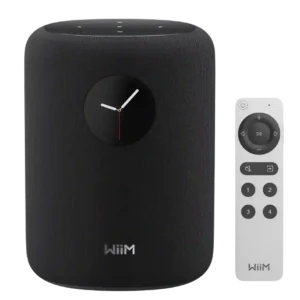
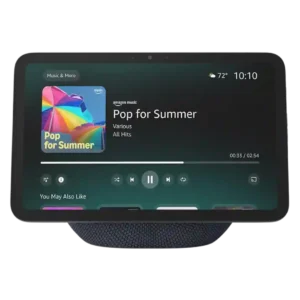
WiiM Sound Smart Speaker
Where It Has the Edge
- Privacy and data is 4.8 vs 2.1. The lack of always-on microphones reduces hands-free convenience but appeals to privacy-conscious users. Push-to-talk voice control lets users...

Scorata scores summarize analyzed review evidence on a 1–5 scale; they are not laboratory measurements or a simple average of customer star ratings. Feature scores summarize the reviews covering that feature. The overall score averages feature scores within each review, then combines review averages. When both expert and customer evidence are available, those two groups receive equal weight. Products can have different review coverage, so small score gaps do not establish a winner.
Recommendations prioritize important features for the category, with a score of at least 3.5, a gap of at least 0.25 points and at least two supporting reviews per product. Features with widely varying scores or broad connectivity contexts are excluded from recommendations. These safeguards do not establish statistical significance.
Quick verdict
The review evidence points to a tradeoff: Privacy and data versus Surround sound simulation and Microphone. Choose according to which strengths matter more to you; the overall score alone does not settle that choice.
Choose WiiM Sound Smart Speaker for Privacy and data.
Choose Amazon Echo Show 8 (4th gen, 2025) for Surround sound simulation and Microphone.
Scores are out of 5. Missing scores mean missing review evidence, not a missing feature.
Single-speaker Bluetooth is straightforward, but one stereo-pair test found it clunky, with playback sometimes jumping between speakers and introducing delay.
Bluetooth is described as part of a faster, more reliable wireless connection setup on the new model.
Voice recognition is a weak spot for music requests in one test, especially with specific band and song names. App control was preferred for precise playback selection.
Voice pickup is consistently strong, including whispered or mumbled requests and commands over background noise. A few Alexa+ mistakes keep recognition from being flawless.
Stereo and multi-speaker pairing is usually quick, intuitive, and stable. There are isolated software and Bluetooth pairing caveats, including device-specific pairing visibility and channel-switching behavior.
Multi-room playback is not completely dependable: one detailed report describes the Show 8 appearing in a group but refusing to join playback.
Bluetooth is useful as a universal fallback and works well for simple single-speaker playback. It becomes less attractive when used instead of Wi-Fi or AirPlay, especially across rooms.
Bluetooth connectivity is described as fast and reliable as part of the fourth-gen wireless upgrade.
Review contexts may differ, so use caution when interpreting the score gap.
The circular touchscreen is more useful than it first appears, giving quick access to playback, sources, presets, EQ, artwork, and settings. A few caveats remain around screen size, placement height, and limited browsing.
On-device usability is mixed. Some reviewers find the touchscreen clean, fast, and easy to customize, while others report confusing smart-home controls, lag, cluttered menus, or frustration with the fixed screen angle.
Alexa and Google-related control is available, but the experience is inconsistent with the idea of a fully hands-free smart speaker. Many setups require the remote, phone, or another assistant device to issue commands.
Alexa and Alexa+ are major strengths, especially for natural commands, smart-home control, and fast responses. Opinions are not unanimous, though: Alexa+ can still mishear, misunderstand, or feel unfinished, and regional availability limits its value.
When triggered through the remote, assistant response can be effectively instant. The bigger limitation is how voice control is initiated, not raw response speed.
Reviewers repeatedly praise the new processor for making Alexa respond faster than earlier Echo Show models, often describing the experience as snappy or exceptionally quick.
For everyday music listening, the WiiM Sound is widely considered engaging, enjoyable, and capable of extended sessions. Its strengths are clearest with vocals and balanced material rather than highly demanding audiophile tracks.
Music playback is a major improvement over older Echo Shows. Reviewers praise the fuller sound, stronger bass, and enough output to make the Show 8 a legitimate everyday music speaker.
Streaming breadth, presets, multi-room management, room correction, and deep settings make the software side a major strength. The overall feature package is unusually broad, though Apple support and hands-free voice remain gaps.
Smart-home capability is one of the strongest points across reviews. Zigbee, Thread, Matter, Omnisense, Visual ID, routines, camera feeds, and touch controls make it a capable household hub.
Network playback is generally stable, with positive reports across Wi-Fi, multi-room use, and Ethernet-backed setups. Wi-Fi 6E and the wired network option give users extra ways to keep streaming dependable.
Wi-Fi 6E is praised for faster, more reliable streaming, with reviewers noting quicker video loading and less waiting for buffering.
The WiiM Sound does not provide standalone Dolby Atmos or virtualized spatial-audio effects. Buyers wanting height or immersive simulation from a single speaker will need another product.
Spatial audio is a standout strength, with reviewers describing the presentation as wider, more immersive, and convincingly room-filling for such a small device.
The 3.5mm analog input and Ethernet jack add practical flexibility for turntables, CD players, computers, and stable networking. Several sources specifically appreciate having connections that competing smart speakers often omit.
The lack of a wired video input is a missed opportunity for users who want to repurpose the display for more sources.
One extended test found the tonal character remained consistent from low through higher listening levels. That makes the speaker suitable for quieter background sessions as well as normal playback.
One reviewer specifically reports that the speaker still sounds fantastic at lower listening levels.
Bass is usually described as tight, controlled, full, and surprisingly capable for the cabinet size. It does not deliver true sub-bass or club-level weight, and some sources want more punch in larger rooms.
Bass is substantially stronger than on earlier Echo Shows, with a punchier, fuller low end from the dedicated woofer. One dissenting review prefers the third-gen model’s bass and depth, so the consensus is strong rather than unanimous.
Two-speaker stereo pairing can create convincing left/right separation, depth, and a wider stage. A single unit is less precise spatially, with some tests finding its image congested or inherently limited.
Stereo effects are audible and reasonably convincing for a single compact device. Reviewers hear left-to-right movement and a broader sound field, though not the separation of discrete speakers.
Most assessments find the sound balanced, clean, powerful, and impressive for the size, with especially good mids and vocals. A smaller group hears a flatter, more congested presentation that trails class leaders for detail and dynamics.
Most reviewers consider the audio a major upgrade: clear, full, and surprisingly room-filling for a smart display. A minority, especially WIRED, prefers the previous generation’s depth and sound quality.
A WiiM Sub Pro can extend the system into 2.1 use and materially increase low-end capability. This is an appealing upgrade path for listeners who want more bass than the compact speaker can produce alone.
The dedicated woofer is credited with a clear improvement in bass impact and low-end control compared with earlier Echo Show designs.
The speaker itself lacks far-field microphones, so it cannot provide the always-listening, hands-free experience typical of many smart speakers. That limits convenience even though the remote can supply a microphone.
Microphone performance is excellent across tests, with strong pickup for calls and voice commands even when music or other ambient noise is present.
With no built-in speaker microphone, the WiiM Sound cannot serve as a convenient hands-free calling speaker. One reviewer specifically missed the ability to take conversations through it.
Video calling is one of the device’s strongest uses: reviewers praise the camera quality, auto-framing, tracking, and clear call experience, with only a few calling the feature merely adequate.
The lack of always-on microphones reduces hands-free convenience but appeals to privacy-conscious users. Push-to-talk voice control lets users invoke assistants more deliberately.
Privacy is the most consistent weakness. Reviewers repeatedly dislike the removal of the physical camera shutter, and one also flags the requirement for Alexa voice recordings to be processed by Amazon.
Google Cast and Google-related integration are frequently treated as strengths, especially for Android or mixed-platform homes. In supported setups, it helps the speaker fit naturally into existing multi-room systems.
The product is a weak fit for Google-centered households; one reviewer explicitly says the Nest Hub is the better choice for Google ecosystem users.
The speaker generally stays composed and clean as volume rises, with several tests noting little or no distortion. One source found distortion possible when both bass and volume were pushed to their limits.
High-volume behavior is mixed. Some reviewers hear distortion, harshness, or buzz as volume climbs, while another found the sound stayed clean without noticeable distortion.
Output is generally strong for the size and can fill small-to-medium spaces well, with several tests calling it surprisingly loud. A few reviewers find it insufficient for larger rooms or high-output listening.
The Echo Show 8 gets impressively loud for its size, with multiple reviewers saying it can fill a kitchen, medium room, or even a large room without needing maximum volume.
Many sources praise clear mids, crisp highs, and strong retrieval of small musical details. The main dissent comes from comparisons with stronger rivals that expose softer treble detail or less precision on complex tracks.
Audio detail is strong, with reviewers hearing distinct instruments and improved fine detail compared with earlier models.
RoomFit is one of the most consistently praised features, with quick calibration and audible improvements to balance and placement-related bass problems. Results can vary by room, and one treated-room test preferred it off.
Environmental audio processing is effective enough to keep playback from developing annoying room reverb in a difficult kitchen acoustic.
Most listening impressions favor the WiiM Sound’s neutral or naturally balanced tuning, with smooth highs and controlled bass. RoomFit and EQ can further shape that balance for different spaces.
Most reviewers describe the tuning as nicely balanced, with clear mids and highs and enough low-end depth. One review found some tracks flat or muddy, so balance can vary with material.
The front display is bright, colorful, customizable, and useful for album art, clocks, playback status, and quick information. It gives the speaker personality and reduces the need to check a phone.
The mute state is easy to recognize, with the prominent visual indicator giving clear confirmation that the camera and microphone have been disabled.
Vocals and midrange clarity are among the strongest sonic traits, commonly described as clean, natural, warm, and well defined. Spoken content also benefits from the clear midrange presentation.
Spoken voices come through clearly, making podcasts and voice-heavy content easy to follow without sounding thin.
Build quality is consistently strong, with sturdy fabric wrapping, solid assembly, good damping, and little unwanted cabinet noise. The speaker feels substantial and appropriately premium.
Build quality feels unusually solid for a screen mounted on a compact speaker base, with reviewers noting little flex and reassuring sturdiness.
A highly versatile first speaker from WiiM, with strong day-to-day usability, broad connectivity, and an unusually useful touchscreen. The main reservations are Apple compatibility, hands-free voice limits, and a few sound-focused dissenters.
The overall verdict is strongly positive across the current-model reviews. Most call it one of the best Alexa smart displays or a clear upgrade, with privacy, price, and software rough edges as the main caveats.
The touchscreen and touch controls are generally fast and responsive, with multiple sources describing immediate reactions to taps and commands. Direct control feels polished rather than sluggish.
The relocated physical buttons are easy to reach and respond quickly in testing.
Small and medium rooms are where the speaker is most consistently comfortable, with enough output for kitchens, studies, bedrooms, and offices. Larger spaces can expose limits in bass extension and maximum room-filling power.
The 8.7-inch size hits a sweet spot for kitchens, offices, bedrooms, and counters: large enough for recipes and video, but compact enough not to dominate the room.
The unboxing impression is straightforwardly positive, with the packaging described as very good.
The packaging receives unusually strong praise for how neatly and securely the device is presented and removed from the box.
The recessed connection area keeps power and other cables visually tidy, letting them route out of the cabinet with minimal visual disruption.
The braided power cable is a small but widely appreciated upgrade, looking and feeling more premium than the older plastic cord.
The design is usually seen as clean, understated, and premium enough to blend into modern rooms. The circular screen adds personality, though a few reviewers find it tacky, plain, or uninspiring when off.
The floating-screen redesign is one of the clearest consensus wins. Reviewers repeatedly call it sleeker, more premium, more modern, or more attractive than the older wedge-shaped Echo Shows.
Setup is repeatedly described as quick and straightforward, often taking only a few minutes from power-on to playback. The app generally guides the process clearly.
Setup is consistently easy and fast, especially for existing Alexa households. QR-code and account-transfer flows make getting the device running notably smoother than older Echo Shows.
Value opinions depend heavily on priorities: the feature set, remote, touchscreen, and ecosystem can justify the price, but the speaker is often more expensive than the Sonos Era 100. Buyers focused only on sound or Apple integration may see weaker value.
Value is generally positive but not unquestioned. Most reviewers think the upgrades justify the higher price, while others prefer the cheaper third-gen model or the slightly pricier Show 11 depending on priorities.
Spotify Connect falls within a broader streaming implementation that worked without a hitch in testing. It is a dependable path for Spotify users even though some app functions still happen in Spotify itself.
Spotify Connect is welcomed as a useful addition that makes direct music casting easier without relying on voice commands.
AirPlay is the clearest recurring weakness: most sources say it is absent and particularly inconvenient for Apple Music and iPhone users. Bluetooth works as a fallback, but is repeatedly described as less seamless.
Accessory compatibility takes a hit: a detailed report says the prior model’s stand and power adapter do not fit or work with this generation.
Google Cast is a strong substitute streaming path for non-Apple households, and one detailed test called its implementation very good. It broadens compatibility with Cast-enabled apps and devices.
The speaker can sound coherent and mature with simpler material, but complex or very loud tracks expose some organizational limits. The most critical tests describe congestion or muddling when arrangements get busy.
Dynamics are mostly solid and controlled for a compact smart speaker, but not universally class-leading. More critical listeners hear reduced attack, punch, or contrast compared with larger or pricier speakers.
The ability to use WiiM Sound units as surround, rear, or center speakers is a major expansion path within WiiM systems. Tests and demonstrations generally find this flexible and immersive.
WiiM’s biggest ecosystem advantage is flexibility: speakers can join stereo pairs, multi-room groups, subwoofer setups, and broader WiiM systems. Most sources see this as a strong long-term expansion path.
The proximity-activated top-control lighting is a small but polished touch, illuminating automatically as a hand approaches. It works well, though one source wished the lights could remain on.
The optional magnetic stand is highly praised for its solid attachment, stability, and easy repositioning, though it costs extra.
Ads and suggested content are a recurring frustration. Reviewers complain about shopping prompts, sponsored cards, or recommendations taking over valuable home-screen space, though some can be disabled.
The included rechargeable remote is widely praised as convenient, comfortable, and more useful than expected. Its biggest downside is that some voice functions depend on having the remote nearby.
The unboxing materials receive positive notice for feeling more sustainable while still looking premium.
At roughly 2.5kg the speaker feels substantial, but one hands-on test still found it easy to move during setup. The weight also helps it feel stable on shelves and counters.
The WiiM Home app is widely praised for stability, speed, and broad control, with several sources calling it excellent. A few isolated issues involve presets, device recognition, or an interface that may feel complex to newcomers.
Sound tuning is a standout strength, with abundant presets plus graphic and parametric EQ controls, often adjustable by source. Tweakers get far more control than on many smart speakers.
One Bluetooth stereo-pair test reported latency when switching between speakers. That makes Bluetooth pairing a poor fit for users sensitive to timing or synchronization.
High-resolution playback up to 24-bit/192kHz is repeatedly presented as a strength, often exceeding competing smart-speaker limits. Support for multiple lossless formats and streaming paths appeals to more demanding listeners.
The new call noise-reduction feature is praised for helping voices stay intelligible in noisy environments.
Reviewers overwhelmingly like the brighter, sharper, more vibrant 8.7-inch screen, and several call it a clear visual upgrade. A few note weaker blacks or merely adequate resolution, but the display is generally a major strength.
Wide dispersion helps the speaker spread sound evenly rather than feeling narrowly localized. It is not a true 360-degree design, but off-axis room coverage is a clear strength.
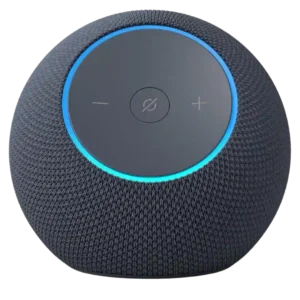
Best for a compact Alexa hub with stronger bass, easy setup, and broad smart-home support. Skip it if you want wired audio, slick manual controls, or a clear full-price upgrade...
Pros: Overall sound quality, Smart features
Cons: Value for money, On-device controls
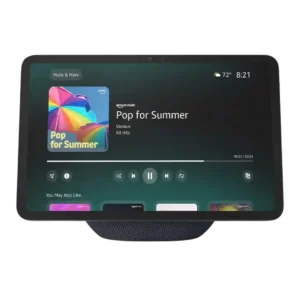
Choose it if you want a larger Alexa smart-home display with excellent sound, strong microphones, and an easy-to-read screen. Skip it if the cheaper Echo Show 8 is large enough,...
Pros: Overall product quality, Display experience
Cons: Value for money, Privacy and data
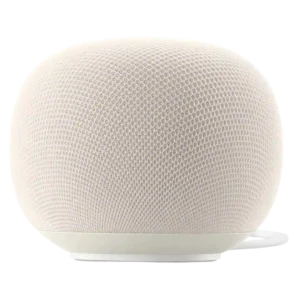
Best for effortless setup, strong microphones, fast Gemini control, and compact room-filling sound inside Google Home. Skip it if you own Nest Audio, prioritize refined music, dislike fixed cables, or...
Pros: Music performance, Voice assistant responsiveness
Cons: Value for money, Bass performance
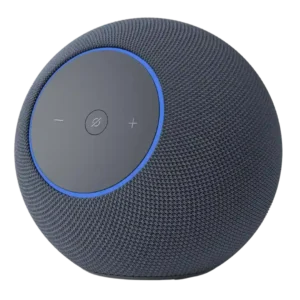
Best for clear, room-filling Alexa audio, easy setup, and smart-home integration in a compact design. Skip it if you own the original Studio, need wired inputs, or want the strongest...
Pros: Overall sound quality, Design and aesthetics
Cons: Value for money, Overall product quality