
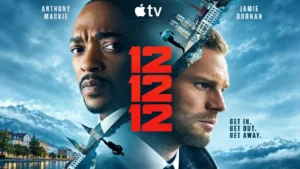
A Thousand Blows, Season 2 Review
Where It Has the Edge
- visual style is 5.0 vs 3.8. The show remains striking to look at, from foggy cobblestones to ornate interiors and Halloween-lit streets.

Scorata scores summarize analyzed review evidence on a 1–5 scale; they are not laboratory measurements or a simple average of customer star ratings. Feature scores summarize the reviews covering that feature. The overall score averages feature scores within each review, then combines review averages. When both expert and customer evidence are available, those two groups receive equal weight. Products can have different review coverage, so small score gaps do not establish a winner.
Recommendations prioritize important features for the category, with a score of at least 3.5, a gap of at least 0.25 points and at least two supporting reviews per product. Features with widely varying scores or broad connectivity contexts are excluded from recommendations. These safeguards do not establish statistical significance.
Quick verdict
The review evidence points to a tradeoff: visual style versus production design. Choose according to which strengths matter more to you; the overall score alone does not settle that choice.
Choose A Thousand Blows, Season 2 Review for visual style.
Choose 12 12 12 for production design.
Scores are out of 5. Missing scores mean missing review evidence, not a missing feature.
The sharpest dialogue is praised for giving the women’s-rights material extra bite and depth.
Expository conversations and strained tough-guy one-liners repeatedly draw criticism for sounding obvious, clichéd or unnatural.
The season closes its central saga in style, giving the ending a satisfying sense of resolution without completely sealing off the future.
Some welcome a strong closing convergence, but several find the last episode cluttered with unlikely or ineffective reveals.
One major action set-piece is criticized for confusing editing that turns the sequence into muddled visual chaos.
The crosscutting can cleverly link actions across different clocks and make chases kinetic. Some feel the constant transitions eventually disrupt the heist’s payoff.
The boxing is especially convincing, with blood, fatigue, and physical wear rendered in grounded detail. Historical dramatization is more flexible, though most reviewers accept the license.
The story asks for substantial suspension of disbelief, especially over the FBI premise, improbable survival and improvised escape plans.
The ending is generally seen as satisfying and offers useful closure, even while leaving room for more story.
The resolution sharply divides opinion: a few celebrate converging timelines and late surprises, while many find the last twists messy or unsatisfying.
Season 2 generally earns praise for pushing its damaged characters through grief, recovery, ambition, and consequence. A few reviews still find some arcs underdeveloped or too functional.
The two leads gain backstory and occasional emotional depth, but a large group of specialists rarely gets beyond functional archetypes. Thin character arcs are among the most persistent complaints.
One episode-one review finds the premiere merely okay, criticizing how little it seems to accomplish.
The debut showcases a bold vault image and glossy chase action. It impresses some instantly, but others say the first episode fails to establish people worth following.
The season is broadly viewed as strong, darker, and more character-driven, though not always as fresh as the debut. The biggest criticisms are conventional choices, thin stretches, and a few too-neat resolutions.
The high-stakes heist and hunt are pleasurable genre material, but the script’s familiarity and implausible late turns prevent wider agreement.
The season’s treatment of colonialism, racism, class, and immigrant experience adds weight beyond the crime and boxing plot. Reviewers especially respond to Hezekiah’s Jamaican history and the power dynamics around him.
International casting adds authenticity to the far-flung setting, although one critique finds the commentary about race clumsy and ill-integrated.
The late-season twist earns direct praise as a strong payoff even from a reviewer who prefers Season 1 overall.
Reversals and delayed context can generate satisfying surprises, but critics split over whether the late-season twists grow arbitrary.
The season repeatedly lands hard emotionally, from heartbreaking storylines to character breakdowns and confrontations that reviewers found genuinely moving.
Family sacrifices, grief and the pursuit’s personal motives produce moving passages for some, but others struggle to care about insufficiently developed characters.
The best episodes create real white-knuckle tension, especially during sieges, gang clashes, and escalating schemes. Even critics of the pacing often acknowledge the season becomes gripping.
The confined robbery, clock-driven chase and rolling obstacles create genuine tension, yet foreknowledge of certain escapes weakens suspense for some.
The overall pace divides opinion: some enjoy the more patient, character-led approach, while others find the opening slow or the season overly setup-heavy.
A slick start is followed by divisive middle episodes and a finale that some find rushed or overstuffed. Others report an increasingly gripping second half.
The script is mostly solid, but one review criticizes it for skipping over details too conveniently.
The heist machinery is often impressively assembled, but formulaic characterization and exposition-heavy dialogue are repeated concerns.
Erin Doherty’s natural cockney-adjacent speech is presented as an excellent fit for Mary Carr, helping the character feel convincing rather than performed.
Jamie Dornan’s New York accent earns a qualified compliment as a decent fit for the character.
One reviewer repeatedly notices green-screen work, saying it weakens the otherwise convincing period sets.
A conspicuous avalanche sequence is criticized for looking and behaving implausibly beside the show’s otherwise restrained effects work.
The ensemble is praised for working as a true collaborative unit, helping the central trio and surrounding cast feel connected rather than isolated.
The antagonism between the FBI agent and thief gives many scenes urgency, and the Galvin brothers can feel convincingly combustible. Others find the romantic and investigative pairings underdeveloped.
The fights and gang clashes land hard, with several reviewers calling them brutal, visceral, and thrilling. Even with less boxing overall, the action that remains is consistently well received.
Car and foot chases and gunfights generate some genuine thrills, but critics disagree on whether they remain impressive later in the season.
The plotting is a mixed point: some praise a more streamlined story, while others find parts muddled, convenient, or slow to establish their purpose.
Timeline labels and careful sequencing make the complicated chronology intelligible for many viewers, while a vocal minority still finds the plotting exhausting or confusing.
Season 2 still has inventive ideas, but multiple reviewers think it feels less fresh, less surprising, or more conventional than the first season.
The three-clock concept feels inventive to some but cosmetic to others, who find the underlying one-last-job story familiar.
The direction is praised for confident atmosphere, grounded physicality, and attention to what violence leaves behind rather than spectacle alone.
Polished coverage, well-staged pursuits and assured early episodes are regularly praised. The final stretch receives more divided responses.
The episode-to-episode rhythm is uneven: several reviews cite a slow or dragging start, but many say the pace improves sharply once the season gets moving.
Some episodes fly through tense reversals, but switches back to already-known events or exposition can halt the momentum.
Six episodes is the clearest recurring structural complaint. Multiple reviewers feel the season ends before all of its storylines have enough room to develop.
Eight episodes give the format room to expand, though several critics say the same caper would work better in a much shorter format.
The camera work is repeatedly singled out as a strength, especially the close, punishing boxing coverage and foggy East End imagery.
Elegant European vistas, tight vault framing and crisp compositions receive remarkably consistent praise, even in otherwise negative verdicts.
The six-episode run is easy to burn through in a weekend, with one reviewer explicitly recommending it as a binge.
The unfolding mystery, cliffhangers and interconnected timelines can make the series hard to stop watching, even if the premise is repeatedly explained.
One sharply negative take finds the premiere poorly structured, with many scenes but too little meaningful progress.
The hour-by-hour vault segment and day-by-day manhunt do not always sustain equal urgency; the aftermath can overshadow the other threads.
Fans of historical crime drama are especially well served, with the period setting, underworld politics, and boxing giving the season a distinctive flavor.
One enthusiastic view hails the series as an exceptional modern heist thriller, setting a high benchmark for the form.
The season is much darker overall, but the Forty Elephants still provide some welcome levity.
A vault-repair scene earns welcome laughs from the contrast between a trapped specialist and instructions delivered remotely.
Interest in another season is high, with several reviewers explicitly saying they would return for a third round.
The setup and developing leads leave some reviewers interested in more installments, particularly after the back half.
Federico Jusid’s score is praised for its propulsive, mechanical pulse and for keeping tension moving forward.
The music propels the tension with an energetic pulse that links events across shifting timelines.
The lead trio are repeatedly identified as the heart of the show, with reviewers praising their chemistry, intensity, and emotional conviction.
Anthony Mackie and Jamie Dornan are often praised for screen presence and opposition, but some critics find both roles too narrow to show their full range.
The supporting cast receives strong notices, with several secondary performances singled out as standouts rather than filler.
Members of the international ensemble make memorable impressions, particularly the vault specialist and bank insider. Much of that talent is seen as underused.
The cast is the season’s clearest strength, with the leads repeatedly praised as commanding, convincing, and emotionally layered. Even more critical takes say the performances keep the drama gripping.
The star performances are a major draw, with particular praise for Dornan’s committed work and the central pair’s energy.
The show remains striking to look at, from foggy cobblestones to ornate interiors and Halloween-lit streets.
The series has a sleek, cinematic look and striking vistas, though one critic wishes each timeline had a more recognizable visual identity.
The East End streets, pubs, and interiors are widely praised as richly realized and atmospheric. The only notable complaint is that some digital-looking backgrounds undercut the otherwise strong sets.
The European cityscapes, mountain scenery and complex vault spaces give the series a premium geographical sweep.
The Victorian East End feels increasingly lived-in, with rivalries, streets, institutions, and social pressures forming a convincing world around the characters.
The elaborate bank, subterranean operation and international chase create a setting one viewer particularly enjoyed exploring.
Most reviewers find the season highly watchable, gritty, and fun despite its darker mood. A small minority find parts of it shallow or weak.
This is often considered a glossy, fun genre ride with ample action. Those less won over by the mechanics find the padding and increasingly familiar twists frustrating.
Mary Carr is a major draw for some viewers but a serious irritant for at least one critic, making character appeal unusually polarized.
Paul can be resourceful and sympathetic, but some viewers find him bland, while Jack’s abrasiveness divides sympathies. Bobby’s disruptive behavior is especially polarizing.
The vault’s cramped confines and the relentless chase create a taut, sometimes nerve-racking mood. The European settings broaden the sense of danger without losing the claustrophobia.
Despite the recognizable ensemble, a skeptical appraisal finds the lead casting poorly suited to the characters’ obsessive intensity.
Several capable supporting performers, especially members of the heist crew, receive far less attention than their intriguing roles warrant.
The back-to-back production pays off in a transition that feels unusually seamless, with Sugar’s characterization in particular reading as a genuine continuation rather than a reset.
The strongest drama comes from the characters’ battles outside the ring, where grief, guilt, family damage, and survival carry real weight.
The ensemble balance is uneven. Some reviewers like how the season spreads attention across its trio, while others think Mary dominates and Sugar, Treacle, or the boxing side get shortchanged.
Variable runtimes allow individual story arcs room to breathe rather than forcing each chapter into the same strict duration.
The introductory 12/12/12 rule and repeated explanations become tiresome to several critics, particularly across a binge.
The brothers’ loyalty and resentment and Paul’s desire to protect his family offer genuine dramatic potential. Some enjoy these stakes, while others think the show repeats rather than develops them.
The logistics of crew recruitment, alarms, tunnels and getaways can be intricate and rewarding to follow. Others fault convenient solutions and the way early outcomes sap the robbery of jeopardy.
The season’s ideas about colonialism, racism, gender, and class are presented as part of the drama rather than detached commentary, giving the period story contemporary resonance.
Revisiting known outcomes can feel redundant, although a more favorable assessment says new obstacles keep the episodes distinct.
Several outcomes are shown early, weakening the peril of the earlier planning and execution scenes even as the pursuit remains tense.
Three braided clocks—planning, robbery and pursuit—are the show’s signature gamble. Some find the clever reveals and visual guidance invigorating; others think jumping ahead spoils suspense and creates needless complexity.
The contortionist emerging from a safety-deposit box is a widely admired, immediate hook, praised for its audacity and visual ingenuity.
Most reviews praise the grime, costumes, sets, and historical texture as immersive and authentic. One reviewer is less convinced, arguing that visible green-screen work weakens the illusion.
Swiss banking and hidden oligarch money offer a promising opening for examining wealth and power, but the drama barely follows up on those implications.
The relatively quick one-year turnaround is welcomed, especially in a streaming landscape where long gaps between seasons are common.
The boxing itself is praised, but several reviewers miss the heavier ring focus of Season 1. For some, the reduced boxing opens space for richer character drama; for others, it leaves the sports side undercooked.
The Holy Ghost nickname and religious allusions suggest guilt and justice, but the symbolism is criticized as more atmospheric than meaningful.
Reviewers repeatedly praise the move beyond simple boxing drama into grief, moral ambiguity, colonialism, racism, class, gender, and survival.
The numerical title makes the central rule unmistakable but strikes at least one reviewer as an irritating gimmick.
The darker second season keeps the rough charm of the first while making grief and consequence feel heavier, a shift one reviewer calls an ideal progression.
A malicious, sexist gang leader is singled out as an effective supporting antagonist, giving the early conflict extra bite.
The season broadens its reach beyond boxing devotees, and reviewers say its historical-crime focus should especially appeal to viewers who value character, atmosphere, and moral ambiguity.
Early critical reception is described as very strong, with the season reported as matching or slightly exceeding the first season’s acclaim.
The period costumes are consistently praised as sumptuous and convincing, helping sell the Victorian setting.
Even underground and at night, the photography retains unusually rich, readable detail rather than losing the action to darkness.
The extensive locations and elaborate set pieces look expensive and cinematic, a point of agreement even among skeptical viewers.

Best for sharp adult humor, magnetic chemistry and a deeply satisfying farewell. Skip it if familiar will-they-won’t-they plotting or deliberately messy leads are dealbreakers.
Pros: humor, writing quality

Choose Widow’s Bay for its dark laughs, richly haunted island and memorable ensemble. Skip it if you need straightforward scares, rapid answers to every mystery or a completely resolved finale.
Pros: humor, genre satisfaction
Cons: ending satisfaction, season pacing

Choose Season 15 for warm, character-driven comedy, meaningful growth, and a finale that rewards longtime fans. Skip it if the short binge format, uneven replacement voices, or occasional clumsy commentary...
Pros: franchise connection, character development

Best for sharply acted, compassionate, high-pressure hospital drama. Skip it if graphic procedures unsettle you or you need a neatly resolved season finale.
Pros: character development, acting performance
Cons: character consistency, dialogue quality