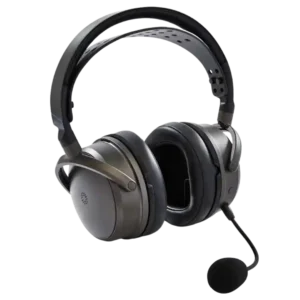
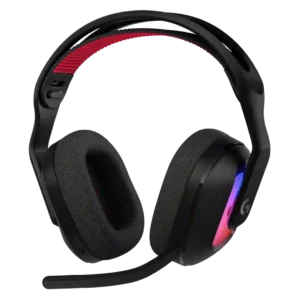
Audeze Maxwell 2
Where It Has the Edge
- Firmware update support is 3.9 vs 3.5. Firmware has already improved bass and microphone behavior, showing that Audeze can correct issues after launch. The update...

Scorata scores summarize analyzed review evidence on a 1–5 scale; they are not laboratory measurements or a simple average of customer star ratings. Feature scores summarize the reviews covering that feature. The overall score averages feature scores within each review, then combines review averages. When both expert and customer evidence are available, those two groups receive equal weight. Products can have different review coverage, so small score gaps do not establish a winner.
Recommendations prioritize important features for the category, with a score of at least 3.5, a gap of at least 0.25 points and at least two supporting reviews per product. Features with widely varying scores or broad connectivity contexts are excluded from recommendations. These safeguards do not establish statistical significance.
Quick verdict
The review evidence points to a tradeoff: Firmware update support versus Connectivity versatility and Equalizer customization. Choose according to which strengths matter more to you; the overall score alone does not settle that choice.
Choose Audeze Maxwell 2 for Firmware update support.
Choose Logitech G Astro A20 X for Connectivity versatility and Equalizer customization.
Scores are out of 5. Missing scores mean missing review evidence, not a missing feature.
The Maxwell 2’s planar drivers deliver exceptional clarity, detail, and resolution across games and music, making sound quality its most consistent strength. A few listeners prefer a more visceral or less analytical presentation, but fidelity is overwhelmingly praised.
Gaming audio is usually clear, detailed, and immersive, especially after EQ, but the default tuning divides opinion. Some find it excellent immediately, while others call it flat, dull, or below expectations for the price.
The tuning is widely described as balanced, natural, and reference-like rather than heavily colored. That accuracy suits detail-focused listening, though bass- or excitement-seeking users may want EQ.
Measured tonal balance departs noticeably from the reviewer’s target, especially through the treble. The stock response can make bass feel muddier and vocals less detailed than intended.
The plush closed-back pads form a strong passive seal that blocks keyboards, chatter, and other everyday noise well. That isolation is useful at a desk, though people who prefer hearing their surroundings may find it too closed off.
Passive isolation is inconsistent, ranging from adequate in quiet rooms to almost ineffective in noisy environments. The breathable fabric pads favor awareness and comfort over a tight acoustic seal.
The closed-back design still produces an unusually spacious stereo field with convincing width and depth. Games and layered music benefit from the open-feeling presentation and easy placement of sounds.
Soundstage is serviceable to strong depending on the listener, with good left-right spread for gaming. Some experts still find it narrower than open-back or more premium alternatives.
Competitive cues such as footsteps remain clear even when explosions and other low-frequency effects pile up. That cue separation gives the headset a strong advantage in shooters.
Footstep cues are usually easy to hear and useful for competitive shooters, especially with the right EQ. Dense mixes can sometimes mask subtler steps, so the advantage is not absolute.
The standard launch model does not include ANC, and several buyers see that as a notable omission at this price. Some specifically suggest waiting for the announced ANC version if active isolation matters.
Noise cancellation is not a consistent strength: several people expected more isolation or noted that true ANC is absent. A few customers nevertheless described the perceived noise reduction as effective.
Bass is clean, tight, and well controlled, yet opinions split on how much physical sub-bass slam it delivers. EQ and firmware updates can add weight without much distortion, but some listeners still find deep rumble too restrained.
Bass is highly dependent on tuning and fit: some hear smooth, punchy lows, while others find it weak, overemphasized, or lacking deep rumble. EQ can improve it substantially.
Native stereo imaging is already so precise that spatial processing can be impressive without being essential. Dolby Atmos or platform 3D modes can add immersion, though at least one listener preferred the natural stereo presentation.
Spatial presentation is a strong gaming feature, helping place enemies and environmental sounds convincingly around the player. It is particularly effective in immersive and competitive titles.
Directional imaging is exceptional and one of the Maxwell 2’s defining strengths. Footsteps, reloads, vertical movement, and distant effects are easy to locate even in crowded competitive mixes.
Directional cues are a strong gaming advantage, with footsteps, gunfire, and enemy locations usually easy to place. Rear positioning and very busy sound mixes can be less precise for some listeners.
FILTER noise reduction can suppress keyboards and loud background sounds effectively, especially on lower settings. Stronger processing can raise volume, clip, compress, or robotize the voice, so the best setting depends on the environment.
Noise handling ranges from excellent with Blue VO!CE filters enabled to overly sensitive in untreated rooms. Background fans, keyboards, and desk noises can still bleed through depending on settings and mic position.
Reliability is the biggest customer-side concern, with reports of white noise, buzzing, disconnects, freezes, mic glitches, and firmware-related behavior. Some problems improve after updates or replacements, but the frequency of failure reports makes consistency a real caveat.
Many units work flawlessly in daily use, but there are meaningful outliers involving battery failure, charging problems, disconnects, and intermittent crackling. Long-term reliability is therefore less consistent than the headset’s day-one performance.
The premium price is easier to justify for buyers prioritizing top-tier sound, battery life, and build quality. Value drops sharply for original-Maxwell owners, since many reviews see the second generation as a modest sidegrade rather than a must-have upgrade.
Value is strongest for people who will actually use PLAYSYNC across two systems; in that use case the convenience can justify the price premium. Single-platform players often see cheaper alternatives or the G522 as the smarter buy.
This is one of the clearest drawbacks: the Maxwell 2 cannot mix Bluetooth and 2.4GHz dongle audio at the same time. Bluetooth can coexist with wired USB or analog audio, but fully wireless two-source use remains awkward.
The biggest connectivity limitation is that Bluetooth and LIGHTSPEED cannot play at the same time. Switching is fast, but users who want phone audio mixed with console or PC sound may find this restrictive.
Firmware has already improved bass and microphone behavior, showing that Audeze can correct issues after launch. The update process and occasional regressions still create frustration for some owners.
Firmware updates can improve sound and resolve initial issues, but updating may require connecting directly to a PC. That extra step is useful when it works but not especially seamless.
Magnetic earpads pop on and off with very little effort, making replacement and aftermarket swaps unusually convenient. This is widely treated as a meaningful quality-of-life improvement.
Removable ear pads are appreciated for cleaning, replacement, and extending the headset’s useful life. Owners who care about maintenance see this as a meaningful practical benefit.
The larger pads usually create a secure over-ear seal that supports bass and passive isolation, but the headset’s mass can make it shift or slide during head movement. Fit therefore depends heavily on head shape and strap position.
Fit is the biggest comfort variable: medium and larger heads tend to fare well, while smaller heads can experience slipping and a weak seal. A loose fit can also change bass response and positional consistency.
The reduced swivel is a step backward for storage and around-the-neck use. The cups no longer rotate fully flat, making the headset bulkier to pack than the original Maxwell.
The earcups offer useful tilt and swivel for fitting different head shapes. That adjustability helps comfort even though the headset does not fold flat.
Android works across the headset’s supported wireless options, but dongle volume can be much lower than expected on phones and may need to be pushed to maximum. The platform is supported, though the experience is not flawless.
The mobile control app supports Android and is particularly useful for console-first setups that still need EQ, mic, and lighting access. Desktop G Hub remains more powerful.
The roomy pads and moderate clamp work especially well with glasses, with multiple users reporting little extra pressure or sealing trouble. The fit is notably accommodating around eyewear.
Glasses comfort is mixed: some users barely notice interference and praise the light clamp, while others report pressure and soreness. Fit seems especially dependent on head size and pad position.
The wireless connection is usually stable at a desk, but physical stability is more mixed because the heavy cups can shift with movement. Some users report no dropouts while others encounter disconnects or sliding fit.
Wireless performance is usually stable and dependable, with many users reporting clean connections and no dropouts. A small minority reported serious disconnects or intermittent crackling after months of use.
Portability is poor for such a large, heavy headset. The cups do not fold or lie fully flat, so travel and compact storage are noticeably less convenient.
It can travel and work over Bluetooth or USB, but dependence on the base station for full wireless functionality makes it less travel-friendly than ordinary Bluetooth headphones. It also does not fold flat.
Range is adequate for normal desk and room use but inconsistent beyond that. Some units hold through nearby rooms, while others drop after roughly 10–12 feet or when moving between floors.
Range is generally excellent, staying connected across rooms, around a house, and even through walls in some tests. It compares favorably with several older wireless headsets.
Sidetone is adjustable from the headset or app and can be useful for monitoring your voice, with improved behavior over the original in some tests. Opinions vary on its sound and usefulness, so many users leave it low or off.
Sidetone is one of the weaker areas, with complaints about missing or unsatisfactory mic monitoring. In some setups it only becomes available after extra app configuration.
The USB-C dongle delivers responsive low-latency wireless audio, but source priority, mode switching, and occasional connection quirks can make it less seamless than expected. Some users also find its range only average.
The compact PLAYSYNC base is central to the headset’s convenience and is much smaller than many multi-system docks. Its light weight can make it slide around, and cable placement can become awkward when systems are far apart.
Voices, dialogue, instruments, and game effects come through with excellent definition and natural body. The clear, articulate mids also help dense mixes stay intelligible during busy gameplay.
Midrange performance is mixed: voices and game detail can sound clean, but several experts hear missing detail or recessed presence in the stock tuning. EQ can improve vocal naturalness and balance.
The removable boom mic is handy for solo play, videos, travel, or public use because it reduces clutter when voice chat is unnecessary. It also makes the headset look less overtly gaming-focused.
The removable boom is convenient for solo play, travel, and casual listening. Some users would prefer flip-to-mute, and the lack of dedicated storage makes the mic easier to misplace.
The detachable boom mic ranges from very clear and near broadcast-like to compressed, distorted, or disappointing depending on software and firmware. In-game chat often fares better than Discord, making mic quality one of the more mixed areas.
The detachable 48 kHz boom mic is one of the most consistently praised parts of the headset, often sounding unusually full and clear for wireless gaming gear. A few users found it too sensitive or merely average without tuning.
The fixed-hole suspension strap holds its setting securely but is cumbersome to adjust and offers limited fine tuning. Users between sizes or sharing the headset may find the three-position approach especially frustrating.
The suspension band works well for many medium and large heads, but its limited adjustment points can be a poor fit for smaller users. Several people would prefer a more conventional sliding system.
PC, PlayStation, Switch, Mac, and mobile coverage is broad, with the correct console model extending support to Xbox or PlayStation. Moving between devices is generally easy once the connection method is configured.
It is especially strong for mixed setups spanning PC, Xbox, PlayStation, Switch, and mobile devices. The single-version approach avoids needing separate console-specific headset variants.
The Maxwell 2 covers USB-C dongle, Bluetooth, USB wired, and 3.5mm analog use across many device types. That flexibility is excellent, although the rules for combining sources are more restrictive than the connection list suggests.
PLAYSYNC is the headset’s defining strength, making it quick and painless to jump between two gaming systems while also offering Bluetooth and USB options. The main tradeoff is that Bluetooth cannot mix simultaneously with LIGHTSPEED audio.
The included presets offer useful starting points for immersive listening, bass boost, and competitive play. Their usefulness varies by game, and some users prefer custom EQ because certain presets do not change key cues enough.
The included and community EQ presets are useful starting points, particularly for FPS, bass, and media listening. Default profiles are not universally loved, and several users get better results from custom or community tuning.
Volume behavior is less consistent than the headset’s overall fidelity. Some users find mobile or wireless output quieter than expected, while others report enough level for normal listening.
Maximum loudness is a recurring complaint, with several users wishing the headset could play louder or deliver stronger chat volume. The restrained output can be a downside for listeners who prefer high volume.
Overall sentiment is positive because the sound, imaging, battery life, and build are genuinely high-end. Satisfaction falls for buyers who cannot tolerate the weight, need better dual-wireless behavior, encounter reliability problems, or already own the original Maxwell.
Overall sentiment is strongly positive for multi-platform gaming, with convenience, comfort, mic clarity, and battery life doing most of the work. Negative experiences cluster around fit, default sound tuning, Bluetooth limitations, and a handful of reliability failures.
The large, plush earpads are generally soft, roomy, and supportive, with enough space for full over-ear fit. Heat buildup varies by user, but padding quality itself is usually praised.
The fabric memory-foam pads are usually praised as soft, breathable, and cooler than leatherette. Some users find the foam too firm, scratchy, hot, or insufficiently plush for long sessions.
The top end is detailed and airy for many listeners, adding definition without masking the mids. Others hear the stock tuning as sharp, sibilant, or metallic enough to become fatiguing over time.
Treble can be crisp and non-fatiguing, but several experts found it recessed, uneven, or lacking sparkle in the default tuning. EQ is often needed to restore detail without making the sound harsh.
The physical game/chat wheel is convenient on supported platforms and gives quick control without opening software. Its usefulness is reduced on PlayStation, where the mix may need to be handled through console settings.
The onboard game/chat mixer is very useful on Xbox and PC and can quickly prioritize teammates or game audio. A few owners found the rocker easy to hit accidentally or reported it failing outright.
Wireless response is consistently quick, with little or no noticeable delay over the 2.4GHz dongle and surprisingly good Bluetooth latency in some tests. It suits fast-paced games well.
LIGHTSPEED is consistently described as effectively lag-free for gaming, with quick source changes and tight response. Bluetooth can show more noticeable delay in video use.
The box provides the main cables, USB adapter, wireless dongle, and detachable boom mic needed for the supported connection modes. The bundle is practical and makes switching between devices easier.
The bundle is well organized and includes useful cables and the PLAYSYNC base, but one expert wanted a power adapter and an additional USB cable. It is comprehensive without feeling luxurious.
Separation is a standout strength: individual effects, voices, and musical layers remain distinct even when the mix gets chaotic. That clarity is especially useful for competitive shooters and dense music.
Separation is a clear gaming strength, keeping gunfire, footsteps, abilities, and ambient effects distinct in busy scenes. This supports accurate tracking in competitive play.
Digital USB playback is a major strength, supporting clean 24-bit/96kHz audio through the headset’s internal processing. It helps the Maxwell 2 function as a serious music-listening headset as well as gaming gear.
High-resolution 24-bit/48 kHz playback on PC is a welcome strength for users who want more than basic wireless game audio. Console output is more limited.
Presentation feels appropriately premium, with the headset and accessories arriving in a polished, high-end package. The unboxing experience reinforces the solid build and premium positioning.
Packaging is generally neat, organized, and increasingly eco-conscious, with accessories separated clearly and reduced plastic. Presentation receives positive marks even when extras are sparse.
Replaceable magnetic earpads make long-term maintenance and comfort customization simple. Being able to swap worn or alternative pads extends the headset’s practical life.
Removable earpads make cleaning and eventual replacement easier. That helps preserve comfort and usability over longer ownership.
USB-C is especially valuable for wired listening because it carries a clean digital signal into the headset and supports high-resolution playback. It is also the preferred wired option over the analog jack for maximum fidelity.
USB-C adds useful flexibility for wired audio and charging, and at least one buyer specifically valued that option. It helps keep the headset usable even when wireless power is depleted.
At roughly 560g, the Maxwell 2 is exceptionally heavy and the weight is its most repeated physical drawback. The wider suspension strap distributes the load better, but many users still notice neck, jaw, or head fatigue during long sessions.
The sub-300 g design feels notably light and is frequently credited with reducing fatigue during long sessions. For a few users, the very light, loose fit can also make the headset shift around.
The recessed boom-mic socket guides the connector into a snug, secure fit with little ambiguity. It is a small but well-executed physical detail.
The keyed mic jack works, but there is no protective cover or dedicated place to store the detached boom. That makes the small microphone easier to lose.
Clamp is usually described as moderate or light enough to avoid excessive ear pressure, and several glasses wearers appreciate the fit. A few users experience more squeeze or instability depending on head shape.
Clamp pressure is generally light and comfortable, helping with long sessions and glasses. The downside is that the headset can feel less secure on smaller heads or during quick movement.
Comfort is highly fit-dependent. The wider strap and plush pads let some people wear the headset for four to six hours comfortably, while others need breaks after one or two hours because of weight, warmth, or pressure.
Comfort is generally a major strength thanks to low weight, breathable fabric, and a suspension-style fit. Head shape matters, though: some smaller-head users and a few experts reported slipping, pressure points, or discomfort after extended wear.
Construction is consistently praised as sturdy, premium, and tank-like, with metal components and little creaking or flex. The substantial materials inspire confidence, even though they contribute to the headset’s heavy weight.
The lightweight plastic frame is usually flexible and solid enough for everyday use, but it does not feel especially premium. Some buyers describe it as cheap or plasticky, while others praise its durability and sturdy feel.
The look is understated, mature, and more audiophile than typical RGB-heavy gaming gear. Some love the premium metal styling and removable plates, while others find the bulky shape plain or generic.
The modern, lightweight look and tasteful RGB are broadly liked, especially in the white colorway. Some Astro fans dislike how closely it resembles the G522 and feel the brand has lost part of its visual identity.
Basic pairing and setup can be straightforward, but firmware, dongle modes, and app recognition introduce friction for some owners. The experience ranges from plug-and-play to surprisingly convoluted when troubleshooting is needed.
Most setups are plug-and-play and PLAYSYNC switching is easy once configured. A minority encountered long Bluetooth pairing attempts, firmware steps that required a PC, or awkward audio-routing quirks.
The recessed dials and physical controls are generally functional, but the tiny recessed mic-mute switch receives repeated criticism for being hard to find and operate quickly. Multi-function wheels also take some learning.
Most physical controls are easy to reach and tactile, including mute, volume, and source switching. Some users dislike the placement of the wheel and buttons because they can be bumped by a chair, hood, or headrest.
Call quality can be clear and easy to understand when the microphone behaves normally. It is suitable for everyday voice use, but the headset’s mic performance is more variable than its playback quality.
Voice communication is one of the headset’s strongest uses, with crisp, full pickup that can approach a decent USB mic for chats and casual streaming. Software presets can add even more polish.
The 10-band EQ is flexible and the planar drivers respond very well to aggressive tuning without falling apart. Multiple custom profiles make it easy to add bass or tailor the sound, though some users want deeper parametric control.
EQ control is unusually deep for a gaming headset, including advanced and community-created profiles for both headphone and mic sound. Tuning is often the key to turning the merely decent default sound into something much better.
Bluetooth is convenient and broadly useful for phones and secondary devices, with generally good sound and easy pairing. Its automatic priority over the dongle can interrupt gaming audio, which makes source behavior frustrating for some setups.
Bluetooth is convenient for phones, calls, and casual listening, but it is not the headset’s strongest connection mode. Some users experienced setup quirks, crackling, or app handoff issues that did not appear over LIGHTSPEED.
The redesigned Audeze app is cleaner, faster, and easier to navigate than the old software, with straightforward access to EQ, sidetone, mic filtering, and updates. A few users still encounter connection or recognition quirks.
G Hub is a major strength on desktop, offering detailed audio, mic, lighting, battery, and profile controls. The mobile app is useful on consoles but more limited and occasionally less intuitive.
USB-C charging is simple, and fast charging adds many hours of playback from a short top-up. Combined with the large battery, charging rarely interrupts normal gaming routines.
USB-C charging is generally simple and can be used while playing, with some tests finding recharging reasonably quick. A small number of units suffered serious charging faults.
Battery life is exceptional, commonly lasting around 80 hours or more and often stretching through a week or two of regular use. It is one of the headset’s strongest practical advantages.
Battery life is a standout feature, commonly landing around 40 hours with RGB and stretching toward 90 hours with lighting off. A few customer units developed battery or charging failures after several months.
The lack of aptX is a small codec gap rather than a deal-breaker. The rest of the wireless codec selection is strong enough that it matters mainly to buyers specifically invested in aptX.
Console support depends on buying the correct version, and some controls do not work identically everywhere. PlayStation game/chat mixing and cross-console wireless restrictions are the most notable limitations.
There is no charging stand or dock, which disappointed at least one buyer coming from a headset that included one. Charging is handled by cable instead.
The built-in microphones are convenient when the boom is removed, but their sound quality is clearly weaker. They are adequate for casual calls or quick communication, while serious voice chat benefits from the boom mic.
LDAC is a welcome option for higher-quality Bluetooth listening on compatible devices. It strengthens the Maxwell 2’s appeal as a music headset as well as a gaming headset.
The planar drivers generally stay composed and detailed when pushed louder, with little muddiness or distortion. A few users still encounter harshness or source-dependent limitations at higher levels.
Removable magnetic outer plates add easy cosmetic customization and can shave a little weight when left off. The feature is fun and practical, though the redesigned controls needed to accommodate it are not universally liked.
The microphone material can discolor or stain over time, creating a cosmetic mismatch with the headset. This was a specific durability concern on one long-term unit.
Xbox support is a notable strength when it works, including easy use within the same multi-platform setup. One customer, however, reported that their unit would not connect to Xbox at all.
Bluetooth can show slight lip-sync delay in podcasts or movies when watched closely. LIGHTSPEED is much tighter and is the better choice for video-sensitive use.
One owner found that people nearby could clearly hear what was playing. That makes the headset less private in shared rooms.
Auracast is part of a strong modern Bluetooth feature set and adds to the headset’s wireless flexibility on compatible devices. It is praised alongside LDAC and LE Audio rather than treated as a headline reason to buy.
Bluetooth codec support is unusually broad and is praised for covering modern high-quality options such as LDAC, LE Audio, and Auracast. The main omission is aptX.
Bluetooth listening is hampered by the lack of basic playback controls such as play or pause. This makes the headset less convenient away from a computer or console.
The LIGHTSYNC lighting is widely liked for adding tasteful visual flair, with strong control through G Hub. It can shorten battery life substantially, and a few software quirks make fully disabling it less straightforward.
Recycled plastic and reduced single-use packaging are meaningful positives, especially for a mainstream gaming headset. The lighter material strategy also supports the headset’s low weight.
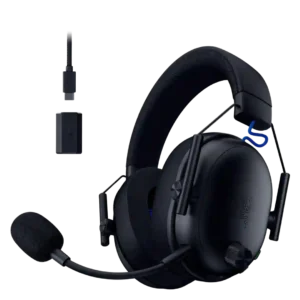
Best for excellent game audio, long-session comfort, clear voice chat, strong battery life, and low-latency wireless. Skip it if you need very high volume, flawless software, or zero tolerance for...
Pros: Midrange clarity, Treble clarity
Cons: Volume output, Console compatibility limitations
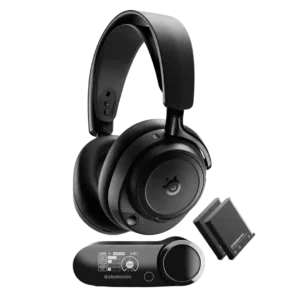
Choose the Arctis Nova Elite if you want top-tier wireless sound, ANC, hot-swap batteries, and multi-device mixing. Skip it if $600 feels excessive, you game on one console, or tight/heavy...
Pros: Maximum volume clarity, Multipoint connectivity reliability
Cons: Portability/foldability, USB-C
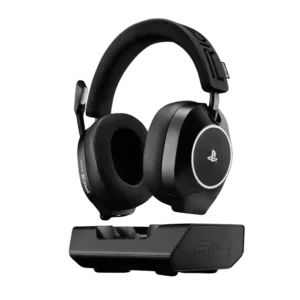
Best for sharp gaming audio, long battery life, an excellent dock, and strong value. Skip it if you need ANC, a detachable mic, maximum console volume, or seamless PS5/Xbox switching.
Pros: Spatial audio, Positional audio accuracy
Cons: Carry case quality, Detachable microphone convenience
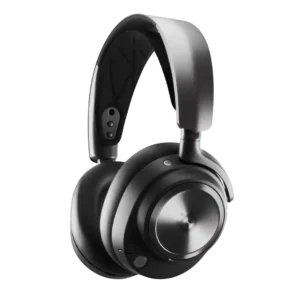
Choose the Arctis Nova Pro Wireless for premium gaming audio, hot-swappable batteries, broad device support, and deep EQ control. Skip it if the high price, mixed mic quality, or uneven...
Pros: Charging, Spatial audio
Cons: Hinge durability, Smudge resistance