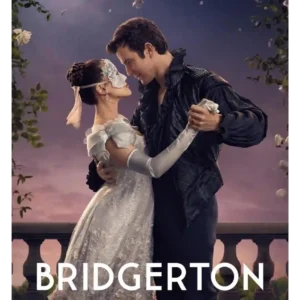

Bridgerton, Season 4
Where It Has the Edge
- supporting cast performance is 4.9 vs 4.5. Supporting performers receive strong notices, particularly in the Penwood, Francesca/Michaela, Violet and Lady Danbury storylines.

Scorata scores summarize analyzed review evidence on a 1–5 scale; they are not laboratory measurements or a simple average of customer star ratings. Feature scores summarize the reviews covering that feature. The overall score averages feature scores within each review, then combines review averages. When both expert and customer evidence are available, those two groups receive equal weight. Products can have different review coverage, so small score gaps do not establish a winner.
Recommendations prioritize important features for the category, with a score of at least 3.5, a gap of at least 0.25 points and at least two supporting reviews per product. Features with widely varying scores or broad connectivity contexts are excluded from recommendations. These safeguards do not establish statistical significance.
Quick verdict
The review evidence points to a tradeoff: supporting cast performance versus drama quality and genre satisfaction. Choose according to which strengths matter more to you; the overall score alone does not settle that choice.
Choose Bridgerton, Season 4 for supporting cast performance.
Choose A Thousand Blows, Season 2 Review for drama quality and genre satisfaction.
Scores are out of 5. Missing scores mean missing review evidence, not a missing feature.
Part 1 and Part 2 do not always feel seamless; some character and story beats are walked back or redirected in ways that can feel disjointed.
The back-to-back production pays off in a transition that feels unusually seamless, with Sugar’s characterization in particular reading as a genuine continuation rather than a reset.
Netflix’s two-part release is a consistent complaint, with reviewers saying the month-long split interrupts romantic momentum and exaggerates pacing problems.
The relatively quick one-year turnaround is welcomed, especially in a streaming landscape where long gaps between seasons are common.
The opening can feel busy or shaky while it resets the ensemble, but the masquerade quickly establishes the season’s central hook.
One episode-one review finds the premiere merely okay, criticizing how little it seems to accomplish.
Reviewers appreciate the season’s broader attention to class, race and queer identity, especially Sophie’s perspective and the expansion beyond the ton’s elite.
The season’s treatment of colonialism, racism, class, and immigrant experience adds weight beyond the crime and boxing plot. Reviewers especially respond to Hezekiah’s Jamaican history and the power dynamics around him.
Episode 8 is one of the strongest-reviewed parts of the season, restoring romance, cleverness and surprise even for critics who struggled with earlier episodes.
The season closes its central saga in style, giving the ending a satisfying sense of resolution without completely sealing off the future.
Convenient misunderstandings and late revelations sometimes strain logic, especially when obvious questions could resolve conflicts much sooner.
The plotting is a mixed point: some praise a more streamlined story, while others find parts muddled, convenient, or slow to establish their purpose.
The class and power-dynamics framing gives the romance more consequence and is often praised for making the season feel more thoughtful than a simple fairy tale.
The season’s ideas about colonialism, racism, gender, and class are presented as part of the drama rather than detached commentary, giving the period story contemporary resonance.
The season can deliver strong romantic and family drama, though some critics find the soapier turns contrived or low-stakes.
The strongest drama comes from the characters’ battles outside the ring, where grief, guilt, family damage, and survival carry real weight.
A conspicuous green-screen moment was singled out as unusually poor, even by an otherwise positive reviewer.
One reviewer repeatedly notices green-screen work, saying it weakens the otherwise convincing period sets.
The season shifts between light fairy tale, steamy romance, grief and soapier ensemble drama; that range works for some reviewers but feels uneven to others.
The darker second season keeps the rough charm of the first while making grief and consequence feel heavier, a shift one reviewer calls an ideal progression.
Banter and romantic declarations often work well, while clunky exposition and occasional soapier dialogue draw criticism.
The sharpest dialogue is praised for giving the women’s-rights material extra bite and depth.
As a romance, the season works best when it embraces yearning, tenderness and fairy-tale payoff. Its Cinderella framework delights some viewers and feels overly familiar to others.
Fans of historical crime drama are especially well served, with the period setting, underworld politics, and boxing giving the season a distinctive flavor.
Late-season reveals and the revived Whistledown mystery generate strong surprise, even when some reviewers see them as safe callbacks or convenient solutions.
The late-season twist earns direct praise as a strong payoff even from a reviewer who prefers Season 1 overall.
Yearning, class barriers and cliffhangers provide romantic tension, although the guaranteed happy ending and obvious secret identity reduce uncertainty for some viewers.
The best episodes create real white-knuckle tension, especially during sieges, gang clashes, and escalating schemes. Even critics of the pacing often acknowledge the season becomes gripping.
The Cinderella structure is the season’s most repeated criticism. Even positive reviews acknowledge that the setup is familiar, predictable or deliberately traditional.
Season 2 still has inventive ideas, but multiple reviewers think it feels less fresh, less surprising, or more conventional than the first season.
The string-led scoring continues to heighten yearning and melodrama, though the music is sometimes treated as part of the show’s familiar formula.
Federico Jusid’s score is praised for its propulsive, mechanical pulse and for keeping tension moving forward.
Benedict and Sophie’s chemistry is one of the clearest points of praise. Some Part 1 reactions found the spark muted, but most felt it grows into convincing yearning and intimacy.
The ensemble is praised for working as a true collaborative unit, helping the central trio and surrounding cast feel connected rather than isolated.
Part 2 is repeatedly described as moving, heartbreaking and tear-inducing, with grief, vulnerability and romantic payoff giving the season substantial emotional weight.
The season repeatedly lands hard emotionally, from heartbreaking storylines to character breakdowns and confrontations that reviewers found genuinely moving.
The writing improves markedly for some reviewers in Part 2, especially around class and emotional consequence, while others still fault contrivances and repetitive plotting.
The script is mostly solid, but one review criticizes it for skipping over details too conveniently.
The finale is frequently praised for restoring energy, romance and mystery, but some critics find its solutions too neat or logically strained.
The ending is generally seen as satisfying and offers useful closure, even while leaving room for more story.
Direction is praised when it heightens romance and visual storytelling, but a few camera and blocking choices miss opportunities in major emotional scenes.
The direction is praised for confident atmosphere, grounded physicality, and attention to what violence leaves behind rather than spectacle alone.
The class divide adds welcome grounding, but reviewers differ on whether the show’s fantasy world makes those social barriers feel credible or selectively convenient.
The boxing is especially convincing, with blood, fatigue, and physical wear rendered in grounded detail. Historical dramatization is more flexible, though most reviewers accept the license.
Despite mixed feelings about this season, many reviewers remain eager for Season 5 and the storylines teased by the finale.
Interest in another season is high, with several reviewers explicitly saying they would return for a third round.
Several reviewers found the season extremely easy to keep watching, including critics who consumed whole batches in one sitting despite reservations about the plotting.
The six-episode run is easy to burn through in a weekend, with one reviewer explicitly recommending it as a binge.
Visual storytelling is frequently effective, particularly in the upstairs/downstairs framing, though at least one pivotal emotional scene drew criticism for its camera blocking.
The camera work is repeatedly singled out as a strength, especially the close, punishing boxing coverage and foggy East End imagery.
Ensemble balance is divisive. Some praise the better-integrated supporting stories, while others think too many subplots repeatedly steal time from Benedict and Sophie.
The ensemble balance is uneven. Some reviewers like how the season spreads attention across its trio, while others think Mary dominates and Sugar, Treacle, or the boxing side get shortchanged.
Class, autonomy, grief, friendship and the cost of love give Season 4 more thematic weight than its fairy-tale surface suggests.
Reviewers repeatedly praise the move beyond simple boxing drama into grief, moral ambiguity, colonialism, racism, class, gender, and survival.
Comic banter, sibling moments and physical comedy provide welcome lightness, with several reviewers calling out genuinely funny scenes.
The season is much darker overall, but the Forty Elephants still provide some welcome levity.
Eight episodes feel cramped for the number of romances and subplots in play; some reviewers explicitly argue that an extra episode or two would improve breathing room.
Six episodes is the clearest recurring structural complaint. Multiple reviewers feel the season ends before all of its storylines have enough room to develop.
Araminta is often praised as a more layered and empathetic villain than the Cinderella template requires, though some late antics still feel cartoonish.
A malicious, sexist gang leader is singled out as an effective supporting antagonist, giving the early conflict extra bite.
Pacing is uneven: Part 1 is often called slow or plodding, while Part 2 accelerates sharply and sometimes rushes resolutions.
The overall pace divides opinion: some enjoy the more patient, character-led approach, while others find the opening slow or the season overly setup-heavy.
The central love story earns substantial affection, but the familiar fairy-tale setup and occasional contrivances keep the overall story from being universally embraced.
The season is broadly viewed as strong, darker, and more character-driven, though not always as fresh as the debut. The biggest criticisms are conventional choices, thin stretches, and a few too-neat resolutions.
The second half earns praise for giving Benedict, Sophie, Violet, Francesca and several supporting characters more growth and emotional dimension.
Season 2 generally earns praise for pushing its damaged characters through grief, recovery, ambition, and consequence. A few reviews still find some arcs underdeveloped or too functional.
Long scenes and crowded episodes occasionally feel padded, with critics arguing that tighter editing could sharpen momentum.
One major action set-piece is criticized for confusing editing that turns the sequence into muddled visual chaos.
Individual episodes can drag when the search, miscommunication or side plots linger, while stronger installments move briskly once the emotional conflicts sharpen.
The episode-to-episode rhythm is uneven: several reviews cite a slow or dragging start, but many say the pace improves sharply once the season gets moving.
Critical response is mixed-to-positive: the season’s romance and fantasy still appeal, but several published assessments cited in the roundup criticize predictability and lost edge.
Early critical reception is described as very strong, with the season reported as matching or slightly exceeding the first season’s acclaim.
Sophie is especially easy to root for, while Benedict’s charm survives even when reviewers criticize his oblivious or immature decisions.
Mary Carr is a major draw for some viewers but a serious irritant for at least one critic, making character appeal unusually polarized.
The season remains easy to recommend to established Bridgerton fans, though its familiar formula and crowded ensemble may test viewers wanting a sharper reinvention.
The season broadens its reach beyond boxing devotees, and reviewers say its historical-crime focus should especially appeal to viewers who value character, atmosphere, and moral ambiguity.
The gowns and masquerade looks remain a signature attraction, with frequent praise for detail and spectacle. A minority found some styling overdone or unflattering.
The period costumes are consistently praised as sumptuous and convincing, helping sell the Victorian setting.
The series remains lush, polished and immediately recognizable, with masquerades, Regencycore pageantry and bright production design continuing to impress.
The show remains striking to look at, from foggy cobblestones to ornate interiors and Halloween-lit streets.
Sets, balls, furnishings and locations remain lavish and immersive overall, despite isolated complaints about artificial-looking environments and green-screen work.
The East End streets, pubs, and interiors are widely praised as richly realized and atmospheric. The only notable complaint is that some digital-looking backgrounds undercut the otherwise strong sets.
Moving downstairs into servants’ spaces meaningfully broadens the Bridgerton world and makes class differences more tangible than in previous seasons.
The Victorian East End feels increasingly lived-in, with rivalries, streets, institutions, and social pressures forming a convincing world around the characters.
The leads carry much of the season’s appeal, with repeated praise for the emotional and romantic work at the center of Benedict and Sophie’s story.
The lead trio are repeatedly identified as the heart of the show, with reviewers praising their chemistry, intensity, and emotional conviction.
Supporting performers receive strong notices, particularly in the Penwood, Francesca/Michaela, Violet and Lady Danbury storylines.
The supporting cast receives strong notices, with several secondary performances singled out as standouts rather than filler.
Performances are widely treated as a major strength, with multiple critics singling out the cast’s emotional precision and romantic conviction.
The cast is the season’s clearest strength, with the leads repeatedly praised as commanding, convincing, and emotionally layered. Even more critical takes say the performances keep the drama gripping.
Overall reactions range from delighted to bored, but the season is more often described as engaging, fun and easy to watch than as a total miss.
Most reviewers find the season highly watchable, gritty, and fun despite its darker mood. A small minority find parts of it shallow or weak.
Erin Doherty’s natural cockney-adjacent speech is presented as an excellent fit for Mary Carr, helping the character feel convincing rather than performed.
The season earns praise when Benedict’s mistakes carry consequences and other characters challenge his assumptions instead of letting him coast past them.
The fights and gang clashes land hard, with several reviewers calling them brutal, visceral, and thrilling. Even with less boxing overall, the action that remains is consistently well received.
Benedict’s careless choices are often framed as believable for his established rake persona, even when those choices frustrate viewers.
Midseason and finale hooks generally land well, leaving viewers eager to continue and rewarding those who stay through the final credits.
Episodes running around an hour give the ensemble room to breathe, but some reviewers feel the length becomes excessive when plotting is not equally sharp.
One sharply negative take finds the premiere poorly structured, with many scenes but too little meaningful progress.
Book readers generally appreciate recognizable scenes and careful updates to more uncomfortable material, though adaptation choices still divide reviewers.
Many reviewers see Season 4 as a return toward Bridgerton’s earlier strengths, while others think the franchise formula is visibly wearing out.
The more restrained hair and makeup is generally welcomed after Season 3’s excesses, although Sophie’s styling choices divide opinion.
Lady Whistledown remains contentious: some welcome the renewed mystery and gossip engine, while others think the concept has outlived its usefulness.
Most reviews praise the grime, costumes, sets, and historical texture as immersive and authentic. One reviewer is less convinced, arguing that visible green-screen work weakens the illusion.
The season’s steamy scenes are generally welcomed as part of Bridgerton’s romantic appeal, especially once Part 2 restores the heat that some viewers missed early on.
The boxing itself is praised, but several reviewers miss the heavier ring focus of Season 1. For some, the reduced boxing opens space for richer character drama; for others, it leaves the sports side undercooked.
Enthusiastic fans explicitly describe rewatching or planning full-series rewatches, especially after Part 2’s emotional payoff.
Instrumental pop covers remain a crowd-pleasing signature, with specific praise for arrangements of contemporary songs woven into romantic scenes.

Best for sharp adult humor, magnetic chemistry and a deeply satisfying farewell. Skip it if familiar will-they-won’t-they plotting or deliberately messy leads are dealbreakers.
Pros: humor, writing quality

Choose Widow’s Bay for its dark laughs, richly haunted island and memorable ensemble. Skip it if you need straightforward scares, rapid answers to every mystery or a completely resolved finale.
Pros: humor, genre satisfaction
Cons: ending satisfaction, season pacing

Choose Season 15 for warm, character-driven comedy, meaningful growth, and a finale that rewards longtime fans. Skip it if the short binge format, uneven replacement voices, or occasional clumsy commentary...
Pros: franchise connection, character development

Best for sharply acted, compassionate, high-pressure hospital drama. Skip it if graphic procedures unsettle you or you need a neatly resolved season finale.
Pros: character development, acting performance
Cons: character consistency, dialogue quality