Scorata scores summarize analyzed review evidence on a 1–5 scale; they are not laboratory measurements or a simple average of customer star ratings. Feature scores summarize the reviews covering that feature. The overall score averages feature scores within each review, then combines review averages. When both expert and customer evidence are available, those two groups receive equal weight. Products can have different review coverage, so small score gaps do not establish a winner.
Recommendations prioritize important features for the category, with a score of at least 3.5, a gap of at least 0.25 points and at least two supporting reviews per product. Features with widely varying scores or broad connectivity contexts are excluded from recommendations. These safeguards do not establish statistical significance.
Quick verdict
What each product is best for
The review evidence points to a tradeoff: Multipoint connectivity reliability and Footstep sound level scaling feature versus Connectivity versatility. Choose according to which strengths matter more to you; the overall score alone does not settle that choice.
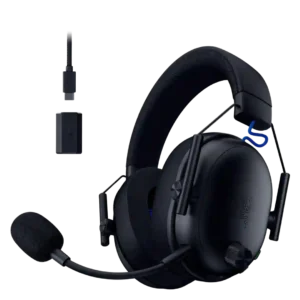
Choose Razer BlackShark V3 for Multipoint connectivity reliability and Footstep sound level scaling feature.
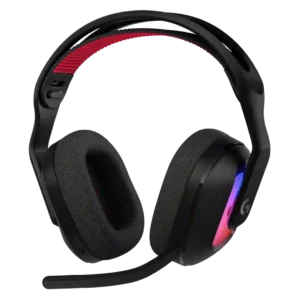
Choose Logitech G Astro A20 X for Connectivity versatility.
Why these recommendations?
Razer BlackShark V3
Where It Has the Edge
Multipoint connectivity reliability is 5.0 vs 1.9. Simultaneous 2.4 GHz and Bluetooth audio is repeatedly praised, letting users keep game audio and a phone or...
Footstep sound level scaling feature is 4.8 vs 4.0. The dedicated footstep-scaling control is viewed as a useful, distinctive competitive-gaming feature that makes cue adjustment more convenient.
Logitech G Astro A20 X
Where It Has the Edge
Connectivity versatility is 5.0 vs 4.7. PLAYSYNC is the headset’s defining strength, making it quick and painless to jump between two gaming systems while...
Razer BlackShark V34.4 overall score
Logitech G Astro A20 X4.3 overall score
Compare features
Scores are out of 5. Missing scores mean missing review evidence, not a missing feature.
Scored on both products
Performance
Sound quality
Razer BlackShark V3
4.6
Logitech G Astro A20 X
4.3
Details and evidence for Sound quality
Razer BlackShark V3
Sound is the headset’s clearest strength: most reviewers describe it as crisp, detailed, rich, or excellent across games, music, and everyday use. A small minority call it tinny, merely decent, or inferior to alternatives.
Gaming audio is usually clear, detailed, and immersive, especially after EQ, but the default tuning divides opinion. Some find it excellent immediately, while others call it flat, dull, or below expectations for the price.
Details and evidence for Frequency response accuracy
Razer BlackShark V3
Reviewers who discuss tonal balance find the response clear, detailed, and generally controlled. One audio-focused customer considered the response good enough to choose the headset over other gaming options.
Measured tonal balance departs noticeably from the reviewer’s target, especially through the treble. The stock response can make bass feel muddier and vocals less detailed than intended.
Details and evidence for Noise isolation (passive)
Razer BlackShark V3
The memory-foam earcups block a meaningful amount of outside sound on their own, helping reviewers stay focused without relying on electronic cancellation.
Passive isolation is inconsistent, ranging from adequate in quiet rooms to almost ineffective in noisy environments. The breathable fabric pads favor awareness and comfort over a tight acoustic seal.
Noise cancellation is not a consistent strength: several people expected more isolation or noted that true ANC is absent. A few customers nevertheless described the perceived noise reduction as effective.
Bass is highly dependent on tuning and fit: some hear smooth, punchy lows, while others find it weak, overemphasized, or lacking deep rumble. EQ can improve it substantially.
Footstep cues are usually easy to hear and useful for competitive shooters, especially with the right EQ. Dense mixes can sometimes mask subtler steps, so the advantage is not absolute.
Details and evidence for Microphone noise reduction
Razer BlackShark V3
Noise handling is inconsistent across the reports: one expert praises background suppression, while a customer says the mic picks up breathing and lacks noise suppression.
Noise handling ranges from excellent with Blue VO!CE filters enabled to overly sensitive in untreated rooms. Background fans, keyboards, and desk noises can still bleed through depending on settings and mic position.
Soundstage is serviceable to strong depending on the listener, with good left-right spread for gaming. Some experts still find it narrower than open-back or more premium alternatives.
Spatial processing is usually a strength, especially for competitive games where THX or surround cues improve awareness. One customer, however, felt the spatial effect was almost absent in music.
Spatial presentation is a strong gaming feature, helping place enemies and environmental sounds convincingly around the player. It is particularly effective in immersive and competitive titles.
Details and evidence for Positional audio accuracy
Razer BlackShark V3
Directional accuracy is excellent in most reports, making footsteps, gunshots, enemies, and environmental sounds easy to locate. One low-volume customer reports the opposite because important cues were too quiet to hear.
Directional cues are a strong gaming advantage, with footsteps, gunfire, and enemy locations usually easy to place. Rear positioning and very busy sound mixes can be less precise for some listeners.
A few customers report severe reliability problems, including units that would not work or were difficult to power on. These failures are much less common than the positive reports, but they are serious when they occur.
Many units work flawlessly in daily use, but there are meaningful outliers involving battery failure, charging problems, disconnects, and intermittent crackling. Long-term reliability is therefore less consistent than the headset’s day-one performance.
Details and evidence for Multipoint connectivity reliability
Razer BlackShark V3
Simultaneous 2.4 GHz and Bluetooth audio is repeatedly praised, letting users keep game audio and a phone or second device active together. The reports that actually use the feature describe it as convenient and working well.
The biggest connectivity limitation is that Bluetooth and LIGHTSPEED cannot play at the same time. Switching is fast, but users who want phone audio mixed with console or PC sound may find this restrictive.
Fit is generally comfortable and secure, but not perfectly consistent. Two users praise the fit while another says the headset slowly slides down and needs frequent readjustment.
Fit is the biggest comfort variable: medium and larger heads tend to fare well, while smaller heads can experience slipping and a weak seal. A loose fit can also change bass response and positional consistency.
One enthusiast is specifically waiting for firmware improvements to address low volume, control behavior, and EQ limitations, so confidence in post-launch fixes remains uncertain.
Firmware updates can improve sound and resolve initial issues, but updating may require connecting directly to a PC. That extra step is useful when it works but not especially seamless.
Most reviewers consider the mid-range price a strong deal because sound, comfort, mic quality, and wireless features approach more expensive headsets. Negative value judgments come from low-volume or nonworking units rather than a broad sense that the feature set is overpriced.
Value is strongest for people who will actually use PLAYSYNC across two systems; in that use case the convenience can justify the price premium. Single-platform players often see cheaper alternatives or the G522 as the smarter buy.
The microphone material can discolor or stain over time, creating a cosmetic mismatch with the headset. This was a specific durability concern on one long-term unit.
Treble can be crisp and non-fatiguing, but several experts found it recessed, uneven, or lacking sparkle in the default tuning. EQ is often needed to restore detail without making the sound harsh.
Midrange performance is mixed: voices and game detail can sound clean, but several experts hear missing detail or recessed presence in the stock tuning. EQ can improve vocal naturalness and balance.
Most reports find the sliding adjustment smooth and useful, but there are exceptions. One customer says the extensions slowly slip, while another simply finds adjustability below average.
The suspension band works well for many medium and large heads, but its limited adjustment points can be a poor fit for smaller users. Several people would prefer a more conventional sliding system.
The bundle is well organized and includes useful cables and the PLAYSYNC base, but one expert wanted a power adapter and an additional USB cable. It is comprehensive without feeling luxurious.
Details and evidence for Sidetone adjustment quality
Razer BlackShark V3
Sidetone is polarizing. One reviewer gets a natural, useful monitoring level after adjustment, while another calls it quiet and terrible-sounding enough to be a dealbreaker.
Sidetone is one of the weaker areas, with complaints about missing or unsatisfactory mic monitoring. In some setups it only becomes available after extra app configuration.
The memory-foam cushions earn strong praise for softness, depth, and breathability. Several reviewers prefer them to pads on competing or older headsets.
The fabric memory-foam pads are usually praised as soft, breathable, and cooler than leatherette. Some users find the foam too firm, scratchy, hot, or insufficiently plush for long sessions.
Three customers independently complain that maximum output is far too low, even after EQ or setting changes. For listeners who prefer high playback levels, this is the most repeated performance warning.
Maximum loudness is a recurring complaint, with several users wishing the headset could play louder or deliver stronger chat volume. The restrained output can be a downside for listeners who prefer high volume.
Xbox results are mostly excellent, with easy setup, strong integration, low-lag play, and precise cues. One customer reports a severe exception where wireless microphone use required an adapter.
Xbox support is a notable strength when it works, including easy use within the same multi-platform setup. One customer, however, reported that their unit would not connect to Xbox at all.
Details and evidence for Detachable microphone convenience
Razer BlackShark V3
Removing the mic is convenient for music or solo play and helps keep it out of the way. The main drawback is that there is no integrated place to store it once detached.
The removable boom is convenient for solo play, travel, and casual listening. Some users would prefer flip-to-mute, and the lack of dedicated storage makes the mic easier to misplace.
The remote dongle design divides reviewers. Some like being able to position or switch it easily, while others dislike the long cable, laptop clutter, or report a failed dongle switch.
The compact PLAYSYNC base is central to the headset’s convenience and is much smaller than many multi-system docks. Its light weight can make it slide around, and cable placement can become awkward when systems are far apart.
The earcups offer useful tilt and swivel for fitting different head shapes. That adjustability helps comfort even though the headset does not fold flat.
Details and evidence for Glasses and hat compatibility
Razer BlackShark V3
Glasses comfort is split. One expert wore the headset without the usual temple pressure, while a customer says the cups hurt their ears when wearing glasses.
Glasses comfort is mixed: some users barely notice interference and praise the light clamp, while others report pressure and soreness. Fit seems especially dependent on head size and pad position.
It can travel and work over Bluetooth or USB, but dependence on the base station for full wireless functionality makes it less travel-friendly than ordinary Bluetooth headphones. It also does not fold flat.
Details and evidence for Preset EQ profile quality
Razer BlackShark V3
Built-in profiles are convenient for some users, but quality is inconsistent. Several like the quick presets, while others call the esports profiles poor or the stock choices unremarkable.
The included and community EQ presets are useful starting points, particularly for FPS, bass, and media listening. Default profiles are not universally loved, and several users get better results from custom or community tuning.
Wireless performance is usually stable and dependable, with many users reporting clean connections and no dropouts. A small minority reported serious disconnects or intermittent crackling after months of use.
Reviewers like being able to move among 2.4 GHz wireless, Bluetooth, USB, phones, PCs, and consoles, with simultaneous sources especially useful. One customer is frustrated by missing Bluetooth/wireless mixing in their setup.
PLAYSYNC is the headset’s defining strength, making it quick and painless to jump between two gaming systems while also offering Bluetooth and USB options. The main tradeoff is that Bluetooth cannot mix simultaneously with LIGHTSPEED audio.
The microphone is usually rated very highly for clarity and voice reproduction, and several reviewers call it among the better wireless-headset mics. Criticism centers on excess background pickup, one long-term degradation report, and one Xbox connection problem.
The detachable 48 kHz boom mic is one of the most consistently praised parts of the headset, often sounding unusually full and clear for wireless gaming gear. A few users found it too sensitive or merely average without tuning.
Overall sentiment is strongly positive: many reviewers call it a favorite, daily driver, excellent upgrade, or easy recommendation. The main dissent comes from low-volume complaints, software frustrations, a few build concerns, and isolated hardware failures.
Overall sentiment is strongly positive for multi-platform gaming, with convenience, comfort, mic clarity, and battery life doing most of the work. Negative experiences cluster around fit, default sound tuning, Bluetooth limitations, and a handful of reliability failures.
Details and evidence for Game/Chat balance control
Razer BlackShark V3
The dedicated game/chat control is useful for changing mixes without opening software, but one customer finds its adjustment steps far too fine and slow.
The onboard game/chat mixer is very useful on Xbox and PC and can quickly prioritize teammates or game audio. A few owners found the rocker easy to hit accidentally or reported it failing outright.
Wireless range is consistently strong in the few reports that test it, including stable use across a living room and roughly 10–15 meters without noticeable delay.
Range is generally excellent, staying connected across rooms, around a house, and even through walls in some tests. It compares favorably with several older wireless headsets.
Low latency is one of the most consistent strengths in the set. Reviewers repeatedly report instant, smooth, or effectively lag-free wireless response, including in competitive games.
LIGHTSPEED is consistently described as effectively lag-free for gaming, with quick source changes and tight response. Bluetooth can show more noticeable delay in video use.
Details and evidence for Multi-platform compatibility
Razer BlackShark V3
Broad platform support is a consistent strength, with positive use across PC, Mac, PlayStation, Switch, Xbox, phones, and other devices. Hardware switching between systems is generally described as convenient.
It is especially strong for mixed setups spanning PC, Xbox, PlayStation, Switch, and mobile devices. The single-version approach avoids needing separate console-specific headset variants.
Separation is a clear gaming strength, keeping gunfire, footsteps, abilities, and ambient effects distinct in busy scenes. This supports accurate tracking in competitive play.
Packaging is generally neat, organized, and increasingly eco-conscious, with accessories separated clearly and reduced plastic. Presentation receives positive marks even when extras are sparse.
Fast charging is consistently praised, with several reviews highlighting the six-hours-from-15-minutes claim or quick real-world top-ups. One customer’s only complaint is a short charging cable.
USB-C charging is generally simple and can be used while playing, with some tests finding recharging reasonably quick. A small number of units suffered serious charging faults.
Battery life is a major strength, commonly lasting days between charges. The caveats are shorter endurance in ultra-low-latency mode, a few optimistic runtime estimates, and one concern about difficult battery replacement access.
Battery life is a standout feature, commonly landing around 40 hours with RGB and stretching toward 90 hours with lighting off. A few customer units developed battery or charging failures after several months.
Physical controls are often praised for tactile feel, placement, and quick access, but not everyone likes them. Two customers find the knobs awkward or excessively slow for large adjustments.
Most physical controls are easy to reach and tactile, including mute, volume, and source switching. Some users dislike the placement of the wheel and buttons because they can be bumped by a chair, hood, or headrest.
Software opinions are mixed. Razer Audio is often described as easy and useful, while several Synapse/Android users complain about connection trouble, heavy resource use, or poor interface choices.
G Hub is a major strength on desktop, offering detailed audio, mic, lighting, battery, and profile controls. The mobile app is useful on consoles but more limited and occasionally less intuitive.
Details and evidence for Software/setup simplicity
Razer BlackShark V3
Setup ranges from plug-and-play and beginner-friendly to genuinely frustrating. Most users have little trouble, but Synapse restart/resource complaints and one repeated power-on problem keep this from being universally simple.
Most setups are plug-and-play and PLAYSYNC switching is easy once configured. A minority encountered long Bluetooth pairing attempts, firmware steps that required a PC, or awkward audio-routing quirks.
EQ flexibility is widely appreciated, with game tuning, mic EQ, and saved profiles giving users meaningful control. One enthusiast criticizes the app for offering only a fixed graphic EQ rather than deeper parametric tuning.
EQ control is unusually deep for a gaming headset, including advanced and community-created profiles for both headphone and mic sound. Tuning is often the key to turning the merely decent default sound into something much better.
Details and evidence for Microphone quality for calls
Razer BlackShark V3
Voice calls are consistently clear and natural, with reviewers reporting compliments from friends, coworkers, and customers. The mic is well suited to Discord, meetings, and work calls.
Voice communication is one of the headset’s strongest uses, with crisp, full pickup that can approach a decent USB mic for chats and casual streaming. Software presets can add even more polish.
Bluetooth is usually convenient and smooth, including easy phone pairing and strong dual-source use. One customer reports occasional short Bluetooth dropouts.
Bluetooth is convenient for phones, calls, and casual listening, but it is not the headset’s strongest connection mode. Some users experienced setup quirks, crackling, or app handoff issues that did not appear over LIGHTSPEED.
Comfort is one of the strongest areas in the set. Reviewers repeatedly wear it for long gaming sessions or workdays without fatigue, pressure, or a strong urge to remove it.
Comfort is generally a major strength thanks to low weight, breathable fabric, and a suspension-style fit. Head shape matters, though: some smaller-head users and a few experts reported slipping, pressure points, or discomfort after extended wear.
The understated black styling appeals to reviewers who dislike flashy gaming gear, and several call it sleek or restrained. One reviewer finds the all-black look boring, so the minimalism will not suit everyone.
The modern, lightweight look and tasteful RGB are broadly liked, especially in the white colorway. Some Astro fans dislike how closely it resembles the G522 and feel the brand has lost part of its visual identity.
Its light weight is repeatedly called out as a major advantage, especially for long sessions. Several users contrast it favorably with heavier premium headsets.
The sub-300 g design feels notably light and is frequently credited with reducing fatigue during long sessions. For a few users, the very light, loose fit can also make the headset shift around.
Build impressions are mixed. Experts and several customers call it robust or durable, but others say the lightweight plastic feels cheap, fragile, or less sturdy than a competing headset.
The lightweight plastic frame is usually flexible and solid enough for everyday use, but it does not feel especially premium. Some buyers describe it as cheap or plasticky, while others praise its durability and sturdy feel.
Clamp pressure is generally light and comfortable, helping with long sessions and glasses. The downside is that the headset can feel less secure on smaller heads or during quick movement.
The mobile control app supports Android and is particularly useful for console-first setups that still need EQ, mic, and lighting access. Desktop G Hub remains more powerful.
High-resolution 24-bit/48 kHz playback on PC is a welcome strength for users who want more than basic wireless game audio. Console output is more limited.
Cable convenience is mixed. One customer likes that the included cord is long enough for direct PC use, while others dislike the long HyperSpeed desktop run or find the charging cord too short.
There is no charging stand or dock, which disappointed at least one buyer coming from a headset that included one. Charging is handled by cable instead.
USB-C adds useful flexibility for wired audio and charging, and at least one buyer specifically valued that option. It helps keep the headset usable even when wireless power is depleted.
Bluetooth can show slight lip-sync delay in podcasts or movies when watched closely. LIGHTSPEED is much tighter and is the better choice for video-sensitive use.
Removable ear pads are appreciated for cleaning, replacement, and extending the headset’s useful life. Owners who care about maintenance see this as a meaningful practical benefit.
Bluetooth listening is hampered by the lack of basic playback controls such as play or pause. This makes the headset less convenient away from a computer or console.
The LIGHTSYNC lighting is widely liked for adding tasteful visual flair, with strong control through G Hub. It can shorten battery life substantially, and a few software quirks make fully disabling it less straightforward.
The keyed mic jack works, but there is no protective cover or dedicated place to store the detached boom. That makes the small microphone easier to lose.
Recycled plastic and reduced single-use packaging are meaningful positives, especially for a mainstream gaming headset. The lighter material strategy also supports the headset’s low weight.