Scorata scores summarize analyzed review evidence on a 1–5 scale; they are not laboratory measurements or a simple average of customer star ratings. Feature scores summarize the reviews covering that feature. The overall score averages feature scores within each review, then combines review averages. When both expert and customer evidence are available, those two groups receive equal weight. Products can have different review coverage, so small score gaps do not establish a winner.
Recommendations prioritize important features for the category, with a score of at least 3.5, a gap of at least 0.25 points and at least two supporting reviews per product. Features with widely varying scores or broad connectivity contexts are excluded from recommendations. These safeguards do not establish statistical significance.
Quick verdict
What each product is best for
The review evidence points to a tradeoff: Home theater integration and Omnidirectional sound versus Gaming performance and Overall product quality. Choose according to which strengths matter more to you; the overall score alone does not settle that choice.
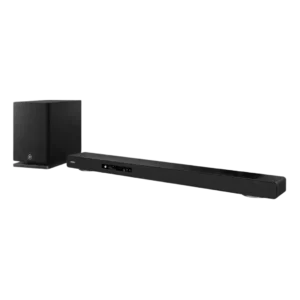
Choose Yamaha True X Surround 90A for Home theater integration and Omnidirectional sound.
Choose KEF XIO for Gaming performance and Overall product quality.
Why these recommendations?
Yamaha True X Surround 90A
Where It Has the Edge
Home theater integration is 4.7 vs 2.8. As a wireless alternative to an AVR and separate speaker package, the system is highly convincing. The bar,...
Omnidirectional sound is 5.0 vs 4.5. The best modes create an enveloping, 360-degree bubble that extends around and above the listener. Music and films...
Low-volume performance is 5.0 vs 4.6. Clarity holds up unusually well at low listening levels. Tests spanning whisper-quiet scenes through loud battle sequences found...
KEF XIO
Where It Has the Edge
Gaming performance is 5.0 vs 1.9. Games benefit from excellent positional cues, convincing height, and clear directionality, making opponents and environmental sounds easy to...
Overall product quality is 4.7 vs 4.3. Overall product quality is exceptionally well regarded for its sound, construction, and one-box convenience. The main reservations are...
Wall mounting support is 5.0 vs 4.6. Wall mounting is exceptionally well supported, with sturdy included hardware and orientation-aware driver routing. Several reviewers specifically preferred...
Yamaha True X Surround 90A4.2 overall score
KEF XIO4.4 overall score
Compare features
Scores are out of 5. Missing scores mean missing review evidence, not a missing feature.
Scored on both products
Ownership and support
Reliability
Yamaha True X Surround 90A
4.8
KEF XIO
3.3
Details and evidence for Reliability
Yamaha True X Surround 90A
After setup, the system has proven highly dependable in extended use. Wireless surrounds stayed synchronized without lag or dropouts, with early pairing hiccups being the main exception.
Reliability reports conflict sharply. One test had persistent CEC issues across two samples, while another experienced responsive, issue-free operation.
Details and evidence for Video passthrough support
Yamaha True X Surround 90A
Video passthrough handles 4K plus Dolby Vision and HDR10+, which covers most film sources. The ceiling is 60Hz rather than 4K/120, limiting its appeal for high-refresh gaming.
HDMI passthrough is the most repeated specification complaint. A soundbar this expensive having no extra HDMI input forces all source switching through the TV and feels under-equipped beside premium rivals.
Setup experiences vary sharply. Some found the system nearly plug-and-play with clear menus, while others struggled with rear registration, HDMI control, and manual beam settings; the absence of automatic calibration magnifies that split.
Setup is overwhelmingly straightforward, often taking only minutes from HDMI connection to calibrated playback. Early firmware/app problems and occasional HDMI handshakes are the main exceptions.
Value is the system’s toughest sell: most price-focused tests consider $3,499 far too high versus strong Samsung, JBL, Sonos, and other alternatives. A few saw the complete wireless package or regional pricing as worthwhile, but the consensus remains that performance does not fully erase the premium.
Value is the biggest tradeoff: the XIO sounds expensive in the best sense, but it also costs enough to compete with complete surround packages. Some reviewers say the performance justifies it; others consider the premium hard to rationalize.
Wall mounting is well supported with included, substantial metal brackets. The hardware feels secure, and moving from a TV stand to a wall installation is straightforward.
Wall mounting is exceptionally well supported, with sturdy included hardware and orientation-aware driver routing. Several reviewers specifically preferred how cleanly the XIO sits under a mounted TV.
Details and evidence for Spotify Connect reliability
Yamaha True X Surround 90A
Spotify Connect worked comfortably and stably in direct use. It provides a dependable route for music without navigating MusicCast’s native service interface.
Gaming is not a strength because the HDMI input lacks 4K/120 and VRR. The system can still handle console audio through a TV/eARC path, but buyers prioritizing next-gen passthrough should look elsewhere.
Details and evidence for Dialogue clarity (for TV/soundbar use)
Yamaha True X Surround 90A
Dialogue is the most repeated sonic caveat: several tests found speech could be buried during dense action scenes even with Clear Voice. Other setups reported consistently intelligible dialogue, especially with simpler TV mixes or after tuning.
Dialogue is usually exceptionally clear, centered, and easy to understand even during busy scenes or at modest volume. A small minority heard muffled, chesty, or partially buried voices with certain material.
The best modes create an enveloping, 360-degree bubble that extends around and above the listener. Music and films can feel room-filling rather than locked to the bar.
The listening sweet spot is wider than expected for a soundbar, with several tests reporting consistent clarity off-center. Rear envelopment can fade when moving substantially away from the middle seat.
The beam system creates convincing perceived elevation and can steer the overhead focus by changing beam angle. When room conditions cooperate, effects clearly move upward rather than merely widening the front stage.
Clarity holds up unusually well at low listening levels. Tests spanning whisper-quiet scenes through loud battle sequences found detail remained intact without needing constant volume changes.
Low-volume listening is a strength: dialogue and detail remain engaging, while Night and Dialogue modes make late viewing easier without simply turning everything dull.
The soundstage is repeatedly described as tall, deep, and expansive, with the beam array adding convincing vertical scale. Manual beam tuning and room geometry can determine how far that height reaches into the seating area.
Spatial placement is usually precise, with effects mapped accurately and instruments separated cleanly. One critical test found strict stereo too center-weighted, so two-channel imaging is not flawless in every mode.
Stereo imaging is unusually wide and precise for a soundbar, often placing vocals and instruments beyond the cabinet with convincing separation. Dedicated stereo speakers and a few rival bars can still produce a wider or more magical stage.
Overall sound is the product’s strongest case: powerful, detailed, spacious, and often startlingly immersive with movies and music. Dialogue inconsistency, rear-speaker integration, and room-dependent height performance are the main sonic tradeoffs.
Overall sound quality is the XIO’s strongest case: powerful, detailed, balanced, spacious, and remarkably refined for a single soundbar. Most tests place it near the top of the category, though one reviewer found it underwhelming and resonant.
Format support is exceptionally broad, including Dolby Atmos, DTS:X, and the unusual addition of Auro-3D. Several tests singled out Auro-3D and high-resolution playback as differentiating strengths.
Format support is a major strength, covering the leading immersive formats and high-resolution playback without leaving meaningful gaps for typical movie or music use.
Details and evidence for Surround sound simulation
Yamaha True X Surround 90A
Surround performance is a major strength, with precise movement, discrete rear separation, and convincing room-filling immersion. Surround:AI can improve placement, though one tester preferred Straight mode because upmixing sometimes sounded distracting.
For a single bar, surround simulation is frequently impressive, enveloping, and spatially convincing, with strong left-right movement and some rear illusion. Physical rear speakers still win for true behind-the-listener placement, and one critical test found the effect merely average.
Bass is consistently powerful, tight, and well integrated rather than boomy. The main reservations are that the deepest extension can feel restrained and the sub needs volume before delivering maximum physical rumble.
Bass is one of the XIO’s defining strengths: deep, punchy, controlled, and unusually substantial for a single bar, often enough without a subwoofer. A few listeners wanted tighter or deeper sub-bass, and one negative test heard compression and resonance when pushed.
HDMI ARC/eARC setup can require manual intervention because HDMI control was disabled by default in multiple tests. That creates unnecessary first-use friction even though the connection works once configured.
There is no automatic room calibration or microphone-assisted correction, a surprising omission at this price. Manual beam angle, height, and level controls can work well, but they demand more effort and room knowledge.
Room tuning is usually quick and noticeably improves balance, spatial scale, and placement. A few tests found it confusing, limited compared with full room correction, or troublesome before firmware updates.
Battery-powered rear speakers can double as portable Bluetooth speakers, a flexibility many found genuinely useful. A few testers disliked having to re-pair them after portable use, while others could switch modes without re-pairing.
Wireless rear-speaker expansion remains a weakness because the promised bespoke satellites have not yet arrived and no confirmed timeline was available.
The front display is useful for source, mode, and level information, and several testers praised its brightness and clarity. Others found the small text hard to read at distance or low in contrast, though it can be dimmed for movies.
Status feedback is a consistent usability weakness: LEDs can be hard to read, disappear from view in horizontal placement, and there is no full front display.
As a wireless alternative to an AVR and separate speaker package, the system is highly convincing. The bar, sub, and true rear channels create theater-like scale with far less wiring, though the rears and room-dependent height effects keep it from replacing every traditional setup.
The XIO is formidable as a one-box home-theater solution, but current expansion is limited by the absence of dedicated wireless surrounds. That makes it less flexible than ecosystems built around add-on rear speakers.
Details and evidence for Inter-speaker connectivity
Yamaha True X Surround 90A
Once connected, the wireless links between bar, subwoofer, and surrounds are exceptionally stable. Extended tests reported no dropouts or lag after initial registration issues were resolved.
Wireless subwoofer integration can be stable and delay-free, but broader speaker expansion remains uneven: some options require an extra adapter and promised rear connectivity still lacks a firm timeline.
The included HDMI cable works, but its straight connector is less convenient for hiding cables in a wall-mounted installation than the angled power connector.
TV connectivity is mixed at first use: two tests encountered HDMI/eARC problems until control and passthrough settings were enabled. Another long-term test found the system then followed the TV effortlessly in daily use.
TV connection stability is the clearest technical concern in the set. Several tests reported eARC/CEC synchronization or handshake problems, including one severe case reproduced across two TVs and two samples.
Room fit is mixed: the bar is low enough for most TVs and some found the sub compact or easy to place, but other units were described as massive, deep, or condo-unfriendly. Tight rooms need careful measurement before buying.
The XIO can create convincing scale and envelopment even in smaller rooms, so it does not need a huge space acoustically. Its physical width still needs to fit the furniture and TV.
The system can operate with a TV without forcing an account, app download, or registration. That unusually low-friction approach was strongly appreciated by a tester tired of mandatory sign-ins.
Privacy is mixed: the hardware microphone-disable switch is a thoughtful safeguard, but mandatory online account creation for deeper app setup drew criticism.
The included remote is consistently easy to understand, with direct sound-mode and level controls and a solid tactile feel. One test noted the lack of backlighting, but day-to-day operation remains straightforward.
The remote is generally easy to understand and sometimes praised for its layout or backlighting, but several tests found it sluggish, limited, or not premium enough for the price.
The main bar and full package are heavy enough to make handling inconvenient, with several testers recommending or needing a second person. The substantial build feels premium, but portability is not a strength.
At its best, the bar, subwoofer, height channels, and rears blend into a seamless sound field with smooth transitions. The main weakness is inconsistent rear integration in some setups, where the satellites can sound lighter or disconnected from the front stage.
Despite the large number of drivers, the XIO usually sounds unified and well organized. Music and movie mixes keep separation without losing the sense of one coherent presentation.
Details and evidence for Loudness / maximum volume
Yamaha True X Surround 90A
The system plays very loud and can fill large rooms with ease. High output is a consistent strength, with enough scale for action-heavy movies and party-level listening.
The XIO can play extremely loud and usually stays composed while doing it, easily filling medium and larger rooms. One critical test found the sound shouty and resonant at higher levels.
The system is widely viewed as technically impressive and premium, with standout sound, construction, and flexibility. Its very high price, missing room calibration, gaming limitations, and uneven rear-speaker opinions keep it from an unqualified flagship recommendation.
Overall product quality is exceptionally well regarded for its sound, construction, and one-box convenience. The main reservations are price, scarce HDMI connectivity, ecosystem limitations, and a sharply negative report of persistent CEC bugs.
Details and evidence for Frequency response balance
Yamaha True X Surround 90A
Most listening impressions describe a clear, balanced, natural presentation with good midrange weight. The main exception is a tendency toward energetic treble in some settings, especially when Clear Voice or certain processing modes are used.
Tonal balance is usually natural, neutral-to-warm, and impressively even across the range. A few music tests exposed isolated lower-mid or bass tonal weak spots.
Most tests found the XIO remarkably clean at high output, with very low audible distortion or compression. One notably negative sample showed cabinet vibration, resonance, and compression when driven hard.
AirPlay 2 integration is straightforward and works within a solid wireless streaming setup. Apple users can send music directly to the bar without relying solely on MusicCast.
The single HDMI input plus eARC and optical covers basic needs, and one tester welcomed having a direct HDMI input at all. Others called the connection selection meager or limited for a system at this price.
The wireless subwoofer is widely praised for tight, controlled, powerful bass and unusually good integration with the bar. A few listeners wanted deeper or more aggressive low-end impact, and its physical size is substantial.
The built-in bass is strong enough that many users may skip a subwoofer, but adding one can deepen impact, improve scale, and offload the lowest frequencies. Integration is generally easy, though cost can rise quickly.
Gaming passthrough is a clear weakness. The HDMI input tops out at 4K/60 for modern use and omits VRR and 4K/120, so serious PS5 or Xbox Series X users are better off connecting consoles to the TV.
The HDMI input is not a full HDMI 2.1 gaming solution: 4K/120 and VRR are missing. That limitation is repeatedly called disappointing or even a dealbreaker for current-generation console owners.
Details and evidence for Dolby Atmos height effects
Yamaha True X Surround 90A
Atmos height is one of the system’s signature strengths, often producing sharply localized overhead effects and convincing vertical scale. Results depend on room geometry, and several tests found the height bubble subtler than top rivals because the rears lack up-firing drivers.
Atmos height is often convincing and sometimes described as class-leading for a standalone bar, with effects clearly lifting above the screen. Results remain room-dependent, and a few tests found the height illusion less dramatic than rival bars or discrete speakers.
Fine detail is a standout strength, from subtle movie effects to layered vocals and synth textures. The system consistently exposes information that can be masked on lesser soundbars.
Fine detail is a standout strength, from subtle debris and ambience in movies to instrument texture and low-level information in music. Complex scenes stay unusually easy to follow.
Details and evidence for Cabinet construction / bracing
Yamaha True X Surround 90A
The rigid metal cabinet and substantial feet give the bar a tank-like feel. That heavy construction is intended to keep vibration under control and is one of the system’s strongest physical qualities.
The system has excellent dynamic reserve, moving from quiet passages to large action peaks without collapsing or compressing the soundstage. It also fills larger rooms confidently.
Details and evidence for Multi-speaker pairing reliability
Yamaha True X Surround 90A
Initial rear-speaker pairing can be fiddly and may require repeated attempts. Once paired, however, other connectivity tests generally found the surrounds stayed connected reliably.
Voice clarity is content-dependent. Vocals and simpler TV mixes can sound clean and natural, but action-heavy material may leave speech recessed unless Clear Voice or level adjustments are used.
Physical controls are responsive and provide useful tactile feedback for quick operation. They complement the remote and on-screen interface rather than forcing app-only control.
On-bar controls range from intuitive and nicely backlit to frustratingly hidden in horizontal placement. Physical usability depends heavily on orientation.
Sound shaping ranges from useful channel-level and beam controls to simple bass/treble sliders. Some testers appreciated the flexibility, while others disliked the menu complexity, lack of presets, or restricted main-channel adjustment.
The sound modes and EQ options are useful and often make an audible improvement, with bass/treble or expert controls available in some paths. A few reviewers wanted deeper manual EQ access or clearer feedback on what each profile changes.
MusicCast is often described as intuitive, dependable, and easy for streaming or level adjustments. Opinions split on depth: some found it refreshingly simple, while others called its controls limited, fragmented, or less useful than the on-screen menu.
KEF Connect is generally clean, fast, stable, and easy to navigate, with useful setup and EQ controls. There are notable exceptions, including slow service browsing, early setup trouble, and TV-mode connectivity problems.
Surround:AI, MusicCast, Auro-3D processing, and multiroom integration give the system unusually deep smart-audio capability. Surround:AI often improves placement and scale, though the broader control experience can feel fragmented across app and TV menus.
Review contexts may differ — read the details before interpreting the score gap.
Details and evidence for Bluetooth connectivity
Yamaha True X Surround 90A
Bluetooth is easy to access and especially useful because the rear speakers can become standalone portable speakers. That flexibility is a genuine advantage even if codec quality is limited.
Music is far better than the average soundbar experience, with wide staging, tight bass, clear separation, and especially strong Auro-3D upmixing. One rigorous test found stereo playback inconsistent and center-heavy, so dedicated stereo speakers still have an edge.
Music is a major reason to consider the XIO, with unusually natural vocals, strong separation, wide staging, and hi-fi-like refinement for a soundbar. Dedicated stereo speakers can still win on imaging and subtlety, and one reviewer found music merely average.
Details and evidence for Wi-Fi streaming reliability
Yamaha True X Surround 90A
Network streaming proved stable in direct testing, including Spotify Connect and Roon use. No recurring Wi-Fi playback failures were reported in the scored listening tests.
The burnished metal bar and fabric finish generally look appropriately premium, with several reviewers calling it handsome or elegant. The design is still bulky, and opinions are less flattering toward the lighter rear speakers and large subwoofer.
The understated fabric-and-metal design is widely praised as premium, elegant, and easy to blend into a living room. Its considerable width is the main visual caveat.
The metal soundbar is repeatedly described as tank-like, solid, and exceptionally well finished. Its sturdy construction feels flagship-grade, even when some reviewers were less impressed by the lighter rear speakers.
IP67 dust protection strengthens the rear speakers’ case as true portable Bluetooth speakers. Their rugged rating is unusually useful for components that can leave the theater room.
Packaging is unusually thorough and secure, with components neatly separated and protected for shipping. Unboxing impressions were consistently positive.
Details and evidence for Rear speaker cable length
Yamaha True X Surround 90A
The surrounds are wireless in operation, but the supplied USB charging cables are short. Using the charging pads behind a couch may require longer cables or nearby outlets.
Details and evidence for Battery life (if portable)
Yamaha True X Surround 90A
The rechargeable surrounds generally last well in real use, ranging from long single sessions to multiple days of intermittent listening. Charging docks reduce the risk of the rear channels dying mid-movie.
USB-C charging is convenient in principle, but the included rear-speaker cables are short and some packages omit charging bricks. Buyers planning permanent charging-pad placement may need longer cables or their own adapters.
Bluetooth is limited to SBC and AAC in the tested configuration. That is fine for casual playback but underwhelming for a flagship aimed at high-quality music listening.
The wireless rears are the system’s biggest point of disagreement. Some found them immersive, stable, and surprisingly full, while others heard them get lost, sound tonally mismatched, or weaken the Atmos bubble.
The low profile helps the XIO sit beneath a TV, but its roughly 47–48-inch width and substantial depth demand a wide stand and generally look best with a 55-inch-or-larger screen. Wall mounting reduces the visual bulk.
The portable surrounds’ IP67 protection is a standout practical feature. It makes occasional outdoor or poolside use far less worrying than with typical soundbar surrounds.