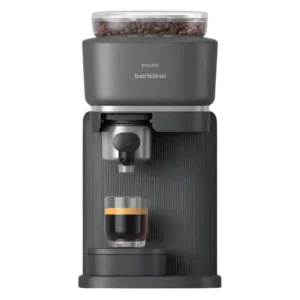
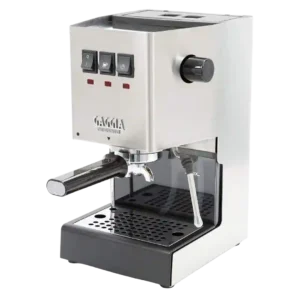
Philips Baristina
Where It Has the Edge
- Speed and time-to-cup is 5.0 vs 3.3. Speed is a standout strength across sources, with many reviewers describing espresso in roughly 30–60 seconds or under...

Scorata scores summarize analyzed review evidence on a 1–5 scale; they are not laboratory measurements or a simple average of customer star ratings. Feature scores summarize the reviews covering that feature. The overall score averages feature scores within each review, then combines review averages. When both expert and customer evidence are available, those two groups receive equal weight. Products can have different review coverage, so small score gaps do not establish a winner.
Recommendations prioritize important features for the category, with a score of at least 3.5, a gap of at least 0.25 points and at least two supporting reviews per product. Features with widely varying scores or broad connectivity contexts are excluded from recommendations. These safeguards do not establish statistical significance.
Quick verdict
The review evidence points to a tradeoff: Speed and time-to-cup versus Plastic-free materials. Choose according to which strengths matter more to you; the overall score alone does not settle that choice.
Choose Philips Baristina for Speed and time-to-cup.
Choose Gaggia Classic E24 Evo Pro for Plastic-free materials.
Scores are out of 5. Missing scores mean missing review evidence, not a missing feature.
Durability is the biggest risk: many customers report leaks, broken grinders, stuck mechanisms, or total failure within months. A smaller group reports reliable use for a year or longer.
Reviewers repeatedly praise the mostly metal, serviceable construction and the Classic line’s long life. It feels more like durable equipment than a disposable appliance, with parts availability and repairability reinforcing that impression.
Plastic is one of the most criticized material choices. Reviewers often call the machine or portafilter cheap-feeling, and some specifically dislike plastic contacting hot coffee.
The machine’s mostly metal construction is repeatedly praised against more plastic-heavy alternatives. It is not literally plastic-free, though, with pieces such as the reservoir, drip tray and included tamper still using plastic.
Leaks, spilled grounds, stuck portafilters, and faults in the sliding mechanism dominate design complaints. These problems are often tied to failures after a few months.
Recurring design irritations include tight cup clearance, limited steam-wand articulation and dripping, plus a more cramped internal layout for E24 mods. Regional Eco electronics add another layer of inconvenience for some owners.
Its slim footprint and clean, modern styling win near-universal praise, especially in small kitchens. The main aesthetic drawback is the lightweight, plastic-heavy feel.
The footprint earns strong praise from reviewers with small kitchens, though styling divides opinion. Some love the compact, colorful metal box while others find its industrial, boxy look bulky or dated.
A few owners praise quick replacements and helpful phone support, but many report long waits, no response, unresolved claims, or difficult refund and warranty experiences.
Specialist-retailer coverage can add meaningful ownership value, with one package pairing longer parts-and-labor protection with setup help and expert technical support.
Physical setup is usually straightforward, yet the missing paper manual or starter guide repeatedly sends buyers online. Several reviewers still found the controls intuitive enough to start quickly.
First-time setup can be more confusing than the machine’s simple controls suggest. One detailed account says the discharge-tube step is poorly explained and can leave new owners puzzling over setup for 30 minutes or more.
Value is polarized. Fans see savings versus cafés or pods and strong simplicity for the price; early failures make the same purchase feel wasteful, especially when support stalls.
Most reviewers consider the E24 strong value because it combines commercial-size components, repairability and high espresso quality around the entry-enthusiast price tier. Value is tempered by the separate grinder and the frequent need to buy a better tamper and cleaning or milk accessories.
The automatic grind-tamp-brew swipe workflow is one of the clearest strengths, taking most technique out of the process. Sliding-mechanism and sensor failures are the main automation caveat.
This is intentionally light on automation: no one-touch drinks, PID, shot timer or customizable profiles on the stock machine. Some owners appreciate the mechanical simplicity, while convenience-focused users and Eco-mode users find the omissions limiting.
The machine body can stay cool, but a few reviewers describe drinks or leaking water as uncomfortably hot and raise burn concerns.
The heavy brass boiler is repeatedly praised for holding heat and stabilizing brewing temperatures. The tradeoff is touch safety: the steam wand is not cool-touch and can become hot enough to burn careless fingers.
Pressure is strong and crema-rich on healthy units, but many failed machines lose pressure and produce watery shots or leaks.
North American E24 units benefit from a factory 9-bar setting that reviewers consider much better for controllable espresso extraction. Some EU/Australian units still need a spring change, and isolated tests mention minor pressure-control or flow concerns.
Speed is a standout strength across sources, with many reviewers describing espresso in roughly 30–60 seconds or under a minute with very little preparation.
The ready light can appear in roughly a minute or two, but several reviewers recommend about 8–15 minutes for the group and portafilter to fully heat soak. Switching from brew to steam adds another short wait, so speed is good for one drink rather than instant.
There is no built-in steam wand. The optional frother can make enjoyable, thick foam, but it costs extra and offers less milk-texture control than a steam wand.
Milk performance is strong for a compact single boiler, with reviewers producing silky microfoam and latte-art-ready texture. It is best with small to medium drinks; big jugs and several milk drinks in succession can exhaust steam reserves.
Daily cleaning is generally simple, but long-term maintenance is clouded by leaks, clogs, hard-to-access grinder areas, and cases where cleaning or descaling does not resolve failures.
Routine care is generally straightforward: the solenoid supports backflushing, the machine is easy to open and service, and the brass boiler broadens descaling options. Owners still need regular wand cleaning, backflushing and descaling, especially because there is no built-in water filter.
Most reviewers enjoy smooth, flavorful espresso with crema when the machine is working well. Technical critics and failed-unit owners describe lighter, watery, or under-extracted shots, especially with the fixed grind.
Espresso quality is the product’s clearest strength: testers describe rich crema, smooth texture, complex flavor and café-level results once grind and temperature are dialed in. Poor technique can still produce mediocre or thin shots.
Short-term ownership is often delightful: fast, simple, compact, and low-fuss. The experience turns sharply negative for owners whose units leak, jam, or stop brewing after a few months.
The experience strongly favors hands-on espresso drinkers who enjoy learning a manual workflow. Many find it simple, rewarding and easy to grow with, but push-button convenience seekers can find temperature management and single-boiler habits frustrating.
The removable tray helps with some taller cups, but reviewers flag limited mug clearance and a drip tray that can miss drips or feel undersized.
The drip tray itself is fairly roomy, but its height leaves limited space under the portafilter for scales and taller cups. Several testers recommend or use a low-profile tray to make cup-and-scale placement easier.
The compact tank and hopper are adequate for light daily use, and some owners go days between refills. Heavier users are more likely to notice the limited hopper or reservoir size.
The 2.1L reservoir is roomy for a compact machine, and the larger brass boiler improves steam reserves over older versions. The brew boiler is still small enough that large jugs or several milk drinks in a row require recovery time.
The optional milk frother broadens the setup, but several reviewers dislike paying extra for it or finding key add-ons unavailable; others appreciate the matching accessory options.
The 58mm platform has an excellent aftermarket ecosystem, but the box contents repeatedly disappoint. Several testers call out the flimsy plastic tamper and missing milk pitcher or cleaning gear, so many buyers will spend extra right away.
The puck-release button and exposed portafilter make daily grounds disposal exceptionally easy for most reviewers, though one technical tester found the button ineffective.
The three-way solenoid is a practical quality-of-life win. It relieves pressure after brewing so pucks come out dry, firm and easy to knock into a knock box instead of leaving wet coffee sludge.
Reviewers strongly like using fresh beans instead of capsules, citing less pod waste, lower ongoing coffee cost, and pod-like convenience without single-use capsules.
The pressurized crema basket makes pods or coarser pre-ground coffee easier to use, giving beginners a lower-friction starting point. Freshly ground coffee is still favored for the machine’s best results.
Fresh automatic grinding is convenient and can work well, but the fixed grind size is a major enthusiast limitation. Customer reports of clogging, weak dosing, or grinder failure are frequent.
There is no integrated grinder, and several reviewers stress that the machine exposes grinder quality quickly. Pre-ground coffee can work with the pressurized basket, but buyers chasing the best espresso should budget for a capable espresso grinder.
The simplicity promise largely rings true, but claims around “real espresso” and dependable performance draw sharp pushback from technical testers and owners whose machines failed.
The brass boiler’s temperature-stability improvement generally lived up to or exceeded expectations. The claimed steam-performance gain was less clear in side-by-side testing, where some tests found little obvious speed difference.
Healthy units often deliver repeatable crema and balanced shots, but a sizeable group reports watery or inconsistent extraction when pressure, dosing, or the mechanism begins to fail.
The brass-boiler E24 is consistently praised for much steadier extraction temperatures and repeatable shots than earlier Classics. It is still not PID-controlled, so some testers use a short temperature-surfing routine and one long-term owner calls consistency good rather than perfect.
The pressurized basket helps create crema and forgive grind variation, but its integrated, non-removable design and plastic-heavy construction draw criticism.
The basket options are useful but mixed in quality. The pressurized basket lowers the barrier for pre-ground coffee, while stock non-pressurized baskets are described as adequate and precision replacements can improve extraction consistency.
Most reviewers find the grinder quieter than expected or perfectly acceptable for mornings, with only a few calling the machine noisy.
Noise is unusually well controlled for an espresso machine: one measured test recorded 66dB and called it seriously quiet. Another owner found the pump quieter with little vibration, though the drip tray can rattle with a light cup.
Espresso or lungo volume and the intensity boost cover basic needs, but grind size and temperature are fixed and drink variety is narrow. That simplicity suits beginners more than tinkerers.
The stock machine favors manual drink-making rather than programmed variety. Reviewers who want automatic drink menus or customizable profiles see this as a limitation, while the intended audience is expected to craft drinks by hand.
On EU and Australian versions, the Eco PCB and momentary power switch prevent normal smart-plug preheating and complicate microcontroller projects. Buyers wanting remote preheat may need hardware changes.
The single-boiler design is workable for one or two drinks but forces brewing and steaming to happen separately. Recovery waits are manageable for a cappuccino or two, yet multiple large milk drinks expose the limitation quickly.
Cord and plug placement gets minor but consistent criticism, with the rear cord or protruding plug making placement less tidy on crowded counters.
Delivery condition is uneven: some machines arrive clean and well packed, while several buyers report opened, damaged, dirty, or apparently previously used units.
One expert praised the sturdy, fully recyclable packaging as compact, protective, and thoughtfully presented.
Automatic tamping is a major convenience on healthy units, yet several owners report wet pucks, failed compaction, or tamping and mechanism faults over time.
There is no dedicated hot-water outlet, so Americano drinkers must work around the machine rather than dispense clean hot water directly.
The Classic is unusually upgrade-friendly, with deep support for PID, pressure, basket and microcontroller mods that can extend its capabilities for years. The E24’s larger boiler and regional Eco PCB make some advanced installs more cramped or involved.
One reviewer considered the compact machine small enough to take camping, suggesting unusual travel potential for an espresso maker with an integrated grinder.
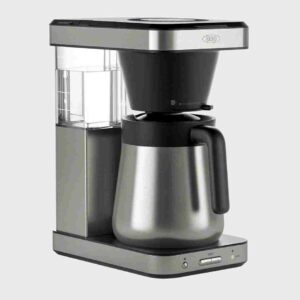
Choose the OXO Brew 8-Cup if you want fast, consistent drip coffee in small or full batches. Skip it if you need programming, app controls, a larger pot, or the...
Pros: Brewing performance and consistency, Overall user experience
Cons: Design flaws
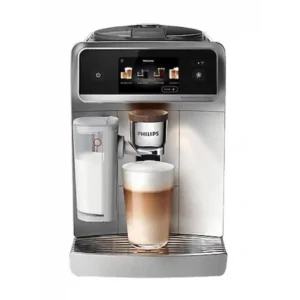
Best for effortless, highly personalized hot and cold coffee in a busy multi-drinker home. Skip it if counter space is tight, you demand silky adjustable microfoam, or the premium price...
Pros: Automation and sensors, Overall user experience
Cons: Design flaws, Mess-free used-puck disposal
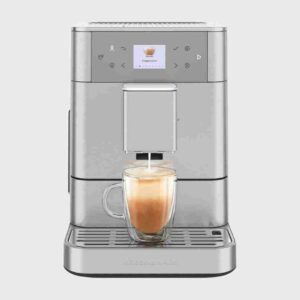
Choose the KitchenAid KF6 for rich espresso, quiet operation, easy cleaning, and strong value in a super-automatic. Skip it if dense cappuccino foam, plant-milk presets, touchscreen controls, or an included...
Pros: Water system, maintenance and descaling, Overall user experience
Cons: Accessories, Design flaws
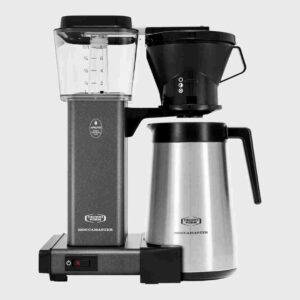
Choose the Moccamaster KBT for fast, excellent drip coffee, durable build, and a thermal carafe that keeps coffee hot. Skip it if you need programmability, a compact footprint, or a...
Pros: Brewing performance and consistency, Espresso and beverage quality
Cons: Automation and sensors, Design flaws