Scorata scores summarize analyzed review evidence on a 1–5 scale; they are not laboratory measurements or a simple average of customer star ratings. Feature scores summarize the reviews covering that feature. The overall score averages feature scores within each review, then combines review averages. When both expert and customer evidence are available, those two groups receive equal weight. Products can have different review coverage, so small score gaps do not establish a winner.
Recommendations prioritize important features for the category, with a score of at least 3.5, a gap of at least 0.25 points and at least two supporting reviews per product. Features with widely varying scores or broad connectivity contexts are excluded from recommendations. These safeguards do not establish statistical significance.
Quick verdict
What each product is best for
The review evidence points to a tradeoff: Detachable microphone convenience and Frequency response accuracy versus Integrated microphone and Wireless range. Choose according to which strengths matter more to you; the overall score alone does not settle that choice.
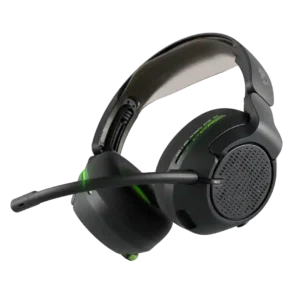
Choose Skullcandy Crusher PLYR 720 for Detachable microphone convenience and Frequency response accuracy.
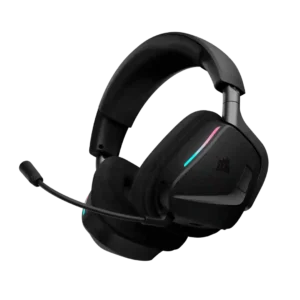
Choose Corsair Void v2 MAX for Integrated microphone and Wireless range.
Why these recommendations?
Skullcandy Crusher PLYR 720
Where It Has the Edge
Detachable microphone convenience is 5.0 vs 2.0. The detachable boom mic is convenient when switching to a separate microphone or using the headset without the...
Frequency response accuracy is 3.8 vs 2.0. Measurements and listening impressions point to generally solid tonal balance, but with uneven bass-to-mid transitions and notable treble...
Corsair Void v2 MAX
Where It Has the Edge
Integrated microphone is 5.0 vs 1.5. The flip-to-mute boom design is a standout convenience for one customer. Raising the mic to mute feels intuitive...
Wireless range is 4.9 vs 1.5. Wireless range is repeatedly strong, from whole-house roaming to roughly 20–30 feet through walls. Users generally stay connected...
Treble clarity is 5.0 vs 3.0. Treble is consistently praised as crisp and detailed. High-frequency effects stay clear enough for game cues and music...
Skullcandy Crusher PLYR 7204.1 overall score
Corsair Void v2 MAX4.2 overall score
Compare features
Scores are out of 5. Missing scores mean missing review evidence, not a missing feature.
Scored on both products
Performance
Sound quality
Skullcandy Crusher PLYR 720
4.6
Corsair Void v2 MAX
4.3
Details and evidence for Sound quality
Skullcandy Crusher PLYR 720
Most reviewers found the core gaming sound clear, punchy, and highly enjoyable even with Crusher bass off. A few felt the stock tuning was merely decent or less refined than top premium rivals.
Sound quality is generally a major strength, with clear, immersive gaming audio and strong music performance after tuning. A minority of customers report severe distortion or cutouts, and stock EQ is not universally liked.
Noise cancelling is generally described as effective, with users saying it cuts distracting household noise and one expert calling it a strong complement to EQ.
Details and evidence for Frequency response accuracy
Skullcandy Crusher PLYR 720
Measurements and listening impressions point to generally solid tonal balance, but with uneven bass-to-mid transitions and notable treble peaks that benefit from EQ.
The stock tuning is not especially neutral. Expert impressions call out mid-heavy or V-shaped balance that favors fun over accuracy and can sound woolly before EQ.
Passive isolation is one of the more variable traits. Some users like retaining awareness of the room, while others find the seal weak and say outside sound comes through too easily.
THX Spatial Audio can add strong immersion and convincing head-tracked movement, but reviewers disagree on its precision and usefulness. Some found it excellent; others found distance controls subtle or head tracking buggy.
Dolby Atmos and Tempest 3D Audio are praised for sharpening directional awareness and immersion. In competitive games, spatial processing helps make footsteps and positional cues easier to locate.
Crusher bass is the defining attraction: it can make explosions, engines, and music physically rumble with unusual force. Reviewers also warn that high settings become overwhelming, fatiguing, or even distort the presentation.
Bass is usually described as punchy, deep, and immersive without drowning out game cues. A few listeners find the stock tuning too bass-heavy or less balanced, so EQ can matter.
Directional audio is a standout gaming strength. Multiple testers could pinpoint footsteps, flanking enemies, and environmental cues early enough to gain a real competitive advantage.
The open-back design creates an unusually wide, spacious presentation that reviewers repeatedly praised for immersion and a convincing sense of distance.
The presentation can feel broad and immersive, surrounding the listener and giving games a more cinematic sense of space. That spaciousness pairs well with directional effects.
Details and evidence for Microphone noise reduction
Skullcandy Crusher PLYR 720
Background-noise rejection is a strength: keyboard noise, ringing phones, and other room sounds are filtered effectively, though the processing can make voices sound compressed.
Background-noise handling is a clear strength when supported by NVIDIA Broadcast or the headset’s filtering. Tests and customers report reduced fan, mouse, and room noise even when voice tone itself is not always ideal.
Wireless range is repeatedly strong, from whole-house roaming to roughly 20–30 feet through walls. Users generally stay connected well beyond a typical desk setup.
The fixed boom mic is a consistent annoyance. Multiple reviewers wish it were removable, especially because the attached mic makes the headset bulkier and less suitable away from a gaming desk.
Xbox game/chat mixing is a weak point. One expert found the headset disables Xbox’s own mixing options, making party and Discord balance unnecessarily frustrating.
The Xbox version is repeatedly recommended because it adds wireless Xbox support while also working across PC, PlayStation, Switch, and mobile in testing.
Xbox support is version-specific rather than universal. The Xbox edition generally works well, but the standard model is incompatible and buyers need to choose the correct SKU.
The swiveling cups help the headset lie flat and sit comfortably around the neck during breaks. It is more desk-friendly than travel-focused, especially because the microphone remains attached.
Treble is consistently praised as crisp and detailed. High-frequency effects stay clear enough for game cues and music without the headset sounding dull.
The core transmitter, charging cable, and guide are organized well, but the bundle feels incomplete to some. Missing adapter options and the lack of a storage solution are the main complaints.
Preset quality is mixed. One expert found the stock modes muddy and too mid-heavy, while another found options such as Bass Boost clearly distinct and useful.
The USB transmitter generally works well and can deliver excellent audio, but its USB-A design feels bulky or dated to some. Its larger size is easier to keep track of, which partly offsets the inconvenience.
The boom microphone is clear enough for gaming, but its stiff arm repeatedly drew criticism because it springs back instead of holding precise placement.
The microphone is usually good for gaming chat and calls, with many users reporting clear voice quality. It is not studio-grade, and a smaller group reports thin sound, boom-position problems, or outright mute failures.
Console use can be less polished than PC. Reported issues include version-specific Xbox support, low maximum volume, confusing transmitter modes, PC-only firmware/customization access, and EQ settings that cannot be carried back to console.
The included charging cable draws repeated criticism for being too short. That can make it awkward or impossible to keep wearing the headset while charging.
Volume headroom is strong on PC, but it is not universally well judged. One Xbox-focused test found maximum console volume too low, while another customer described the output as excessive.
Adjustment is smooth and accommodating across head sizes. Reviewers praise easy sizing, precise sliding movement, and enough range to create a comfortable fit.
Simultaneous 2.4GHz wireless and Bluetooth, broad device support, and easy phone-plus-game audio make connectivity a major strength. A recurring caveat is the lack of a wired listening option.
The packaging is described as sturdy, polished, and protective, with organized internal compartments. It delivers a notably premium unboxing experience.
USB-C charging is widely welcomed as a convenient upgrade from older Corsair models. The connector itself is a strength, although one included cable is criticized for being too short.
Glasses wearers are consistently happy with the fit, reporting little side pressure even after long sessions. The headset also stays comfortable for users who regularly wear glasses during work or gaming.
Midrange performance is mostly solid, especially after tuning, but the stock balance can recess vocals and mids behind bass and treble. Better-tuned examples keep dialogue and game cues easy to follow.
The ear cushions are generally soft, breathable, and comfortable for long gaming sessions, though a few reviewers found the cloth less plush than expected.
Breathable memory foam and deeper earcups are repeatedly praised for plush comfort. Larger ears and heat buildup can still be issues for some users during extended sessions.
Details and evidence for Multi-platform compatibility
Skullcandy Crusher PLYR 720
Multi-platform support is excellent, especially with the Xbox version, which reviewers used successfully across major consoles, PC, Switch, and mobile.
Platform coverage is excellent across PC, PlayStation, Switch, mobile, and dedicated Xbox variants. Users who switch between console and computer generally find the flexibility valuable.
Overall reactions range from ecstatic to deeply frustrated. The unique bass, strong gaming sound, and immersion inspire unusually strong fans, while software bugs, weight, build concerns, and price prevent universal endorsement.
Most owners and experts are very positive, especially about comfort, sound, battery life, and connectivity. The main divide comes from a smaller but serious group reporting audio cutouts, software failures, or hardware defects.
The lightweight fit remains secure despite the low mass. Reviewers note that the headset stays put during head movement without needing painful clamp pressure.
Clamping is generally comfortable and secure, with little pressure reported even during long sessions. One tester found it fairly firm out of the box, but most feedback is strongly positive.
Weight impressions are mixed. The suspension system distributes the mass well for some reviewers, while others found roughly 370 grams too heavy for extended wear.
Weight comfort is exceptionally strong and remarkably consistent. Even users coming from heavier headsets say the light frame disappears on the head during long sessions.
The styling is restrained for a gaming headset, with a premium matte-black look and subtle lighting. The oversized cups can still look bulky on the head.
The angular Void styling and slim RGB strips are widely liked for looking clean and gamer-oriented without being excessive. Several users also praise the matte finish and subtle lighting.
Long-session comfort is usually very good thanks to breathable pads and the suspension design. Heavier weight, a sticky silicone strap, and occasional fit quirks keep it from being universally comfortable.
Long-session comfort is an outstanding strength. The light frame, breathable cushions, and low pressure let many users wear it for hours or even full workdays without fatigue.
Build quality is divisive. Some units feel premium, sturdy, and durable, while others come across as too plastic-heavy with creaking adjustment points for the price.
The lightweight frame usually feels sturdy enough for daily use, but it rarely feels truly premium. Plastic construction, weak foam or fabric, and one early headband-pad failure create some durability concern.
Details and evidence for RGB lighting customization
Skullcandy Crusher PLYR 720
RGB is subtle rather than flashy and can be customized by color and brightness. Effects are fairly limited, and much of the lighting sits inside the earcups.
The RGB itself is attractive and color customization is fun, but control can be annoying. Some users must open iCUE just to turn the lighting down or off.
Details and evidence for Microphone quality for calls
Skullcandy Crusher PLYR 720
Microphone impressions range from crystal-clear to merely usable. Voice intelligibility is usually good, but some reviewers heard compression, clipping, white noise, or weaker-than-premium quality.
Voice-chat performance is consistently strong in the positive reports. Friends and Discord partners repeatedly describe speech as clear, and one console test found party-chat voice especially crisp.
The apps offer unusually deep control over EQ, lighting, spatial audio, mic settings, and more. Reliability is inconsistent, with some reviewers reporting smooth operation and others repeated detection or sync bugs.
iCUE can make sound tuning easy and powerful on PC, but the software experience is sharply divided. Complaints include no mobile app, awkward dependence on PC, and one update-related failure that left a headset unusable.
Bluetooth is a major part of the headset’s dual-wireless appeal and usually works reliably. A smaller number of users report choppy audio or wish it supported better multi-device Bluetooth management.
The controls offer a lot directly on the headset, but the multifunction joystick can feel overloaded, imprecise, or easy to mis-trigger. Other reviewers found the layout satisfying and easy to reach.
On-ear controls are convenient when they work well, with some praising tactile volume adjustment and easy access. Others find the buttons or mixer finicky, springy, or unintuitive.
Details and evidence for Software/setup simplicity
Skullcandy Crusher PLYR 720
Setup can be straightforward when everything behaves, but conflicting instructions, unclear icons, and serious software bugs made the experience frustrating for some reviewers.
Basic pairing is often very easy, especially over the dongle, and iCUE can be straightforward for PC users. The experience becomes less simple when extra apps, PC-only controls, or console-specific steps are required.
iCUE’s custom EQ, presets, and SoundID can transform or fine-tune the sound, and many users like the flexibility. A minority find SoundID underwhelming or run into software problems that block the benefit.
Battery results vary widely: some reviewers saw multi-day endurance near the advertised range, while others measured closer to about 25 hours with features active.
Battery life is one of the headset’s strongest qualities. Long-term users regularly go many days between charges, while expert testing repeatedly supports the very long wireless and Bluetooth runtimes.
USB-C and fast charging are strong conveniences, with quick top-ups providing hours of play and some users able to listen while plugged in. The main drawback is the short included cable in some units.
The articulated cups can create a good seal and fit larger heads well, but some reviewers found the overall grip loose enough to shift when tilting the head.
Fit depends noticeably on head and ear shape. Some users settle into a good fit after break-in, while smaller heads, large ears, or unusual head shapes can leave the cups sitting awkwardly.
Value is highly audience-dependent. Bass enthusiasts often feel the experience justifies the premium, while other reviewers argue the $260–$270 price is steep beside cheaper, more polished alternatives.
Value is usually seen as good for the comfort, battery life, sound, and dual wireless features, especially on sale. At full price, some reviewers feel the software, controls, or reliability issues are hard to justify.
Details and evidence for Multipoint connectivity reliability
Skullcandy Crusher PLYR 720
Simultaneous Bluetooth plus 2.4GHz is one of the most consistently praised conveniences, letting users keep game audio active while taking calls or using a phone app.
Simultaneous 2.4GHz and Bluetooth is one of the headset’s most praised features and often works seamlessly for calls, podcasts, and gaming together. A few users report switching quirks or limited control over the second Bluetooth connection.
Reliability is the biggest concern. Several customers report cutouts, distorted 2.4GHz audio, mic-mute failures, material failure, or a software update that left the headset unusable.
Firmware support is inconsistent. Updates work smoothly for some users, but PC-only access, failed installations, and one report of an update bricking the headset make this a meaningful risk area.
High-volume playback stayed clean in one detailed test, with no distortion even when pushed louder. That supports strong clarity at the top of the volume range.
The move toward cardboard inserts and cloth protectors is positively received. The environmentally friendlier packaging feels like a welcome improvement.
Playback controls are convenient for managing media without reaching for a keyboard. One customer notes the media button works most, but not all, of the time.