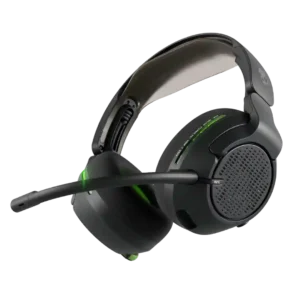
Skullcandy Crusher PLYR 720
Where It Has the Edge
- Multipoint connectivity reliability is 5.0 vs 1.9. Simultaneous Bluetooth plus 2.4GHz is one of the most consistently praised conveniences, letting users keep game audio active...

Scorata scores summarize analyzed review evidence on a 1–5 scale; they are not laboratory measurements or a simple average of customer star ratings. Feature scores summarize the reviews covering that feature. The overall score averages feature scores within each review, then combines review averages. When both expert and customer evidence are available, those two groups receive equal weight. Products can have different review coverage, so small score gaps do not establish a winner.
Recommendations prioritize important features for the category, with a score of at least 3.5, a gap of at least 0.25 points and at least two supporting reviews per product. Features with widely varying scores or broad connectivity contexts are excluded from recommendations. These safeguards do not establish statistical significance.
Quick verdict
The review evidence points to a tradeoff: Multipoint connectivity reliability versus Wireless range and Microphone. Choose according to which strengths matter more to you; the overall score alone does not settle that choice.
Choose Skullcandy Crusher PLYR 720 for Multipoint connectivity reliability.
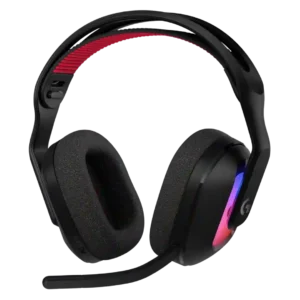
Choose Logitech G Astro A20 X for Wireless range and Microphone.
Scores are out of 5. Missing scores mean missing review evidence, not a missing feature.
Most reviewers found the core gaming sound clear, punchy, and highly enjoyable even with Crusher bass off. A few felt the stock tuning was merely decent or less refined than top premium rivals.
Gaming audio is usually clear, detailed, and immersive, especially after EQ, but the default tuning divides opinion. Some find it excellent immediately, while others call it flat, dull, or below expectations for the price.
One reviewer reported no perceptible lag during wireless use, with game audio feeling immediately synchronized.
Bluetooth can show slight lip-sync delay in podcasts or movies when watched closely. LIGHTSPEED is much tighter and is the better choice for video-sensitive use.
Open-back leakage is noticeable in shared spaces, though a couple of reviewers found it less severe than expected at normal listening levels.
One owner found that people nearby could clearly hear what was playing. That makes the headset less private in shared rooms.
Measurements and listening impressions point to generally solid tonal balance, but with uneven bass-to-mid transitions and notable treble peaks that benefit from EQ.
Measured tonal balance departs noticeably from the reviewer’s target, especially through the treble. The stock response can make bass feel muddier and vocals less detailed than intended.
Passive isolation is very weak by design. The open-back cups let outside sound in, making the headset a poor fit for noisy rooms.
Passive isolation is inconsistent, ranging from adequate in quiet rooms to almost ineffective in noisy environments. The breathable fabric pads favor awareness and comfort over a tight acoustic seal.
The open-back design creates an unusually wide, spacious presentation that reviewers repeatedly praised for immersion and a convincing sense of distance.
Soundstage is serviceable to strong depending on the listener, with good left-right spread for gaming. Some experts still find it narrower than open-back or more premium alternatives.
THX Spatial Audio can add strong immersion and convincing head-tracked movement, but reviewers disagree on its precision and usefulness. Some found it excellent; others found distance controls subtle or head tracking buggy.
Spatial presentation is a strong gaming feature, helping place enemies and environmental sounds convincingly around the player. It is particularly effective in immersive and competitive titles.
Background-noise rejection is a strength: keyboard noise, ringing phones, and other room sounds are filtered effectively, though the processing can make voices sound compressed.
Noise handling ranges from excellent with Blue VO!CE filters enabled to overly sensitive in untreated rooms. Background fans, keyboards, and desk noises can still bleed through depending on settings and mic position.
Crusher bass is the defining attraction: it can make explosions, engines, and music physically rumble with unusual force. Reviewers also warn that high settings become overwhelming, fatiguing, or even distort the presentation.
Bass is highly dependent on tuning and fit: some hear smooth, punchy lows, while others find it weak, overemphasized, or lacking deep rumble. EQ can improve it substantially.
Active noise cancellation is absent, and one reviewer counted that omission against the headset at this price.
Noise cancellation is not a consistent strength: several people expected more isolation or noted that true ANC is absent. A few customers nevertheless described the perceived noise reduction as effective.
Positional audio is a major strength, with reviewers repeatedly able to pinpoint footsteps, gunfire, and movement accurately in competitive games.
Directional cues are a strong gaming advantage, with footsteps, gunfire, and enemy locations usually easy to place. Rear positioning and very busy sound mixes can be less precise for some listeners.
Wireless range drew a repeated complaint: one reviewer saw dropouts at roughly 12 feet, far short of the expected range.
Range is generally excellent, staying connected across rooms, around a house, and even through walls in some tests. It compares favorably with several older wireless headsets.
The boom microphone is clear enough for gaming, but its stiff arm repeatedly drew criticism because it springs back instead of holding precise placement.
The detachable 48 kHz boom mic is one of the most consistently praised parts of the headset, often sounding unusually full and clear for wireless gaming gear. A few users found it too sensitive or merely average without tuning.
Glasses wearers reported little to no extra pressure, with the soft cups sitting comfortably over frame arms.
Glasses comfort is mixed: some users barely notice interference and praise the light clamp, while others report pressure and soreness. Fit seems especially dependent on head size and pad position.
The silicone suspension strap can pick up visible grease and feel sticky, which makes it less pleasant to keep looking clean.
The microphone material can discolor or stain over time, creating a cosmetic mismatch with the headset. This was a specific durability concern on one long-term unit.
Wireless latency reports conflict sharply, from snappy 25ms or effectively lag-free use to concerns over a quoted 40–50ms delay.
LIGHTSPEED is consistently described as effectively lag-free for gaming, with quick source changes and tight response. Bluetooth can show more noticeable delay in video use.
The 2.4GHz dongle is easy to use, with reviewers describing instant plug-and-play behavior.
The compact PLAYSYNC base is central to the headset’s convenience and is much smaller than many multi-system docks. Its light weight can make it slide around, and cable placement can become awkward when systems are far apart.
Height and headband adjustment can be smooth and stable, but at least one unit gradually slid out of position and needed repeated readjustment.
The suspension band works well for many medium and large heads, but its limited adjustment points can be a poor fit for smaller users. Several people would prefer a more conventional sliding system.
The Xbox version is repeatedly recommended because it adds wireless Xbox support while also working across PC, PlayStation, Switch, and mobile in testing.
Xbox support is a notable strength when it works, including easy use within the same multi-platform setup. One customer, however, reported that their unit would not connect to Xbox at all.
The detachable boom mic is convenient when switching to a separate microphone or using the headset without the boom attached.
The removable boom is convenient for solo play, travel, and casual listening. Some users would prefer flip-to-mute, and the lack of dedicated storage makes the mic easier to misplace.
The midrange was described as clean and well balanced overall, with only minor coloration.
Midrange performance is mixed: voices and game detail can sound clean, but several experts hear missing detail or recessed presence in the stock tuning. EQ can improve vocal naturalness and balance.
The wide, bulky earcups make the headset awkward to pack or use as a travel companion, and the lack of integrated mics further hurts portability.
It can travel and work over Bluetooth or USB, but dependence on the base station for full wireless functionality makes it less travel-friendly than ordinary Bluetooth headphones. It also does not fold flat.
One reviewer found PC and music playback quieter than expected for a premium gaming headset.
Maximum loudness is a recurring complaint, with several users wishing the headset could play louder or deliver stronger chat volume. The restrained output can be a downside for listeners who prefer high volume.
Several reviewers were happy with the default flat or out-of-box tuning and found little reason to change presets.
The included and community EQ presets are useful starting points, particularly for FPS, bass, and media listening. Default profiles are not universally loved, and several users get better results from custom or community tuning.
The box is well equipped, and the Xbox version’s included Game Pass code was singled out as a welcome extra.
The bundle is well organized and includes useful cables and the PLAYSYNC base, but one expert wanted a power adapter and an additional USB cable. It is comprehensive without feeling luxurious.
The packaging was praised for its presentation and eco-friendly approach.
Packaging is generally neat, organized, and increasingly eco-conscious, with accessories separated clearly and reduced plastic. Presentation receives positive marks even when extras are sparse.
USB-C audio adds another useful wired connection option alongside Bluetooth, 2.4GHz, and 3.5mm.
USB-C adds useful flexibility for wired audio and charging, and at least one buyer specifically valued that option. It helps keep the headset usable even when wireless power is depleted.
The ear cushions are generally soft, breathable, and comfortable for long gaming sessions, though a few reviewers found the cloth less plush than expected.
The fabric memory-foam pads are usually praised as soft, breathable, and cooler than leatherette. Some users find the foam too firm, scratchy, hot, or insufficiently plush for long sessions.
Once adjusted, the earcups held their selected height surprisingly well in one detailed review.
Wireless performance is usually stable and dependable, with many users reporting clean connections and no dropouts. A small minority reported serious disconnects or intermittent crackling after months of use.
Treble is the main tonal weakness. Several reviewers heard reduced top-end refinement or an 8kHz emphasis that can sound sharp, metallic, or sibilant.
Treble can be crisp and non-fatiguing, but several experts found it recessed, uneven, or lacking sparkle in the default tuning. EQ is often needed to restore detail without making the sound harsh.
Sidetone is one of the weaker features. Multiple reviewers called it faint, quiet, or robotic, though one found the level appropriate.
Sidetone is one of the weaker areas, with complaints about missing or unsatisfactory mic monitoring. In some setups it only becomes available after extra app configuration.
Connectivity is exceptionally versatile, combining Bluetooth, 2.4GHz wireless, USB audio, and 3.5mm across a broad range of devices.
PLAYSYNC is the headset’s defining strength, making it quick and painless to jump between two gaming systems while also offering Bluetooth and USB options. The main tradeoff is that Bluetooth cannot mix simultaneously with LIGHTSPEED audio.
Multi-platform support is excellent, especially with the Xbox version, which reviewers used successfully across major consoles, PC, Switch, and mobile.
It is especially strong for mixed setups spanning PC, Xbox, PlayStation, Switch, and mobile devices. The single-version approach avoids needing separate console-specific headset variants.
Overall reactions range from ecstatic to deeply frustrated. The unique bass, strong gaming sound, and immersion inspire unusually strong fans, while software bugs, weight, build concerns, and price prevent universal endorsement.
Overall sentiment is strongly positive for multi-platform gaming, with convenience, comfort, mic clarity, and battery life doing most of the work. Negative experiences cluster around fit, default sound tuning, Bluetooth limitations, and a handful of reliability failures.
Android Bluetooth pairing was seamless in two reviews, with stable audio and no meaningful quality drop.
The mobile control app supports Android and is particularly useful for console-first setups that still need EQ, mic, and lighting access. Desktop G Hub remains more powerful.
The 180-degree earcup swivel was praised as convenient for resting the headset around the neck.
The earcups offer useful tilt and swivel for fitting different head shapes. That adjustability helps comfort even though the headset does not fold flat.
Game/chat balance works directly on the headset for Xbox and PC, but reviewers note that the same control is unavailable on PS5.
The onboard game/chat mixer is very useful on Xbox and PC and can quickly prioritize teammates or game audio. A few owners found the rocker easy to hit accidentally or reported it failing outright.
Busy game scenes stay well separated, with effects and gunfire remaining distinct even when the action gets dense.
Separation is a clear gaming strength, keeping gunfire, footsteps, abilities, and ambient effects distinct in busy scenes. This supports accurate tracking in competitive play.
Simultaneous Bluetooth plus 2.4GHz is one of the most consistently praised conveniences, letting users keep game audio active while taking calls or using a phone app.
The biggest connectivity limitation is that Bluetooth and LIGHTSPEED cannot play at the same time. Switching is fast, but users who want phone audio mixed with console or PC sound may find this restrictive.
The earpads can be replaced, which helps cleaning and longevity, although reinstalling them can be fiddly.
Removable earpads make cleaning and eventual replacement easier. That helps preserve comfort and usability over longer ownership.
Value is highly audience-dependent. Bass enthusiasts often feel the experience justifies the premium, while other reviewers argue the $260–$270 price is steep beside cheaper, more polished alternatives.
Value is strongest for people who will actually use PLAYSYNC across two systems; in that use case the convenience can justify the price premium. Single-platform players often see cheaper alternatives or the G522 as the smarter buy.
The articulated cups can create a good seal and fit larger heads well, but some reviewers found the overall grip loose enough to shift when tilting the head.
Fit is the biggest comfort variable: medium and larger heads tend to fare well, while smaller heads can experience slipping and a weak seal. A loose fit can also change bass response and positional consistency.
Clamping is light and comfortable, but one reviewer found it so loose that the headset could move during more active head motion.
Clamp pressure is generally light and comfortable, helping with long sessions and glasses. The downside is that the headset can feel less secure on smaller heads or during quick movement.
Weight impressions are mixed. The suspension system distributes the mass well for some reviewers, while others found roughly 370 grams too heavy for extended wear.
The sub-300 g design feels notably light and is frequently credited with reducing fatigue during long sessions. For a few users, the very light, loose fit can also make the headset shift around.
The styling is restrained for a gaming headset, with a premium matte-black look and subtle lighting. The oversized cups can still look bulky on the head.
The modern, lightweight look and tasteful RGB are broadly liked, especially in the white colorway. Some Astro fans dislike how closely it resembles the G522 and feel the brand has lost part of its visual identity.
Build quality is divisive. Some units feel premium, sturdy, and durable, while others come across as too plastic-heavy with creaking adjustment points for the price.
The lightweight plastic frame is usually flexible and solid enough for everyday use, but it does not feel especially premium. Some buyers describe it as cheap or plasticky, while others praise its durability and sturdy feel.
Long-session comfort is usually very good thanks to breathable pads and the suspension design. Heavier weight, a sticky silicone strap, and occasional fit quirks keep it from being universally comfortable.
Comfort is generally a major strength thanks to low weight, breathable fabric, and a suspension-style fit. Head shape matters, though: some smaller-head users and a few experts reported slipping, pressure points, or discomfort after extended wear.
Rapid charging is useful, with one reviewer citing roughly four hours of playback from a ten-minute charge.
USB-C charging is generally simple and can be used while playing, with some tests finding recharging reasonably quick. A small number of units suffered serious charging faults.
Battery results vary widely: some reviewers saw multi-day endurance near the advertised range, while others measured closer to about 25 hours with features active.
Battery life is a standout feature, commonly landing around 40 hours with RGB and stretching toward 90 hours with lighting off. A few customer units developed battery or charging failures after several months.
Microphone impressions range from crystal-clear to merely usable. Voice intelligibility is usually good, but some reviewers heard compression, clipping, white noise, or weaker-than-premium quality.
Voice communication is one of the headset’s strongest uses, with crisp, full pickup that can approach a decent USB mic for chats and casual streaming. Software presets can add even more polish.
Setup can be straightforward when everything behaves, but conflicting instructions, unclear icons, and serious software bugs made the experience frustrating for some reviewers.
Most setups are plug-and-play and PLAYSYNC switching is easy once configured. A minority encountered long Bluetooth pairing attempts, firmware steps that required a PC, or awkward audio-routing quirks.
The controls offer a lot directly on the headset, but the multifunction joystick can feel overloaded, imprecise, or easy to mis-trigger. Other reviewers found the layout satisfying and easy to reach.
Most physical controls are easy to reach and tactile, including mute, volume, and source switching. Some users dislike the placement of the wheel and buttons because they can be bumped by a chair, hood, or headrest.
Bluetooth preserved the headset’s haptic-bass performance well in the tested use case.
Bluetooth is convenient for phones, calls, and casual listening, but it is not the headset’s strongest connection mode. Some users experienced setup quirks, crackling, or app handoff issues that did not appear over LIGHTSPEED.
The apps offer unusually deep control over EQ, lighting, spatial audio, mic settings, and more. Reliability is inconsistent, with some reviewers reporting smooth operation and others repeated detection or sync bugs.
G Hub is a major strength on desktop, offering detailed audio, mic, lighting, battery, and profile controls. The mobile app is useful on consoles but more limited and occasionally less intuitive.
RGB is subtle rather than flashy and can be customized by color and brightness. Effects are fairly limited, and much of the lighting sits inside the earcups.
The LIGHTSYNC lighting is widely liked for adding tasteful visual flair, with strong control through G Hub. It can shorten battery life substantially, and a few software quirks make fully disabling it less straightforward.
EQ flexibility is extensive, with multiple custom slots and multi-band tuning that can meaningfully fix the headset’s sharper or bassier tendencies.
EQ control is unusually deep for a gaming headset, including advanced and community-created profiles for both headphone and mic sound. Tuning is often the key to turning the merely decent default sound into something much better.
Many units work flawlessly in daily use, but there are meaningful outliers involving battery failure, charging problems, disconnects, and intermittent crackling. Long-term reliability is therefore less consistent than the headset’s day-one performance.
Firmware updates can improve sound and resolve initial issues, but updating may require connecting directly to a PC. That extra step is useful when it works but not especially seamless.
High-resolution 24-bit/48 kHz playback on PC is a welcome strength for users who want more than basic wireless game audio. Console output is more limited.
The included flat analog cable works, but one reviewer found its tendency to bunch up annoying.
Platform support is broad, but documentation around the two variants and PlayStation behavior can be confusing or contradictory.
There is no charging stand or dock, which disappointed at least one buyer coming from a headset that included one. Charging is handled by cable instead.
There are no integrated microphones, so removing the boom mic sacrifices call convenience and makes the headset less practical on the go.
Auto-sleep behavior was unreliable in repeated testing, occasionally leaving the headset powered on for hours.
Footstep cues are usually easy to hear and useful for competitive shooters, especially with the right EQ. Dense mixes can sometimes mask subtler steps, so the advantage is not absolute.
Plastic hinge and adjustment points raised durability concerns in two hands-on reviews, including creaking and visible flex.
The keyed mic jack works, but there is no protective cover or dedicated place to store the detached boom. That makes the small microphone easier to lose.
Recycled plastic and reduced single-use packaging are meaningful positives, especially for a mainstream gaming headset. The lighter material strategy also supports the headset’s low weight.
Bluetooth listening is hampered by the lack of basic playback controls such as play or pause. This makes the headset less convenient away from a computer or console.
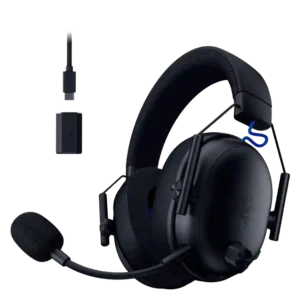
Best for excellent game audio, long-session comfort, clear voice chat, strong battery life, and low-latency wireless. Skip it if you need very high volume, flawless software, or zero tolerance for...
Pros: Overall satisfaction, Sound quality
Cons: Button control usability, Dongle
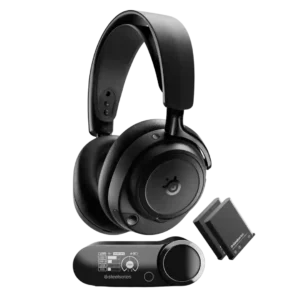
Choose the Arctis Nova Elite if you want top-tier wireless sound, ANC, hot-swap batteries, and multi-device mixing. Skip it if $600 feels excessive, you game on one console, or tight/heavy...
Pros: Sound quality, Connectivity versatility
Cons: Value for money, Carry case quality
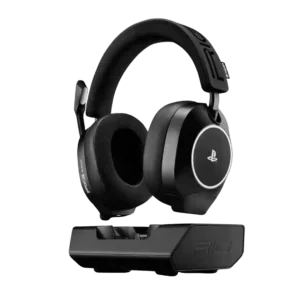
Best for sharp gaming audio, long battery life, an excellent dock, and strong value. Skip it if you need ANC, a detachable mic, maximum console volume, or seamless PS5/Xbox switching.
Pros: Sound quality, Included stand quality
Cons: Detachable microphone convenience
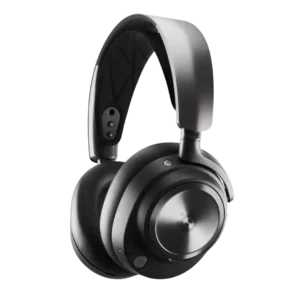
Choose the Arctis Nova Pro Wireless for premium gaming audio, hot-swappable batteries, broad device support, and deep EQ control. Skip it if the high price, mixed mic quality, or uneven...
Pros: Battery, Comfort during long use
Cons: Console compatibility limitations, USB-C