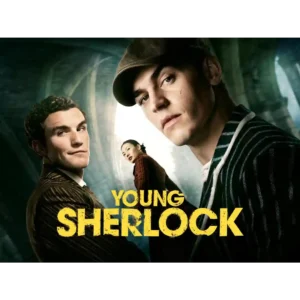

Young Sherlock, Season 1
Where It Has the Edge
- production design is 5.0 vs 4.6. Period Oxford, elaborate sets, props, and international locations are consistently praised as detailed, high-budget, and immersive.

Scorata scores summarize analyzed review evidence on a 1–5 scale; they are not laboratory measurements or a simple average of customer star ratings. Feature scores summarize the reviews covering that feature. The overall score averages feature scores within each review, then combines review averages. When both expert and customer evidence are available, those two groups receive equal weight. Products can have different review coverage, so small score gaps do not establish a winner.
Recommendations prioritize important features for the category, with a score of at least 3.5, a gap of at least 0.25 points and at least two supporting reviews per product. Features with widely varying scores or broad connectivity contexts are excluded from recommendations. These safeguards do not establish statistical significance.
Quick verdict
The available evidence supports the recommendation below, but does not establish an overall winner. Check the remaining features against your priorities.
Choose Young Sherlock, Season 1 for production design.
There is not enough comparable review evidence to recommend Amadeus over the other product.
No clear scored advantage over the other product.
Scores are out of 5. Missing scores mean missing review evidence, not a missing feature.
Multiple reviewers explicitly want another season, citing the open ending, strong character dynamics, and curiosity about where Sherlock and Moriarty go next.
Interest in the project varies from enthusiastic recommendation to outright pre-release boredom with another remake.
Colin Firth’s transformation earns specific praise for its delightful makeup-and-hair disguise.
Aging makeup is a recurring weak spot, with multiple critics calling the older versions distracting or unconvincing.
Reviewers describe the series as comparatively clean and suitable for a broad family audience, with restrained violence and mild suggestive material.
This is not a family-friendly take on Mozart: profanity and explicit sexual material make it unsuitable for younger viewers according to one reviewer.
One critic objects that the series recreates imperial-era Oxford without offering enough perspective on its colonial context.
The series deliberately uses contemporary attitudes and framing. Some reviewers see that as timely and effective, while others condemn the perceived modern ideological overlay.
Several reviewers like how individual episodes build their own hooks while feeding the larger mystery, though others dislike the season-long case swallowing episodic detective storytelling.
The old-age confession framing adds a metafictional layer, but some reviewers find the bookends flatter and less tense than the central story.
The show sustains a brash, playful adventure tone surprisingly well, though some reviewers think its lighter energy undercuts tension or its late escalation pushes too far.
The tonal mixture of bawdy comedy, gritty drama, satire, and tragedy is adventurous but does not feel fully unified to every critic.
The central mystery and family conspiracy are compelling enough to sustain the adventure, though some critics find the story overcomplicated, disjointed, or weaker than its presentation.
The story can be compelling and ambitious, but detractors argue that the expanded plot becomes sparse, repetitive, or uneven across five episodes.
The propulsive mystery makes the season easy to binge for some viewers, while others found the all-at-once experience exhausting or padded enough to benefit from breaks.
At its fastest, the series has enough narrative thrust and energy to encourage a one- or two-day binge despite complaints about slower middle episodes.
The finale delivers major payoffs, revelations, and appetite for more, but reactions are mixed because some twists feel rushed or overstuffed.
The finale earns some of the series’ strongest praise, particularly for its powerful landing and self-aware closing ideas.
The rapid banter and one-liners are often called sharp, witty, and fun, though detractors find the quipping forced, anachronistic, or exhausting.
The sharpest dialogue—especially between Mozart and Salieri—is repeatedly praised as sparkling, venomous, and one of the adaptation’s best-written elements.
Turning Moriarty into Sherlock’s friend and reshaping his family history gives the familiar character a fresh angle, even if some reviewers see the broader prequel formula as derivative.
Opinions split sharply on the need for another Amadeus: some praise the fresh perspective and bold adaptation choices, while others see an unnecessary or infuriating reworking of already-mastered material.
The suggestive material is described as mild, contributing to the show’s relatively restrained TV-14 profile.
The sexual content is deliberately provocative and often very explicit. Some reviewers think it meaningfully exposes character flaws, while others call it gratuitous and limiting for family viewing.
The Holmes family tragedy and the doomed Sherlock-Moriarty friendship provide unusually strong emotional stakes for such a pulpy adventure.
The strongest emotional moments—family tragedy, resentment, and the second episode’s later scenes—land deeply for admirers, though other critics feel the series remains emotionally shallow.
One family-focused review found only a modest amount of language, keeping the show comfortably within a TV-14 range.
Modern profanity and anachronistic language are divisive: some find them witty and playful, while others think the swearing is excessive or adds little.
Episodes usually move quickly and keep viewers engaged, but the middle stretch and finale draw complaints for either dragging or cramming too much into too little time.
Pacing is one of the most recurring concerns: several critics point to lag or rushed beats in the middle episodes, although others find the series fast and bingeable.
The show takes major liberties with Conan Doyle and Andrew Lane, which some viewers embrace as a fresh remix and purists or critics see as barely recognizable Holmes.
As an adaptation, the series gets sharply divided marks: supporters value its new routes and fuller characterization, while detractors believe it diminishes or fails to equal earlier versions.
Princess Shou’an’s wardrobe is praised for avoiding lazy Orientalism, but other reviews criticize the series for thin cultural context and broad stereotypes.
Cultural and casting choices are highly contentious. Some reviewers accept the modernization, while others strongly reject the casting and representation as historically or culturally inauthentic.
The conspiracy, recurring mysteries, and steady curveballs keep tension high, although the lighter tone occasionally softens the urgency.
The rivalry often creates a charged, breathless atmosphere, though some critics feel that tension fades as the five-hour story stretches on.
The season’s overall rhythm is its biggest structural weakness: a fast opening and ending can surround a dull middle, while nonstop revelations leave little breathing room.
The five-hour expansion is a major tradeoff. Some appreciate the added room for character, while several critics find the story padded, repetitive, or exhausting.
The theme music receives unusually enthusiastic praise for amplifying the show’s energy.
One review identifies the classical score as a standout strength that adds emotional depth and authenticity even when the narrative falters.
The deliberately heightened adventure asks viewers to suspend disbelief; some enjoy the scrappy fight authenticity, while others find deductions and conspiracy turns implausible.
Historical realism is one of the weakest areas for accuracy-minded viewers. Several sources flag major inventions and liberties even when they accept them as deliberate historical fiction.
Writing reactions are divided: some praise the tightly threaded mystery and character work, while harsher critics call the subplots weak and the dialogue/material poorly written.
Writing gets sharply mixed reactions: some praise exquisite exchanges and big swings, while harsher reviews call the script banal or less substantial than earlier versions.
The best thematic material comes from grief, family, loyalty, class differences, morality, and the diverging values that will eventually separate Holmes and Moriarty.
The series wrestles with genius, envy, faith, creative insecurity, and power. Admirers find those ideas timeless; detractors think spectacle sometimes replaces genuine depth.
Sherlock and Moriarty’s chemistry is one of the clearest strengths, with their banter, camaraderie, and doomed-friendship dynamic repeatedly singled out as the show’s best element.
The central Mozart–Salieri pairing is one of the series’ clearest strengths, with multiple critics praising the tension and chemistry even when they disagree about the adaptation overall.
The visual photography is consistently praised as polished, immersive, carefully curated, and cinematic.
Cinematography is praised for polished, carefully framed imagery, with some viewer reactions calling the visual craft close to flawless.
The banter, quips, campiness, and comic performances land very well for most reviewers, though a few find the jokes effortful or overly constant.
The bawdy humor, jokes, and irreverence work well for viewers who embrace the show’s deliberately messy, modern energy.
The family history and Moriarty friendship give several characters meaningful arcs, but some critics feel the breakneck conspiracy leaves too little room for reflection or earned growth.
The expanded format gives Mozart, Constanze, and Salieri more psychological space, but critics disagree on whether the supporting characters receive enough depth.
One reviewer especially enjoyed the playful mind-palace device, where remembered characters seem to interact with Sherlock inside his reconstruction.
The finale’s fourth-wall turn is singled out as unusually ambitious and memorable, giving the adaptation a distinctive metafictional flourish.
This younger Sherlock is often described as boyish, accessible, and easy to like, while Moriarty’s charm also wins over many reviewers.
Some critics struggle to empathize with the leads, especially when the characters’ egos and cruelty dominate the drama.
One reviewer thought the show’s Metacritic score understated its quality, placing it closer to a solidly positive reception.
Critical reception is broadly favorable but clearly mixed, with strong praise for performances and craft countered by concerns about pacing, depth, and comparison with the 1984 film.
Costumes are a standout craft element, praised for rich detail, character storytelling, texture, and visual appeal even when historical accuracy is imperfect.
Costumes are widely admired as lavish and beautiful, although one pre-release critic strongly disliked the fit and styling shown in promotional material.
The production is repeatedly described as stylish, polished, cinematic, and visually impressive, even by reviewers who dislike the story.
Visual presentation is a major strength across many reviews, with lavish frames, colorful period atmosphere, and sumptuous styling; a few critics object to washed-out grading or trailer lighting.
Period Oxford, elaborate sets, props, and international locations are consistently praised as detailed, high-budget, and immersive.
Production design is consistently admired for opulent settings, detailed locations, lavish sets, and an immersive sense of courtly spectacle.
The core cast is generally strong, especially Dónal Finn, though Hero Fiennes Tiffin receives more divided reactions and Max Irons draws some notable criticism.
Lead acting is among the strongest points of consensus, especially for Paul Bettany and Will Sharpe, even in otherwise negative reviews.
The modern, high-energy soundtrack helps sell the youthful Ritchie style for many viewers, but others find the choices dated, anachronistic, or potentially quick to age.
The music divides critics more than expected. Some say it comes alive thrillingly, while others argue Mozart’s work is pushed into the background when it should dominate the series.
Performance quality is a major strength overall, with the ensemble repeatedly called superb, phenomenal, fantastic, or assured despite a few sharply negative takes on the leads.
The acting is consistently one of the series’ safest strengths, with reviewers praising the ensemble and repeatedly singling out the principal cast.
The dominant verdict is that the series is lively, fun, and highly watchable even when its logic, fidelity, or depth falls short.
Overall entertainment value ranges from enthusiastic praise to outright rejection. Several critics find the series lively and compelling, while the harshest detractors say they actively despise the remake.
One critic found the exaggerated Victorian accents part of the show’s broad, stereotyped period caricature rather than convincing texture.
The fights and chases are energetic and frequent, but reactions split: some call them inventive and top-notch, while others find them forgettable, overused, or unable to generate excitement.
The show’s treatment of Mozart’s self-destructive drinking and partying is seen by some as part of a meaningful discussion of addiction, pressure, and raw talent.
Sherlock’s characterization can wobble, and one review specifically found his behavior inconsistent across the season.
The season’s cliffhangers land strongly, with reviewers describing them as effective hooks that immediately create appetite for another episode or season.
One critic flags information gaps where characters appear to know things the established continuity has not shown them learning.
Guy Ritchie’s kinetic approach is widely praised for giving the show energy and visual identity, even as a minority finds the imitation of his style overbearing or stale.
Family revelations, rivalry, and intrigue give the adventure real dramatic pull, especially as the season moves into its more personal material.
Fast, rhythmic editing gives the series momentum and style, but the same hyperactive cutting can make scenes feel trailer-like or rushed.
One critic argues the overall running time feels bloated, suggesting the story could have worked better in a much shorter format.
The series borrows recognizable Holmes lore and Ritchie-style DNA without belonging to his Robert Downey Jr. film continuity, a separation reviewers view with both relief and disappointment.
As a mystery-adventure caper, the show is widely enjoyed for its blend of crime, action, humor, suspense, and globe-trotting escapades.
Reviewers enjoy the family history, early mind palace, Moriarty friendship, and other origin-story additions that expand Holmes lore beyond familiar Baker Street territory.
Period authenticity is contested. Some reviewers find the locations and atmosphere convincing, while others feel the modern-looking cast, grooming, and historical liberties break the illusion.
The opening episode is repeatedly praised as a strong, stylish, fast-moving introduction that balances character setup with an engaging case.
The widening conspiracy often becomes difficult to follow, with critics citing logical leaps, too many subplots, and revelations that can overwhelm rather than clarify.
Twists are a major attraction, frequently described as bold, surprising, riveting, and effective enough to propel the binge.
The full-season drop is criticized by reviewers who think the dense plotting and constant reveals would have played better with a weekly release.
The last episode offers big revelations and spectacle but is polarizing because some reviewers find the payoff earned while others call it rushed and overloaded.
Several critics think eight episodes overextend the material and argue a six-episode season or even a film could have preserved momentum better.
Moriarty’s reinvention is widely praised as fresh and compelling, but his late movement toward villainy can feel rushed and inconsistent to some reviewers.
Violence is frequent but generally restrained rather than graphic, which one family-focused critic considers appropriate for the TV-14 range.
The series is generally viewed as accessible to teens and adults, with a comparatively clean TV-14 level and broad family appeal.
Most reviewers see an easy-to-recommend adventure with wide appeal, though a few question whether its youthful remix will satisfy either traditional Holmes fans or Gen Z viewers.
One devoted Holmes reviewer was already rewatching early episodes and expected to restart the season immediately after finishing.
The supporting ensemble is a major asset, with Dónal Finn, Colin Firth, Natascha McElhone, Zine Tseng, and Holly Cattle receiving repeated individual praise.
Oxford, the Holmes family estate, Paris, Constantinople, and the wider Victorian setting create a rich, expansive adventure world that reviewers find immersive.

Best for sharp adult humor, magnetic chemistry and a deeply satisfying farewell. Skip it if familiar will-they-won’t-they plotting or deliberately messy leads are dealbreakers.
Pros: humor, writing quality

Choose Widow’s Bay for its dark laughs, richly haunted island and memorable ensemble. Skip it if you need straightforward scares, rapid answers to every mystery or a completely resolved finale.
Pros: humor, genre satisfaction
Cons: ending satisfaction, season pacing

Choose Season 15 for warm, character-driven comedy, meaningful growth, and a finale that rewards longtime fans. Skip it if the short binge format, uneven replacement voices, or occasional clumsy commentary...
Pros: franchise connection, character development

Best for sharply acted, compassionate, high-pressure hospital drama. Skip it if graphic procedures unsettle you or you need a neatly resolved season finale.
Pros: character development, acting performance
Cons: character consistency, dialogue quality