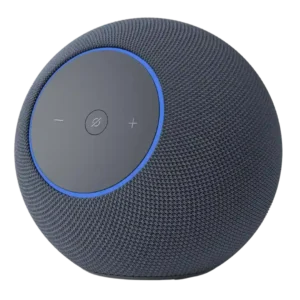
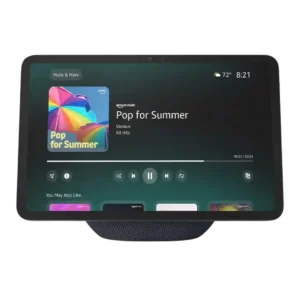
Echo Studio (2nd Gen)
Where It Has the Edge
- Privacy and data is 4.8 vs 1.9. Physical microphone muting and prominent privacy controls are reassuring touches. The app also exposes voice-recording and microphone settings...

Scorata scores summarize analyzed review evidence on a 1–5 scale; they are not laboratory measurements or a simple average of customer star ratings. Feature scores summarize the reviews covering that feature. The overall score averages feature scores within each review, then combines review averages. When both expert and customer evidence are available, those two groups receive equal weight. Products can have different review coverage, so small score gaps do not establish a winner.
Recommendations prioritize important features for the category, with a score of at least 3.5, a gap of at least 0.25 points and at least two supporting reviews per product. Features with widely varying scores or broad connectivity contexts are excluded from recommendations. These safeguards do not establish statistical significance.
Quick verdict
The review evidence points to a tradeoff: Privacy and data versus Small-room suitability and Setup simplicity. Choose according to which strengths matter more to you; the overall score alone does not settle that choice.
Choose Echo Studio (2nd Gen) for Privacy and data.
Choose Amazon Echo Show 11 for Small-room suitability and Setup simplicity.
Scores are out of 5. Missing scores mean missing review evidence, not a missing feature.
Physical microphone muting and prominent privacy controls are reassuring touches. The app also exposes voice-recording and microphone settings without burying them.
Privacy is one of the weakest areas. Multiple reviewers dislike the removal of the physical camera shutter, and some are uneasy about visual recognition, always-listening behavior, or Amazon’s broader data practices.
The enclosure generally feels solid, stable, and premium, with fabric and a weighted base that suit a living-room speaker. There are isolated complaints about uneven fabric or cheaper-feeling materials.
At very high output, one reviewer felt the compact enclosure sounded overextended, which contributed to sharpness and some distortion.
TV dialogue can need a little tuning before it sounds fully clear. One owner found a Fire TV dialogue setting solved an initially muddy presentation.
Dialogue remained consistently intelligible in one film-and-TV test, even while the speaker delivered larger-scale effects around it.
At its best, the Studio presents music and TV audio as a full, coherent wall of sound rather than a tiny point source. Bass limitations and some compressed or muddy mixes can weaken that sense of cohesion.
Some music can sound flat and compressed rather than fully open or involving, especially on layered tracks where vocals and bass bunch into the midrange.
It can get genuinely loud and fill a typical room, but maximum output is a recurring step down from the original Studio. Larger spaces often benefit from using a pair.
Reviewers repeatedly say the speaker gets impressively loud for its size, filling kitchens, bedrooms, living rooms, and even larger spaces without needing maximum volume.
The microphone system is capable of strong far-field pickup, including over loud music, but owner experiences are mixed. Some units hear exceptionally well while others are judged weaker than older Echo devices.
Microphone pickup is consistently strong, with reviewers praising clear voice capture and reliable wake-word detection even in noisy rooms or with music playing.
Detail retrieval is a standout audio strength. Across genres, listeners repeatedly pick out clean textures, instrument separation, and small musical details that cheaper Echo speakers tend to blur.
In one detailed listening test, individual instruments remained easy to distinguish even during a dense crescendo, suggesting strong detail retrieval for a compact smart display.
The overall package earns strong praise for compact design, smart-home breadth, and capable sound, but satisfaction is far from unanimous. Original-Studio comparisons, software bugs, and price pull the experience down for a sizable group.
Overall sentiment is strongly positive toward the hardware and smart-home usefulness. Reviewers commonly recommend it for Alexa households, while software, privacy, and value caveats stop it from being universally compelling.
Tap controls are notably inconsistent. Several owners report missed play/pause gestures, accidental activations, or music stopping when they touch the controls.
Touch response is inconsistent across reviews. Some find it usable, but several report lag, missed swipes, slow reactions, or responsiveness that falls well short of an iPad or phone.
Vocals are generally crisp and easy to follow, especially for podcasts, acoustic material, and many pop tracks. A smaller group found voices recessed or less natural than on competing speakers.
Video-call voice transmission was reported as clear on the receiving end, giving the Echo Show 11 a strong showing for spoken communication.
The speaker usually stays clean at louder levels, with several tests noting little or no obvious distortion. A few owners heard rattling, roughness, or compression when pushed hard.
High-volume behavior is mostly good, with some reviewers hearing no distortion even at very loud levels. One reviewer did hear sharpness and distortion near the top of the volume range.
The compact cabinet is particularly well suited to bedrooms, offices, apartments, and modest living rooms. In larger spaces a single unit can feel undersized, making a stereo pair more satisfying.
The Echo Show 11 fits especially well in kitchens and offices, where its screen remains readable and its speakers provide more than enough volume for everyday use.
The compact hardware runs out of dynamic headroom sooner than the original Studio. DSP and compression keep the speaker controlled, but some material loses punch and requires frequent volume changes.
One reviewer specifically found the speaker short on drive, suggesting limited dynamic energy on certain tracks even though overall loudness is strong.
The smaller, lighter body is easier to place than the old Studio and less visually imposing. Its reduced weight is a practical win for a speaker meant to stay on a shelf or stand.
Despite the large display, one reviewer found the Echo Show 11 lighter than expected, which helps placement and handling.
Mids and highs are often clean and balanced, yet tuning is inconsistent across genres and placements. Some owners hear a mid-heavy, muddy, or overly bright balance until the EQ is adjusted.
Tonal balance is mixed: one reviewer heard muddiness and recessed vocals on some tracks, while another praised punchy bass and balanced frequencies across the spectrum.
The front light ring gives useful visual feedback for listening, mute, volume, and alerts. Visibility is more mixed from the side or in bright rooms, where some owners miss the older top-mounted ring.
The mute indicator is clear when visible, but placement is not ideal. One reviewer likes the obvious red status cue, while another wishes the LED were positioned on the front.
One owner reports unwanted promotional interruptions after adding the Studio, turning an otherwise simple assistant interaction into an annoyance.
Ads and suggested content are a repeated frustration. Reviewers describe frequent, poorly targeted, or continuously cycling promotions that can clutter an otherwise attractive home screen.
Packaging is consistently presented as sturdy and premium, with the speaker and power accessories arriving well protected. The unboxing experience matches the product's higher-end positioning.
Packaging gets unusually strong praise for being neatly presented, easy to open, and in one review eco-friendly.
Music can sound rich, clear, and immersive across many genres, but performance is strongly content-dependent. Bass-heavy or dense rock mixes expose the smaller hardware more readily than vocals, acoustic music, and well-mixed spatial tracks.
Music playback is consistently enjoyable, with fuller sound and stronger bass making the device useful for cooking, cleaning, or casual listening.
The angled front buttons are easy to reach and clearer than the old Studio's controls, while top tapping adds quick playback actions. The basic physical layout is simple even for people who mostly use voice.
The touchscreen interface itself gets mixed marks. Some reviewers find the menus simple and straightforward, while others call navigation crowded, unintuitive, or frustrating compared with voice control.
Response speed is often quick, particularly in expert testing and with the newer processor. Some owners still report multi-second delays, sluggish Alexa+ behavior, or commands that do not execute promptly.
Voice responses can be exceptionally quick, with reviewers describing Alexa as immediate or even replying before a request was fully finished.
The Alexa app can make setup and device management easy, but software polish is uneven. Bugs, awkward device filtering, and early Home Theater issues show that the companion experience still needs refinement.
Software and streaming reliability are recurring weak points, including bugs, sluggish Silk-browser performance, buffering, and weak third-party app support. These issues keep the hardware from feeling fully polished.
Bluetooth is easy and fast on some setups, but it is not consistently dependable. Playback quality and connection behavior are less polished than the speaker's Wi-Fi experience.
Bluetooth playback is described as serviceable, making the Echo Show 11 usable as a conventional Bluetooth speaker when needed.
Review contexts may differ, so use caution when interpreting the score gap.
The built-in hub, Matter, Thread, Zigbee, temperature sensing, presence detection, and routines make this much more than a music speaker. Most smart-home functions work well, though some sensors and integrations still show software gaps.
Smart-home capability is one of the strongest consensus positives. Reviewers value Matter, Thread, Zigbee, routines, presence sensing, camera access, and the ability to centralize household controls.
Alexa and Alexa+ are central strengths when they work well, with natural follow-up conversations and broad smart-home control. Experiences vary from fast and intuitive to slow, inaccurate, or not fully ready.
Alexa and Alexa+ are a major part of the appeal, with many reviewers praising faster, more natural, more conversational control. Experiences are not uniform, however, and some report frequent mistakes or frustrating regressions.
Far-field pickup often hears commands across a room or over loud music, but accuracy is inconsistent. A meaningful group has to repeat requests or finds the new model less attentive than older Echos.
Voice recognition ranges from excellent in noisy rooms to noticeably inconsistent with Alexa+. Several reviewers report reliable wake-word pickup, while others describe misheard prompts or false activations.
At modest levels the Studio can sound balanced and apartment-friendly, but low-volume bass is less convincing on some tracks. One owner also found the lowest usable volume still too loud for bedside listening.
At lower volumes, the speaker remains solid and well controlled, avoiding the harsher character one reviewer heard near maximum output.
An Echo Sub can add the low-end weight the smaller Studio sometimes lacks, and some owners call the combination transformative. Others ran into weak integration, pairing trouble, or questioned the extra cost.
The built-in woofer is credited with adding meaningful low-end weight and helping the Show 11 produce unusually full sound for a smart display.
Bass is the most divisive part of the sound: it can be deep and punchy for such a small cabinet, yet it is repeatedly lighter than the original Studio. Placement, EQ, genre, and listening distance all change the impression.
Bass is generally strong for a smart display, with reviewers describing satisfying thump, low-end weight, and booming output. It will not replace a large dedicated speaker, but it performs above expectations for its size.
A single unit creates useful width and separation, but it does not replace true left-right stereo. Pairing two speakers produces a noticeably broader and more convincing image.
Stereo separation is limited by the close spacing of the drivers. Reviewers still hear some movement, but do not consider the soundstage strongly separated.
Overall sound is clear, detailed, and expansive enough to make this Amazon's strongest current Echo for many listeners. The main split is with original-Studio owners, who often hear less bass, scale, and authority from the smaller redesign.
Sound is a major strength, with repeated praise for full, clear, room-filling output and stronger performance than older Echo displays. A minority find some tracks muddy or note limitations at the extremes.
Dolby Atmos and spatial processing can make music and movies feel much larger than the cabinet, especially with supported content or multiple speakers. The effect is convincing rather than true discrete surround from one unit.
Spatial-audio playback can give films convincing scale and impact, helping action scenes feel larger than expected from the compact speaker base.
The braided cable looks and feels premium, but cable design is not universally practical. One owner strongly criticizes the short proprietary lead, while another simply wishes it were longer.
Opinions split on the power setup: one reviewer praises the thick, durable cord, while another dislikes the proprietary connector and absence of USB-C.
The compact spherical redesign is widely admired for looking cleaner, more modern, and easier to place than the old cylinder. A minority dislike the ball shape, larger horizontal footprint, or fabric finish.
Reviewers consistently like the slimmer, floating-screen look, calling it sleeker, more premium, and easier to place in modern rooms. The redesigned form is one of the clearest hardware wins.
Full-price value is the product's biggest recurring objection. Sound and smart-home features can justify the cost for committed Alexa users, but many buyers recommend waiting for a sale or keeping an older Studio.
Value is highly context-dependent. Buyers who want the larger screen and use Alexa heavily may find the price fair, but many reviewers say the cheaper Echo Show 8 delivers nearly the same core experience and advise waiting for discounts.
Setup is one of the strongest consensus positives: many owners are playing music within minutes, and pre-linked Amazon accounts make it nearly plug-and-play. A few multi-speaker or TV configurations need extra manual work.
Setup receives consistently strong marks. Reviewers describe it as quick, guided, and especially easy for households that already use Alexa devices.
The speaker's self-powered design removes the need for a separate amplifier. That makes it easy to use as a standalone room speaker without extra audio hardware.
Compatibility with older Echo setups is not seamless in every case. Owners report pairing or grouping behavior that makes the new Studio feel less interchangeable with previous generations than expected.
Extended playback produces little heat and avoids battery-management overhead. The plug-in design gives the speaker consistent power during long listening sessions.
Alexa Home Theater can deliver a surprisingly immersive, room-filling TV experience once it is working. Setup and compatibility are the tradeoff: some users see effortless pairing, while others cannot get supported Fire TV hardware to link reliably.
Stereo and multi-room connections can noticeably improve width and fullness when they stay linked. Group dropouts, low-volume secondary speakers, and re-pairing hassles remain recurring frustrations.
The optional magnetic stand is praised for attaching securely and enabling easy angle adjustment without feeling loose.
The large screen improves visibility but takes up noticeable counter or desk space, making placement a tradeoff in already crowded areas.
When used with Fire TV Home Theater, the Fire TV remote can control the grouped speakers as one system. That simplifies everyday volume and playback control.
The fixed screen angle is a repeated ergonomic complaint because tilt and rotation generally require the optional stand. One reviewer strongly liked the magnetic stand once fitted, but several consider the extra purchase an avoidable compromise.
Video calling is generally praised, particularly for accurate auto-framing and clear, natural-looking calls. Reviewers who use the camera find it effective, though not everyone considers video calling essential.
Long-term sustainability receives little attention, but one owner specifically dislikes replacing aging Echo hardware and the resulting electronic waste. That concern stands largely alone in this set.
The threaded base is a useful placement option for buyers who want a stand or wall-mount solution. Owners specifically appreciate being able to use standard 1/4-inch mounting hardware.
TV connection stability is one of the rougher areas. Some systems work cleanly, but many owners report failed Fire TV links, update loops, disconnects, or compatibility quirks that undermine Home Theater use.
Lip sync over Home Theater can require adjustment, and one test noticed an initial delay. Built-in tuning can correct it, but the experience is not always perfect out of the box.
Lossless, Dolby Atmos, Sony 360 Reality Audio, and high-resolution streaming support add real flexibility for compatible services. Spatial formats sound especially good when the source material is properly mixed.
One owner specifically praises how well the speaker rejects background noise while still hearing voice commands. That is encouraging, though direct commentary on this trait is limited.
The 11-inch screen is widely praised for brightness, color, sharpness, and easy readability at a distance. A few reviewers flag reflections, grayish blacks, or only-average close-up sharpness, but the larger display is still a major strength.
Multi-directional drivers spread sound effectively through open spaces, giving more even coverage away from the speaker's front. Owners replacing conventional bookshelf setups particularly appreciate the broader room coverage.
The loss of the 3.5mm and other wired audio inputs is one of the most consistent complaints. Buyers who want legacy or direct-source connections are pushed entirely toward wireless playback.
There is no battery, so this is strictly a plug-in home speaker. That stationary design is a real limitation for anyone expecting portable Bluetooth use.
Bluetooth audio works, but support is limited to the basic SBC codec. That is functional for casual playback rather than a premium wireless-audio implementation.
Bluetooth pairing can be quick and stable, but reliability is inconsistent across units. Some owners describe repeated disconnects or having to reconnect manually.
The app's EQ can meaningfully improve bass and tame bright or mid-heavy tuning, and some owners found the speaker much better after adjustment. Others feel the simple controls cannot fully correct the sound.
Multi-speaker setups can be smooth once configured, including stereo and Home Theater groups. Reliability is uneven, though, with pairing failures and regrouping problems appearing alongside seamless experiences.
Wi-Fi streaming is generally stable and straightforward, with several owners reporting uninterrupted playback and easy reconnection. Isolated network-specific dropouts keep it from being universally trouble-free.
Removing the optical input is repeatedly treated as a downgrade from the original Studio. It limits direct connections to older TVs and audio gear.
Continuous wall power gives consistent performance for long sessions, but reliability is not flawless. At least one owner reports restart and power-related behavior that interrupts normal use.
Spotify reliability is a clear weak spot in the small set of comments that address it. Owners report playback stopping, disconnecting, or working only intermittently.
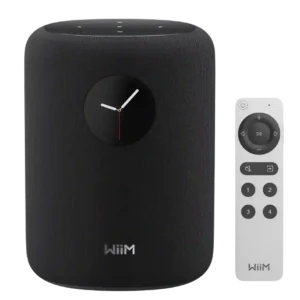
Best for flexible multi-room streaming, deep EQ, RoomFit, and strong vocal clarity. Skip it if AirPlay, built-in hands-free voice control, or class-leading bass and dynamics matter most.
Pros: Overall product quality, Overall sound quality
Cons: AirPlay compatibility, Smart assistant integration (Alexa
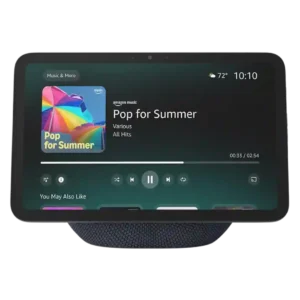
Best for a polished Alexa smart-home hub with fast voice response, a bright display, and much stronger audio. Skip it if a physical camera shutter, cleaner home screen, or the...
Pros: Overall product quality, Smart features
Cons: Privacy and data, On-device controls
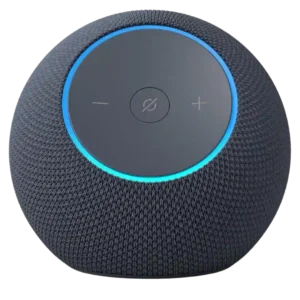
Best for a compact Alexa hub with stronger bass, easy setup, and broad smart-home support. Skip it if you want wired audio, slick manual controls, or a clear full-price upgrade...
Pros: Overall sound quality, Smart features
Cons: Value for money, On-device controls
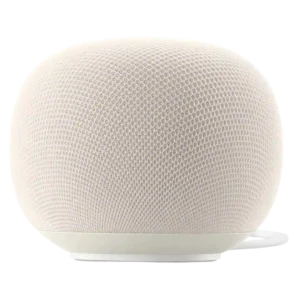
Best for effortless setup, strong microphones, fast Gemini control, and compact room-filling sound inside Google Home. Skip it if you own Nest Audio, prioritize refined music, dislike fixed cables, or...
Pros: Music performance, Voice assistant responsiveness
Cons: Value for money, Bass performance