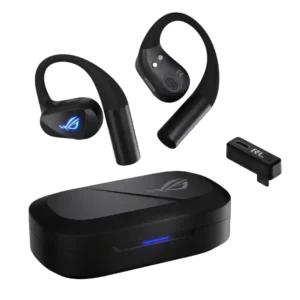
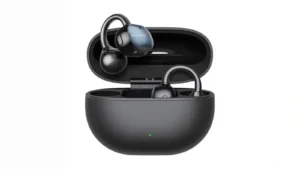
Asus ROG Cetra Open
Where It Has the Edge
- Audio-video sync accuracy is 5.0 vs 4.5. Low-latency gaming is one of the clearest strengths. The 2.4GHz dongle repeatedly delivers near-wired responsiveness and excellent sync...

Scorata scores summarize analyzed review evidence on a 1–5 scale; they are not laboratory measurements or a simple average of customer star ratings. Feature scores summarize the reviews covering that feature. The overall score averages feature scores within each review, then combines review averages. When both expert and customer evidence are available, those two groups receive equal weight. Products can have different review coverage, so small score gaps do not establish a winner.
Recommendations prioritize important features for the category, with a score of at least 3.5, a gap of at least 0.25 points and at least two supporting reviews per product. Features with widely varying scores or broad connectivity contexts are excluded from recommendations. These safeguards do not establish statistical significance.
Quick verdict
The review evidence points to a tradeoff: Audio-video sync accuracy versus Portability/foldability and Maximum volume clarity. Choose according to which strengths matter more to you; the overall score alone does not settle that choice.
Choose Asus ROG Cetra Open for Audio-video sync accuracy.
Choose SoundPEATS UU2 for Portability/foldability and Maximum volume clarity.
Scores are out of 5. Missing scores mean missing review evidence, not a missing feature.
Sound quality is good for many gaming-focused users, especially for dialogue and positional cues, but it is not a universal win. Some reviewers hear clean, detailed audio while others describe the presentation as thin, compressed, or harsh.
Sound quality earns unusually strong praise for an inexpensive open-ear model, with clear mids, controlled treble and much fuller bass than reviewers expected. It still cannot match the isolation, sub-bass pressure or ultimate fidelity of a good sealed in-ear design.
Bass is the most divisive part of the tuning. Phantom Bass can add useful punch, but many reviewers still hear weak sub-bass or thin impact compared with sealed earbuds, while a smaller group finds the low end surprisingly satisfying.
Bass is one of the UU2’s standout strengths, with reviewers repeatedly praising its punch and weight for an open-ear design. Deep sub-bass still trails sealed earbuds, and positioning or aggressive DynamicEQ can make the low end less consistent.
Positional performance is strong for games, especially footsteps and directional cues. A few tests find rear localization or Dolby Atmos rendering less convincing.
Spatial Audio is one of the most divisive features. Movie mode can add useful width, but several reviewers preferred it off for music because it thinned the mids, reduced bass or added an artificial effect.
Passive isolation is essentially nonexistent by design. That is useful for awareness, but it makes noisy environments and fully immersive gaming poor fits.
Passive isolation is weak by design: outside noise remains audible and loud environments can overwhelm the music. That limitation is the flip side of the strong situational awareness many reviewers wanted from an open-ear product.
Noise suppression works well in many tests, keeping speech understandable while reducing fans, background media, and ambient chatter.
Noise reduction can keep speech intelligible and suppress steady background noise well, but performance is inconsistent in wind. Some reviewers found outdoor filtering impressive, while others reported wind overwhelming the processing.
Low-latency gaming is one of the clearest strengths. The 2.4GHz dongle repeatedly delivers near-wired responsiveness and excellent sync for shooters, rhythm games, handhelds, and console play.
Video and gaming latency was generally low, especially with Game Mode enabled; several reviewers found synchronization effectively unnoticeable for everyday viewing.
Reliability is the biggest technical concern. Multiple customer reviews report disconnects, one-sided audio, distortion, failed updates, beeping, or erratic behavior, although some users find later firmware dramatically improves performance.
Firmware updating is generally straightforward, but software did not solve the persistent connection problems on one test unit. Another reviewer also encountered a minor app-language/update hiccup.
Leakage is better controlled than some open-ear designs, though nearby people may hear faint audio in quiet rooms or at higher volumes.
Some leakage is unavoidable at higher volume in quiet spaces, but Privacy Mode noticeably reduces what nearby people can hear. It helps rather than creating complete privacy, and it changes the tonal balance while active.
The open design generally creates a spacious presentation, with several reviewers praising the wide soundstage and stereo image.
The open fit produces a broad, airy stage with respectable separation and spatial cues. Imaging is adequate to strong, though not as precise or three-dimensional as better sealed alternatives.
Default tuning was described as reasonably clean and usable, though one reviewer still preferred the flatter EQ setting.
One detailed listening test found the default balance fairly flat across bass, mids and highs, with a natural overall timbre rather than exaggerated coloration.
One customer received a unit that appeared used or refurbished, with misaligned protective films and a dead earbud.
Packaging was described as tidy and well protected, with the earbuds and essentials presented appropriately for the price.
Portability is a recurring weakness because the charging case is unusually large and thick. Several reviewers say it is barely pocketable or not pocket-friendly at all.
The compact charging case slips easily into a pocket and reviewers repeatedly found the overall package easy to carry.
At high levels, clarity can break down with sharp treble or bass distortion. The earbuds have plenty of headroom, but pushing them hard is not their best use.
The UU2 can play unusually loud for clip-on earbuds while remaining mostly clean and controlled. A few tests noted slight harshness, tonal change or bass distortion only near the highest levels.
Treble is another polarizing area. Some reviewers praise crisp detail, but many hear excessive brightness, sibilance, or piercing highs at louder levels.
Treble is generally clear, crisp and controlled without the harsh glare common to cheap earbuds. Some reviewers found it slightly bright or short of premium-level air, with occasional harshness only at very high volume.
The dongle and charging cable are useful additions, while the reflective neck strap is more mixed because some find it stiff or uncomfortable.
The package includes the basic essentials without clutter, and one reviewer particularly liked the clear, useful printed manual.
The earbuds get very loud, but the volume curve is uneven. Several reviewers complain that even low settings are too loud, while others appreciate the strong headroom.
Output is unusually strong for an open-ear design, with most reviewers finding moderate settings already plenty loud. The extra headroom also helps outdoors where ambient noise competes with the music.
Android use is generally workable, though one test still found the volume curve aggressive. The earbuds remain usable on Android without the sharper low-volume problem being quite as severe as on iOS.
Android users get the fuller feature set, including LDAC support, and reviewers reported straightforward operation on Android phones.
The included charging cable received a positive mention and was viewed as a useful part of the package.
The included charging cable works, but one reviewer called the USB-A-to-USB-C choice dated for 2026.
Wear detection is a useful convenience, automatically stopping playback when the earbuds are removed.
Wear detection and other smart sensors are absent, but most reviewers treated that omission as minor at this price. A few still noted automatic pause as a convenience they would have liked.
The case draws mixed reactions. Some owners like its quality and dongle storage, but many reviewers criticize its bulky size, plasticky feel, or missing premium touches.
Most reviewers liked the compact, matte case, its magnets and premium-feeling finish. One reviewer encountered sticking charging pins that could leave a bud uncharged, making case reliability the main exception.
The dongle works across a wide range of PCs, handhelds, phones, and consoles, but platform-specific quirks appear on Steam Deck, Mac, and PS5 in some reviews.
Reviewers connected the UU2 successfully across phones and computers, making it a practical cross-platform option for mixed-device use.
Presets and Phantom Bass can improve the listening experience, but results vary. Some users call Phantom Bass essential, while others find presets subtle or dislike the default communication profile.
One reviewer called the app’s large selection of EQ presets better than average, giving useful ready-made tuning choices.
Overall opinion is polarized but leans positive for the right niche. Fans love the comfort, awareness, and gaming responsiveness, while critics are pushed away by price, sound compromises, or software instability.
Overall sentiment is strongly positive, driven by sound, comfort, features and price. The clearest exception is one reviewer whose persistent Bluetooth and charging-case problems prevented an unqualified recommendation.
Mids are usually a strength, with clear dialogue, vocals, and footsteps. A few reviewers hear lower-mid thinness, but speech intelligibility remains strong.
The midrange is a major strength, with clear, natural vocals and good instrument texture that stays present even when the bass is energetic. Only critical listening exposed a modest loss of fine detail versus pricier in-ear models.
Glasses compatibility is consistently excellent, with thin hooks and low pressure working well alongside frames. One expert also found the fit comfortable with hats and sunglasses.
Glasses compatibility is excellent: the slim clip sits around the outer ear instead of competing for space behind it. Reviewers also reported no meaningful interference with hats.
IPX5 earbud protection is viewed as well suited to workouts, sweat, and light rain, supporting the product’s gaming-and-fitness crossover use.
The IPX5 protection was consistently viewed as suitable for sweat, workouts and light rain. Reviewers still cautioned that the UU2 is not intended for swimming or full water immersion.
Physical fit is highly secure for most users. The hooks stay put during running, workouts, and active movement, though a few ear shapes struggle with fit.
Most reviewers found the clip secure for walking, running and workouts, often reporting no shifting at all. One test noted slight movement during high-intensity exercise, so security can still depend on ear shape and activity.
Situational awareness is nearly universally praised. Reviewers can hear conversations, doorbells, traffic, children, and room activity without removing the earbuds.
Situational awareness is universally praised: the open design keeps traffic, conversations, doorbells and other surroundings audible while music continues. This is a central reason reviewers favored the UU2 for walking, cycling, work and exercise.
Game-audio separation is consistently strong. Reviewers can distinguish footsteps, dialogue, and competing sounds clearly enough for competitive play.
Separation is repeatedly praised, with layered vocals, guitars and busy arrangements staying distinct instead of smearing together. A few reviewers stopped short of calling it analytical-grade imaging.
Price is the most consistent purchasing objection. Even positive reviewers often call the $230 class price steep, and several experts say cheaper gaming earbuds or headsets offer better overall value.
Value is close to unanimous praise: reviewers repeatedly said the UU2 competes with substantially more expensive open-ear models while delivering strong sound, comfort, battery life and features at around the $50 level.
ASUS acknowledged a reported Steam Deck issue and said it was being investigated, but did not promise a fix.
One reviewer specifically described SoundPEATS customer support and online service as very good.
AAC and SBC are considered adequate for the gaming-focused use case, though one expert would have preferred higher-bandwidth codec options.
SBC and AAC provide broad compatibility, while LDAC gives compatible Android devices a higher-bitrate option that reviewers considered unusually generous at this price.
Multipoint is excellent when it works, with fast switching and useful dual-device behavior. Several reviews, however, criticize unpredictable switching or the lack of simultaneous audio in certain setups.
Multipoint switching between two devices was consistently described as useful and generally seamless. The main tradeoff is that LDAC must be disabled while multipoint is active.
Manual voice-assistant activation via a triple press was viewed as redundant and not a good use of the control scheme.
One reviewer praised being able to communicate with Siri on the fly, making voice-assistant access a useful hands-free convenience.
Setup experiences vary sharply. Some users get simple plug-and-play operation, while others encounter hidden apps, multiple utilities, web-only controls, or convoluted firmware update steps.
Pairing and basic setup are generally quick and uneventful, with firmware updates easy for most users. Minor friction included one app-language glitch and a few interface complaints.
Gear Link is polarizing: several reviewers love the browser/mobile flexibility and deep controls, while others find it buggy, hidden, web-dependent, or awkward during firmware setup.
The companion app is unusually feature-rich for the price, with EQ, button remapping, Privacy Mode, Find My and other tools. Most found it useful, though a few called setup clunky or noted minor software quirks.
Physical buttons are easy to find and tactile, but the default multi-press scheme is contentious. Four presses for volume and three presses for mute or assistant functions feel unnecessarily cumbersome to several reviewers.
Physical buttons are overwhelmingly preferred to touch controls because they give clear tactile feedback and avoid accidental commands while adjusting the fit. Minor complaints include small, flush buttons and one test unit with a noticeable response delay.
Bluetooth works well for ordinary listening in several reviews, but reliability is inconsistent. Some owners report slow pairing, disconnects, or worse sound than the 2.4GHz dongle.
Most reviewers found Bluetooth 6.0 pairing, range and reconnection stable, but one test unit suffered frequent connection failures and dropouts even at very short range. Reliability therefore appears strong in most tests but not universal.
The EQ is highly useful and often materially improves the sound. Several reviewers say tuning or Phantom Bass turns a mediocre out-of-box presentation into something much better.
EQ flexibility is extensive, with custom, adaptive and DynamicEQ options giving plenty of control over the tuning. DynamicEQ often improves bass, though some listeners found it too heavy and one review disliked account-gating for certain EQ tools.
Mic quality is mixed but generally usable. Many reviewers find voice chat clear and good for earbuds, while several customers report thin, robotic, or poor-sounding voice transmission.
Call quality is mixed rather than a core strength. Several reviewers had clear, natural indoor calls, but others reported reduced clarity, tinny tone or weak performance in noisy and windy conditions.
The styling splits opinion. Some like the flashy gaming look and RGB accents, while others call the buds chunky, angular, oversized, or unattractive.
The design is generally viewed as clean, understated and more premium-looking than the price suggests, although one reviewer considered the basic clip form fairly generic.
Comfort is the product’s strongest consensus advantage. Most reviewers can wear the buds for hours without ear-canal pressure, though a minority experience cartilage pain or poor fit depending on ear shape.
Long-term comfort is the most consistent strength in the coverage. Reviewers repeatedly wore the UU2 for hours or a full workday without canal pressure, soreness or meaningful fatigue.
The earbuds themselves are generally seen as solid or premium, but impressions are less consistent around the plastics. Several reviewers think the materials feel good, while others say parts of the package feel cheaper than the price suggests.
The earbuds generally feel better built than their budget price suggests, with several reviewers describing them as premium or sturdy. A few noted that parts of the housing still feel plasticky.
The ear-hook design applies little pressure for at least one reviewer, helping the buds stay comfortable during long sessions.
The flexible clip applies little pressure and repeatedly avoided pinching or soreness, even during long sessions and with glasses.
Low weight is consistently praised and helps the earbuds disappear during long sessions despite their visibly chunky shape.
At roughly 5g per side, the earbuds are repeatedly described as barely noticeable, with several reviewers forgetting they were wearing them.
Battery life is usually strong, often lasting through long gaming sessions and in some tests approaching the advertised figures. Heavy use of RGB, Immersion Mode, Phantom Bass, or the mic can cut runtime substantially.
Battery life is consistently praised, with real-world tests commonly landing around a full workday per charge and the case extending use substantially. LDAC and louder playback reduce runtime, but endurance remains a major strength.
Charging is a strong part of the package, especially the USB-C passthrough on the dongle and quick top-ups. One defective unit failed to charge, but most reviewers praise the convenience and speed.
Quick charging is a useful strength and the case recharges over USB-C, with several reviewers praising short top-ups for emergency use. Full charging can take a while, and one test unit had unreliable case-pin contact.
Immersion Mode only softens steady background noise and is nowhere near full ANC. A few users notice a small benefit, but most reviewers treat noise reduction as secondary to the open-ear design.
The 2.4GHz USB-C dongle is central to the appeal, delivering excellent low-latency gaming and useful passthrough charging. A few units show disconnects or awkward port blocking, so reliability is not universal.
The rounded arm allows useful rotation around the ear, making it easier to dial in a comfortable position.
The Find My tools are useful for locating misplaced earbuds, though one reviewer found the audible locating function less helpful than expected.
Fit is usually secure, but sound is sensitive to placement and individual ear shape. A few millimetres of movement can change bass and volume, so some users may need a short adjustment period to find the best position.
The built-in microphones are considered decent for an earbud design, especially for casual chat rather than broadcast-quality recording.
LDAC is a notable value feature and several reviewers heard worthwhile gains in clarity or detail on compatible Android devices. It cannot be used at the same time as multipoint, so users must choose between fidelity and convenience.
The open design provides a very natural ability to hear your own voice during chat, which one reviewer particularly appreciated.
The matte, oil-resistant case finish was repeatedly praised for resisting fingerprints and staying cleaner than glossy budget cases.
One video describes the controls as responsive and intuitive, giving them a very positive usability assessment.
The open-ear effect was judged more natural and effective for hearing surroundings than typical electronic transparency modes.
USB-C implementation is excellent where discussed, particularly the case-friendly dongle plug and passthrough charging that keeps handhelds or phones powered.
Xbox support is absent, which one reviewer flags as a concrete platform limitation even while noting the broader USB-C ecosystem constraint.
One reviewer specifically described the charging-case hinge as solid.
Automatic left/right assignment is a small but widely praised convenience, letting either earbud go in either ear or charging slot without checking markings.
RGB controls are extensive and easy to personalize, with effects, brightness, and colors available. Some reviewers enjoy the style, while others see lighting as garish or unnecessary battery drain.
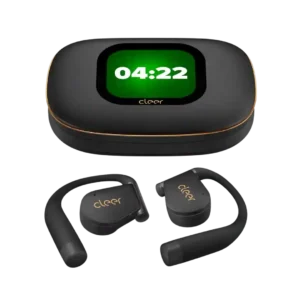
Best for all-day comfort, secure open-ear awareness, long battery life, and a genuinely useful touchscreen case. Skip it if deep bass, strong isolation, compact size, or consistently premium music quality...
Pros: Overall satisfaction, Carry case quality
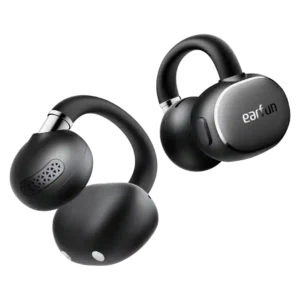
Best for lightweight all-day comfort, outstanding battery life, dependable physical controls, and premium features at a budget price. Skip it if you need deep bass, noise isolation, flawless high-volume sound,...
Pros: Overall satisfaction, Sound quality
Cons: Maximum volume clarity, Noise isolation (passive)
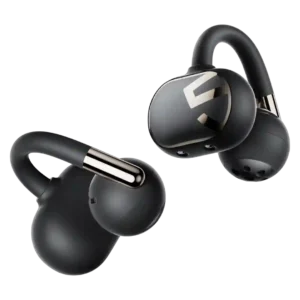
Best for featherlight all-day comfort, secure workout fit, strong open-ear sound, and unusually rich features for the price. Skip it if you need ANC, deep sub-bass, high volume in noisy...
Pros: Comfort during long use, Sound quality
Cons: Carry case quality, Touch control responsiveness

Choose these for secure, comfortable running with excellent outdoor awareness and improved bass. Skip them for noise isolation, swimming, or immersive music at a lower price.
Pros: Sound quality, Overall satisfaction
Cons: Volume output, Sound leakage