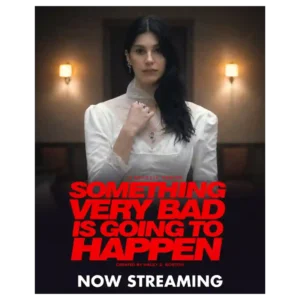
Something Very Bad Is Going to Happen, Season 1
Where It Has the Edge
No clear scored advantage over the other product.

Scorata scores summarize analyzed review evidence on a 1–5 scale; they are not laboratory measurements or a simple average of customer star ratings. Feature scores summarize the reviews covering that feature. The overall score averages feature scores within each review, then combines review averages. When both expert and customer evidence are available, those two groups receive equal weight. Products can have different review coverage, so small score gaps do not establish a winner.
Recommendations prioritize important features for the category, with a score of at least 3.5, a gap of at least 0.25 points and at least two supporting reviews per product. Features with widely varying scores or broad connectivity contexts are excluded from recommendations. These safeguards do not establish statistical significance.
Quick verdict
The available evidence supports the recommendation below, but does not establish an overall winner. Check the remaining features against your priorities.
There is not enough comparable review evidence to recommend Something Very Bad Is Going to Happen, Season 1 over the other product.
Choose Sterling Point for humor and entertainment value.
No clear scored advantage over the other product.
Scores are out of 5. Missing scores mean missing review evidence, not a missing feature.
The limited-series ending does not create strong demand for another season, with at least one response explicitly preferring the story to remain complete.
Several reviewers explicitly want a second season, citing unresolved family threads and continued investment in the characters rather than a cliffhanger alone.
Rachel is repeatedly asked to surrender the resolve established early on, and some later character choices feel driven by plot mechanics rather than personality.
Character choices are praised for staying true to established personalities even when viewers might wish someone would behave differently.
The excessively dim, color-drained presentation can flatten dramatic scenes as well as the scares.
The emotional drama can be thoughtful and layered, but its deliberately gentle approach sometimes makes major conflicts feel tamer than their setup suggests.
The marriage-and-soulmate premise is compelling and thematically rich, but reactions split over whether the mystery coheres or collapses under its own mythology.
The family mystery and sister relationship drive a compelling season, though some reviewers think the show occasionally gets lost among too many plot threads.
Rachel’s final turn is framed as an earned reclaiming of agency rather than punishment, giving the woman-centered story a satisfying sense of self-determination.
Adult and teen mistakes are often treated with compassion, but some reviewers felt parental oversight and consequences were too light, especially around major family decisions.
The family’s oddness often stays just plausible enough to be unnerving, but characters’ refusal to leave and several coincidence-heavy decisions strain credibility.
Authentic conversation and emotionally recognizable teen behavior are recurring strengths. The biggest realism caveats are extreme parental absence, wealth-fueled freedom, and occasionally fairy-tale convenience.
The season’s loose chaptering is uneven, but standout formats—including home video, found footage, and a frantic wedding-morning episode—give individual installments identity.
Reaction coverage praised the construction of key episodes for delivering multiple strong scenes and satisfying emotional beats.
The bloody wedding payoff is fitting, chaotic, and exhilarating for many, but others find it anticlimactic, underexplained, or insufficiently earned.
The final episode is generally praised for strong emotional payoff and a satisfying stopping point, although some reviewers wanted more answers to lingering family questions.
The road-trip premiere establishes dread immediately and was repeatedly called terrific, chilling, or the season’s high-water mark.
The pilot has an effective shock hook, but several reviewers found its setup slower, messier, or harder to settle into than the stronger later episodes.
Morbid jokes and absurd family behavior provide useful pressure relief without breaking the sinister tone, even if the comedy rarely produces big laughs.
Humor is praised for feeling organic to the characters and for relieving heavier family drama without undercutting it, with Connor frequently serving as comic relief.
The family gradually gains texture, especially Jules and Nell, but Nicky and several supporting figures remain too thin for a story built around relationship choices.
Character growth is a major strength, especially Annie and Ramona learning from each other and building a family bond. A few side arcs feel incomplete or compressed.
The couple’s teasing banter and the family’s morbid speeches can ring true, but repetitive exposition and limited intimate conversation weaken the relationship writing.
Natural teen dialogue is one of the strongest areas of agreement, with praise for overlapping speech, filler words, humor, and current vernacular. A handful of critics found some lines stilted, cringey, or overly polished.
Heavy profanity adds to the adult tone and limits suitability for viewers who prefer cleaner dialogue.
Content-focused reviews strongly criticize the amount of harsh profanity, including very frequent use of the f-word.
The broad destination is obvious from the title, but the shifting threat, dense red herrings, and hazy curse mechanics leave major parts of the journey difficult to follow.
The expanding family tree and layered secrets can become confusing even for viewers who ultimately understand how the relationships fit together.
The harshest appraisal blames a weak script for unearned choices, broken character logic, and an ending the story has not properly justified.
A content-focused critic felt the mystery would be stronger with a tighter script that kept more attention on the central plot.
Loose ends, unexplained healing, location logic, and shifting character behavior create noticeable continuity and internal-logic problems.
The loose, improvisational style occasionally creates plotting gaps; one reviewer specifically called out glaring plot holes.
Pacing is the central divide: admirers enjoy the slow accumulation of dread, while detractors find the first half padded, stalled, and far too long.
Pacing is one of the clearest tradeoffs: some love the luxurious, unhurried rhythm, while others think the season stretches reveals, rushes side arcs, or becomes heavy in the back half.
The midpoint reversal and later reveals repeatedly reshape the story and produce real shocks. Some turns are predictable, contrived, or arrive in such quantity that they muddy the whole.
The family reveals are usually praised as surprising and well timed, with multiple reviewers saying they genuinely did not see key turns coming. A minority felt some late twists chased shock over payoff.
The early episodes can feel aimless and repetitive, though the real-time wedding-morning chapter earns praise for using a slower rhythm with purpose.
Individual episodes can start unevenly: some reviewers found the opening stretch either too frantic to absorb or too slow to maintain momentum.
Graphic gore, sexual material, profanity, and adult relationship themes make this unsuitable as family viewing.
Reviewers focused on family suitability say the profanity, sex, alcohol, weed, and smoking outweigh the show’s sweeter family themes for younger audiences.
Familiar wedding and in-law horror ingredients are rearranged with confidence and surprising perspective shifts, though a minority sees the homage as derivative.
Although the show uses familiar summer-romance and secret-family tropes, reviewers strongly value it as original IP and repeatedly say it makes those ingredients feel fresh.
Colin Stetson’s ominous music intensifies dread without overwhelming the story, and the recurring musical motifs become part of the show’s identity.
One review specifically praises how the music is placed to strengthen emotional beats without feeling manipulative.
Marriage, soulmates, inherited family trauma, belief, respect, and women’s agency give the horror genuine substance. The ideas can be heavy-handed or left incomplete, but they remain central.
Reviewers consistently praise the show for treating grief, identity, adoption, class, parental wounds, sisterhood, and growing up with more depth than a romance-first YA drama.
Rachel and Nicky feel warm, flirtatious, and companionable, while a subtle emotional distance makes doubts about their compatibility believable.
Chemistry is a standout, especially the evolving Annie-Ramona sister bond and the wider friend group. Reviewers consistently say the relationships feel lived-in rather than assembled around plot mechanics.
Strategic camera movement, lighting, and extended takes produce sustained unease, with the home-video and near-continuous-shot episodes singled out as especially effective.
Direction is praised for intimacy, emotional observation, and a confident sense of place, with Megan Park’s work repeatedly highlighted for keeping heightened material grounded.
The show blends psychological, supernatural, body, and folk-horror ideas with dark comedy. Its ambition delights genre fans, though the abundance of tropes can feel overstuffed.
Critics repeatedly say the series refreshes familiar YA ingredients with wit, empathy, maturity, and a stronger focus on family and identity than romance alone.
A recurring complaint is that eight episodes are excessive; several critics argue the material would work better as six chapters or a feature film.
Two reviewers argue eight episodes are not enough for everything the ensemble and family story are trying to develop, especially secondary arcs.
Sustained unease is the show’s signature achievement, built through ominous details, isolation, sound, and uncertainty rather than constant jump scares.
The family mystery hooks many viewers and encourages continued watching, though one critic found the mysteries interesting without enough narrative pull.
The final episode is widely admired as a bloody, haunting, and audacious finish, even among reactions that find the road there uneven.
The season finale is described as jaw-dropping and admirable, with its emotional revelations providing a strong late payoff.
Sex is present without explicit nudity, but the strange foreplay and adult relationship context reinforce that this is not light or family-safe viewing.
Family-oriented reviewers find the teen sexual material too mature, while other critics specifically appreciate that the show can be sexy and sex-positive without feeling exploitative.
The female-led creative perspective gives the marriage horror a distinct emphasis on women’s intuition, pressure, and agency.
Queer relationships and a diverse friend group are widely praised for feeling normalized, central, and non-tokenized. One faith-based source strongly objected to that same content, making this a clear values-dependent split.
Several reactions describe losing sleep, watching rapidly, or being unable to stop once the mystery takes hold. The oppressive mood was intense enough that at least one viewer needed a break after the premiere.
Reviewers repeatedly describe the season as addictive, hard to switch off, and easy to finish in one sitting; several actually binged all eight episodes at once.
The series leaves a lingering residue of discomfort, dread, and sadness; even positive reactions describe an experience that sticks in the mind afterward.
Grief, sisterhood, family revelations, and the finale land hard for many reviewers, several of whom describe crying, feeling gut-punched, or being unexpectedly moved.
Some viewers already cherish the one-time discovery and would gladly revisit the craft, while others say the oppressive experience is not something they expect to repeat.
Some viewers are already encouraging rewatches or expect the series to become an easy comfort/background rewatch.
For the right audience, it is a fun, bold familial goth romp with memorable set pieces. Its scattershot storytelling keeps that enjoyment from being universal.
The overall response is strongly positive: reviewers call it charming, fun, compelling, and easy to recommend even when acknowledging familiar tropes or structural flaws.
Gus Birney, Jennifer Jason Leigh, Jeff Wilbusch, and others deliver vivid turns, although some roles are too underwritten or underused to reach their potential.
Supporting players frequently steal scenes, with Missi Pyle and Bo Bragason receiving especially enthusiastic notices.
Camila Morrone is the clear anchor, carrying Rachel’s panic, wit, strength, and emotional swings with exceptional commitment.
The leads carry demanding emotional material effectively overall, especially Ella Rubin, though one reviewer needed a few episodes to warm to her heightened delivery.
Haunting love songs and well-timed needle drops deepen the wedding theme while making familiar romance music feel threatening.
The soundtrack is a consistent highlight, described as perfect, iconic, carefully curated, and well matched to the show’s lakeside mood and emotional turns.
The ensemble is one of the season’s safest strengths, with committed, memorable performances keeping even the messier turns watchable.
The ensemble is one of the clearest strengths: performances are repeatedly called natural, soulful, elevated, and emotionally convincing. A few reviews found some early delivery stilted before the cast settled in.
The cold palette, skewed framing, deep shadows, and surreal compositions create a distinctive nightmare mood. Frequent complaints that the image is simply too dark temper that praise.
The Canadian lakeside imagery is near-universally praised: warm cabins, green-and-blue scenery, sunsets, water, and forests make the show feel soothing and transportive.
The labyrinthine mansion, snowy isolation, shadowy bar, and uncanny courtyard create a richly detailed setting that feels both luxurious and hostile.
The physical world is praised for helping sell the personalities and cottage-country atmosphere rather than feeling like a generic backdrop.
Buzzes, staccato notes, muffled voices, and carefully shaped silence mirror panic and sustain tension with unusual precision.
The sparse technology and ambient sounds of water and nature are praised for strengthening the island’s escapist, face-to-face atmosphere.
The remote woods, local legends, sinister businesses, and mansion rituals create a strange, specific pocket of reality that feels richer than a generic cabin setting.
Sterling Point itself is a major attraction, with reviewers responding to the no-signal island bubble, local routines, cottage culture, and lived-in sense of place.
This is firmly adult horror: the marriage themes, disturbing imagery, and graphic violence make it a poor fit for younger viewers.
Content-focused reviewers consider the series better suited to mature viewers than younger teens because of sex, substance use, and strong language.
Atmospheric-horror fans are the clearest match, especially those who enjoy dread, gore, and surreal turns. Viewers seeking a brisk, broadly accessible thriller may find it exhausting or opaque.
The show reaches beyond a narrow teen audience, with reviewers saying its nostalgic tone, layered characters, and mature emotional concerns can work for adults as well as YA fans.
The casting drew strong praise for matching fresh young performers with recognizable adults while keeping the ensemble believable and distinctive.
Inventive angles, stalking shots, long takes, and found-footage passages turn ordinary spaces into sources of anxiety. The craft is widely admired even when the low-light approach frustrates.
At least one major family-secret reveal is singled out as exactly the kind of sharp, cut-to-black cliffhanger a teen drama needs.
Abrupt smash cuts, disorienting transitions, long takes, and inserted home-video footage are used purposefully to disturb the viewer’s sense of time and safety.
The central sisters receive rich attention, but supporting characters do not always get equal space. Connor is the most repeated example, with Sully and Maple also singled out as deserving more development.
Eight roughly 45-minute chapters often feel stretched, with detours and research scenes running beyond their natural length.
The curse mythology creates intriguing reversals and thematic links, but its rules, coincidences, and unanswered implications are not developed consistently enough for everyone.
Its focus on women reassessing marriage, standards, and romantic expectations gives the supernatural premise a pointed contemporary edge.
One reviewer specifically argues the season works better as an all-at-once binge than it would as a weekly release.
Romance is mostly praised for yearning, warmth, and emotional maturity, especially because it does not overwhelm the family story. One reviewer calls the love triangle the weakest thread and wanted more development.
The most negative responses object to unresolved main-character fates and a conclusion that feels unjustified rather than complete.
The finale’s bloodshed and body horror look convincingly gruesome, with the realistic VFX repeatedly singled out as a technical triumph.
The quiet, reflective tone generally holds, but one reviewer felt the final revelations briefly tip into soap-opera energy.
Horror fans praise the escalating blood and body horror, while the stomach-churning imagery makes it an easy skip for squeamish viewers.
Most reviewers enjoy spending time with the warm, messy ensemble, though a minority found the characters too frivolous or lacking enough charm to fully connect.
Its most enthusiastic appraisal calls the series award-worthy and places it among Netflix’s best horror shows.
One reviewer felt the promotion leaned harder on the love-triangle angle than the show itself, whose central relationship is really the sister bond and family mystery.
The strongest reactions consider the series worth the full eight-part investment, largely because the central performance and audiovisual craft carry it.

Best for sharp adult humor, magnetic chemistry and a deeply satisfying farewell. Skip it if familiar will-they-won’t-they plotting or deliberately messy leads are dealbreakers.
Pros: humor, writing quality

Choose Widow’s Bay for its dark laughs, richly haunted island and memorable ensemble. Skip it if you need straightforward scares, rapid answers to every mystery or a completely resolved finale.
Pros: humor, genre satisfaction
Cons: ending satisfaction, season pacing

Choose Season 15 for warm, character-driven comedy, meaningful growth, and a finale that rewards longtime fans. Skip it if the short binge format, uneven replacement voices, or occasional clumsy commentary...
Pros: franchise connection, character development

Best for sharply acted, compassionate, high-pressure hospital drama. Skip it if graphic procedures unsettle you or you need a neatly resolved season finale.
Pros: character development, acting performance
Cons: character consistency, dialogue quality