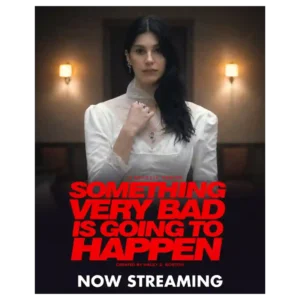
Something Very Bad Is Going to Happen, Season 1
Where It Has the Edge
- main cast performance is 4.8 vs 4.5. Camila Morrone is the clear anchor, carrying Rachel’s panic, wit, strength, and emotional swings with exceptional commitment.

Scorata scores summarize analyzed review evidence on a 1–5 scale; they are not laboratory measurements or a simple average of customer star ratings. Feature scores summarize the reviews covering that feature. The overall score averages feature scores within each review, then combines review averages. When both expert and customer evidence are available, those two groups receive equal weight. Products can have different review coverage, so small score gaps do not establish a winner.
Recommendations prioritize important features for the category, with a score of at least 3.5, a gap of at least 0.25 points and at least two supporting reviews per product. Features with widely varying scores or broad connectivity contexts are excluded from recommendations. These safeguards do not establish statistical significance.
Quick verdict
The available evidence supports the recommendation below, but does not establish an overall winner. Check the remaining features against your priorities.
Choose Something Very Bad Is Going to Happen, Season 1 for main cast performance.
There is not enough comparable review evidence to recommend Run Away, Season 1 over the other product.
No clear scored advantage over the other product.
Scores are out of 5. Missing scores mean missing review evidence, not a missing feature.
Haunting love songs and well-timed needle drops deepen the wedding theme while making familiar romance music feel threatening.
The soundtrack is barely discussed, with one viewer complaint characterizing the music as amateurish.
Gus Birney, Jennifer Jason Leigh, Jeff Wilbusch, and others deliver vivid turns, although some roles are too underwritten or underused to reach their potential.
Supporting performances are frequently praised, especially the detectives, Elena, and several side characters. Strong ensemble work often keeps the show engaging even when the plot becomes implausible.
The ensemble is one of the season’s safest strengths, with committed, memorable performances keeping even the messier turns watchable.
Performances are one of the season’s most consistent strengths, with several critics calling the cast stellar or the best part of the show. A minority found the ensemble soap-like or uneven outside the strongest leads.
Camila Morrone is the clear anchor, carrying Rachel’s panic, wit, strength, and emotional swings with exceptional commitment.
The principal cast is usually a strength, anchored by a widely praised lead performance. A few critics find the ensemble uneven, but strong casting is a frequent point of agreement.
The limited-series ending does not create strong demand for another season, with at least one response explicitly preferring the story to remain complete.
Interest in more material centers on Elena Ravenscroft, with multiple reviewers saying they would gladly watch a spin-off or series focused on her.
Colin Stetson’s ominous music intensifies dread without overwhelming the story, and the recurring musical motifs become part of the show’s identity.
The musical score receives little direct discussion, but one strongly negative viewer comment calls the music amateurish.
Abrupt smash cuts, disorienting transitions, long takes, and inserted home-video footage are used purposefully to disturb the viewer’s sense of time and safety.
Editing drew a direct complaint that scene construction and cuts undercut otherwise talented performers, especially during high-emotion moments.
A recurring complaint is that eight episodes are excessive; several critics argue the material would work better as six chapters or a feature film.
Eight episodes feel quick and well-sized to some binge-watchers, while others say the same story could have been told in six. The length works best for viewers who enjoy the side stories.
The final episode is widely admired as a bloody, haunting, and audacious finish, even among reactions that find the road there uneven.
The finale sharply divides opinion. Some viewers think it lands a memorable final twist, while others say it becomes anticlimactic, overstuffed, or damaging to the momentum built earlier.
The excessively dim, color-drained presentation can flatten dramatic scenes as well as the scares.
The family drama and Coben-style melodrama can be very engaging, but some reviewers think the melodramatic flair becomes excessive and weakens the suspense.
The early episodes can feel aimless and repetitive, though the real-time wedding-morning chapter earns praise for using a slower rhythm with purpose.
The episodes generally move quickly, which helps the binge, but some reviewers want more breathing room and find the tempo uneven from installment to installment.
Inventive angles, stalking shots, long takes, and found-footage passages turn ordinary spaces into sources of anxiety. The craft is widely admired even when the low-light approach frustrates.
Visual reactions are divided. Some praise the distinct look and color treatment, while others find the shadow-heavy or unusual cinematography harsh, cheap-looking, or generic.
The curse mythology creates intriguing reversals and thematic links, but its rules, coincidences, and unanswered implications are not developed consistently enough for everyone.
One review finds the mystery lore so sprawling that it compares its density to major fantasy and superhero universes, though that depth also contributes to the challenge of keeping up.
The most negative responses object to unresolved main-character fates and a conclusion that feels unjustified rather than complete.
Because this is a limited series, the ending carries the full burden of closure. Some sources praise the answers and convergence, while others feel the last stretch cannot justify the buildup.
Familiar wedding and in-law horror ingredients are rearranged with confidence and surprising perspective shifts, though a minority sees the homage as derivative.
The series is openly familiar Coben territory. Some viewers enjoy the dependable formula, while others see the repeated playbook and adaptation patterns as a lack of freshness.
Strategic camera movement, lighting, and extended takes produce sustained unease, with the home-video and near-continuous-shot episodes singled out as especially effective.
Direction receives polarized reactions: one review praises the directors for extracting excellent performances, while others find the staging and overall streaming-thriller aesthetic generic or performance-undermining.
The female-led creative perspective gives the marriage horror a distinct emphasis on women’s intuition, pressure, and agency.
The move from the book’s American setting to Britain works for some reviewers but feels insufficiently naturalized to others, who say the show can still feel culturally American in tone and setup.
Eight roughly 45-minute chapters often feel stretched, with detours and research scenes running beyond their natural length.
Episode runtimes work for some viewers as a quick watch, but another review found the lengths inconsistent, with some installments dragging and others rushing major events.
The season’s loose chaptering is uneven, but standout formats—including home video, found footage, and a frantic wedding-morning episode—give individual installments identity.
The season is often praised for low filler and strong end hooks, making each episode feel purposeful and designed to propel the mystery forward.
The broad destination is obvious from the title, but the shifting threat, dense red herrings, and hazy curse mechanics leave major parts of the journey difficult to follow.
This is one of the most contested attributes. Some reviewers admire how the many threads eventually connect, while others call the story convoluted, incoherent, or difficult to follow without extra effort.
Horror fans praise the escalating blood and body horror, while the stomach-churning imagery makes it an easy skip for squeamish viewers.
Violence is intense and graphic enough to be a major concern for one reviewer, while another explicitly appreciated that the deaths were not softened or cut away from.
Heavy profanity adds to the adult tone and limits suitability for viewers who prefer cleaner dialogue.
One content-focused review strongly objects to the heavy, frequent crude language, making the language level a clear concern for sensitive viewers.
Pacing is the central divide: admirers enjoy the slow accumulation of dread, while detractors find the first half padded, stalled, and far too long.
Fast pacing keeps many reviewers engaged and helps disguise plot holes, but others find the tempo overly compressed, uneven, or weakened by the finale.
The marriage-and-soulmate premise is compelling and thematically rich, but reactions split over whether the mystery coheres or collapses under its own mythology.
The central family mystery is widely considered compelling and entertaining, but opinions split sharply over whether the escalating conspiracies and coincidences remain satisfying or collapse into nonsense.
Rachel is repeatedly asked to surrender the resolve established early on, and some later character choices feel driven by plot mechanics rather than personality.
One source strongly objected to a late character decision as out of character, arguing that the writing forced behavior for shock rather than credibility.
The family’s oddness often stays just plausible enough to be unnerving, but characters’ refusal to leave and several coincidence-heavy decisions strain credibility.
The grounded family-addiction premise earns praise, but realism falls away for many reviewers once cults, coincidences, and repeated late twists take over. Implausibility is one of the most common reservations.
The harshest appraisal blames a weak script for unearned choices, broken character logic, and an ending the story has not properly justified.
The screenplay can keep a complicated mystery moving, but one critic argues it needs tighter scripting because overloaded scenes and plot turns weaken performances.
The family gradually gains texture, especially Jules and Nell, but Nicky and several supporting figures remain too thin for a story built around relationship choices.
Many reviewers like the depth given to supporting characters such as Elena, the detectives, and the assassins. Critics of the show argue that Paige and some other figures are underdeveloped or treated mainly as plot devices.
Graphic gore, sexual material, profanity, and adult relationship themes make this unsuitable as family viewing.
Graphic deaths, heavy crude language, drug use, and sexual-violence references make this a poor family-viewing choice for viewers sensitive to adult content.
Its focus on women reassessing marriage, standards, and romantic expectations gives the supernatural premise a pointed contemporary edge.
One adaptation-focused discussion finds the added race-and-power dynamic between a wealthy white father and a Black detective interesting, while noting that it replaces some of the book’s deeper religious debate.
Sex is present without explicit nudity, but the strange foreplay and adult relationship context reinforce that this is not light or family-safe viewing.
Sexual content is limited in one reviewer’s viewing, but another content-focused source flags underwear and references to sexual violence as reasons for caution.
Morbid jokes and absurd family behavior provide useful pressure relief without breaking the sinister tone, even if the comedy rarely produces big laughs.
Light humor can provide welcome relief from the darker material, especially through Elena, but another reviewer felt some comic beats were out of place.
Loose ends, unexplained healing, location logic, and shifting character behavior create noticeable continuity and internal-logic problems.
Plot holes and loose threads are a recurring concern. Some reviewers forgive them because the show moves quickly, while harsher critics say inconsistencies and dead-end red herrings undermine the mystery.
The couple’s teasing banter and the family’s morbid speeches can ring true, but repetitive exposition and limited intimate conversation weaken the relationship writing.
Dialogue quality is sharply split. Some reviewers call it extremely good or pacy, while others single out clichéd hospital lines and amateurish dialogue as major weaknesses.
The bloody wedding payoff is fitting, chaotic, and exhilarating for many, but others find it anticlimactic, underexplained, or insufficiently earned.
The ending is the season’s biggest dividing point. Some reviewers praise its shocking payoff and answers, while others call it unnecessary, anticlimactic, overstuffed, or a reason the whole story loses momentum.
Sustained unease is the show’s signature achievement, built through ominous details, isolation, sound, and uncertainty rather than constant jump scares.
Suspense is a consistent strength for most reviewers, driven by multiple suspects, interlocking mysteries, and cliffhangers. The main exception is criticism that too much complexity can eventually weaken tension.
Rachel and Nicky feel warm, flirtatious, and companionable, while a subtle emotional distance makes doubts about their compatibility believable.
Several pairings work especially well, including the police detectives and the assassin duo. Reviewers often found those dynamics convincing or captivating, though one source thought chemistry was weak in parts of the ensemble.
The midpoint reversal and later reveals repeatedly reshape the story and produce real shocks. Some turns are predictable, contrived, or arrive in such quantity that they muddy the whole.
Twists are the engine of the season and often its biggest pleasure, but the volume becomes a major drawback for critics who feel later reveals turn improbable, exhausting, or nonsensical.
The road-trip premiere establishes dread immediately and was repeatedly called terrific, chilling, or the season’s high-water mark.
The opening is usually praised as gripping and immediately effective, though one viewer found the first hour and a half slow to click despite liking the series afterward.
Several reactions describe losing sleep, watching rapidly, or being unable to stop once the mystery takes hold. The oppressive mood was intense enough that at least one viewer needed a break after the premiere.
Bingeability is a standout strength. Multiple reviewers finished all eight episodes quickly or said the cliffhangers and fast-moving mystery made it hard to stop watching.
Marriage, soulmates, inherited family trauma, belief, respect, and women’s agency give the horror genuine substance. The ideas can be heavy-handed or left incomplete, but they remain central.
The strongest thematic material centers on family secrecy, addiction, guilt, protection, and how well people truly know those closest to them. Some critics think those ideas get buried beneath the twist machinery.
The series leaves a lingering residue of discomfort, dread, and sadness; even positive reactions describe an experience that sticks in the mind afterward.
The father-daughter addiction story gives the season a strong emotional center and is often called relatable, heartbreaking, or weighty. Some critics feel that later twists crowd out that early emotional power.
Rachel’s final turn is framed as an earned reclaiming of agency rather than punishment, giving the woman-centered story a satisfying sense of self-determination.
Simon is not treated as consequence-free: one review praises the way the story makes him carry the weight of his choices into the finale.
The show blends psychological, supernatural, body, and folk-horror ideas with dark comedy. Its ambition delights genre fans, though the abundance of tropes can feel overstuffed.
For viewers who like twist-heavy mystery thrillers, the season usually delivers. Even mixed reviews often concede that it is gripping, bingeable genre entertainment, though some find the Coben formula too outlandish.
Some viewers already cherish the one-time discovery and would gladly revisit the craft, while others say the oppressive experience is not something they expect to repeat.
The season is highly watchable in the moment but often described as forgettable afterward, suggesting limited rewatch appeal despite strong binge value.
For the right audience, it is a fun, bold familial goth romp with memorable set pieces. Its scattershot storytelling keeps that enjoyment from being universal.
Most reviewers find the season entertaining even when they criticize its logic. The common pattern is a fun, fast, twist-heavy ride whose absurdity is either part of the appeal or the main limitation.
The labyrinthine mansion, snowy isolation, shadowy bar, and uncanny courtyard create a richly detailed setting that feels both luxurious and hostile.
Production design ranges from strongly praised sets that reinforce character to a harsh viewer complaint that the sets and production look amateurish.
The cold palette, skewed framing, deep shadows, and surreal compositions create a distinctive nightmare mood. Frequent complaints that the image is simply too dark temper that praise.
The visual presentation is divisive: some praise a distinct, well-graded look, while others see harsh shadows, odd lenses or grading, and generic streaming aesthetics.
The remote woods, local legends, sinister businesses, and mansion rituals create a strange, specific pocket of reality that feels richer than a generic cabin setting.
The mystery world feels unusually expansive, with one review praising its lore as dense enough to rival much larger fictional universes. That richness also contributes to the show’s complexity.
Its most enthusiastic appraisal calls the series award-worthy and places it among Netflix’s best horror shows.
Critical reception is positive but not ecstatic: one source describes respectable critic scores, while another notes that many positive notices still land around a modest 3/5.
This is firmly adult horror: the marriage themes, disturbing imagery, and graphic violence make it a poor fit for younger viewers.
The series carries strong adult-content concerns, especially graphic violence, crude language, drug material, and references to sexual violence, making it a poor fit for younger or sensitive viewers.
Atmospheric-horror fans are the clearest match, especially those who enjoy dread, gore, and surreal turns. Viewers seeking a brisk, broadly accessible thriller may find it exhausting or opaque.
Audience response is split but leans positive in several sources: some report mixed early scores, while others describe largely positive fan reactions and broad watchability.
Action is not the dominant focus, but one review specifically praises how it is balanced with mystery, melodrama, and uncertainty.
The addiction storyline is one of the show’s most grounded strengths, especially in its depiction of parental fear, helplessness, and determination to help a child.
Episode-ending cliffhangers are one of the clearest strengths, repeatedly praised for pushing viewers straight into the next episode and sustaining surprise.
One reviewer appreciated the real-world wheelchair use but wished the series had acknowledged it in dialogue, saying the unexplained presentation became distracting instead of informative.
The large ensemble is a major tradeoff: some reviewers enjoy having many characters and perspectives to latch onto, while others find the overlapping storylines crowded, distracting, or hard to track.
The adaptation keeps much of the book’s core plot and even some dialogue closely intact, while making major setting and character-expansion changes. Reviewers generally see the book-to-screen approach as a strength despite those alterations.
The early public-shaming thread is praised for making Simon’s struggle against stigma and viral scrutiny feel captivating and personally distressing.
The finale’s bloodshed and body horror look convincingly gruesome, with the realistic VFX repeatedly singled out as a technical triumph.
Some reviewers praise the realistic or subtly shifting tone, while others think misplaced humor, camp, or a late twist disrupts the mood and weakens the drama.
The assassin duo is repeatedly singled out as compelling, entertaining, and unusually decisive, making them one of the stronger elements of the ensemble mystery.
The characters are frequently described as watchable and compelling even when flawed. Simon in particular can be frustrating but remains relatable because of his desperation to find his daughter.
Elena’s styling drew specific praise, with one reviewer singling out her yellow windbreaker as especially memorable.
Buzzes, staccato notes, muffled voices, and carefully shaped silence mirror panic and sustain tension with unusual precision.
The strongest reactions consider the series worth the full eight-part investment, largely because the central performance and audiovisual craft carry it.

Best for sharp adult humor, magnetic chemistry and a deeply satisfying farewell. Skip it if familiar will-they-won’t-they plotting or deliberately messy leads are dealbreakers.
Pros: humor, writing quality

Choose Widow’s Bay for its dark laughs, richly haunted island and memorable ensemble. Skip it if you need straightforward scares, rapid answers to every mystery or a completely resolved finale.
Pros: humor, genre satisfaction
Cons: ending satisfaction, season pacing

Choose Season 15 for warm, character-driven comedy, meaningful growth, and a finale that rewards longtime fans. Skip it if the short binge format, uneven replacement voices, or occasional clumsy commentary...
Pros: franchise connection, character development

Best for sharply acted, compassionate, high-pressure hospital drama. Skip it if graphic procedures unsettle you or you need a neatly resolved season finale.
Pros: character development, acting performance
Cons: character consistency, dialogue quality