Scorata scores summarize analyzed review evidence on a 1–5 scale; they are not laboratory measurements or a simple average of customer star ratings. Feature scores summarize the reviews covering that feature. The overall score averages feature scores within each review, then combines review averages. When both expert and customer evidence are available, those two groups receive equal weight. Products can have different review coverage, so small score gaps do not establish a winner.
Recommendations prioritize important features for the category, with a score of at least 3.5, a gap of at least 0.25 points and at least two supporting reviews per product. Features with widely varying scores or broad connectivity contexts are excluded from recommendations. These safeguards do not establish statistical significance.
Quick verdict
What each product is best for
The review evidence points to a tradeoff: theme depth and production design versus cultural representation. Choose according to which strengths matter more to you; the overall score alone does not settle that choice.
Choose The Testaments, Season 1 for theme depth and production design.
Choose DANG! for cultural representation.
Why these recommendations?
The Testaments, Season 1
Where It Has the Edge
theme depth is 5.0 vs 3.2. Girlhood, indoctrination, complicity, friendship, resistance, and patriarchal power give the season substantial thematic weight. This is one of...
production design is 5.0 vs 4.0. The finishing school, opulent homes, ritual spaces, and culturally suggestive details create a beautiful but threatening environment. Reviewers...
bingeability is 5.0 vs 4.2. Positive reviewers describe the season as moreish, addictive, and difficult to stop watching despite its bleak subject matter.
DANG!
Where It Has the Edge
cultural representation is 4.1 vs 2.0. The Asian American and LGBTQ+ material is generally praised for feeling integrated into everyday character life rather than...
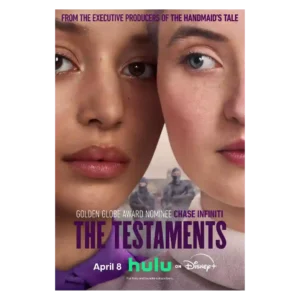
The Testaments, Season 13.8 overall score
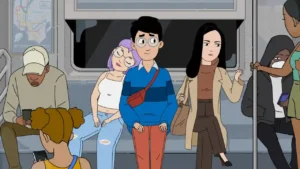
DANG!3.6 overall score
Compare features
Scores are out of 5. Missing scores mean missing review evidence, not a missing feature.
Scored on both products
Other features
Season length
The Testaments, Season 1
1.5
DANG!
4.5
Details and evidence for season length
The Testaments, Season 1
The ten-episode season is criticized as far longer than its amount of story can support, with one reviewer comparing it to a pilot’s worth of plot.
The compact eight-episode run is generally considered a good match for the concept, with reviewers appreciating that it does not become an oversized streaming commitment.
Aunt Lydia is the main point of friction: several reviewers feel her softening, redemption, and double-agent direction clash with the character established earlier.
One critic found the sub-45-minute episodes oddly truncated yet still underfilled, reinforcing the sense that too little plot is being stretched across the season.
The roughly 25–27 minute episodes are widely seen as a good fit, keeping weaker stories from dragging and preventing the season from overstaying its welcome.
Diverse casting is visible, but critics repeatedly say the series avoids meaningful engagement with race and leaves its queer-coded elements underdeveloped.
The Asian American and LGBTQ+ material is generally praised for feeling integrated into everyday character life rather than reduced to a lecture. Reviewers especially like the avoidance of some familiar assimilation clichés, though a few identity storylines could go deeper.
Girlhood, indoctrination, complicity, friendship, resistance, and patriarchal power give the season substantial thematic weight. This is one of the show’s most consistently praised qualities.
The show touches on adulthood, family expectations, identity, anxiety, dating, and social pressure with real insight at times. Several critics still think those ideas stop short of deeper exploration.
Differences among the novel, The Handmaid’s Tale, and this sequel create noticeable strain. Aunt Lydia’s history and the shortened timeline are the most frequently questioned points.
The season has an ongoing thread and character continuity, but some critics feel the largely standalone episode setups do not advance the story enough.
Rotating viewpoints and character-focused episodes give the season useful depth, with Aunt Lydia’s material producing both a major highlight and some of the sharpest criticism. Exposition-heavy stretches and an underdeveloped standalone episode keep the structure uneven.
Standalone stories and occasional cutaway gags can interrupt momentum. Reviewers who object to the structure want stronger cohesion between episode ideas and the ongoing family arc.
One reviewer celebrated an explosive, unexpected finish, while others thought the finale reverted to predictable Handmaid’s Tale patterns or undercut its climax with weak writing.
The season finale is one of the better-received episodes, giving the family arc a natural endpoint and some character growth. Its emotional impact is more warm and light than devastating.
Responses to the sexual and crude material vary sharply. One critic finds it excessively detailed or disgusting, while another appreciates that the sex-and-drug jokes are restrained enough to leave room for the family story.
The middle of the season gains momentum and becomes more character-focused after a mechanical opening. That improvement helps, but the early episodes still spend too long explaining familiar territory.
The privileged teenage viewpoint gives Gilead a genuinely different angle, especially through its marriage-market setting. Several critics still feel the sequel repeats too many ideas and story beats from The Handmaid’s Tale.
The central sibling angle has some distinctive personality, but many reviewers still see familiar adult-animation and slice-of-life territory. Repeated mistakes, topical jokes, and recognizable sitcom setups can make the season feel predictable.
The ending offers hope and a strong appetite for more, especially through its unresolved character threads. Critics who disliked it found the central reveal obvious, confusing, or too dependent on franchise knowledge.
The Boston-set finale is generally viewed as one of the stronger episodes and a natural place to end the season, though one reviewer finds it lighter than a true emotional gut punch.
The short episodes make the season easy to keep watching, and some reviewers call it an easy binge. The main drawback is that repeated character mistakes become more noticeable across multiple episodes.
Slow-burn setup is the season’s most repeated drawback, with several reviewers calling it a prologue stretched across ten episodes. A smaller group appreciates the measured buildup or finds it faster than The Handmaid’s Tale.
The contemporary parallels are among the strongest points of agreement, especially around reproductive control, authoritarianism, grooming, and complacency. For some viewers, that relevance is so close and repetitive that it becomes exhausting.
One reviewer likes that contemporary social and political ideas function mostly as a comic backdrop rather than becoming a lecture or a simple right-versus-wrong argument.
Reactions to the dialogue are sharply divided. One reviewer found the teenage speech authentic, while many others called it trite, clunky, overly explanatory, or painfully on the nose.
The series is frequently described as gut-wrenching, disturbing, and deeply moving. For some viewers, its closeness to current politics makes it too exhausting or painful to enjoy.
The family story grows warmer as the season progresses, but the emotional punch is lighter than in more dramatic adult animation. Reviewers who connect with the sibling arc still find genuine endearing moments.
The opening episodes impressed some viewers with their atmosphere, performances, and promise. Others found the pilot overloaded with exposition and too trapped in Gilead’s familiar formalities.
Reviewers value how ordinary teenage behavior sits beside normalized authoritarian cruelty. That contrast makes indoctrination, privilege, and the mundanity of fascism feel disturbingly plausible.
Comedy is the biggest point of disagreement. Reviewers praise some character-driven, visual, and generational jokes, but repeatedly criticize strained punchlines, topical references, repetition, and crude bits that do not always land.
The girls’ gradual awakening, friendships, and small acts of rebellion are among the season’s strongest elements. Daisy’s depth and Aunt Lydia’s shifting motives are less consistently convincing.
Growth is present and becomes more meaningful later in the season, especially when the family returns to its roots. Some critics still find the leads one-note early on, but others see clear emotional progress by the end.
The season’s coming-of-age story is often described as fresh, gripping, and politically urgent. Less enthusiastic critics find it emotionally hollow, repetitive, or too reliant on shock.
The sibling relationship is the story’s strongest asset, and the later family material gives the season more purpose. Critics still note familiar setups, underdeveloped side ideas, and occasional overreliance on dysfunction.
The friendships feel lived-in, believable, and essential to the story. Reviewers especially respond to Agnes and Becka’s bond, Agnes and Daisy’s developing trust, and the wider sisterhood.
The sibling ensemble is widely considered a major strength, with a lived-in, genuine dynamic that carries both the jokes and the warmer family moments.
Acting is one of the strongest areas of agreement. Even negative reviews usually praise the young ensemble, with only a few reservations about Daisy’s performance.
Voice acting is a consistent strength, with reviewers praising the ensemble’s comic delivery and vivid character work. SungWon Cho and the three sibling leads receive especially positive notices.
The writing earns praise for its themes and some strong character work, but criticism is frequent. Reviewers repeatedly mention didactic voiceovers, blunt messaging, cringe-inducing lines, and missed dramatic potential.
The writing can be sharp and character-specific, but it is also frequently criticized for topical name-drops, repetitive jokes, and a lack of distinctiveness. The best-reviewed material comes from the siblings’ specific family dynamics.
The coming-of-age drama can be absorbing and emotionally forceful. Some stylistic choices, especially conspicuous music and YA flourishes, make the darkest material feel less serious than intended.
Interest in another season is consistently high among favorable reviewers, who see abundant room for rebellion, character growth, and a larger payoff. Even several mixed reviews hope later seasons fix the pacing.
Several positive reviewers would willingly return for more, including one who explicitly says they would tune in for a second season. The characters’ chemistry appears to be the main reason for that interest.
The YA dystopian approach is the season’s defining gamble. Many find the teen-drama blend fresh and effective, while others experience tonal whiplash or feel it trivializes the material.
As an adult animated sitcom, the show is viewed as enjoyable but not elite-tier. Its niche generational humor works better for some reviewers than for those seeking a broader, more universal comedy.
The series is not family-friendly, with sexual abuse, coercion, executions, mutilation, grooming, and sustained political oppression driving the story.
Despite the family-centered premise and affectionate sibling moments, reviewers explicitly warn that the sexual material, profanity, and adult humor make it unsuitable for children.
Appeal looks highly demographic-dependent. Younger viewers and people who recognize the show’s online, generational references may connect strongly, while others may find the humor too niche or reference-heavy.
Despite the YA framing and teenage leads, the material is intensely adult and often harder to watch because the victims are young. One critic also found the actors’ ages distracting for the roles.
Reviewers who address suitability are clear that this is an adults-only series, citing sexual material, profanity, and raunchy humor as reasons to keep it away from children.
The finishing school, opulent homes, ritual spaces, and culturally suggestive details create a beautiful but threatening environment. Reviewers repeatedly see the design as one of the production’s strongest assets.
Restrained interiors and crowded public spaces are used effectively to heighten awkwardness and surreal comedy, even if the overall design is deliberately subdued.
Bright pastels, purple-and-white uniforms, and carefully composed iconography give the sequel a striking look. Even skeptical critics generally acknowledge the polish, though some find it too similar to its predecessor.
Clean lines, bright colors, soft or deliberately awkward shapes, and expressive faces give the series a recognizable look. Some reviewers find it less visually distinctive than peers, but the overall presentation is widely praised.
The school, marriage market, and privileged girls make familiar Gilead feel fresh to many reviewers. Detractors think the show overexplains a world audiences already know and treats old information like revelation.
Reviewers disagree on how fully New York comes alive: one sees the city as cultural shorthand, while another praises the animation for capturing its kinetic, uncomfortable energy.
The music is a major point of disagreement. Some call it unusual but effective and well suited to youthful daydreaming; others find the needle drops obvious, awkward, or damaging to the drama.
Details and evidence for supporting cast performance
The Testaments, Season 1
The supporting ensemble is repeatedly singled out as a strength, with Becka, Shunammite, Hulda, the Aunts, and Gilead’s adults all receiving specific praise.
Supporting voices often make strong impressions in limited time, with SungWon Cho singled out as especially memorable and other side characters sometimes judged funnier than the leads.
The three sibling leads are a major asset, with reviewers crediting their voice work for making the characters entertaining, distinct, and convincing as a family.
Enjoyment depends heavily on tolerance for Gilead’s cruelty and political parallels. Some had a great time and rated it highly; others found it tiring, exploitative, or impossible to recommend right now.
Overall enjoyment ranges from barely watchable to genuinely fun, but most reviewers find enough charm in the siblings, animation, and comedy to keep the season moving.
The animation is one of the most consistently praised elements: clean, colorful, expressive, and well suited to physical comedy. Even reviewers who find the style simple generally think it fits the characters.
Coverage of the three siblings is somewhat uneven across reviews: one critic finds Andrew more developed than his sisters, while another praises the series for giving all three meaningful attention.
The leads are intentionally selfish, abrasive, and messy, which can make them hard to sympathize with at first. Several reviewers nevertheless grow to enjoy or appreciate them because their flaws feel funny, recognizable, and human.
Details and evidence for cliffhanger effectiveness
The Testaments, Season 1
The finale leaves several character and rebellion threads hanging in a way that strongly increases interest in Season 2. A smaller episode-ending cliffhanger also keeps immediate questions alive.
The more intimate middle episodes allow characters to lead the story and draw praise. Elsewhere, emotional scenes and voiceover-heavy material are judged less effectively directed.
Details and evidence for faithfulness to source material
The Testaments, Season 1
The adaptation takes substantial liberties with character ages, relationships, timelines, and plot order. Many reviewers accept those changes because the novel’s spirit remains intact, while others are less convinced.
Callbacks and continuity with The Handmaid’s Tale can elevate the story and reward longtime fans. They can also make the sequel feel inaccessible to newcomers or trapped in the original’s shadow.
The sequel is considered understandable across different levels of Gilead familiarity, using recognizable lore without requiring every viewer to remember the full original series.
Some reviewers found the story easy to follow without a rewatch. Others were distracted by plot holes, implausibly careless Mayday operations, and character decisions that weaken the internal logic.
The season delivers several effective surprises and a late shock for some reviewers. Others saw major developments coming well in advance or felt the twists were insufficiently earned.
Script quality is uneven across critics: topical references and less-distinctive writing draw criticism, while another reviewer praises the quick-witted lines and laugh-out-loud moments.
A large group calls the series a worthy, fresh, or exemplary follow-up. The opposing view sees franchise fatigue, creative dependence, and a story that should not have been extended.
At its best, the season is an unnerving, slow-building thriller that keeps viewers alert. Its tension drops when the pacing stalls or Mayday’s easy movement through Gilead feels too convenient.
The irreverent energy usually suits the characters, but the balance is not seamless. One reviewer especially notes that comedy can intrude on stronger dramatic moments.
The sequel is generally less graphically violent than The Handmaid’s Tale, but it still includes mutilation, executions, abuse, and deeply disturbing violence against women. Reviewers often found the level emotionally difficult.
The series can prompt reflection on how democracies normalize authoritarian ideas and how indoctrinated people gradually recognize their loss of freedom.