

Margo’s Got Money Troubles
Where It Has the Edge
- sexual content level is 4.7 vs 2.8. Despite extensive nudity and a sex-work premise, several critics say the presentation is frank rather than exploitative. The...

Scorata scores summarize analyzed review evidence on a 1–5 scale; they are not laboratory measurements or a simple average of customer star ratings. Feature scores summarize the reviews covering that feature. The overall score averages feature scores within each review, then combines review averages. When both expert and customer evidence are available, those two groups receive equal weight. Products can have different review coverage, so small score gaps do not establish a winner.
Recommendations prioritize important features for the category, with a score of at least 3.5, a gap of at least 0.25 points and at least two supporting reviews per product. Features with widely varying scores or broad connectivity contexts are excluded from recommendations. These safeguards do not establish statistical significance.
Quick verdict
The available evidence supports the recommendation below, but does not establish an overall winner. Check the remaining features against your priorities.
Choose Margo’s Got Money Troubles for sexual content level.
There is not enough comparable review evidence to recommend Amadeus over the other product.
No clear scored advantage over the other product.
Scores are out of 5. Missing scores mean missing review evidence, not a missing feature.
At least one enthusiastic critic finished the season already hoping for a second season.
Interest in the project varies from enthusiastic recommendation to outright pre-release boredom with another remake.
Reviewers largely applaud the nonjudgmental treatment of sex work, young motherhood, addiction, and Gen Z life. The main divide is whether the OnlyFans world feels thoughtfully humane or overly sanitized.
Cultural and casting choices are highly contentious. Some reviewers accept the modernization, while others strongly reject the casting and representation as historically or culturally inauthentic.
The full-season story was called tightly constructed, with family foundations established before the more extravagant online persona appears.
The old-age confession framing adds a metafictional layer, but some reviewers find the bookends flatter and less tense than the central story.
The scripts are praised for sharp humor, emotional clarity, and thematic ambition, but criticized when court drama, tonal shifts, or convenient resolutions become too visible.
Writing gets sharply mixed reactions: some praise exquisite exchanges and big swings, while harsher reviews call the script banal or less substantial than earlier versions.
Most reviews see a warm, emotionally sincere story that turns an outlandish premise into compelling family drama. The negative view is that tonal confusion, convenience, and a weak finish keep it from fully landing.
The story can be compelling and ambitious, but detractors argue that the expanded plot becomes sparse, repetitive, or uneven across five episodes.
Despite extensive nudity and a sex-work premise, several critics say the presentation is frank rather than exploitative. The restraint works for many, while skeptics see it as another sign the show sanitizes its subject.
The sexual content is deliberately provocative and often very explicit. Some reviewers think it meaningfully exposes character flaws, while others call it gratuitous and limiting for family viewing.
Class, sex work, capitalism, religious respectability, and women’s choices are handled without overt lecturing. Reviewers generally appreciate the modern perspective, though some think the safeguards soften its critique.
The series deliberately uses contemporary attitudes and framing. Some reviewers see that as timely and effective, while others condemn the perceived modern ideological overlay.
The family emotions, financial pressure, childbirth, and addiction often feel unusually candid. The main criticism is that Margo’s rapid online success and softened sex-work risks create a safe, convenient version of reality.
Historical realism is one of the weakest areas for accuracy-minded viewers. Several sources flag major inventions and liberties even when they accept them as deliberate historical fiction.
The premise and Hungry Ghost material feel singular even when the family and coming-of-age tropes are familiar. Some critics see a fresh combination rather than a wholly novel story.
Opinions split sharply on the need for another Amadeus: some praise the fresh perspective and bold adaptation choices, while others see an unnecessary or infuriating reworking of already-mastered material.
The show is not primarily a thriller, but conflict and tension build strongly toward the custody battle and late-season family crises.
The rivalry often creates a charged, breathless atmosphere, though some critics feel that tension fades as the five-hour story stretches on.
The ending delivers beautiful and heartwarming moments, but the courtroom climax and a late turn divided reviewers. Some accepted the emotional fantasy; others found it melodramatic or confusing.
The finale earns some of the series’ strongest praise, particularly for its powerful landing and self-aware closing ideas.
The series repeatedly lands heartfelt, tearful moments without losing its humor. Maternal disappointment, addiction recovery, and the finale were especially affecting, though some critics found the emotion openly manipulative.
The strongest emotional moments—family tragedy, resentment, and the second episode’s later scenes—land deeply for admirers, though other critics feel the series remains emotionally shallow.
Motherhood, sex work, class, addiction, faith, respectability, and self-determination give the comedy substantial weight. The main debate is whether the series interrogates those ideas deeply enough or protects viewers with too many guardrails.
The series wrestles with genius, envy, faith, creative insecurity, and power. Admirers find those ideas timeless; detractors think spectacle sometimes replaces genuine depth.
Book readers were unusually positive about the adaptation. It keeps the novel’s beats and spunky spirit while making selective changes that expand the world and sharpen themes.
As an adaptation, the series gets sharply divided marks: supporters value its new routes and fuller characterization, while detractors believe it diminishes or fails to equal earlier versions.
The season improves after a setup-heavy beginning, but not everyone agrees it earns the time. Praise for fast later episodes sits alongside complaints that the OnlyFans premise arrives too late or that the narrative feels overstretched.
The five-hour expansion is a major tradeoff. Some appreciate the added room for character, while several critics find the story padded, repetitive, or exhausting.
Pacing varies by reviewer: some praised the swift, compact episodes, while others found the pilot incomplete or the season too slow to reach OnlyFans. The early setup is the most common sticking point.
Pacing is one of the most recurring concerns: several critics point to lag or rushed beats in the middle episodes, although others find the series fast and bingeable.
Margo, Shyanne, and Jinx are widely praised as flawed people whose motives remain clear. Some supporting figures, especially Susie, KC, and Rose, are criticized for existing mainly to help Margo.
The expanded format gives Mozart, Constanze, and Salieri more psychological space, but critics disagree on whether the supporting characters receive enough depth.
Short episodes and a three-episode premiere make the show easy to consume quickly. Even a mixed reviewer described it as breezy and easily digestible.
At its fastest, the series has enough narrative thrust and energy to encourage a one- or two-day binge despite complaints about slower middle episodes.
Many reviews call the show funny, sharp, or even hilarious, especially when family chaos meets wrestling and online performance. A few critics found the laughs scarce or overshadowed by drama.
The bawdy humor, jokes, and irreverence work well for viewers who embrace the show’s deliberately messy, modern energy.
The mother-daughter bond between Margo and Shyanne is the emotional engine, while Margo’s quieter connection with Jinx adds warmth. A dissenting review felt the broader ensemble never fully occupied the same world.
The central Mozart–Salieri pairing is one of the series’ clearest strengths, with multiple critics praising the tension and chemistry even when they disagree about the adaptation overall.
A slow push toward Shyanne during the baby shower was praised for capturing an entire emotional world without dialogue.
Cinematography is praised for polished, carefully framed imagery, with some viewer reactions calling the visual craft close to flawless.
The dialogue was praised as realistic and punchy, helping the show move between family conflict, humor, and class commentary.
The sharpest dialogue—especially between Mozart and Salieri—is repeatedly praised as sparkling, venomous, and one of the adaptation’s best-written elements.
Music is used to carry mood and character perspective, including emotional needle drops and playful title music.
One review identifies the classical score as a standout strength that adds emotional depth and authenticity even when the narrative falters.
The show’s bright, attention-grabbing wardrobe fits its heightened personalities and wrestling-inspired flair. One critic called the costumes impeccable, while another celebrated the retina-burning outfits.
Costumes are widely admired as lavish and beautiful, although one pre-release critic strongly disliked the fit and styling shown in promotional material.
Vibrant color, playful camera work, costumes, and sci-fi videos make the show visually distinctive. Some reviewers found the Hungry Ghost surrealism disjointed from the grounded family drama.
Visual presentation is a major strength across many reviews, with lavish frames, colorful period atmosphere, and sumptuous styling; a few critics object to washed-out grading or trailer lighting.
Detailed sets, a vibrant palette, and retro-futurist online videos give the show a colorful, intentional look.
Production design is consistently admired for opulent settings, detailed locations, lavish sets, and an immersive sense of courtly spectacle.
The soundtrack draws praise for its mix of modern pop, sing-alongs, and synthy classics. Music contributes heavily to the show’s color and emotional lift.
The music divides critics more than expected. Some say it comes alive thrillingly, while others argue Mozart’s work is pushed into the background when it should dominate the series.
The ensemble is the clearest point of agreement. Elle Fanning, Michelle Pfeiffer, and Nick Offerman lead a cast repeatedly described as excellent, layered, and capable of moving between comedy and pain.
The acting is consistently one of the series’ safest strengths, with reviewers praising the ensemble and repeatedly singling out the principal cast.
Elle Fanning’s lead work is repeatedly described as grounded, radiant, vulnerable, and emotionally precise. Even negative reviews usually identify her or the core trio as the strongest reason to keep watching.
Lead acting is among the strongest points of consensus, especially for Paul Bettany and Will Sharpe, even in otherwise negative reviews.
The strongest notices treat the series as five-star television and praise how difficult performances are made to look effortless.
Critical reception is broadly favorable but clearly mixed, with strong praise for performances and craft countered by concerns about pacing, depth, and comparison with the 1984 film.
Most reviewers found the season engaging, funny, and easy to watch even when it tackled heavy subjects. Its mix of warmth and chaos keeps the unusual premise inviting.
Overall entertainment value ranges from enthusiastic praise to outright rejection. Several critics find the series lively and compelling, while the harshest detractors say they actively despise the remake.
Consequences are rarely waved away: pregnancy, addiction, public exposure, and custody pressure all reshape the characters’ lives. Several critics praised that honesty, though some felt the courtroom and recovery arcs resolve too neatly.
The show’s treatment of Mozart’s self-destructive drinking and partying is seen by some as part of a meaningful discussion of addiction, pressure, and raw talent.
The animated pinball-style title sequence was singled out as clever and creative, immediately establishing the show’s playful visual identity.
Most characters remain distinct and understandable, but Shyanne’s shifts and the heightened supporting roles confused one reviewer. The core family is more consistent than the surrounding ensemble.
Bold camera choices, stylish flourishes, and efficient pilot staging give the show a confident surface. The strongest direction keeps tender moments simple while letting the Hungry Ghost material become playful.
The emotional material can be devastating and sincere, especially around family and recovery. Critics split on whether the drama grows naturally or is softened by pulled punches, rushed turns, and tonal whiplash.
Runs of roughly 35–45 minutes were generally considered ideal and easy to devour. One enthusiastic reviewer wanted longer episodes simply to spend more time with the characters.
This is not a family-friendly take on Mozart: profanity and explicit sexual material make it unsuitable for younger viewers according to one reviewer.
The finale’s fourth-wall turn is singled out as unusually ambitious and memorable, giving the adaptation a distinctive metafictional flourish.
For most critics, the family dramedy balances comedy, pain, and comfort-viewing warmth. Dissenters wanted either more laughs, more grit, or a less prestige-conscious tone.
Modern profanity and anachronistic language are divisive: some find them witty and playful, while others think the swearing is excessive or adds little.
Aging makeup is a recurring weak spot, with multiple critics calling the older versions distracting or unconvincing.
Period authenticity is contested. Some reviewers find the locations and atmosphere convincing, while others feel the modern-looking cast, grooming, and historical liberties break the illusion.
The pilot efficiently covers a large amount of setup and character history for some viewers. Others felt it stops before revealing the full show or plays as a slow-burn introduction.
The family, wrestling, sex-work, and class elements take time to align. Once the series settles, the central throughline is clear, but the early episodes can feel like competing versions of the same show.
A late heel turn was criticized as arriving from left field, weakening an otherwise emotional finale.
The finale contains moving closure but also the season’s most disputed choices: an oversized courtroom sequence, a head-scratching denouement, and a late turn that some found unearned.
Eight episodes feel compact and satisfying to many viewers, though one critic argued the story would be tighter in six. Another reviewer was sorry to leave the family after the final episode.
Jinx’s wrestling history is more than decoration: it becomes a smart way to discuss persona, performance, audience, and self-invention.
The tonal mixture of bawdy comedy, gritty drama, satire, and tragedy is adventurous but does not feel fully unified to every critic.
Most critics found the series charming, moving, and easy to recommend, with several calling it a must-watch or one of Apple TV’s best recent shows. A smaller group was underwhelmed by its softened realism and uneven tone.
Some critics struggle to empathize with the leads, especially when the characters’ egos and cruelty dominate the drama.
Sound and music help reveal the characters’ inner worlds and support the show’s offbeat emotional tone.
Small adaptation changes and the layered family, wrestling, church, college, and creator communities expand the story beyond its central premise.
The ensemble is frequently praised as stacked and layered, with strong notices for Kinnear, Graham, Harden, Kidman, Normington, and Rico Nasty. Some critics argue several supporting women never become full characters.

Best for sharp adult humor, magnetic chemistry and a deeply satisfying farewell. Skip it if familiar will-they-won’t-they plotting or deliberately messy leads are dealbreakers.
Pros: humor, writing quality

Choose Widow’s Bay for its dark laughs, richly haunted island and memorable ensemble. Skip it if you need straightforward scares, rapid answers to every mystery or a completely resolved finale.
Pros: humor, genre satisfaction
Cons: ending satisfaction, season pacing
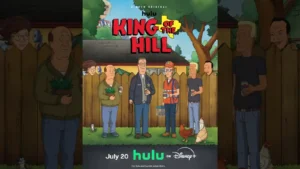
Choose Season 15 for warm, character-driven comedy, meaningful growth, and a finale that rewards longtime fans. Skip it if the short binge format, uneven replacement voices, or occasional clumsy commentary...
Pros: franchise connection, character development

Best for sharply acted, compassionate, high-pressure hospital drama. Skip it if graphic procedures unsettle you or you need a neatly resolved season finale.
Pros: character development, acting performance
Cons: character consistency, dialogue quality