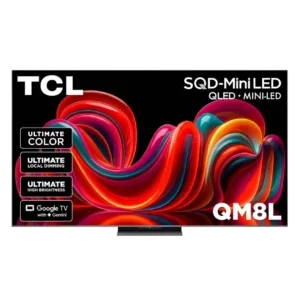
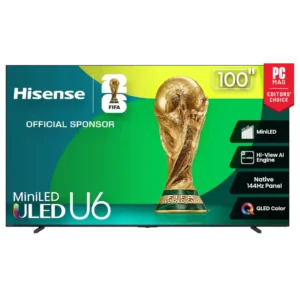
Scorata scores summarize analyzed review evidence on a 1–5 scale; they are not laboratory measurements or a simple average of customer star ratings. Feature scores summarize the reviews covering that feature. The overall score averages feature scores within each review, then combines review averages. When both expert and customer evidence are available, those two groups receive equal weight. Products can have different review coverage, so small score gaps do not establish a winner.
Recommendations prioritize important features for the category, with a score of at least 3.5, a gap of at least 0.25 points and at least two supporting reviews per product. Features with widely varying scores or broad connectivity contexts are excluded from recommendations. These safeguards do not establish statistical significance.
Quick verdict
What each product is best for
The review evidence points to a tradeoff: input lag and casting support versus menu responsiveness and soundstage. Choose according to which strengths matter more to you; the overall score alone does not settle that choice.
Choose TCL QM8L for input lag and casting support.
Choose Hisense U65QF for menu responsiveness and soundstage.
Why these recommendations?
TCL QM8L
Where It Has the Edge
input lag is 4.8 vs 4.5. Input lag is consistently very low, typically around one frame or less. Controls feel immediate on consoles and...
casting support is 5.0 vs 2.0. Casting from phones and tablets is straightforward across both Google and Apple devices.
voice assistant support is 4.8 vs 3.0. Gemini is unusually capable for a TV assistant, handling conversational follow-ups, general questions, smart-home tasks, and content discovery.
Hisense U65QF
Where It Has the Edge
menu responsiveness is 5.0 vs 4.5. Where menu responsiveness is tested directly, navigation and app switching feel quick and smooth.
soundstage is 4.5 vs 4.0. The built-in speakers create a fuller and more spacious soundstage than expected for a budget flat-panel TV.
value for money is 4.9 vs 4.5. Value for money is the strongest consensus point. Nearly every source describes the U65QF as an exceptional bargain,...
TCL QM8L4.4 overall score
Hisense U65QF4.2 overall score
Compare features
Scores are out of 5. Missing scores mean missing review evidence, not a missing feature.
Scored on both products
Performance
Picture quality
TCL QM8L
5.0
Hisense U65QF
4.7
Details and evidence for picture quality
TCL QM8L
The QM8L produces a sharp, vibrant, high-impact picture that repeatedly drew flagship and OLED-adjacent comparisons. Fine detail, bright highlights, and deep dark areas give movies, sports, and games strong depth.
Picture quality is the clearest strength: the U65QF is repeatedly described as unusually bright, colorful, crisp, and impressive for its price. Blooming, motion artifacts, and flatter depth versus pricier sets are the main qualifications.
For dim-room movie viewing, one detailed account praises the combination of strong contrast and broad color coverage as especially well suited to film.
HDR is spectacularly punchy, combining intense highlights, deep blacks, rich color, and strong detail. Dolby Vision material is particularly impressive when the appropriate picture mode is selected.
HDR usually looks punchy and worthwhile, especially given the price, with bright highlights and strong contrast. A few sources are more reserved, calling it merely adequate or warning that entry-level HDR still trails higher-tier TVs.
Accuracy varies noticeably by mode and unit. Movie or Filmmaker settings can look natural and calibrate beautifully, while Standard and some HDR settings may run overly bright, cool, or saturated.
Color accuracy is consistently strong, with several measurements and viewing tests describing natural, balanced color. A small amount of oversaturation appears in a few modes or demos, but the overall color presentation is highly rated.
Accurate picture modes can look very natural when selected carefully. Movie and Dolby Vision Dark modes receive the strongest comments for a balanced, reference-like image.
HDR highlights reach extraordinary levels, producing brilliant sparks, sunlight, reflections, and explosions. The panel has enough headroom to make premium HDR content look genuinely dramatic.
HDR brightness is broadly praised and often measured near or above 1,000 nits, giving highlights real impact. A minority view is less enthusiastic, especially for smaller sizes or when comparing HDR output with stronger step-up models.
Daytime viewing is generally strong because the TV gets bright enough to remain punchy in well-lit rooms. Reflection handling is less consistent, so window placement still matters.
Virtual spatial processing adds a noticeable sense of height and width. It is effective for casual immersion but does not replace a real surround setup.
Contrast is a major strength, helped by mini-LED local dimming and bright highlights. Dark-versus-bright scenes often look punchy and dimensional for the price.
Details and evidence for local dimming performance
TCL QM8L
The dense local-dimming system controls bright and dark zones with impressive precision. Its backlight management is among the strongest available outside much costlier flagship models.
Local dimming is one of the most praised picture features, producing strong contrast and impressive black control when viewed head-on. Haloing becomes more visible in some difficult scenes and off-axis positions.
TCL’s SQD Mini-LED system meaningfully improves color richness and overall picture quality, bringing premium panel performance to a less expensive tier.
Mini-LED backlighting is widely treated as a major reason this budget set punches above its class, especially for contrast and local light control. One source credits it directly for the TV's strong value-oriented picture.
Built-in audio is fuller and more capable than typical flat-panel sound, with clear mids and enough presence for everyday viewing. Movie enthusiasts will still gain scale and impact from an external system.
Built-in sound is better than expected in many reviews, often good enough for casual use without a cheap soundbar. Tom's Guide is less impressed and calls it merely passable, so demanding listeners may still want external audio.
Extreme brightness is the QM8L’s defining strength, with measured peaks among the highest in its class. Highlights pop intensely and the screen remains commanding in bright rooms.
Peak brightness is a standout strength, with several tests and hands-on accounts describing the set as exceptionally bright for a budget model. That brightness gives highlights and everyday viewing more punch.
Rear woofers add useful mid-bass and more weight than most televisions. They cannot reproduce true subwoofer depth, so cinematic low-end still requires an add-on.
Bass is surprisingly capable for a TV and the built-in subwoofer adds useful weight, but opinions vary on balance and cleanliness. One source finds the low end mediocre and distorted under stress.
The QM8L offers vivid HDR, low lag, multiple full-bandwidth ports, and high refresh rates for an excellent mainstream gaming experience. Competitive players may be bothered by its slower motion response.
Gaming is a major strength across the set of reviews, with low lag, high refresh rates, strong HDR color, and responsive play repeatedly praised. Even the more cautious source still finds casual and cinematic gaming satisfying.
Motion is the most divisive area. Many found sports, movies, and casual gaming smooth, while stricter testing exposed blur and weaker performance with fast-moving content.
Motion is generally smooth in sports, games, and action scenes, but it is not flawless. Several sources mention ghosting or blur in fast motion, while others report excellent smoothness with no choppiness.
Input lag is consistently low, commonly around 13 ms at 4K/60 and lower at faster modes. Reviewers generally describe the delay as barely perceptible or comfortably within good-gaming territory.
Low-frame-rate movies can look choppy until the judder controls are adjusted. Moderate settings help, but aggressive smoothing may introduce skipped frames or unnatural motion.
Advertising is the clearest smart-platform complaint. Fire TV is repeatedly described as heavy on promotions or unrelated product ads, and this is one of the strongest recurring negatives.
Remote layout divides opinion. One source praises the intuitive button arrangement, but others complain that the remote lacks a dedicated input/source button.
Distortion control is mixed: one source hears only slight musical harshness and another reports clean output as volume rises, while Tom's Guide finds obvious bass distortion at high stress.
Two HDMI 2.1 ports are often praised as unusually generous for the price, though some reviewers would prefer every HDMI input to support the full high-speed feature set.
Blooming is usually subtle or nearly invisible in ordinary viewing, including around subtitles and bright objects. Torture tests and a few difficult dark scenes can still expose faint halos.
Blooming control is mixed. Some testers saw very little haloing even in harsh bright-on-black tests, while others found visible bloom around highlights, subtitles, credits, or off-angle images.
The backlit silver remote is comfortable, substantial, and unusually useful. Dedicated controls make it one of the most consistently praised accessories.
Remote quality is mixed: some reviewers like the ergonomic, simple design, while others miss the backlighting and see it as a downgrade from Hisense's higher models.
SQD color is a major attraction, delivering exceptionally rich, bright hues without usually looking cartoonish. The expanded color remains vivid even as luminance climbs.
Color volume gets sharply different reactions. Two hands-on reviewers praise vivid, rich color, while a buyer's guide warns that the wider color coverage is relatively weak compared with higher-end sets.
Details and evidence for low-resolution content handling
TCL QM8L
Even 720p material can look surprisingly good, with useful cleanup and detail enhancement that makes older content more watchable on a large 4K screen.
Lower-resolution material holds up better than expected, especially with the TV's processing enabled. Minor artifacts can appear, but they are usually described as small rather than distracting.
Low interpolation settings can smooth motion without immediately creating a soap-opera effect. Pushing the controls higher introduces more artificial-looking movement and artifacts.
Motion interpolation is highly adjustable, which some viewers will appreciate. One reviewer strongly dislikes the default soap-opera effect, while another praises the flexibility to tune judder and smoothness.
Off-axis performance is better than many VA-panel TVs and remains solid across a typical sofa. Color and contrast still fade at sharper angles, so centered seating remains best.
Viewing angles are one of the biggest points of disagreement. PCMag and one sponsored review find them quite good, but most other hands-on sources warn that contrast, blacks, or color degrade noticeably away from center.
High-refresh gaming is usually a standout strength, especially for PC use and 120Hz-capable consoles. One conflicting source describes a 60Hz ceiling, while another cautions that the full 144Hz benefit is mainly for PC gaming.
The glossy screen visibly reflects windows and direct lights. Extreme brightness helps overcome ambient light, but it cannot erase mirror-like reflections in dark scenes.
Reflection handling varies substantially by source and size. Some testers find reflections well controlled or diffused, while another calls the glossy screen a reflection magnet.
Screen mirroring works smoothly for casual photos, presentations, and video in the source that evaluates it directly, though it is not intended for low-latency gaming.
Screen uniformity is mixed: one source sees only minor corner vignetting and another reports clean brightness distribution, while a separate test calls black uniformity imperfect in fully dark scenes.
Dark-scene detail is generally strong, with textures and contours remaining visible near black. A few sources found patchiness, flicker, or lost detail in especially difficult scenes.
Shadow detail is usually preserved well, with dark scenes retaining texture instead of collapsing into gray or crushed blacks. Aggressive tone mapping in one account can still sacrifice some dark detail.
Calibration and picture adjustment options are strong, with granular controls, multiple presets, motion tuning, local-dimming adjustment, and tone-mapping flexibility available to enthusiasts.
Older HD and cable sources look cleaner, sharper, and more detailed than expected without excessive artificial sharpening. TCL’s processing now approaches the better upscalers in the category.
Upscaling is generally good, with 1080p and sub-1080p material gaining useful detail and staying watchable. One test calls it merely decent and notes minor artifacts.
Black levels are unusually deep for an LCD TV, often approaching OLED-like darkness in normal scenes. Dark backgrounds stay convincing while preserving bright highlights.
Black levels are generally strong for an LCD mini-LED TV, with several accounts describing deep or nearly black dark areas. A few sources still see grayish blacks or weaker depth in demanding conditions and off-axis viewing.
Bright output makes the picture easy to see in daylight, yet coating performance varies by comparison. Rooms with windows directly opposite the screen may still need curtains.
Glare resistance is similarly mixed. Several bright-room tests find it manageable or very good, but other sources warn that reflections can be obvious and may require more careful room lighting.
Wide-gamut coverage approaches premium RGB LED and OLED competitors, with especially strong P3 performance. Claims of complete BT.2020 coverage were not consistently matched in measurements.
Wide-gamut performance is generally strong for the price, with near-full cinema-gamut coverage reported in some measurements. It is not uniformly flagship-level, but the consensus is positive.
Low-power settings can reduce electricity use without making startup noticeably bothersome, and eco controls are available within normal picture modes.
One source describes brightness and SDR output as balancing performance with energy efficiency, giving the TV a positive but limited efficiency assessment.
Detail enhancement is subtle and effective rather than harsh. The processor adds texture and clarity while generally avoiding an overly processed appearance.
Image processing earns unusually strong praise, particularly for AI super-resolution, contrast enhancement, and its ability to keep bright presets from falling apart. The processing is treated as a meaningful advantage over ultra-budget sets.
The high native refresh rate is praised for producing visibly smoother animation and gaming. At this price, 144Hz capability is repeatedly treated as a premium-level feature.
VRR is mostly viewed positively and contributes to smooth, tear-free play. One source says it is unavailable, and another finds it can be finicky depending on the HDMI input used.
Most long-term and first-impression testing was smooth and bug-free. One extended test found occasional brief wireless-audio dropouts, so accessory stability is not flawless.
A single dead-pixel report raises a quality-control caution, but there is not enough repeated durability discussion to establish a broader reliability pattern.
Casting support is a notable weakness for Android/Chrome users because several sources criticize the loss of Google Cast. Other mirroring methods remain available, but they do not erase that complaint.
Atmos compatibility is present, but the lack of built-in up-firing speakers was viewed as a step backward for buyers hoping for convincing overhead effects without accessories.
Dolby Atmos is a useful addition and can enhance the perceived height or spaciousness of sound, but built-in speakers do not replace a true Atmos speaker layout.
Physical assembly is generally simple and the stand goes together easily. Google TV setup was smooth for most, although one tester encountered repeated account and network-transfer failures.
Setup is consistently easy, from attaching the feet to completing Fire TV initialization. Multiple reviewers describe the process as straightforward, quick, or exceptionally simple.
Most gaming-focused sources present 4K/120 as ready for modern consoles and more than adequately supported. One conflicting article claims native 120Hz is absent, so this attribute is not unanimous.
HDMI 2.1 capability is a major source conflict: most hands-on reviews praise it for modern console and PC gaming, while one article says the TV lacks HDMI 2.1 entirely. Where present, it is treated as a strong value feature.
Tuner support is unusually conflicted: one source praises an ATSC 3.0 tuner as rare at this price, while another says the built-in tuner is ATSC 1.0 and cannot deliver over-the-air 4K.
Performance often approaches much more expensive flagships, making the QM8L a compelling premium value. Its launch price is still steep, and discounted previous-generation TCL models can be the smarter purchase until prices fall.
Value for money is the strongest consensus point. Nearly every source describes the U65QF as an exceptional bargain, especially when discounted, because it combines mini-LED brightness, gaming features, large sizes, and solid sound at budget-oriented prices.
4K gaming is generally praised for crisp detail, smooth response, and strong console compatibility. One source is more cautious about the highest-end gaming features, but still finds casual 4K play satisfying.
All four premium inputs can handle 4K/144Hz, making the TV unusually flexible for multiple consoles and PCs. One source wished the ceiling reached 165Hz.
144Hz support is widely praised as exceptional at this price, particularly for PC gaming. One conflicting source describes a 60Hz limit, making the coverage unusually inconsistent across the supplied material.
Dolby Vision is particularly well regarded when the right preset is used. Dolby Vision Dark is favored for accuracy, while another account finds Dolby Vision smoother and more cinematic than HDR10 in difficult gradations.
Size choice is a major strength, with the lineup spanning mainstream screens through very large 85- and 100-inch options. Reviewers especially like the ability to buy a huge screen without moving into flagship pricing.
The nearly borderless face and restrained metallic finish create a clean premium look. The thicker rear profile is less elegant than ultra-slim flagships but unobtrusive from the front.
Design is generally clean, simple, and appropriate for the price, with slim bezels and understated styling. It is not universally seen as premium, and stand placement limits flexibility for some furniture.
The television generally looks and feels premium, though plastic elements—especially the stand on some sizes—keep it from matching the heft of costlier flagships.
Build quality ranges from merely adequate plastic construction to surprisingly good fit and finish. The common view is functional and solid rather than truly premium.
Alexa is useful for voice search and smart-home control, but several sources dislike the lack of an onboard far-field microphone. Voice support is therefore functional but less hands-free than some competing TVs.
Google TV is attractive, familiar, and effective at bringing apps and content together. It runs smoothly enough that most owners will not need a separate streamer.
The smart-TV platform is the most divisive part of the product. Several reviewers call Fire TV cluttered, ad-heavy, or a step down from Google TV, while others find it clean, familiar, smooth, and easy for non-technical users.
Tone mapping can deviate substantially from reference targets, with midtones and highlights sometimes rendered too bright. Lower peak-brightness settings improve tracking but sacrifice some impact.
Tone mapping is one of the more mixed areas. Some sources praise flexible controls and balanced highlight handling, while others report clipping or an aggressive approach that can lose texture and shadow detail.
Operating-system speed is mixed by source. Some testers find Fire TV or the described smart platform fast and snappy, while others warn that Fire TV feels slower outside Amazon content and may worsen as the processor ages.
Alexa-based smart-home integration is consistently praised, especially for users already invested in Amazon devices. Reviewers like being able to control connected devices or access camera-related functions from the TV.
Streaming-service coverage is broad and includes the major services most buyers expect, so an external streamer is not required for app availability alone.
Voice interaction feels natural and responsive, but answers and streaming destinations are not always reliable. It is useful, though not dependable enough to replace manual search.
Voice recognition is reported to work effectively in quiet environments, though its natural-language depth is described as more limited than dedicated smart displays.
Ambient Experience is viewed as a fun, distinctive extra that can turn the idle screen into art, widgets, or generated backgrounds. It is liked, but not considered essential to the buying decision.
ALLM is praised as a useful HDMI 2.1 gaming feature where supported. One conflicting article says the TV lacks it, while other sources include it in the modern-console feature set.
Overall satisfaction is very high: all 17 sources contain a positive product-level judgment, often describing the U65QF as an excellent value or standout budget TV. The strongest reservations center on Fire TV, off-angle viewing, blooming, and a few conflicting gaming/HDR claims.
The TV can hold very high brightness for real viewing rather than only producing brief test-pattern spikes. Performance may settle below its initial peak, but remains exceptionally strong.
Google TV can collect substantial account and usage data unless settings are adjusted. Location, advertising identifiers, app permissions, and the microphone deserve a privacy review during setup.
Software updates are described as routine and useful for app stability and system maintenance, though the cadence is said to be less aggressive than some rival platforms.