Scorata scores summarize analyzed review evidence on a 1–5 scale; they are not laboratory measurements or a simple average of customer star ratings. Feature scores summarize the reviews covering that feature. The overall score averages feature scores within each review, then combines review averages. When both expert and customer evidence are available, those two groups receive equal weight. Products can have different review coverage, so small score gaps do not establish a winner.
Recommendations prioritize important features for the category, with a score of at least 3.5, a gap of at least 0.25 points and at least two supporting reviews per product. Features with widely varying scores or broad connectivity contexts are excluded from recommendations. These safeguards do not establish statistical significance.
Quick verdict
What each product is best for
The review evidence points to a tradeoff: Weight convenience and Price / value for money versus Omnidirectional sound and Wired input. Choose according to which strengths matter more to you; the overall score alone does not settle that choice.
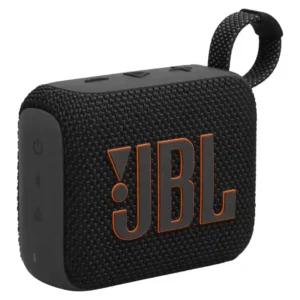
Choose JBL Go 4 for Weight convenience and Price / value for money.
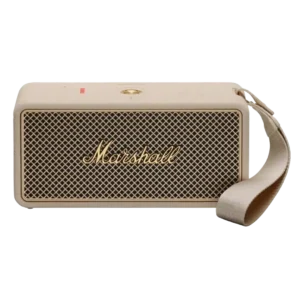
Choose Marshall Middleton II for Omnidirectional sound and Wired input.
Why these recommendations?
JBL Go 4
Where It Has the Edge
Weight convenience is 4.8 vs 2.5. At roughly 190 grams, the speaker is exceptionally light and easy to slip into a pocket or bag....
Price / value for money is 4.6 vs 2.6. At roughly $40 to $50—and especially when discounted—the speaker is widely considered an affordable way to get dependable...
Detail retrieval is 4.7 vs 3.9. The speaker reveals an impressive amount of vocal and instrumental detail for its size, especially after EQ tuning....
Marshall Middleton II
Where It Has the Edge
Omnidirectional sound is 4.6 vs 1.0. The 360-degree presentation is repeatedly praised for producing a wide, immersive sound from many listening positions. Reviewers generally...
Wired input is 4.7 vs 1.7. The 3.5mm auxiliary input is repeatedly welcomed as a useful fallback when Bluetooth is not ideal. Reviewers also...
JBL Go 44.1 overall score
Marshall Middleton II3.8 overall score
Compare features
Scores are out of 5. Missing scores mean missing review evidence, not a missing feature.
Scored on both products
Performance
Omnidirectional sound
JBL Go 4
1.0
Marshall Middleton II
4.6
Details and evidence for Omnidirectional sound
JBL Go 4
Sound is directional rather than truly room-filling in every direction. Reviewers often preferred laying the speaker face-up, while listening from behind it produced a muffled and narrower presentation.
The 360-degree presentation is repeatedly praised for producing a wide, immersive sound from many listening positions. Reviewers generally found the effect convincing rather than just a marketing claim.
A single Go 4 is mono and offers limited left-right separation. Pairing two identical units creates true stereo and a much wider, more immersive presentation, though occasional sync delay has been reported.
Stereo imaging is one of the clearest strengths. Reviewers repeatedly praise unusually convincing left-right separation and a soundstage that extends beyond the compact cabinet.
Bass is punchy and satisfying for such a tiny speaker, especially after EQ adjustment, but true low-bass depth is limited. Playtime Boost strips away much of the bass, and higher volumes can make the low end thin out.
Bass is one of the most praised sound traits: deep, punchy, controlled, and unusually substantial for the size. It can compress at maximum volume and cannot reproduce the deepest sub-bass, but most reviewers still rate it highly.
At low and moderate listening levels, the sound remains enjoyable and can compare closely with newer compact models. It works especially well for desk listening, quiet rooms, and background music.
Low-volume listening is a strength, especially for desks and quiet rooms. Reviewers and a customer said the speaker retains a full, satisfying sound without needing to be played loudly.
There is no 3.5mm auxiliary input, and the USB-C port does not carry audio. Reviewers who still use older wired players consider this a clear limitation.
The 3.5mm auxiliary input is repeatedly welcomed as a useful fallback when Bluetooth is not ideal. Reviewers also liked that the port is easy to access.
The Go 4 begins to sound thinner when pushed to roughly 70 percent volume and beyond. It has useful output for its size, but limited reserve for demanding outdoor or party use.
The stronger amplifier setup gives the speaker useful headroom and low-frequency extension. Reviewers described the added reserve as helping bass feel more substantial without immediately losing control.
Details and evidence for Latency with TV (lip sync)
JBL Go 4
Reviewers who used the speaker with video reported low or minimal latency. It is suitable for casual phone, tablet, or laptop viewing without obvious lip-sync problems.
One reviewer found noticeable audio delay with video playback and said lip sync was not correct. Buyers planning to use the speaker for TV or video should expect Bluetooth latency.
The basic light communicates low battery and operating status, but reviewers wanted a more precise, graduated battery display. The app provides a clearer percentage readout.
The LED bars provide useful feedback for battery, volume, bass, and treble levels. A customer specifically appreciated being able to see power and volume status at a glance.
There is no built-in microphone, so the speaker cannot handle calls directly. Phone conversations and voice commands must stay on the connected device.
The built-in microphone is a welcome addition and generally works well for hands-free calls. Pickup is strongest at close to moderate distance rather than across a large room.
At roughly 190 grams, the speaker is exceptionally light and easy to slip into a pocket or bag. Its low weight is a defining advantage for travel, hiking, cycling, and everyday carrying.
Weight is one of the most repeated drawbacks. At about 1.8 kg, it feels substantial and premium, but several reviewers and customers found it heavy for bags, walks, or truly portable use.
Complex tracks can sound muddled, with limited separation between instruments. The compact mono design favors an energetic, direct presentation over precise layering.
Complex arrangements can become somewhat cluttered, even though the stereo layout helps create space. The speaker is cohesive with most music but not flawless when many instruments compete at once.
Speakerphone performance is good at close range, with clear calls reported by several reviewers. Quality drops with distance, where voices can become less clear or more echoey.
Details and evidence for Cabinet construction / bracing
JBL Go 4
The fabric wrap, rubberized edges, and sturdy body feel unusually solid for the price. The enclosure tolerates travel and rough handling well, though the fabric can collect dirt and sand.
Construction feels premium overall, but there is a specific concern about the removable outer wrap lifting at the corners. Other users praised the materials, so build impressions are positive with a notable casing caveat.
The speaker reveals an impressive amount of vocal and instrumental detail for its size, especially after EQ tuning. Dense or heavily layered recordings can still lose texture and separation.
Detail retrieval is generally good, with reviewers hearing subtle percussion, vocals, and spatial information that smaller speakers can lose. The main weakness is reduced high-frequency detail in some dense or bass-heavy tracks.
The IP67 build handles dust, sand, and outdoor use with little concern. Reviewers found it well suited to beaches, trails, workshops, and other messy environments.
The IP67 dust protection earned strong confidence for outdoor use. Reviewers specifically saw the sealed design as well suited to dirt, sand, and general outdoor exposure.
Most owners are highly satisfied with the combination of sound, ruggedness, portability, and price. Negative experiences center mainly on isolated battery or connection failures and expectations beyond what such a small speaker can deliver.
Overall satisfaction is mostly high, with many customers calling the speaker excellent or saying they would buy it again. Repeated charging failures and delayed LE Audio support create a meaningful minority of strongly negative experiences.
The speaker floats when dropped in water, making it easier to retrieve at a pool or lake. That adds practical reassurance beyond its waterproof rating.
The ability to float adds extra reassurance around pools despite the speaker’s weight. One reviewer specifically saw it as useful peace of mind for poolside use.
The Go 4 is well suited to bedrooms, bathrooms, offices, hotel rooms, and small outdoor groups. It provides pleasant personal-scale sound without dominating nearby spaces.
The speaker is particularly well suited to desks, kitchens, and small-to-medium rooms. It can fill these spaces comfortably without requiring maximum volume.
Details and evidence for Inter-speaker connectivity
JBL Go 4
Auracast adds useful flexibility for linking compatible JBL speakers, and two Go 4 units can form a true stereo pair. Cross-model groups remain mono, and setup is usually easier through the app.
Auracast gives the Middleton II a flexible path to grouped playback with compatible speakers and broadcasts. Reviewers viewed it as a useful, more future-facing inter-speaker option.
Details and evidence for Frequency response balance
JBL Go 4
The tuning is often mid-forward, with clear voices and lively instruments but limited deep bass. Some listeners hear harsh or thin highs, while others find the overall balance remarkably full and controlled for the size.
Most reviewers describe the tuning as balanced, with clean mids and controlled bass. A few found the upper mids and treble less detailed or somewhat overshadowed by the low end.
Details and evidence for Distortion at high volume
JBL Go 4
Many reviewers heard clean, surprisingly controlled sound at louder levels, while others noticed harsh treble, lost detail, or strain near maximum volume. It performs best below its absolute limit.
It generally stays composed at high volume, with multiple reviewers reporting little obvious distortion. The main caveat is bass compression or rougher treble when pushed close to maximum output.
Multipoint lets the speaker stay connected to two devices and switch between them smoothly. Reviewers found it useful for moving between a phone, tablet, or laptop without repeated pairing.
Multipoint is treated as a useful everyday upgrade, allowing two source devices to remain connected. Reviewers liked the flexibility for switching between devices without repeated pairing.
Reviewers appreciate the use of recycled fabric and plastic along with largely paper-based packaging. These materials add environmental appeal without making the speaker feel cheap.
Repairability and replaceable parts make the Middleton II less disposable than many sealed portable speakers. Reviewers viewed that approach as a meaningful sustainability advantage.
Its pocketable size, simple setup, and grab-and-go design make it exceptionally easy to use around the home, at work, or while traveling. Reviewers often describe it as a speaker they carry without thinking.
Everyday operation is straightforward thanks to direct controls, simple pairing, and a practical feature set. Reviewers generally found it easy to live with across desk, room, and portable use.
Details and evidence for Loudness / maximum volume
JBL Go 4
The Go 4 plays impressively loud for its palm-sized body and can cover a desk, hotel room, kitchen, or small gathering. It does not have the output or projection needed for large parties or noisy open spaces.
The Middleton II gets impressively loud for its size and easily handles rooms, backyards, and smaller gatherings. Reviewers still caution that it is not a true high-output party speaker.
The built-in fabric loop feels sturdy and makes the speaker easy to hang from a bag or hook. Several reviewers still wish JBL had included an integrated carabiner or a more versatile strap.
The detachable strap is generally useful and later versions feel more durable, but opinions are mixed because the speaker lacks a full carry handle. That matters more given its relatively heavy weight.
Auracast works with newer compatible JBL speakers, but it does not connect with older PartyBoost models. Owners of legacy JBL speakers may not be able to mix them into the same group.
Backward compatibility is limited because the Middleton II does not wirelessly stack with the original first-generation Middleton. That is a meaningful drawback for owners hoping to reuse an older unit in a paired setup.
The SBC-only wireless connection is considered perfectly acceptable for casual music, podcasts, and video. It lacks higher-quality codec options for listeners who care about premium wireless audio.
Codec support is mixed: AAC, SBC, and LC3 are useful additions, but several reviewers criticize the lack of aptX or LDAC. One customer was also frustrated that promised LE Audio functionality had not arrived.
Details and evidence for Multi-speaker pairing reliability
JBL Go 4
Pairing through the JBL app is usually quick and dependable, and some owners found linking multiple speakers effortless. The physical Auracast-button process can be confusing, and one expert noted synchronization delay in stereo mode.
The absence of conventional multi-speaker pairing disappointed at least one reviewer. Auracast offers another route to grouped playback, but it does not fully replace the expected pairing option for everyone.
Details and evidence for Bluetooth connection stability
JBL Go 4
Most reviewers found pairing quick and playback stable, including use around the house and outdoors. A minority reported random disconnections, shutdowns, or unusually unreliable behavior.
Wireless stability is strong in testing, with reviewers reporting reliable connections around homes and gardens plus fast reconnection to paired devices. The newer Bluetooth implementation appears dependable in normal use.
Wireless range is generally strong for a speaker this size, with reports ranging from about 30 feet to nearly 100 feet in favorable conditions. A few owners encountered much shorter usable range.
Bluetooth range is a notable upgrade, with reviewers reporting much longer reach and reliable use around a house, garden, or park. The extended range reduces the likelihood of dropouts in everyday use.
Details and evidence for Control button responsiveness
JBL Go 4
The controls are tactile and generally easy to operate, but some reviewers found that presses register best in the center of each button. The side controls can also be hard to see in darker finishes.
The raised, tactile controls are generally easier to feel and use than before. One reviewer noted that some strip controls can be pressed accidentally, so the layout is not flawless.
The top-mounted play, skip, and volume controls are simple and useful, with separate power and pairing buttons on the side. A few users found the activation area narrower than the visible button surface.
Physical controls are a standout usability feature, letting users handle playback, volume, bass, and treble without opening the app. Reviewers repeatedly described the layout as intuitive and convenient.
Review contexts may differ — read the details before interpreting the score gap.
Details and evidence for Bluetooth connectivity
JBL Go 4
Bluetooth setup is usually fast and straightforward across phones, tablets, and laptops. Reviewers commonly describe the connection process as simple enough to complete in seconds.
The five-band EQ and presets are a major improvement, letting users tame the mids, add punch, or improve vocal clarity. The small driver limits how much extra bass the EQ can create, and Playtime Boost disables custom tuning.
EQ flexibility is a strong point. Reviewers liked the physical bass and treble controls plus the app’s five-band EQ, though one noted that more advanced adjustment options would still be welcome.
The overall sound is lively, clear, and enjoyable for casual listening, with much more scale than the tiny enclosure suggests. It cannot match larger speakers for bass depth, openness, stereo width, or fine detail.
Music playback is consistently enjoyable, with reviewers especially liking rock and bass-driven material. The warm, energetic presentation also works across a broader range of genres.
The JBL Portable app is generally easy to connect, simple to navigate, and reliable for EQ, battery checks, updates, and speaker grouping. A few reviewers found it basic rather than feature-rich.
The Marshall app is consistently described as simple, well organized, and easy to use. Reviewers liked quick setup, clear battery information, and straightforward access to EQ and device settings.
Vocals and spoken content are usually clear, forward, and easy to understand, making the speaker useful for podcasts and audiobooks. Some default EQ settings can let voices compete with other elements, but tuning helps.
Close-range call testing produced clear, rich voice pickup, even with quiet speech. Voice quality appears strongest when the user stays near the speaker.
At roughly $40 to $50—and especially when discounted—the speaker is widely considered an affordable way to get dependable portable sound and a rugged build. Some rivals offer more battery or bass for similar money.
Price is a recurring concern. Several reviewers think the Middleton II is expensive for its size, especially when the Kilburn III or cheaper rivals are close enough in price to complicate the value proposition.
The Go 4 delivers strong value through its durable build, app-based EQ, waterproofing, and surprisingly lively sound. Its case becomes even stronger on sale, though battery-focused buyers can find longer-lasting alternatives.
Value opinions are split. Some reviewers and customers consider it worth the premium or a strong buy at the right price, while others think cheaper rivals or nearby Marshall models offer better value.
Initial Bluetooth pairing is typically completed in seconds, and the app recognizes the speaker quickly. Stereo and multi-speaker setup is also straightforward when handled through the app.
Bluetooth setup was described as extremely easy by a customer, with quick connection and little friction. Pairing simplicity is a clear usability strength.
Many packages include a USB charging cable, but the supplied cable is often described as very short and a wall adapter may be absent. Buyers may prefer to use their own longer cable and charging block.
A full recharge commonly takes around three hours, which reviewers consider acceptable but not especially quick for the available runtime. Some users praised faster charging, while others found the wait lengthy.
Quick charging is repeatedly praised as practical, with short top-ups restoring several hours of playback. Reviewers found this especially useful before gatherings or when the battery is nearly empty.
USB-C charging is convenient and keeps the speaker compatible with common modern cables. The port is charging-only, fast charging is absent, and a full recharge can take around three hours.
Details and evidence for Battery life (if portable)
JBL Go 4
Battery life is adequate for casual outings, with many users getting roughly five to seven hours and some reporting longer results. Others experienced shorter or inconsistent runtime, while Playtime Boost extends playback at a noticeable cost to sound quality.
Battery life is a major strength, with many reviewers praising roughly 30-hour endurance and multi-day use. A few users did not reach the full claim, and one customer found the newer model shorter-lived than the original.
Details and evidence for Drop resistance durability
JBL Go 4
Durability is one of the strongest points: reviewers repeatedly report drops, bumps, travel, and outdoor abuse without meaningful damage. The rubberized edges and solid construction inspire confidence.
One hands-on reviewer had enough confidence in the rugged build to say an accidental drop would not cause immediate concern. That supports strong perceived impact durability.
Water protection is consistently praised: the IP67 speaker survives splashes, rain, dunking, and poolside use without trouble. Reviewers regularly treat it as a dependable beach, shower, and outdoor companion.
Reviewers are highly positive about the IP67 protection and repeatedly frame it as suitable for pools, rain, beaches, and outdoor use. One reviewer still considered it less rugged than purpose-built outdoor rivals.
The compact shape, colorful fabric finishes, and rubber accents are widely praised as cute, modern, and premium-looking. Some buyers dislike the oversized JBL logo or particular accent colors.
Design is one of the most consistently praised traits. Reviewers and customers repeatedly call the retro Marshall styling premium, distinctive, attractive, and closer to décor than a generic portable speaker.
AirPlay is not supported, which one iPhone-focused reviewer specifically called a letdown. Apple users wanting Wi-Fi-based AirPlay streaming will need another option.
LC3 support was praised for reducing energy use while maintaining good audio performance. That gives the newer Bluetooth implementation a modest efficiency advantage.
Most reviewers see the Middleton II as a premium, well-made product with strong sound and practical features. A few customer failures and one casing-quality concern prevent the overall quality picture from being uniformly positive.
One customer reported a good unboxing experience and that the speaker arrived in good condition. There is limited commentary on packaging beyond that positive experience.
The reverse-charging power-bank function is widely seen as genuinely useful for travel and outdoor use. One customer did report that this function failed before the speaker later stopped charging entirely.
The companion app can be installed and used without creating an account, which one reviewer explicitly appreciated. That makes the software experience relatively privacy-friendly.
Higher-resolution wireless audio options are limited. Reviewers specifically note that the speaker does not provide the broader high-res codec support available from some competitors.
Overall sound quality is a major strength, with broad praise for clarity, stereo width, bass, and musicality. Even critical reviewers generally describe the sound as good, while the main reservations involve price, high-frequency detail, or reliability rather than core audio quality.
The soundstage has little vertical dimension and becomes muffled from behind the speaker. Its presentation is broader than expected for the size, but not spacious or three-dimensional.
Support experiences are inconsistent. One customer praised Marshall’s warranty replacement, while others felt help was limited or unhelpful when charging failures and delayed LE Audio support arose.
Power reliability is the clearest customer concern. Multiple buyers report units that would not charge, arrived dead, stopped holding power, or failed across more than one replacement, although another customer described Marshall speakers as reliable.
The replaceable battery is repeatedly praised as a meaningful long-term advantage. Reviewers value the ability to extend the speaker’s useful life instead of treating the battery as permanently sealed.
The feature set covers the essentials, including EQ, battery controls, microphone use, and Auracast. Some reviewers still miss extras found on other Marshall models, so the smart feature package feels useful rather than exhaustive.
Details and evidence for Voice assistant responsiveness
JBL Go 4
The speaker has no native voice-assistant support, so commands must be made through the phone. Reviewers who wanted hands-free control viewed this as a notable omission.
One reviewer was disappointed that the speaker remains Bluetooth-only with no Wi-Fi streaming. That limits its flexibility as a more integrated at-home speaker.