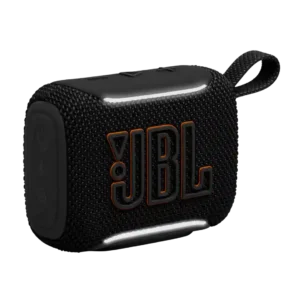
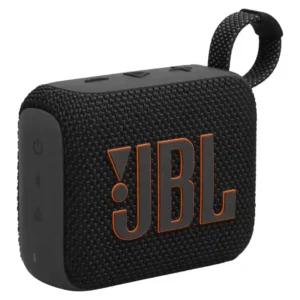
JBL Go 5
Where It Has the Edge
- Status indicators is 4.7 vs 2.0. The edge lights provide helpful cues for volume, power, pairing, battery, and Auracast. The same persistent status flashes...

Scorata scores summarize analyzed review evidence on a 1–5 scale; they are not laboratory measurements or a simple average of customer star ratings. Feature scores summarize the reviews covering that feature. The overall score averages feature scores within each review, then combines review averages. When both expert and customer evidence are available, those two groups receive equal weight. Products can have different review coverage, so small score gaps do not establish a winner.
Recommendations prioritize important features for the category, with a score of at least 3.5, a gap of at least 0.25 points and at least two supporting reviews per product. Features with widely varying scores or broad connectivity contexts are excluded from recommendations. These safeguards do not establish statistical significance.
Quick verdict
The available evidence supports the recommendation below, but does not establish an overall winner. Check the remaining features against your priorities.
Choose JBL Go 5 for Status indicators.
There is not enough comparable review evidence to recommend JBL Go 4 over the other product.
No clear scored advantage over the other product.
Scores are out of 5. Missing scores mean missing review evidence, not a missing feature.
The Go 5 sounds composed, full, and musically coherent for its size. Its tuning favors an engaging overall presentation over analytical precision.
Complex tracks can sound muddled, with limited separation between instruments. The compact mono design favors an energetic, direct presentation over precise layering.
The Go 5 sounds punchy and energetic at sensible levels and stays more composed than the Go 4 when pushed. Its tiny driver still limits large-scale dynamics and deep impact.
The Go 4 begins to sound thinner when pushed to roughly 70 percent volume and beyond. It has useful output for its size, but limited reserve for demanding outdoor or party use.
The edge lights provide helpful cues for volume, power, pairing, battery, and Auracast. The same persistent status flashes can be annoying in dark rooms.
The basic light communicates low battery and operating status, but reviewers wanted a more precise, graduated battery display. The app provides a clearer percentage readout.
Auracast can synchronize the Go 5 with several current JBL models, including the Go 4. AirTouch stereo requires two Go 5 units, and older PartyBoost speakers are excluded.
Auracast works with newer compatible JBL speakers, but it does not connect with older PartyBoost models. Owners of legacy JBL speakers may not be able to mix them into the same group.
The raised physical controls are simple, familiar, and quick to respond. Reviewers report near-instant reactions from both the buttons and companion app.
The controls are tactile and generally easy to operate, but some reviewers found that presses register best in the center of each button. The side controls can also be hard to see in darker finishes.
Reviewers value the upgraded dust protection for beaches, hiking, and outdoor travel. IP68 coverage is repeatedly treated as a meaningful durability improvement.
The IP67 build handles dust, sand, and outdoor use with little concern. Reviewers found it well suited to beaches, trails, workshops, and other messy environments.
The integrated loop is handy for bags, bikes, and one-finger carrying. Several reviewers wish it were more elastic or included a carabiner for easier attachment.
The built-in fabric loop feels sturdy and makes the speaker easy to hang from a bag or hook. Several reviewers still wish JBL had included an integrated carabiner or a more versatile strap.
AirTouch is a standout feature, making two-speaker stereo pairing almost instant, while Auracast supports larger JBL groups. True stereo requires two Go 5 units, and older PartyBoost products are not fully compatible.
Auracast adds useful flexibility for linking compatible JBL speakers, and two Go 4 units can form a true stereo pair. Cross-model groups remain mono, and setup is usually easier through the app.
The Go 5 has no built-in speakerphone function, which some reviewers list as a clear drawback. It cannot handle calls without a separate microphone accessory.
The lack of a microphone means there is no speakerphone function. Buyers who want hands-free calls need a different portable speaker.
The tuning is generally warm, clear, and mid-forward, with clean highs and enjoyable bass for the size. Deep lows remain limited, and Playtime Boost can make the balance thin.
The tuning is often mid-forward, with clear voices and lively instruments but limited deep bass. Some listeners hear harsh or thin highs, while others find the overall balance remarkably full and controlled for the size.
A single Go 5 is well suited to desks, kitchens, bathrooms, hotel rooms, and other modest spaces. Unavoidable light flashes can make it less appealing for dark bedrooms or movie watching.
The Go 4 is well suited to bedrooms, bathrooms, offices, hotel rooms, and small outdoor groups. It provides pleasant personal-scale sound without dominating nearby spaces.
Several reviewers find the Go 5 cleaner than expected when pushed, with little obvious distortion. Others hear harsh mids, compression, or mild bass distortion at the highest settings.
Many reviewers heard clean, surprisingly controlled sound at louder levels, while others noticed harsh treble, lost detail, or strain near maximum volume. It performs best below its absolute limit.
Most buyers are highly enthusiastic about the compact sound, portability, and ruggedness. A smaller group is strongly dissatisfied because of lighting behavior, app setup, or missing accessories.
Most owners are highly satisfied with the combination of sound, ruggedness, portability, and price. Negative experiences center mainly on isolated battery or connection failures and expectations beyond what such a small speaker can deliver.
Vocals, podcasts, and spoken content come through cleanly and prominently. Reviewers especially praise clear mids and crisp speech from such a small enclosure.
Vocals and spoken content are usually clear, forward, and easy to understand, making the speaker useful for podcasts and audiobooks. Some default EQ settings can let voices compete with other elements, but tuning helps.
The speaker works especially well for desks, kitchens, showers, travel, commuting, work, biking, and casual outdoor use. Its small size and simple controls make it easy to use without planning.
Its pocketable size, simple setup, and grab-and-go design make it exceptionally easy to use around the home, at work, or while traveling. Reviewers often describe it as a speaker they carry without thinking.
Recycled fabric, plastic, magnet materials, and simpler cardboard packaging receive positive attention. Reviewers see these changes as meaningful in a high-volume product line.
Reviewers appreciate the use of recycled fabric and plastic along with largely paper-based packaging. These materials add environmental appeal without making the speaker feel cheap.
Portability is one of the strongest points: the Go 5 fits in pockets, bags, and backpacks and is easy to carry all day. A few Go 4 comparisons note that it is slightly heavier or bulkier.
At roughly 190 grams, the speaker is exceptionally light and easy to slip into a pocket or bag. Its low weight is a defining advantage for travel, hiking, cycling, and everyday carrying.
Reviewers hear clean mids, crisp highs, defined instruments, and musical details that are easy to miss on lesser mini speakers. Fine separation is still constrained by the single small driver.
The speaker reveals an impressive amount of vocal and instrumental detail for its size, especially after EQ tuning. Dense or heavily layered recordings can still lose texture and separation.
The Go 5 plays surprisingly loud for its palm-sized body and works well for desks, showers, job sites, and small gatherings. It still cannot replace a larger room-filling speaker, and some reviewers hear strain near maximum output.
The Go 4 plays impressively loud for its palm-sized body and can cover a desk, hotel room, kitchen, or small gathering. It does not have the output or projection needed for large parties or noisy open spaces.
The speaker lacks a built-in microphone, so it cannot natively handle calls. Reviewers treat this as a minor-to-moderate omission rather than a deal breaker.
There is no built-in microphone, so the speaker cannot handle calls directly. Phone conversations and voice commands must stay on the connected device.
USB-C audio provides clearer lossless wired playback from compatible devices, an uncommon bonus in such a small budget speaker. Activating it requires holding the play button while connecting the cable, so the process is easy to miss.
There is no 3.5mm auxiliary input, and the USB-C port does not carry audio. Reviewers who still use older wired players consider this a clear limitation.
The Go 5 is a directional mono speaker rather than a true 360-degree design. It is adequate for personal listening, but omnidirectional rivals may serve groups better.
Sound is directional rather than truly room-filling in every direction. Reviewers often preferred laying the speaker face-up, while listening from behind it produced a muffled and narrower presentation.
One reviewer reports no noticeable delay when watching video from a phone. Broader TV-specific testing is limited.
Reviewers who used the speaker with video reported low or minimal latency. It is suitable for casual phone, tablet, or laptop viewing without obvious lip-sync problems.
A single Go 5 remains a focused mono speaker with limited width. Two units paired through AirTouch create a much wider, believable left-right image and noticeably clearer presentation.
A single Go 4 is mono and offers limited left-right separation. Pairing two identical units creates true stereo and a much wider, more immersive presentation, though occasional sync delay has been reported.
Bass is punchy, clean, and fuller than expected for the size, especially after EQ adjustment. Deep sub-bass and room-shaking impact are absent, and Playtime Boost weakens the low end substantially.
Bass is punchy and satisfying for such a tiny speaker, especially after EQ adjustment, but true low-bass depth is limited. Playtime Boost strips away much of the bass, and higher volumes can make the low end thin out.
At low and moderate volume, the speaker remains clear and works very well for background music, podcasts, and close listening. Several users specifically praise bass and clarity at quieter levels.
At low and moderate listening levels, the sound remains enjoyable and can compare closely with newer compact models. It works especially well for desk listening, quiet rooms, and background music.
The box omits a USB-C cable or charger, and this is one of the most repeated customer complaints. Several buyers still like the speaker but lower their rating or question the value because basic charging accessories are absent.
Many packages include a USB charging cable, but the supplied cable is often described as very short and a wall adapter may be absent. Buyers may prefer to use their own longer cable and charging block.
One customer reports that USB-C charging is quick. The broader complaint is not the charging method itself, but that no cable is included.
USB-C charging is convenient and keeps the speaker compatible with common modern cables. The port is charging-only, fast charging is absent, and a full recharge can take around three hours.
A full charge generally takes about 2.5 to three hours. Some reviewers find that acceptable, while others consider it slow for a small battery.
A full recharge commonly takes around three hours, which reviewers consider acceptable but not especially quick for the available runtime. Some users praised faster charging, while others found the wait lengthy.
Typical expectations are about eight hours, or up to ten with Playtime Boost, and many users find that adequate. Real-world reports range from roughly four to nine hours, while the boost mode noticeably reduces bass and sound quality.
Battery life is adequate for casual outings, with many users getting roughly five to seven hours and some reporting longer results. Others experienced shorter or inconsistent runtime, while Playtime Boost extends playback at a noticeable cost to sound quality.
Most testing reports seamless pairing, no dropouts, and stable playback through walls. A minority report problems when mixing the Go 5 with older JBL speakers.
Most reviewers found pairing quick and playback stable, including use around the house and outdoors. A minority reported random disconnections, shutdowns, or unusually unreliable behavior.
Range testing is strong, including stable playback through walls, closed doors, and multiple floors. The connection generally holds farther than reviewers expected from a speaker this small.
Wireless range is generally strong for a speaker this size, with reports ranging from about 30 feet to nearly 100 feet in favorable conditions. A few owners encountered much shorter usable range.
The physical playback, volume, Bluetooth, and Auracast controls are straightforward and dependable. Familiar JBL layouts help returning users operate it immediately.
The top-mounted play, skip, and volume controls are simple and useful, with separate power and pairing buttons on the side. A few users found the activation area narrower than the visible button surface.
Support for SBC, AAC, and LC3 is viewed as modern and useful, especially for efficiency and stability. Reviewers do not present it as audiophile-grade, but it is strong for the category.
The SBC-only wireless connection is considered perfectly acceptable for casual music, podcasts, and video. It lacks higher-quality codec options for listeners who care about premium wireless audio.
Pairing is generally fast and easy across phones, laptops, and Android Fast Pair. The basic wireless experience is polished and accessible.
Bluetooth setup is usually fast and straightforward across phones, tablets, and laptops. Reviewers commonly describe the connection process as simple enough to complete in seconds.
Review contexts may differ, so use caution when interpreting the score gap.
AirTouch and Auracast pairing are usually fast, synchronized, and reliable. One customer reports more difficult cross-generation pairing and repeated Bluetooth loss with older Go 4 units.
Pairing through the JBL app is usually quick and dependable, and some owners found linking multiple speakers effortless. The physical Auracast-button process can be confusing, and one expert noted synchronization delay in stereo mode.
Multipoint support makes switching between a phone and laptop straightforward and lets two people share playback control.
Multipoint lets the speaker stay connected to two devices and switch between them smoothly. Reviewers found it useful for moving between a phone, tablet, or laptop without repeated pairing.
Most reviewers describe the JBL Portable app as stable, clean, responsive, and useful for EQ, lights, updates, and grouping. One customer experienced failed connections, lengthy troubleshooting, and a highly frustrating setup.
The JBL Portable app is generally easy to connect, simple to navigate, and reliable for EQ, battery checks, updates, and speaker grouping. A few reviewers found it basic rather than feature-rich.
The dominant view is that the Go 5 sounds exceptionally good for a palm-sized speaker, with clear mids, crisp highs, and lively tuning. It remains best for casual listening rather than critical or large-room playback.
The overall sound is lively, clear, and enjoyable for casual listening, with much more scale than the tiny enclosure suggests. It cannot match larger speakers for bass depth, openness, stereo width, or fine detail.
The seven-band EQ is one of the most useful app features and can meaningfully improve bass, vocals, or room tuning. One customer calls it gimmicky, and it becomes unavailable when two speakers are stereo-paired.
The five-band EQ and presets are a major improvement, letting users tame the mids, add punch, or improve vocal clarity. The small driver limits how much extra bass the EQ can create, and Playtime Boost disables custom tuning.
Bluetooth setup is usually quick and intuitive, with Fast Pair and AirTouch reducing friction further. One customer had a severe app-connection problem that required hours of troubleshooting.
Initial Bluetooth pairing is typically completed in seconds, and the app recognizes the speaker quickly. Stereo and multi-speaker setup is also straightforward when handled through the app.
The overall consensus is that the Go 5 delivers excellent sound, ruggedness, and connectivity for the money. Value weakens for existing Go 4 owners, buyers who need longer battery life, or those frustrated by missing accessories.
The Go 4 delivers strong value through its durable build, app-based EQ, waterproofing, and surprisingly lively sound. Its case becomes even stronger on sale, though battery-focused buyers can find longer-lasting alternatives.
The compact fabric-wrapped design feels premium, colorful, and rugged, with many buyers praising its looks. The fixed-color lighting and slightly larger Go 4 footprint divide opinion.
The compact shape, colorful fabric finishes, and rubber accents are widely praised as cute, modern, and premium-looking. Some buyers dislike the oversized JBL logo or particular accent colors.
The dense build survives rough handling, dirt, concrete, and several real-world drops in the supplied reviews. It is consistently described as rugged, solid, and easy to carry without babying.
Durability is one of the strongest points: reviewers repeatedly report drops, bumps, travel, and outdoor abuse without meaningful damage. The rubberized edges and solid construction inspire confidence.
IP68 protection is a major strength, with reviewers confidently using the speaker near pools, in showers, in rain, and after submersion. Multiple hands-on accounts describe water exposure without damage.
Water protection is consistently praised: the IP67 speaker survives splashes, rain, dunking, and poolside use without trouble. Reviewers regularly treat it as a dependable beach, shower, and outdoor companion.
Support for 24-bit/48kHz lossless playback over USB-C is a standout capability at this size and price. Reviewers hear modest improvements in clarity and detail when using wired playback.
The soundstage has little vertical dimension and becomes muffled from behind the speaker. Its presentation is broader than expected for the size, but not spacious or three-dimensional.
The fabric wrap, rubberized edges, and sturdy body feel unusually solid for the price. The enclosure tolerates travel and rough handling well, though the fabric can collect dirt and sand.
One customer specifically misses Chromecast and considers its absence a meaningful limitation. No reviewer reports native Chromecast support.
Playtime Boost can extend runtime by roughly two hours, but it does so by reducing bass and flattening the sound. Reviewers generally treat it as an emergency setting rather than the preferred listening mode.
The speaker floats when dropped in water, making it easier to retrieve at a pool or lake. That adds practical reassurance beyond its waterproof rating.
Google Fast Pair makes Android setup quick and nearly effortless.
Lighting is the most polarizing feature: many users find it tasteful, fun, or useful at night, while others call it gimmicky, distracting, or impossible to fully disable. Limited color customization is a common complaint.
Some reviewers praise the app for working without forced registration. One customer reports mandatory account setup and data sharing, creating a sharply conflicting privacy experience.
AirTouch, Auracast, app-based EQ, lighting control, firmware updates, and USB-C audio make the Go 5 unusually sophisticated for its size. The feature set is a major reason it feels more mature than a basic budget speaker.
The speaker has no native voice-assistant support, so commands must be made through the phone. Reviewers who wanted hands-free control viewed this as a notable omission.
These are a few of the reviews included in our analysis.

Discover what’s new in the JBL Go 5 vs Go 4. From refreshed design to ambient lighting and improved battery life, is it worth the upgrade?
The JBL Go 5 and Go 4 are extremely similar speakers, but JBL added a few upgrades that may make the Go 5 worth it.
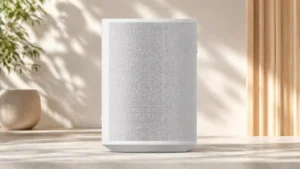
Best for rich, room-filling stereo sound, easy Sonos expansion and flexible Bluetooth/AirPlay playback. Skip it if Google Assistant, Dolby Atmos or true battery-powered portability is essential.
Pros: Bass performance, Overall sound quality
Cons: Google, Wired input
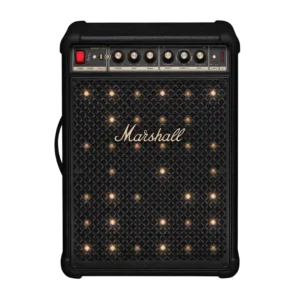
Best for powerful 360° sound, exceptional battery life, premium styling, and flexible mic/instrument inputs. Skip it if you want a light, inexpensive speaker or deep app-based control.
Pros: Battery life (if portable), Weight convenience
Cons: App reliability, Remote control usability
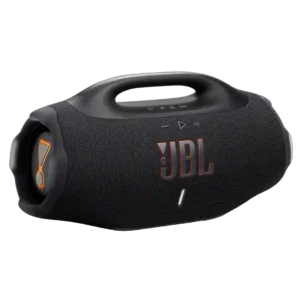
Choose the Boombox 4 if you want huge bass, extreme outdoor volume, long battery life, IP68 durability, and a replaceable battery in a carryable boombox. Skip it if price, lighter...
Pros: Overall satisfaction, Overall sound quality
Cons: Energy efficiency, Microphone
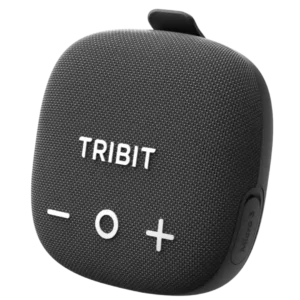
Choose the StormBox Micro 3 for rugged travel, magnetic mounting, long battery life, strong value, and surprisingly full sound. Skip it if you need premium codecs, aux input, refined detail,...
Pros: Magnetic mounting, Frequency response balance
Cons: Backwards compatibility, Distortion at high volume