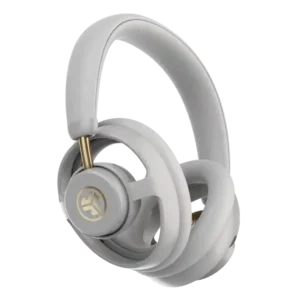
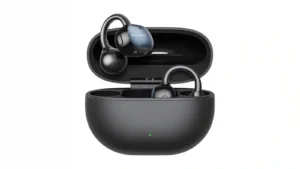
JLab JBuds Open
Where It Has the Edge
- Instrument separation is 4.9 vs 4.6. Instrument separation and imaging are standout strengths, especially with orchestral, acoustic, jazz, and vocal material. Reviewers frequently hear...

Scorata scores summarize analyzed review evidence on a 1–5 scale; they are not laboratory measurements or a simple average of customer star ratings. Feature scores summarize the reviews covering that feature. The overall score averages feature scores within each review, then combines review averages. When both expert and customer evidence are available, those two groups receive equal weight. Products can have different review coverage, so small score gaps do not establish a winner.
Recommendations prioritize important features for the category, with a score of at least 3.5, a gap of at least 0.25 points and at least two supporting reviews per product. Features with widely varying scores or broad connectivity contexts are excluded from recommendations. These safeguards do not establish statistical significance.
Quick verdict
The review evidence points to a tradeoff: Instrument separation versus LDAC and Water/sweat resistance rating. Choose according to which strengths matter more to you; the overall score alone does not settle that choice.
Choose JLab JBuds Open for Instrument separation.
Choose SoundPEATS UU2 for LDAC and Water/sweat resistance rating.
Scores are out of 5. Missing scores mean missing review evidence, not a missing feature.
The sound is generally clear, detailed, airy, and strong for the price, with excellent vocals and separation. Critics hear a thin, mid-heavy presentation with weak low-end body, limited loudness, or firmware-related echo.
Sound quality earns unusually strong praise for an inexpensive open-ear model, with clear mids, controlled treble and much fuller bass than reviewers expected. It still cannot match the isolation, sub-bass pressure or ultimate fidelity of a good sealed in-ear design.
The tuning is noticeably mid-forward with limited extension at both ends. Rolled sub-bass and inconsistent treble make it less natural and less reference-like than audiophile open-backs.
One detailed listening test found the default balance fairly flat across bass, mids and highs, with a natural overall timbre rather than exaggerated coloration.
Bass is punchier and fuller than many open-ear products, and some listeners find it surprisingly satisfying. Deep sub-bass and hard impact remain limited, however, leaving bass-focused users divided or disappointed.
Bass is one of the UU2’s standout strengths, with reviewers repeatedly praising its punch and weight for an open-ear design. Deep sub-bass still trails sealed earbuds, and positioning or aggressive DynamicEQ can make the low end less consistent.
Several customers report random sound-mode changes, channel cutouts, or left/right phase errors, especially with spoken content. Resets and disabling spatial audio did not consistently solve the problem for those affected.
Firmware updating is generally straightforward, but software did not solve the persistent connection problems on one test unit. Another reviewer also encountered a minor app-language/update hiccup.
Movie mode can trim latency and improve dialogue for video, but gaming still carries a small delay. It is fine for casual viewing, not a dedicated low-latency gaming solution.
Video and gaming latency was generally low, especially with Game Mode enabled; several reviewers found synchronization effectively unnoticeable for everyday viewing.
Spatial audio is highly effective for movies, creating a convincing theater-like space for some users. For music, opinions are mixed because it can add reverb, weaken bass, or sound overly processed.
Spatial Audio is one of the most divisive features. Movie mode can add useful width, but several reviewers preferred it off for music because it thinned the mids, reduced bass or added an artificial effect.
Leakage is often impressively low at moderate volume, especially with the grilles installed. It becomes clearly audible as volume rises, so quiet offices and close seating still require caution.
Some leakage is unavoidable at higher volume in quiet spaces, but Privacy Mode noticeably reduces what nearby people can hear. It helps rather than creating complete privacy, and it changes the tonal balance while active.
Passive isolation is intentionally weak because the cups are extremely open. That is useful for awareness, but traffic, chatter, and transit noise can overwhelm the audio.
Passive isolation is weak by design: outside noise remains audible and loud environments can overwhelm the music. That limitation is the flip side of the strong situational awareness many reviewers wanted from an open-ear product.
The open structure produces a broad, spacious presentation that suits orchestral, jazz, movies, and acoustic music. It is wider than most open earbuds, though not always as natural or expansive as traditional wired open-backs.
The open fit produces a broad, airy stage with respectable separation and spatial cues. Imaging is adequate to strong, though not as precise or three-dimensional as better sealed alternatives.
The noise-reducing microphone captures speech effectively in ordinary use. It helps keep voice intelligible, though detailed performance in very harsh noise is less certain.
Noise reduction can keep speech intelligible and suppress steady background noise well, but performance is inconsistent in wind. Some reviewers found outdoor filtering impressive, while others reported wind overwhelming the processing.
At high volume, one critical listener found the upper frequencies piercing and fatiguing. Turning the headphones up to overcome ambient noise can worsen both harshness and leakage.
The UU2 can play unusually loud for clip-on earbuds while remaining mostly clean and controlled. A few tests noted slight harshness, tonal change or bass distortion only near the highest levels.
LDAC is not supported, and several enthusiasts specifically miss it. Those sensitive to Bluetooth compression report reduced cymbal definition compared with LDAC or wired playback.
LDAC is a notable value feature and several reviewers heard worthwhile gains in clarity or detail on compatible Android devices. It cannot be used at the same time as multipoint, so users must choose between fidelity and convenience.
There is no official IP rating, which makes sweat, rain, and outdoor workouts a risk. The breathable fit feels workout-friendly, but protection is not guaranteed.
The IPX5 protection was consistently viewed as suitable for sweat, workouts and light rain. Reviewers still cautioned that the UU2 is not intended for swimming or full water immersion.
The headphones are light but bulky, and the cups do not fold inward. The included case helps, yet open-ear earbuds remain far easier to carry.
The compact charging case slips easily into a pocket and reviewers repeatedly found the overall package easy to carry.
Maximum volume is a recurring weakness, particularly on noisy streets, public transit, and bass-heavy tracks. Output is adequate in quieter settings, but many users wish for more headroom.
Output is unusually strong for an open-ear design, with most reviewers finding moderate settings already plenty loud. The extra headroom also helps outdoors where ambient noise competes with the music.
Phones, tablets, computers, and USB-C wired sources work well, but console support is uneven. Casual gaming is possible, while direct PS5 or Xbox use may fail or require extra hardware.
Reviewers connected the UU2 successfully across phones and computers, making it a practical cross-platform option for mixed-device use.
There is no automatic wear sensor for pause and resume. Reviewers who expect modern auto-pause convenience will miss it.
Wear detection and other smart sensors are absent, but most reviewers treated that omission as minor at this price. A few still noted automatic pause as a convenience they would have liked.
Treble can sound crisp, detailed, and lively, especially with vocals and instruments. Other reviewers hear shrill cymbals, flat highs, or spikes, making upper-frequency quality inconsistent.
Treble is generally clear, crisp and controlled without the harsh glare common to cheap earbuds. Some reviewers found it slightly bright or short of premium-level air, with occasional harshness only at very high volume.
The default JLab Signature tuning works well for some listeners, while Balanced can lose punch and Bass Boost can become bloated. Presets are useful starting points rather than universally better options.
One reviewer called the app’s large selection of EQ presets better than average, giving useful ready-made tuning choices.
Most buyers love the unusual combination of breathable over-ear comfort, awareness, spacious sound, and reasonable pricing. The product remains niche because fit, loud-environment performance, bass depth, and a small cluster of firmware defects produce sharp negative reactions.
Overall sentiment is strongly positive, driven by sound, comfort, features and price. The clearest exception is one reviewer whose persistent Bluetooth and charging-case problems prevented an unqualified recommendation.
The package includes a USB-C cable and protective sleeve or case, a useful bundle at this price. The cable supports both charging and digital audio.
The package includes the basic essentials without clutter, and one reviewer particularly liked the clear, useful printed manual.
The headphones stay secure during running, rollerblading, and ordinary movement, with clamp pressure helping during exercise. Very small heads may find the fit too loose.
Most reviewers found the clip secure for walking, running and workouts, often reporting no shifting at all. One test noted slight movement during high-intensity exercise, so security can still depend on ear shape and activity.
Instrument separation and imaging are standout strengths, especially with orchestral, acoustic, jazz, and vocal material. Reviewers frequently hear clear placement, fine detail, and room between parts.
Separation is repeatedly praised, with layered vocals, guitars and busy arrangements staying distinct instead of smearing together. A few reviewers stopped short of calling it analytical-grade imaging.
Vocals, dialogue, guitars, and acoustic instruments are consistently clear and well represented. The mid-forward balance is one of the most dependable parts of the sound.
The midrange is a major strength, with clear, natural vocals and good instrument texture that stays present even when the bass is energetic. Only critical listening exposed a modest loss of fine detail versus pricier in-ear models.
Glasses wearers report hours of use without frame pressure, and one remote worker finds the fit comfortable over a baseball hat. Accessories on the head generally pair well with the lightweight clamp.
Glasses compatibility is excellent: the slim clip sits around the outer ear instead of competing for space behind it. Reviewers also reported no meaningful interference with hats.
An included soft sleeve or case is widely appreciated at this price and offers useful protection in a bag. Its partially open design leaves the headband and interior more exposed than a full hard case.
Most reviewers liked the compact, matte case, its magnets and premium-feeling finish. One reviewer encountered sticking charging pins that could leave a bud uncharged, making case reliability the main exception.
Awareness is the defining strength: users can hear traffic, coworkers, family, conversations, and outdoor activity naturally while listening. Very loud surroundings can overpower the music, but the safety and openness are exceptional.
Situational awareness is universally praised: the open design keeps traffic, conversations, doorbells and other surroundings audible while music continues. This is a central reason reviewers favored the UU2 for walking, cycling, work and exercise.
Google Fast Pair works quickly, and Android users report an easy setup with the JLab app. The Android experience is considered convenient and less intrusive than some competing apps.
Android users get the fuller feature set, including LDAC support, and reviewers reported straightforward operation on Android phones.
Wireless codec support is limited to SBC and AAC, with no hi-res option. The basic codecs are adequate for casual listening but frustrate enthusiasts who hear reduced detail.
SBC and AAC provide broad compatibility, while LDAC gives compatible Android devices a higher-bitrate option that reviewers considered unusually generous at this price.
Most reviewers consider the headphones a strong value around $99 and especially compelling when discounted. Buyers who dislike the thin sound, shallow cups, or limited durability see the same price as difficult to justify.
Value is close to unanimous praise: reviewers repeatedly said the UU2 competes with substantially more expensive open-ear models while delivering strong sound, comfort, battery life and features at around the $50 level.
Multipoint is one of the strongest features, with reliable two-device connections and convenient automatic switching. Transfers can take a few seconds, but users generally find them seamless.
Multipoint switching between two devices was consistently described as useful and generally seamless. The main tradeoff is that LDAC must be disabled while multipoint is active.
Clamp pressure is secure and generally manageable, helping the headphones stay put during movement. Some reviewers find it tight during long indoor sessions, especially when combined with shallow cups.
The flexible clip applies little pressure and repeatedly avoided pinching or soreness, even during long sessions and with glasses.
Most reviewers find the lightweight frame solid, flexible, and free of creaks, though the plastics do not feel premium. A few owners criticize thin pleather, nonreplaceable wear parts, or an early grille failure.
The earbuds generally feel better built than their budget price suggests, with several reviewers describing them as premium or sturdy. A few noted that parts of the housing still feel plasticky.
The flexible joints feel reassuring rather than fragile, with no obvious sense that they will snap during normal adjustment. Long-term durability is less established.
One reviewer specifically described the charging-case hinge as solid.
Most users praise the cool, breathable fit and wear the headphones for hours without fatigue or sweaty ears. Comfort is highly ear-shape dependent, because shallow cups can press the driver housing directly against some ears.
Long-term comfort is the most consistent strength in the coverage. Reviewers repeatedly wore the UU2 for hours or a full workday without canal pressure, soreness or meaningful fatigue.
Most users find the headphones exceptionally light and barely noticeable during long sessions. A small minority calls them heavy or bulky, but the dominant experience is excellent weight comfort.
At roughly 5g per side, the earbuds are repeatedly described as barely noticeable, with several reviewers forgetting they were wearing them.
The removable grilles and sci-fi open frame look distinctive and earn plenty of praise, but the styling is undeniably divisive. Limited colors, visible bulk, and the unconventional shape will not suit everyone.
The design is generally viewed as clean, understated and more premium-looking than the price suggests, although one reviewer considered the basic clip form fairly generic.
Pairing and app setup are usually quick and straightforward, especially with Fast Pair. Missing paper instructions and unresolved firmware behavior make the experience less consistent than the easy first setup suggests.
Pairing and basic setup are generally quick and uneventful, with firmware updates easy for most users. Minor friction included one app-language glitch and a few interface complaints.
The customizable physical buttons are usually responsive, easy to locate, and preferable to touch controls. One owner found them extremely small and difficult to distinguish.
Physical buttons are overwhelmingly preferred to touch controls because they give clear tactile feedback and avoid accidental commands while adjusting the fit. Minor complaints include small, flush buttons and one test unit with a noticeable response delay.
A detailed 10-band custom EQ is unusually generous for the price and gives users meaningful control. Some reviewers still prefer the default tuning because manual changes can reduce bass or volume.
EQ flexibility is extensive, with custom, adaptive and DynamicEQ options giving plenty of control over the tuning. DynamicEQ often improves bass, though some listeners found it too heavy and one review disliked account-gating for certain EQ tools.
Pairing is generally fast, stable, and easy across phones and computers, with strong reported range. Bluetooth 6.0 and Fast Pair make everyday wireless use a clear strength.
Most reviewers found Bluetooth 6.0 pairing, range and reconnection stable, but one test unit suffered frequent connection failures and dropouts even at very short range. Reliability therefore appears strong in most tests but not universal.
Call quality ranges from merely serviceable to excellent, with most users remaining clearly audible. Some voices sound boomy, distant, or slightly unclear, but open-ear conversation feels more natural.
Call quality is mixed rather than a core strength. Several reviewers had clear, natural indoor calls, but others reported reduced clarity, tinny tone or weak performance in noisy and windy conditions.
The app offers a 10-band EQ, control remapping, listening modes, spatial audio, connection management, and a useful volume limiter. Most find it easy and functional, though the interface, upselling, and occasional software problems draw criticism.
The companion app is unusually feature-rich for the price, with EQ, button remapping, Privacy Mode, Find My and other tools. Most found it useful, though a few called setup clunky or noted minor software quirks.
The customizable button successfully launches a phone voice assistant. The feature works as expected and is easy to assign.
One reviewer praised being able to communicate with Siri on the fly, making voice-assistant access a useful hands-free convenience.
Most users get dependable all-day or multi-day use, generally around the high teens to low twenties in hours. It trails long-lasting closed-back rivals, and one overnight user needed near-daily charging.
Battery life is consistently praised, with real-world tests commonly landing around a full workday per charge and the case extending use substantially. LDAC and louder playback reduce runtime, but endurance remains a major strength.
Quick charging is a strong point, with short top-ups providing hours of playback and a full charge taking roughly two and a half hours. Several owners simply describe charging as very fast.
Quick charging is a useful strength and the case recharges over USB-C, with several reviewers praising short top-ups for emergency use. Full charging can take a while, and one test unit had unreliable case-pin contact.
There is no 3.5mm jack, so traditional analog sources need an adapter or a second headset. USB-C audio works, but several buyers still wanted a standard aux connection.
aptX is not supported. Listeners who prioritize higher-quality Bluetooth codecs view that omission as a meaningful limitation.
USB-C digital audio is supported, but it does not unlock higher-resolution playback or a clear fidelity upgrade. Buyers seeking a hi-res wired DAC experience will be underwhelmed.
The included charging cable works, but one reviewer called the USB-A-to-USB-C choice dated for 2026.
Direct PS5 and PS5 Portal use may require a separate Bluetooth dongle. That extra purchase undermines convenience for console buyers.
Memory foam and Cloud Foam feel soft and comfortable for many users, but the pads are shallow and sometimes too thin to prevent ear contact with the driver housing. Padding quality is therefore strongly fit dependent.
The cups swivel, but they do not rotate a full 180 degrees and the frame does not fold inward. That limitation annoys users who prefer headphones to lie flat in a particular direction.
The Find My tools are useful for locating misplaced earbuds, though one reviewer found the audible locating function less helpful than expected.
The matte, oil-resistant case finish was repeatedly praised for resisting fingerprints and staying cleaner than glossy budget cases.
Fit is usually secure, but sound is sensitive to placement and individual ear shape. A few millimetres of movement can change bass and volume, so some users may need a short adjustment period to find the best position.
The removable grilles are a fun idea, but one owner could not twist the pads off without fearing damage. Clearer instructions and an easier release would improve the experience.
The headband sizing mechanism slides smoothly and feels easy to adjust. No sticking or rough movement was reported.
The built-in microphone works well for everyday calls. Users generally find it serviceable to excellent rather than studio-grade.
Packaging was described as tidy and well protected, with the earbuds and essentials presented appropriately for the price.
USB-C is unusually useful here because it handles charging and wired digital playback, sometimes simultaneously. It reduces latency and provides a practical alternative when Bluetooth is inconvenient.
Direct Xbox One and Series compatibility is not supported according to an owner. Console users should expect adapters or another headset.
There is no traditional ANC; the open design intentionally lets outside sound through. Some listeners enjoy avoiding ANC pressure or processing, but anyone seeking silence or strong commuting isolation should look elsewhere.
The frame and pad area remain quiet during head and jaw movement, with little creaking or groaning reported. Mechanical noise should not distract during listening.
Auracast is absent despite the Bluetooth 6.0 branding. Buyers hoping for newer LE Audio features will not find them here.
Replacement pads are not readily available, which is a serious weakness for comfort and longevity. Owners with shallow-cup discomfort cannot simply install thicker pads.
One reviewer specifically described SoundPEATS customer support and online service as very good.
Automatic left/right assignment is a small but widely praised convenience, letting either earbud go in either ear or charging slot without checking markings.
Thin, proprietary, nonreplaceable pads raise a legitimate e-waste concern if they wear out. The product offers little repairability for its most failure-prone soft parts.
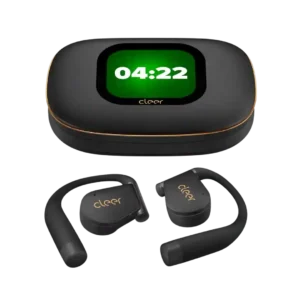
Best for all-day comfort, secure open-ear awareness, long battery life, and a genuinely useful touchscreen case. Skip it if deep bass, strong isolation, compact size, or consistently premium music quality...
Pros: Overall satisfaction, Carry case quality
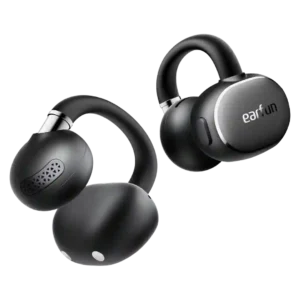
Best for lightweight all-day comfort, outstanding battery life, dependable physical controls, and premium features at a budget price. Skip it if you need deep bass, noise isolation, flawless high-volume sound,...
Pros: Overall satisfaction, Sound quality
Cons: Maximum volume clarity, Noise isolation (passive)
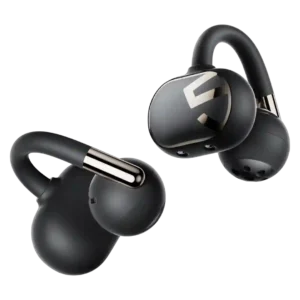
Best for featherlight all-day comfort, secure workout fit, strong open-ear sound, and unusually rich features for the price. Skip it if you need ANC, deep sub-bass, high volume in noisy...
Pros: Comfort during long use, Sound quality
Cons: Carry case quality, Touch control responsiveness
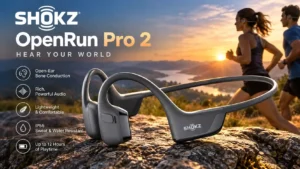
Choose these for secure, comfortable running with excellent outdoor awareness and improved bass. Skip them for noise isolation, swimming, or immersive music at a lower price.
Pros: Sound quality, Overall satisfaction
Cons: Volume output, Sound leakage