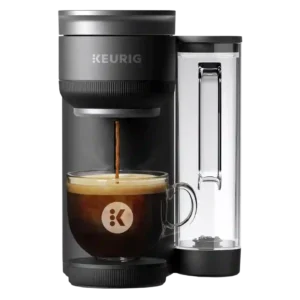
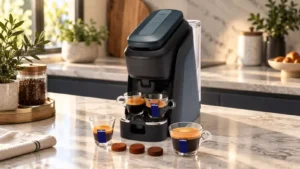
Keurig K-Crema
Where It Has the Edge
- Cup, tray and carafe handling is 5.0 vs 4.8. The adjustable, removable tray handles espresso cups, regular mugs, and travel mugs well. Raising the cup closer to...

Scorata scores summarize analyzed review evidence on a 1–5 scale; they are not laboratory measurements or a simple average of customer star ratings. Feature scores summarize the reviews covering that feature. The overall score averages feature scores within each review, then combines review averages. When both expert and customer evidence are available, those two groups receive equal weight. Products can have different review coverage, so small score gaps do not establish a winner.
Recommendations prioritize important features for the category, with a score of at least 3.5, a gap of at least 0.25 points and at least two supporting reviews per product. Features with widely varying scores or broad connectivity contexts are excluded from recommendations. These safeguards do not establish statistical significance.
Quick verdict
The available evidence supports the recommendation below, but does not establish an overall winner. Check the remaining features against your priorities.
Choose Keurig K-Crema for Cup, tray and carafe handling.
There is not enough comparable review evidence to recommend Lavazza Tabli Espresso Machine over the other product.
No clear scored advantage over the other product.
Scores are out of 5. Missing scores mean missing review evidence, not a missing feature.
One buyer received a defective refurbished machine from a third-party seller, creating an immediate failure and a difficult return dispute.
The machine was reported to arrive well protected in its packaging and in good condition.
The compact single-serve format works well for a desk or quick on-the-go drinks, while still offering iced and espresso-style options.
The machine is not especially travel-friendly: one tester specifically found it heavy and bulky.
Spent pods can be easy to remove when the machine works normally, but some owners report leaking pods, stuck capsules, and messy retrieval after mechanical problems develop.
Automatic puck ejection is usually convenient because used coffee drops into a bin without finger contact. The downside is that damp spent tabs can develop mold if the drawer is left uncleared.
There is no built-in milk frother or steam wand, so cappuccinos and lattes require separate milk preparation despite the espresso-style shot options.
Milk-drink results vary by style. Some testers made good cappuccinos and found the espresso strong enough for lattes, while another found flat whites and lattes overly foamy rather than silky.
The removable parts and routine wiping are manageable, and the descale indicator is useful. Grounds can collect near the needles, frequent rinsing may be needed, and several owners say cleaning or descaling failed to restore a malfunctioning machine.
The large tank can reduce refill frequency, but maintenance is a real tradeoff. Some testers found upkeep quick, while one long-term test reported frequent bin attention, descaling needs and difficult cleaning around the brew area.
Automatic shutoff and water or descale indicators are convenient. Confidence is reduced by reports of a pressure lock that did not engage, malfunctioning buttons, and a high-altitude mode that would not activate.
Automatic puck ejection is a convenient strength, letting used coffee drop away with little handling. The drawback is unreliable waste-bin status logic in some testing, which can block brewing even when the drawer is not actually full.
Returns and shipping are inconsistent. One return was easy and Keurig covered shipping in another case, but a third-party seller’s defective refurbished unit led to an extremely poor refund experience.
One buyer had a poor shipping experience because the coffee arrived about a week before the machine, leaving the system unusable in the meantime.
The experience is polarized. Happy owners praise the flavor, speed, simplicity, and flexibility, while failed units generate strong regret and repeated warnings not to buy.
Most hands-on experiences are very positive, emphasizing easy controls, low effort and strong first-cup satisfaction. One extended test rejected the machine because of upkeep, controls, price and coffee-quality frustrations.
Speed is one of the clearest strengths, with most drinks finishing in roughly one to two minutes and some classic brews taking less than a minute.
Single drinks can be very fast, and several testers praised the push-button speed. A heavy-use office test found back-to-back brewing slow because the puck-ejection cycle adds waiting time.
Included accessories vary by package: the Costco bundle adds pods and a filter, while the standard machine may include a manual but no water filter. First-time buyers may need to purchase one separately.
Bundles can add a milk frother and handling tweezers that make the system more versatile and easier to serve from. The frother is handy and easy to rinse, though some configurations charge extra for it.
The 72-ounce removable reservoir is a consistent strength, allowing multiple cups between refills and making the water level easy to monitor.
The water reservoir is a strength, with testers saying it holds plenty and rarely needs refilling. The eight-tab waste drawer is fine for home use but can feel small in a busy office.
The adjustable, removable tray handles espresso cups, regular mugs, and travel mugs well. Raising the cup closer to the dispenser can also improve crema.
Cup handling is flexible thanks to a removable drip tray and base that can make room for larger cups and different cup sizes.
The broad K-Cup selection and ability to reuse existing pods are major advantages. Compatibility is not universal, though: some refillable, stainless, and third-party pods do not fit or cannot use pressure mode.
The compressed tabs are convenient and distinctive, but the ecosystem is proprietary and the flavor selection is still limited. Open multi-tab packs also raise freshness concerns because the remaining coffee is exposed to air.
Coffee is usually bold, rich, and smoother in pressure mode, with several owners calling it café-quality. Crema is the dividing point: some love it, while others get thin bubbles, weak foam, or disappointing espresso-style results.
Most hands-on testers like the bold, full-bodied coffee, thick crema and strong flavor, with especially positive reactions to fresh-tasting shots. A minority found the flavor one-dimensional, overly acidic or too foamy compared with traditional espresso.
Espresso-style shots work well over ice, and owners successfully use the machine for iced coffee and café-style iced lattes.
Cold drinks are a strong use case: iced lattes, shakerato-style drinks and other chilled preparations were praised for flavor and frothy texture.
Noise is consistently praised. The machine operates quietly, with a lower, less piercing sound than many older Keurig brewers.
Noise was a disappointment in one detailed hands-on test, which found the machine louder than expected during extraction.
When working properly, the brewer makes flavorful coffee quickly and handles classic cups consistently. Reliability sharply lowers the experience because failed units may underfill, stall mid-cycle, require repeated attempts, or stop brewing entirely.
Extraction is usually praised for producing bold, crema-rich shots with a substantial texture. A more critical test found the process slow and the default ristretto volume poorly calibrated.
Filter value depends on the package. The standard brewer may omit a water filter, while a Costco configuration includes one and may produce smoother-tasting coffee.
Cleaning around the brew-area filter can be awkward, and one tester expected the small holes to clog over time without careful cleaning.
The pressure-brew concept can deliver richer coffee and visible crema, but several units did not match advertised behavior. Complaints include weak crema, failed pressure brewing, a missing lock indicator, and an unusable high-altitude mode.
Roast and intensity labels do not always match the cup: some coffees tasted darker or more uniformly bold than expected. One critical test also felt the remaining plastic weakened the system’s sustainability message.
Durability is the product’s biggest weakness. A large number of owners report pressure-mode failure, lockups, leaks, or complete breakdowns within days or a few months, despite some units initially feeling solid.
Build impressions are split. One first-use test called the machine solidly built, while another criticized the body for feeling overly plastic.
Common design complaints include splashback, leaking, stuck pods, jammed levers, locked lids, missing controls, and pressure mechanisms that repeatedly fail. These issues can turn routine brewing and pod removal into a mess.
One long-term test found several interaction choices frustrating, including a very short auto-off interval that forces users to reactivate the machine between drinks.
The brewer is widely liked for its sleek, modern appearance and relatively compact footprint. The side-mounted 72-ounce reservoir adds width, and one owner still found it took up too much room.
The Tablì is widely praised for a sleek, compact look that fits small kitchens and crowded counters. One tester found it heavier and bulkier than expected, so the footprint is not universally admired.
Classic coffee, pressure coffee, single and double shots, several cup sizes, tea, cocoa, and iced drinks provide useful variety. The main customization gap is the lack of strength and temperature controls.
The machine covers espresso, double espresso and lungo, and a frother can expand that into milk drinks. The tradeoff is limited coffee variety, espresso-focused output and default volumes that may need reprogramming.
Strong coffee, regular K-Cup compatibility, and discounts can make the machine feel worthwhile. The value collapses when pressure mode or the entire brewer fails early, leaving many owners regretting the premium price.
Value depends heavily on market and usage. Some testers saw the machine or discounted bundles as approachable and even money-saving versus takeaway coffee, while others criticized higher per-cup costs and an expensive machine price.
Setup and daily operation are generally simple, with clear controls and one-button brewing. High-altitude activation was a notable exception for one owner, who could not get the mode to respond.
Setup is consistently simple: fill the tank, insert a tab and start brewing. Multiple hands-on tests describe the machine as ready to use with almost no learning curve.
Smart features are polarizing. Some coverage likes app-based personalization, while one hands-on tester preferred simple buttons without an app and another found Wi‑Fi, Alexa and app functions unnecessarily complicated.
The power cord drew a specific complaint for being only about 80 cm long, which can limit placement flexibility.
Reducing single-use pod waste is the product’s standout strength, and many sources praise the all-coffee tabs. The main caveat is that plastic film remains in the packaging, which one critical test felt undercut the sustainability promise.
The machine draws relatively high power, but that translates into a quick warm-up of roughly 35 seconds.
Brew temperature is generally hot and often praised as ready to drink without a long wait. A few owners found it either too hot or not hot enough, and one unit eventually stopped heating altogether.
Pressure mode can make coffee stronger, smoother, and topped with enjoyable crema, especially with darker roasts. However, pressure performance is inconsistent and frequently reported to fail within days or months.
The individual coffee tabs avoid plastic or aluminum casings, which is a major appeal for shoppers concerned about pod waste and microplastics. The machine body and outer packaging still contain plastic, so the overall system is not completely plastic-free.
Support experiences are mostly frustrating, including rejected refunds, lengthy troubleshooting, slow warranty claims, and replacement units that also failed. A few owners found Keurig helpful or received covered return shipping.
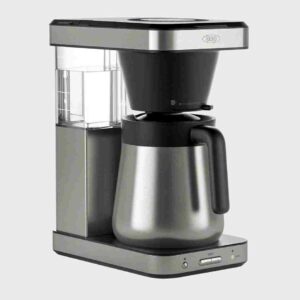
Choose the OXO Brew 8-Cup if you want fast, consistent drip coffee in small or full batches. Skip it if you need programming, app controls, a larger pot, or the...
Pros: Brewing performance and consistency, Overall user experience
Cons: Design flaws
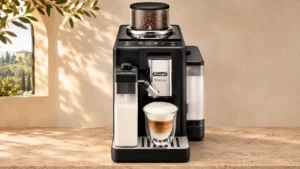
Swappable bean hoppers, intuitive controls and silky automatic milk foam make the Rivelia unusually convenient for varied coffee routines. The premium price, grinder-clearing step and optional cold-foam upgrade are worth...
Pros: Grinder, hopper and dosing system, Espresso and beverage quality
Cons: Iced / cold-brew function quality, Capacity
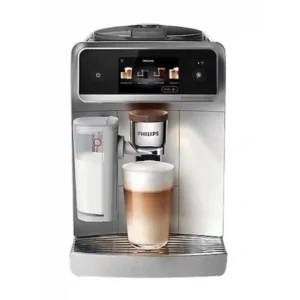
Best for effortless, highly personalized hot and cold coffee in a busy multi-drinker home. Skip it if counter space is tight, you demand silky adjustable microfoam, or the premium price...
Pros: Automation and sensors, Overall user experience
Cons: Design flaws, Mess-free used-puck disposal
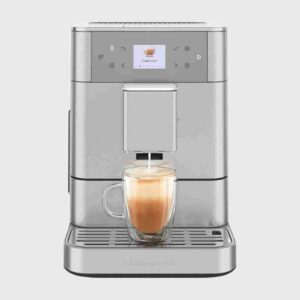
Choose the KitchenAid KF6 for rich espresso, quiet operation, easy cleaning, and strong value in a super-automatic. Skip it if dense cappuccino foam, plant-milk presets, touchscreen controls, or an included...
Pros: Water system, maintenance and descaling, Overall user experience
Cons: Accessories, Design flaws