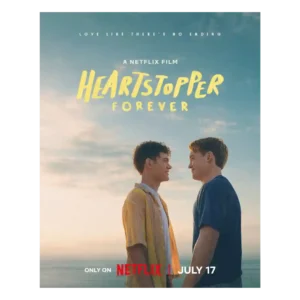
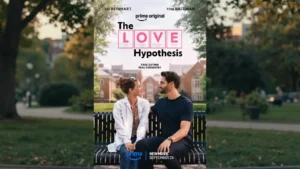
Heartstopper Forever
Where It Has the Edge
- visual style is 4.6 vs 1.0. Pastel imagery, animated flourishes, deepened colors, and comic-inspired transitions keep the movie visually distinctive while signaling greater maturity.

Scorata scores summarize analyzed review evidence on a 1–5 scale; they are not laboratory measurements or a simple average of customer star ratings. Feature scores summarize the reviews covering that feature. The overall score averages feature scores within each review, then combines review averages. When both expert and customer evidence are available, those two groups receive equal weight. Products can have different review coverage, so small score gaps do not establish a winner.
Recommendations prioritize important features for the category, with a score of at least 3.5, a gap of at least 0.25 points and at least two supporting reviews per product. Features with widely varying scores or broad connectivity contexts are excluded from recommendations. These safeguards do not establish statistical significance.
Quick verdict
The review evidence points to a tradeoff: visual style versus directing quality and emotional impact. Choose according to which strengths matter more to you; the overall score alone does not settle that choice.
Choose Heartstopper Forever for visual style.
Choose The Love Hypothesis for directing quality and emotional impact.
Scores are out of 5. Missing scores mean missing review evidence, not a missing feature.
Pastel imagery, animated flourishes, deepened colors, and comic-inspired transitions keep the movie visually distinctive while signaling greater maturity.
A few viewers find the look drab and washed out despite the film’s lively romantic premise.
The story remains thoughtful and supportive for teen audiences, while its move into sex, alcohol, and heavier relationship conflict clearly targets older teens and adults.
Sexual content and strong language make the film a poor fit for younger or sensitive viewers.
Critical response is strongly positive overall, but not unanimous: most call it heartfelt and satisfying, while a few dismiss it as overlong or unnecessary.
Its strong early critic score suggests the film reaches much of its genre audience.
Existing fans and queer viewers are the clear audience, with strong emotional and nostalgic appeal. Newcomers may struggle without the context of the three prior seasons.
Genre fans and book readers are the clearest audience, though expectations about heat and chemistry vary.
The cinematography keeps the recognizable Heartstopper look, including intimate framing and graceful tracking shots that suit the farewell.
Flat or uninspired camerawork is a recurring visual complaint.
The central relationship story remains cohesive and easy to follow from beginning to end, even when secondary arcs receive less explanation.
The fake-dating setup and academic stakes can feel convoluted when the film hurries to establish them.
The movie retains Heartstopper’s compassionate sweetness while adopting a more somber, mature mood. The tonal shift mostly works, though its sincerity can still feel cloying to skeptics.
A quick swing from comedy to career-threatening harassment jars some viewers, while others accept the change in stakes.
Most critics found the finale heartfelt, fitting, and satisfying for longtime fans. A small minority felt the standalone movie was unnecessary or too weak to justify the farewell.
The romantic payoff pleases some, while others find the final conflict and its consequences resolved too quickly.
The hopeful representation can be valuable for older teens and families, but the more explicit sex, drinking, and adult themes make it less suitable for younger viewers.
Sex and strong language limit its appeal as a family movie.
The main story works best as a heartfelt farewell centered on Nick and Charlie, though several critics found it driftless, repetitive, or too compressed to fully land.
The friendship and academic ambitions enrich a familiar story, but thin motivations and late plot shortcuts draw criticism.
The film’s queer representation, trans-rights advocacy, and emphasis on joy and community receive near-universal praise, though some message-driven moments feel shoehorned.
Naming Olive’s demisexuality is meaningful to some viewers; others question the treatment of Anh’s cultural identity or the trimmed gay romance.
The feature-length format divided critics: some thought it suited the characters’ maturity, while many felt the story was either rushed or stretched across nearly two hours.
The length gives room to the couple’s gradual connection for some, while others feel a two-hour romance drags or compresses key scenes.
The score generally supports the emotion, but some critics found it overly insistent, twee, or prone to emphasizing feelings the actors already communicate.
The score’s fan-fiction nods amuse some, while others hear a pushy cueing of the romance.
The screenplay is often praised for empathy, mature themes, and confident character writing, though a few scenes feel overworked or explain emotions too explicitly.
The script gives the fake-dating setup a playful rhythm, but some dialogue and the late harassment conflict feel underworked.
The romance remains tender, convincing, and emotionally rewarding as Nick and Charlie confront distance, codependence, and the work of sustaining love.
The romance is sweet and occasionally swoony, though its slow build and uneven spark do not convince everyone.
Charlie’s growing confidence and Nick’s identity crisis give the leads meaningful new dimensions. The compressed format and repeated anxiety cycles weaken some of the supporting development.
Olive’s confidence and ambitions give her more substance than a stock romantic lead. Adam and several friends can feel underdeveloped.
Most critics approved of the more mature intimacy as loving, sensitive, and emotionally purposeful. A few found the sex scenes overly sanitized or coy.
The intimate scene is tender or suitably steamy for some, while others find its heat lacking or its placement jarring.
Flashbacks deepen nostalgia for some viewers, while others found the repeated montages excessive and disruptive to the movie’s rhythm.
Some editing choices enliven Olive’s viewpoint, but choppy or low-energy cutting draws criticism.
Locke and Connor’s warm, convincing chemistry remains the movie’s strongest and most consistent asset, anchoring even the more critical assessments.
Many feel the leads turn awkward banter into genuine attraction; others find the spark thin or Bateman’s reserve hard to warm to.
Wash Westmoreland handles the characters’ maturation gently and preserves the series’ familiar visual and emotional language rather than imposing a jarring new style.
Scanlon’s feel for comic timing and tender moments earns praise, though a few critics find the direction too safe.
Its messages about self-acceptance, agency, care, and LGBTQIA+ solidarity are central strengths, even when the delivery occasionally becomes heavy-handed.
Friendship, consent and a woman’s right to pursue science on her own terms give the romance a clear point of view.
The finale stays closely aligned with Alice Oseman’s source material and preserves the franchise’s defining warmth, optimism, and character focus.
Book readers appreciate key romantic beats and the friendship focus, while some miss characters, context or stronger yearning.
The farewell is widely described as moving, bittersweet, and emotionally resonant. A few critics found the rushed structure reduced the impact of key moments.
Olive’s grief, ambitions and bond with Anh give the film heart beyond the central romance.
The finale largely offers a polished continuation rather than a reinvention, with familiar tropes, callbacks, and conflicts limiting its sense of novelty.
Its comfortable genre formula is easy to enjoy for some and short on novelty for others.
Pacing is the most consistent drawback: some found the movie rushed and montage-heavy, while others thought the two-hour runtime repeated too few story beats.
The opening moves briskly, but several reviews say the last act rushes through a serious conflict and resolution.
As a warm YA romance and series finale, it largely delivers the emotional comfort and hopeful resolution fans expect.
The film embraces fake dating and familiar rom-com pleasures; whether that feels comforting or conventional depends on the viewer.
The dialogue can be tender and emotionally clear, but several critics found it overly sweet, platitudinous, or clunky in its most message-heavy scenes.
Witty exchanges and awkward banter often land, though science jargon and a few clunky lines break the spell for some.
Humor is used sparingly, with Imogen’s blunt observations and comic timing providing the clearest laughs.
Awkward encounters and friend-group reactions draw laughs, although a few viewers find the comedy muted.
The film thoughtfully explores whether first love can mature, how partners maintain separate identities, and why care must include both devotion and self-preservation.
The film touches on grief, sexism and power in academia, but some wish those ideas had more space.
Some critics praised the more grounded look at changing relationships and mental health, while others still found the idealized queer world too polished to feel fully real.
The leads’ awkwardness can feel grounded, yet the fake-dating setup and academic power dynamics test plausibility.
The plot leans on familiar coming-of-age conflicts and revisits emotional beats the series has already explored, leaving some critics wanting fresher material.
The familiar fake-dating plot rarely surprises, even when its science setting and friendship give it a little freshness.
The ensemble remains likable and capable, but most critics wanted much more time with Tao, Elle, Tara, Darcy, Isaac, Imogen, Tori, and the wider friend group.
Rachel Marsh’s Anh often steals scenes, and the friend group brings welcome personality. Some supporting characters have too little room to develop.
The gentle soundtrack supports the film’s tender, nostalgic atmosphere, though music is not a major focus of the criticism.
Music and needle drops can add playfulness, but some find the soundtrack surprisingly weak or intrusive.
Joe Locke and Kit Connor are widely praised for showing greater maturity, emotional range, and confidence as the characters move toward adulthood.
Performances are a frequent bright spot, particularly Reinhart’s approachable Olive and the lively ensemble. A few critics find Bateman too stiff for the romance to fully ignite.
The lead work is a major strength, with Joe Locke and especially Kit Connor receiving career-best praise for vulnerable, emotionally grounded performances.
Reinhart’s warmth and comic timing draw steady praise, while Bateman’s reserved Adam divides opinion as he slowly softens.
Devoted fans are likely to revisit the finale for its comfort, nostalgia, and affectionate send-off, with several critics expecting it to endure as a comfort watch.
Fans who find it comforting already want another watch; others see little reason to revisit it.
The movie remains highly enjoyable for invested fans, though occasional repetition and a fun-but-pointless musical interlude reduce its momentum.
For many, this is an easy, charming movie night watch. Detractors find the familiar path too dull to linger.
The familiar hearts, leaves, sparks, and hand-drawn accents remain charming and emotionally expressive without overwhelming the live-action story.
The relationship drama is strongest when it lays fear, jealousy, dependence, and vulnerability bare. Repetition makes the conflict exhausting for a minority of critics.
Olive and Anh’s bond is widely praised as the film’s emotional center, giving their chosen family story a pull of its own.
Strong language stands out as a drawback for viewers seeking a gentler romance.
Costumes offer small character details for some; others find the wardrobe generic or dated.
The campus setting adds a fresh academic frame and lets Olive’s research matter to the story.
A pushy score makes the soundscape feel cramped in one sharply negative assessment.
The friends and campus details make Olive’s world feel larger than her romance.

Best for pristine archival footage, immersive sound, and a surprisingly tense look at Disneyland’s construction. Skip it if you want a comprehensive, deeply critical history; several reviewers found the 78–79-minute...
Pros: plot clarity, realism
Cons: plot originality, runtime
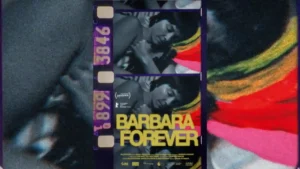
Best for an intimate, inventive archival portrait with strong emotional and cultural impact. Skip it if substantial nudity or an occasionally wandering biographical structure will frustrate you.
Pros: chemistry between characters, emotional impact
Cons: runtime, plot clarity
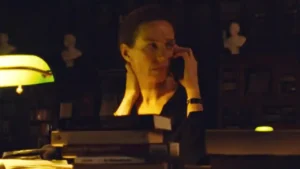
Best for an audacious, text-driven conspiracy thriller with gorgeous 16mm atmosphere and mounting dread. Skip it if long stretches of reading, deliberate repetition, and an intentionally austere narrative sound more...
Pros: story quality, plot clarity
Cons: chemistry between characters, sound design

Best for slow-burn suspense, iconic synth music, and shadow-soaked filmmaking that still feels influential. Skip it if you need fast pacing, polished sound, consistently natural dialogue, or modern gore-heavy kills.
Pros: chemistry between characters, directing quality
Cons: sound design, dialogue quality