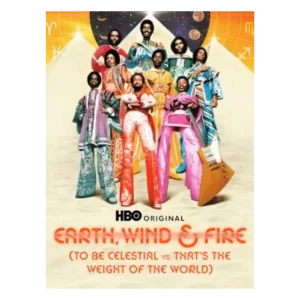
Earth, Wind & Fire (To Be Celestial vs. That’s the Weight of the World)
Where It Has the Edge
No clear scored advantage over the other product.

Scorata scores summarize analyzed review evidence on a 1–5 scale; they are not laboratory measurements or a simple average of customer star ratings. Feature scores summarize the reviews covering that feature. The overall score averages feature scores within each review, then combines review averages. When both expert and customer evidence are available, those two groups receive equal weight. Products can have different review coverage, so small score gaps do not establish a winner.
Recommendations prioritize important features for the category, with a score of at least 3.5, a gap of at least 0.25 points and at least two supporting reviews per product. Features with widely varying scores or broad connectivity contexts are excluded from recommendations. These safeguards do not establish statistical significance.
Quick verdict
The available evidence supports the recommendation below, but does not establish an overall winner. Check the remaining features against your priorities.
There is not enough comparable review evidence to recommend Earth, Wind & Fire (To Be Celestial vs. That’s the Weight of the World) over the other product.
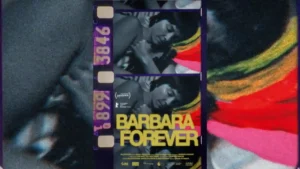
Choose Barbara Forever for emotional impact and theme depth.
No clear scored advantage over the other product.
Scores are out of 5. Missing scores mean missing review evidence, not a missing feature.
Its immersive collage, animation, and musical analysis can feel distinctive, but some sections fall back on a conventional chronological survey of albums, hits, and personnel changes.
Most praise the film for refusing a standard biographical mold and echoing Hammer’s experimental sensibility, though one assessment finds the underlying structure conventional.
The film usually balances affection, honesty, humor, and sadness effectively. A dissenting view finds the celebration and critical inquiry insufficiently integrated.
Tenderness and quiet melancholy permeate the film, giving its mix of memory, love, and loss a cohesive emotional atmosphere.
The documentary generally explains the band’s evolution, sound, and philosophy in a clear, accessible way. Its more impressionistic passages can feel sprawling, and one critique finds the overall focus insufficiently sharp.
Loose chronology and occasional wandering can make the documentary feel less cohesive or firmly outlined, even when its emotional throughline remains strong.
The film clearly communicates the band’s belief in music as a force for hope, unity, expanded consciousness, and cultural possibility while acknowledging the personal cost of that vision.
Its clearest message is that preserving and representing queer lives matters; Hammer’s legacy becomes a call to remember, create, and make space.
The strongest sequences combine interviews, archival performances, animation, and needle drops with infectious rhythm. The lone major complaint is that busy cutting sometimes interrupts songs before viewers can fully savor them.
Editing is one of the film’s clearest strengths, with sharp montage, precise pairings of testimony and imagery, and inventive archival weaving earning repeated praise.
Joy, nostalgia, spiritual uplift, betrayal, loss, and forgiveness all register strongly. The best moments make the band’s music feel newly immediate while the darker history adds haunting weight.
The film is repeatedly described as affecting, moving, poignant, and inspiring, especially around illness, intimacy, memory, and legacy.
The sensory, non-linear passages feel fresh, but the career chronology often resembles a familiar music-documentary timeline. The result is inventive in texture more than in overall structure.
The film’s narrative shape divides opinion: one take praises its refusal of the usual overnight-success arc, while another calls the underlying structure simplistic and conventional.
Playful interview moments, especially around Reasons and the band’s rivalries, add warmth without undercutting the more painful material.
A funny, disarming streak helps keep the film lively without undercutting its quieter uplift.
The tension between celestial ambition and worldly cost gives the documentary substantial depth. It explores how spiritual idealism, artistic control, family trauma, money, and fame shaped both the music and the fractures.
The film reaches beyond biography into identity, sexuality, aging, illness, legacy, preservation, and the politics of visibility.
The two-hour scope is packed with history, music, and personalities, yet the determination to be definitive can make some passages feel both overstuffed and hurried.
One assessment finds the roughly hour-and-45-minute experience can waver and wander, making the runtime feel less disciplined than the film’s emotional impact.
The film builds a compelling story around Earth, Wind & Fire’s rise and Maurice White’s complicated leadership. Most find it rich and moving, though one critique sees an authorized greatest-hits tour where a deeper reappraisal was needed.
The biography feels intimate, creative, and accessible, using Hammer’s life and archives to build a vivid portrait. One take finds the conventional framework tiring, but still credits the film with a holistic view.
Maurice White emerges as visionary, wounded, controlling, inspiring, and self-sabotaging rather than a flattened musical icon. Family and bandmate testimony gives his contradictions emotional weight.
Hammer emerges as warm, charming, vulnerable, powerful, and increasingly complex as the film traces her artistic and personal evolution.
This is widely seen as a strong music documentary that combines biography, cultural history, and musical analysis. Its main limitation is a conventional greatest-hits structure that occasionally feels more comprehensive than penetrating.
As a documentary portrait, it lands very well: intimate, immersive, accessible, and emotionally charged, with only occasional structural fatigue.
Band members, family, peers, and famous admirers provide candid, funny, and informative perspectives. Philip Bailey, Marilyn White, Stevie Wonder, and the Obamas contribute several standout moments.
Interviews and recorded testimony are woven into the archive with care; Hammer’s voice and wisdom are described as striking and soul-stirring.
The documentary connects Earth, Wind & Fire’s sound to African roots, Afrofuturism, Black cultural history, spiritual uplift, and crossover success without reducing the band to nostalgia.
The documentary strongly celebrates lesbian life, queer filmmaking, feminist art, and the importance of putting marginalized lives on screen.
Most of the film moves with musical energy and keeps interviews flowing smoothly. The broad scope occasionally creates rushed or checklist-like stretches, especially when covering decades in limited time.
The pace is often praised as brisk or deliberately unhurried in a way that lets archival material breathe. Two assessments, however, say the structure can tire or wander.
Rare concert clips and archival interviews bring the band’s peak years vividly to life. The strongest footage feels immersive enough to place viewers inside the performances.
The archival construction is the movie’s defining strength: luminous recordings, personal materials, photos, outtakes, and testimony become an intimate, immersive portrait. Even the more critical take calls the archive work thrilling.
Questlove’s musical knowledge, enthusiasm, and archival instincts make the film vivid and accessible. The main reservation is that his attempt to balance celebration with reappraisal can sometimes feel unfocused.
O’Connor is widely praised for making the material intimate, accessible, and emotionally resonant while honoring Hammer’s experimental spirit. A minority critique her less-distinct authorial voice or conventional structure.
The Roots’ floaty ambient score supports the documentary’s meditative, cosmic atmosphere without competing with Earth, Wind & Fire’s own music.
Taul Katz’s score is singled out for beautifully complementing one of the film’s most affecting experimental passages.
Most critical reactions are highly enthusiastic, calling the film superb, polished, essential, or a must-see. A notable dissent argues that it never reaches the greatness of its subject.
Critical reception is strongly positive, with festival plaudits described as deserved and strong praise for the film’s assembly and introductory value.
The film has broad pull for longtime fans and newcomers because its familiar songs, lively interviews, and cultural context are immediately inviting. One dissenting take finds the presentation more dependable than revelatory.
Longtime Hammer fans are expected to be satisfied, while newcomers get an accessible entry point. The main barrier is a structure that some find tiring or wandering.
Classic songs, charismatic interviews, humor, and vivid performance footage make the documentary consistently engaging. Even the most critical assessment concedes that the band’s catalog creates a high entertainment floor.
Despite its art-documentary subject matter, the film is called engaging, exhilarating, engrossing, and even a must-watch.
Gold-toned archival footage, animation, stage spectacle, and trippy period imagery create a vivid ’70s atmosphere. Concert sequences are especially immersive and sometimes almost synesthetic.
Striking, luminous, dreamlike, and sometimes surreal imagery gives the film a sensuous experimental character that echoes Hammer’s work.
The animated passages make Maurice White’s spiritual and metaphysical ideas easier to grasp while preserving the film’s vibrant, period-rich personality.
Archival footage of Hammer with her partner lands as tender, romantic, and emotionally convincing.
O’Connor’s camera and use of repurposed footage are praised for immersing viewers in Hammer’s mindset.
Maurice White’s brilliance, family wounds, financial conflicts, and strained band relationships give the documentary genuine tension beyond its celebratory music history.
The closing emphasis on September, reunion, forgiveness, and the music’s permanence leaves the film on an exuberant and emotionally satisfying note.
The documentary evokes Hammer’s own films and is praised as a fitting tribute made in the spirit of its subject rather than a generic biography.
The tactile archive and candid home-video texture give Hammer’s portrait a raw, intimate authenticity, with the realism of the portrait explicitly praised.
The partner footage is singled out as tender, unabashedly romantic, and more moving because lesbian intimacy was historically underrepresented.
Nudity and sexuality are central to Hammer’s life and art and are generally framed as vulnerable, powerful, tender, and liberating. One take finds some extended nude and sexual stretches mundane.
The blend of image and sound is described as a radiant sensory polyphony joining sex, love, life, and death.
The film conveys Earth, Wind & Fire’s stage universe as a fusion of African roots, cosmic futurism, choreography, costumes, magic, and spiritual aspiration.
The band’s catalog is the film’s most dependable strength, with familiar songs made vivid through context, performance footage, and musical breakdowns. Several reactions say the documentary makes well-known tracks sound fresh again.
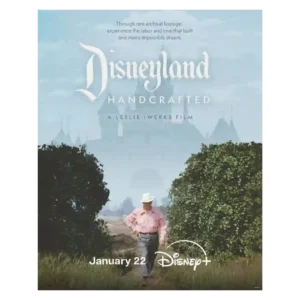
Best for pristine archival footage, immersive sound, and a surprisingly tense look at Disneyland’s construction. Skip it if you want a comprehensive, deeply critical history; several reviewers found the 78–79-minute...
Pros: plot clarity, realism
Cons: plot originality, runtime
Best for an audacious, text-driven conspiracy thriller with gorgeous 16mm atmosphere and mounting dread. Skip it if long stretches of reading, deliberate repetition, and an intentionally austere narrative sound more...
Pros: story quality, plot clarity
Cons: chemistry between characters, sound design
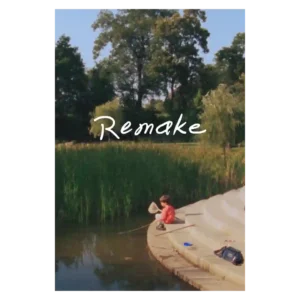
Best for a profound, formally inventive meditation on grief, memory, and the ethics of filming family. Skip it if intensely personal addiction material, a 114-minute runtime, or occasional repetition will...
Pros: plot originality, ending satisfaction
Cons: runtime, pacing
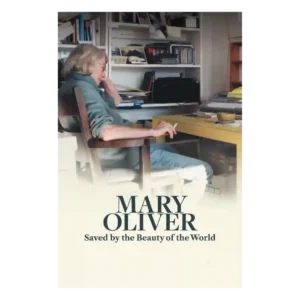
Best for a tender, accessible portrait that lets Oliver’s poetry, friends, and archival voice carry the experience. Skip it if you want a brisk, deeply investigative biography; the calm rhythm...
Pros: romance quality, faithfulness to source material
Cons: none