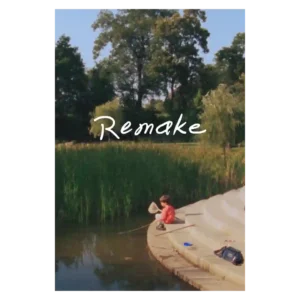
Remake
Where It Has the Edge
- originality is 5.0 vs 4.6. This is an unusually singular grief documentary: part family archive, career reckoning, Hollywood satire, and ethical self-interrogation.

Scorata scores summarize analyzed review evidence on a 1–5 scale; they are not laboratory measurements or a simple average of customer star ratings. Feature scores summarize the reviews covering that feature. The overall score averages feature scores within each review, then combines review averages. When both expert and customer evidence are available, those two groups receive equal weight. Products can have different review coverage, so small score gaps do not establish a winner.
Recommendations prioritize important features for the category, with a score of at least 3.5, a gap of at least 0.25 points and at least two supporting reviews per product. Features with widely varying scores or broad connectivity contexts are excluded from recommendations. These safeguards do not establish statistical significance.
Quick verdict
The review evidence points to a tradeoff: originality versus editing quality and realism. Choose according to which strengths matter more to you; the overall score alone does not settle that choice.
Choose Remake for originality.
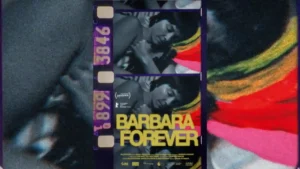
Choose Barbara Forever for editing quality and realism.
Scores are out of 5. Missing scores mean missing review evidence, not a missing feature.
The grief story and failed Hollywood adaptation initially seem disconnected, but the film links them through legacy, authorship, and the impossibility of controlling what remains.
Loose chronology and occasional wandering can make the documentary feel less cohesive or firmly outlined, even when its emotional throughline remains strong.
Rather than forcing a conventional documentary arc, it builds around an open question about whether life, memory, or a damaged relationship can ever be remade.
The film’s narrative shape divides opinion: one take praises its refusal of the usual overnight-success arc, while another calls the underlying structure simplistic and conventional.
Most of the archival journey is absorbing, though repeated returns to certain ideas and the remake subplot create occasional stretches of tedium.
The pace is often praised as brisk or deliberately unhurried in a way that lets archival material breathe. Two assessments, however, say the structure can tire or wander.
The father-son relationship feels loving, funny, tense, and painfully unresolved; their banter makes the bond vivid even when the camera creates distance.
Archival footage of Hammer with her partner lands as tender, romantic, and emotionally convincing.
Dry industry satire, family teasing, and off-kilter observations provide welcome levity without trivializing the central loss.
A funny, disarming streak helps keep the film lively without undercutting its quieter uplift.
This is an unusually singular grief documentary: part family archive, career reckoning, Hollywood satire, and ethical self-interrogation.
Most praise the film for refusing a standard biographical mold and echoing Hammer’s experimental sensibility, though one assessment finds the underlying structure conventional.
The best passages weave decades of footage into intricate emotional and thematic echoes. A few critics found the cross-cutting clumsy or repetitive in places.
Editing is one of the film’s clearest strengths, with sharp montage, precise pairings of testimony and imagery, and inventive archival weaving earning repeated praise.
Adrian’s mobile, precise footage provides an energetic contrast to his father’s steadier style and lets the film briefly see the world through the son’s eyes.
O’Connor’s camera and use of repurposed footage are praised for immersing viewers in Hammer’s mindset.
Home movies, candid conversations, and Adrian’s own footage create an unusually unvarnished portrait of family strain, addiction, and grief.
The tactile archive and candid home-video texture give Hammer’s portrait a raw, intimate authenticity, with the realism of the portrait explicitly praised.
Adrian emerges as a bright, funny, ambitious child and a complicated adult whose talent and pain are shown without reducing him to addiction.
Hammer emerges as warm, charming, vulnerable, powerful, and increasingly complex as the film traces her artistic and personal evolution.
The film turns decades of family footage into a profound, heartbreaking portrait of a father, son, and the limits of memory. Its private details grow into universal questions about love, loss, and responsibility.
The biography feels intimate, creative, and accessible, using Hammer’s life and archives to build a vivid portrait. One take finds the conventional framework tiring, but still credits the film with a holistic view.
McElwee is widely praised for shaping an enormous personal archive into a searching, emotionally devastating film. One critic sharply questions the ethics of turning family life into public art.
O’Connor is widely praised for making the material intimate, accessible, and emotionally resonant while honoring Hammer’s experimental spirit. A minority critique her less-distinct authorial voice or conventional structure.
As a personal documentary, it is widely viewed as accomplished, profound, and even masterful, working both as a standalone film and a career culmination.
As a documentary portrait, it lands very well: intimate, immersive, accessible, and emotionally charged, with only occasional structural fatigue.
The film argues that images cannot undo loss, but they can preserve fragments of love, invite accountability, and help the living continue.
Its clearest message is that preserving and representing queer lives matters; Hammer’s legacy becomes a call to remember, create, and make space.
The film is consistently described as devastating, shattering, and deeply moving, yet moments of humor and tenderness keep it from becoming emotionally one-note.
The film is repeatedly described as affecting, moving, poignant, and inspiring, especially around illness, intimacy, memory, and legacy.
Adrian’s candid discussion after rehab is especially affecting because his honesty and intelligence remain visible amid the severity of his addiction.
Interviews and recorded testimony are woven into the archive with care; Hammer’s voice and wisdom are described as striking and soul-stirring.
At roughly two hours, the film earns most of its length through emotional and thematic depth, though repetition makes some sections feel longer than necessary.
One assessment finds the roughly hour-and-45-minute experience can waver and wander, making the runtime feel less disciplined than the film’s emotional impact.
Its richest ideas concern memory, artistic responsibility, family privacy, legacy, and the camera’s power to preserve life while also distorting it.
The film reaches beyond biography into identity, sexuality, aging, illness, legacy, preservation, and the politics of visibility.
It works for newcomers as well as longtime followers, and its layered questions make it especially rewarding for viewers who want to discuss a film afterward.
Longtime Hammer fans are expected to be satisfied, while newcomers get an accessible entry point. The main barrier is a structure that some find tiring or wandering.
Critical response is overwhelmingly enthusiastic, with the film called a masterpiece, a career high, and one of the year’s strongest documentaries.
Critical reception is strongly positive, with festival plaudits described as deserved and strong praise for the film’s assembly and introductory value.
The subject is difficult, but the personalities, humor, revealing footage, and evolving family story remain absorbing and consistently compelling.
Despite its art-documentary subject matter, the film is called engaging, exhilarating, engrossing, and even a must-watch.
The mix of old film, digital footage, and Adrian’s visually expressive material makes shifting time and memory feel tangible.
Striking, luminous, dreamlike, and sometimes surreal imagery gives the film a sensuous experimental character that echoes Hammer’s work.
The archival construction is the movie’s defining strength: luminous recordings, personal materials, photos, outtakes, and testimony become an intimate, immersive portrait. Even the more critical take calls the archive work thrilling.
The documentary strongly celebrates lesbian life, queer filmmaking, feminist art, and the importance of putting marginalized lives on screen.
McElwee’s droll, gentle voiceover gives the film clarity and warmth, while candid father-son exchanges expose affection, tension, and regret.
The documentary transforms private tragedy into gripping human drama, especially as childhood joy gives way to addiction, regret, and mourning.
The final passages and farewell land with overwhelming force, bringing grief, regret, and enduring love together without pretending to resolve them.
The documentary evokes Hammer’s own films and is praised as a fitting tribute made in the spirit of its subject rather than a generic biography.
The partner footage is singled out as tender, unabashedly romantic, and more moving because lesbian intimacy was historically underrepresented.
Taul Katz’s score is singled out for beautifully complementing one of the film’s most affecting experimental passages.
The narration and interlaced structure connect childhood, addiction, family rupture, career history, and grief with unusual thoughtfulness.
Nudity and sexuality are central to Hammer’s life and art and are generally framed as vulnerable, powerful, tender, and liberating. One take finds some extended nude and sexual stretches mundane.
Tenderness and quiet melancholy permeate the film, giving its mix of memory, love, and loss a cohesive emotional atmosphere.
The blend of image and sound is described as a radiant sensory polyphony joining sex, love, life, and death.

Best for pristine archival footage, immersive sound, and a surprisingly tense look at Disneyland’s construction. Skip it if you want a comprehensive, deeply critical history; several reviewers found the 78–79-minute...
Pros: plot clarity, realism
Cons: plot originality, runtime
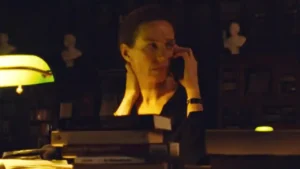
Best for an audacious, text-driven conspiracy thriller with gorgeous 16mm atmosphere and mounting dread. Skip it if long stretches of reading, deliberate repetition, and an intentionally austere narrative sound more...
Pros: story quality, plot clarity
Cons: chemistry between characters, sound design

Best for joyful music, rare footage, candid interviews, and a layered Maurice White portrait. Skip it if you want a tightly focused, unconventional reappraisal that lingers on performances instead of...
Pros: ending satisfaction, drama quality
Cons: runtime, originality
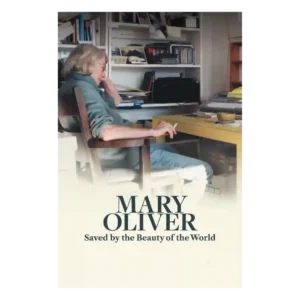
Best for a tender, accessible portrait that lets Oliver’s poetry, friends, and archival voice carry the experience. Skip it if you want a brisk, deeply investigative biography; the calm rhythm...
Pros: romance quality, faithfulness to source material
Cons: none