Scorata scores summarize analyzed review evidence on a 1–5 scale; they are not laboratory measurements or a simple average of customer star ratings. Feature scores summarize the reviews covering that feature. The overall score averages feature scores within each review, then combines review averages. When both expert and customer evidence are available, those two groups receive equal weight. Products can have different review coverage, so small score gaps do not establish a winner.
Recommendations prioritize important features for the category, with a score of at least 3.5, a gap of at least 0.25 points and at least two supporting reviews per product. Features with widely varying scores or broad connectivity contexts are excluded from recommendations. These safeguards do not establish statistical significance.
Quick verdict
What each product is best for
The review evidence points to a tradeoff: originality and world-building versus story quality and character development. Choose according to which strengths matter more to you; the overall score alone does not settle that choice.
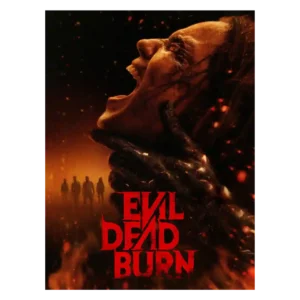
Choose Evil Dead Burn for originality and world-building.
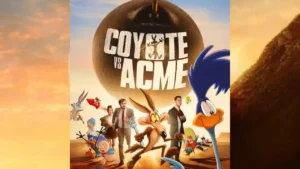
Choose Coyote vs. Acme for story quality and character development.
Why these recommendations?
Evil Dead Burn
Where It Has the Edge
originality is 4.2 vs 3.8. The film brings inventive visual ideas, tactile gore, and a more active role for the Deadites, but its...
world-building is 4.5 vs 4.2. The expanded lore, family connection to the Deadites, and renewed focus on the Kandarian dagger give the mythology...
Coyote vs. Acme
Where It Has the Edge
story quality is 4.1 vs 2.3. Reviewers generally find the legal-conspiracy story clever, engaging, and surprisingly substantial for a Looney Tunes premise. One strong...
character development is 3.7 vs 2.0. Reviewers appreciate how the film gives Wile E. Coyote more dimension without erasing his familiar identity. His failures,...
directing quality is 4.9 vs 4.1. Dave Green's direction is one of the strongest creative points, with reviewers praising his grasp of Looney Tunes...
Evil Dead Burn3.3 overall score
Coyote vs. Acme3.9 overall score
Compare features
Scores are out of 5. Missing scores mean missing review evidence, not a missing feature.
Scored on both products
Ownership and support
Rewatch value
Evil Dead Burn
1.0
Coyote vs. Acme
3.8
Details and evidence for rewatch value
Evil Dead Burn
The unrelenting cruelty makes the film difficult to revisit for viewers who find its violence exhausting rather than exhilarating.
Several reviewers expect the comedy to reward repeat viewing and explicitly want to see it again. A smaller group considers it worth one viewing but not a repeat purchase or rewatch.
Reactions range from gleeful appreciation of the gory fun to outright frustration with the oppressive tone. The experience works best for viewers who enjoy extreme practical carnage and can tolerate a grim, punishing atmosphere.
Entertainment value is very strong across the set: reviewers repeatedly call the movie fun, charming, delightful, or a good time. The main exceptions see it as merely likable or held back by uneven execution.
Value opinions are polarized: one viewer calls it their best movie-ticket money in years, while another says weak sound and image quality make a family theater outing a tough sell.
The film’s misery and cruelty can feel overwhelming rather than cathartic. Its grief and abuse material is forceful, but some viewers leave emotionally drained instead of moved.
A major surprise for many reviewers is the film's heart. Wile E.'s persistence, his relationships, and the underdog story repeatedly register as touching, moving, or unexpectedly emotional.
Dedicated Evil Dead fans may enjoy the ferocity and lore additions, but the movie is not a universal crowd-pleaser within the franchise. Some call it a solid entry, while others find it merely middling.
One enthusiastic reviewer calls it the best court-procedural film of the decade so far, signaling very strong satisfaction with the legal-comedy format.
Runtime opinions are mixed. Some reviewers think the feature-length format works surprisingly well, while others feel the short-form gag style strains over 90-plus minutes or could lose a few minutes late.
The family backstory and expanded mythology offer more narrative ambition than usual, but the plot is often described as predictable, thin, or insufficiently engaging. The set pieces routinely outshine the dramatic throughline.
Reviewers generally find the legal-conspiracy story clever, engaging, and surprisingly substantial for a Looney Tunes premise. One strong dissenter calls the concept high-concept inanity, but most say the story gives the comedy real shape.
The editing draws criticism for a choppy opening and occasional clumsy transitions that disrupt momentum. The strongest continuous sequences show how effective the film can be when the cutting is more controlled.
The family members often come across as thin, vague, or caricatured before the Deadites take over. Alice receives the most attention, but several relationships and motivations need more development for the losses to land.
Reviewers appreciate how the film gives Wile E. Coyote more dimension without erasing his familiar identity. His failures, trauma, perspective, and persistence make him feel more fully realized.
CGI reactions are mixed: one reviewer dislikes the cell-shaded CG approach, while another praises specific rendered environments. The compromise works better for some viewers than others.
The screenplay has ambitious emotional and mythological ideas, but the character writing and dramatic structure often feel less sturdy than the concepts surrounding them.
The screenplay is widely praised as clever, witty, and better constructed than the premise might suggest. Even favorable reviews acknowledge a few loose strands, repetitive beats, or conventional turns.
The comedy is the most divisive part of the film. Some reviewers found the dark gags and timing genuinely funny, while others thought the jokes were scarce, forced, or badly matched with the domestic-abuse storyline.
Humor is the clearest point of agreement: most reviewers find the film genuinely funny, often hilarious, with rapid-fire visual gags and slapstick. A smaller group thinks the comedy is too tame, inconsistent, or less anarchic than the classic shorts.
The music receives sharply split reactions, ranging from a great, propulsive score to an awful distraction. Its effectiveness appears closely tied to whether the viewer embraces the film’s bombastic intensity.
Steven Price's score is praised for playful orchestral writing and Looney Tunes-style musical touches, including clever use of the Road Runner's signature sound.
The lawsuit premise is repeatedly described as simple, clever, ingenious, and unusually well suited to Wile E. Coyote. Several reviewers say the familiar cartoon setup feels fresh when reframed as a legal battle.
Sébastien Vaniček shows real command of claustrophobic action, gruesome choreography, and energetic camera movement. His handling of tone is less consistent, especially when bleak family drama, comedy, and franchise mayhem compete for space.
Dave Green's direction is one of the strongest creative points, with reviewers praising his grasp of Looney Tunes timing, affection for the material, and ability to make the hybrid world work.
Once the violence begins, the movie can move with fierce momentum, yet many reviewers still found the nearly two-hour experience overlong, repetitive, or slow between major payoffs. The final stretch is especially prone to fatigue.
Pacing draws the most consistent structural caveat: some reviewers call the film brisk or never dull, while others flag middle stretches, courtroom material, or late-act sections that drag.
Most reviewers think the movie understands and respects Looney Tunes, preserving character personalities, slapstick grammar, and affectionate deep cuts. A vocal minority finds it tamer or less true to the old cartoons' anarchic spirit.
The sincere family drama gives the carnage emotional context, but its bleak realism and the franchise’s exaggerated horror do not always sit comfortably together.
The one direct comparison on dramatic impact says the film's drama does not land as strongly as Roger Rabbit's. That is a narrow but clearly negative assessment.
Details and evidence for practical effects quality
Evil Dead Burn
The practical gore is consistently praised for looking tactile, authentic, and stomach-churning. Graphic injuries retain a physical weight that keeps even exaggerated moments disturbingly believable.
The film brings inventive visual ideas, tactile gore, and a more active role for the Deadites, but its underlying survival structure remains familiar. The fresh presentation is stronger than the basic plot.
Reviewers find the legal premise and human-toon setup distinctive enough to feel fresh, even while the movie openly builds on familiar Looney Tunes and hybrid-film traditions.
The ending draws sharply divided reactions: one review celebrates a spectacular, bonkers finale, while another feels the movie adds an unnecessary climax that weakens the finish.
Most comments on the ending are positive, praising an unexpectedly moving or funny wrap-up. A few reviewers wanted a less rushed, less muddled final act.
The film sustains an oppressive, nearly unbroken sense of danger once the Deadites attack. Its tension is relentless enough to thrill gore fans, though the lack of breathing room may exhaust others.
The conspiracy and legal-thriller elements give the film more tension than a simple gag reel, with reviewers enjoying the mystery, noir flavor, and escalating stakes.
The story uses grief, abuse, xenophobia, and inherited family damage to give the carnage a darker purpose. Reviewers appreciate the ambition but disagree on whether those ideas are meaningfully developed or merely attached to the violence.
The makeup and physical effects help sell the Deadites’ mutilations and transformations with memorable detail. The craft is strongest when it stays tactile rather than leaning toward digital spectacle.
The live-action/animation effects are mostly praised as seamless and convincing, though a few reviewers stop short of calling the hybrid work top-tier.
The close-quarters car fight, extended takes, overhead staging, and household-weapon set pieces are among the movie’s biggest strengths. Some viewers still feel the spectacle starts to resemble a chain of violent showcases rather than a fully connected story.
Reviewers praise the chase scenes, stunt work, and set pieces for using cartoon logic in lively ways. The car chase and practical action are among the specifically highlighted sequences.
Most reviewers like the film's messages about perseverance, friendship, justice, and corporate power, often calling them timely or meaningful. One ideological dissenter strongly rejects the anti-corporate framing.
The camera work is a major highlight, with spinning perspectives, long takes, mirror reveals, and aggressive movement that make familiar carnage feel freshly staged. Even mixed reviews often praise the film’s visual ingenuity.
Cinematography is praised for making animated characters feel integrated with real offices, streets, and sets. Lighting and compositions help the hybrid world feel physical rather than pasted together.
The violence is exceptionally graphic, inventive, and tactile, making this one of the franchise’s harshest entries. Gore fans may admire its commitment, while many reviewers found the cruelty excessive, numbing, or simply unpleasant.
Cartoon violence is treated as fun by some reviewers but as overly prevalent by a content-focused critic. Approval therefore depends heavily on tolerance for classic slapstick harm.
The rules connecting the physical Deadites, the metaphysical threat, and the Kandarian dagger are not always explained clearly, leaving parts of the mythology fuzzy.
The clearest plot-clarity criticism is that the final act becomes somewhat muddled and formulaic. That concern is isolated rather than a broad consensus.
One reviewer specifically praises how naturally the live-action world accommodates animated characters, making the mixed reality feel internally believable.
Details and evidence for supporting cast performance
Evil Dead Burn
The supporting cast adds emotional heft and sharply defined hostility to the family conflict. Tandi Wright in particular brings convincing guilt, denial, and maternal protectiveness to material that could have felt one-note.
The supporting cast is commonly described as fun and effective, with several comic turns singled out. One reviewer is notably unimpressed with Lana Condor's presence.
The cast commits fully to the family’s panic, hostility, and physical punishment, giving the confined ensemble enough intensity to hold the screen even when the writing thins out.
The ensemble is usually viewed as well cast and game for the hybrid format. A minority finds the live-action performances merely okay or too flat beside the animated characters.
Souheila Yacoub gives Alice raw physical commitment and emotional credibility, making her easy to root for through the ordeal. A minority view finds the character less forceful than the franchise’s strongest survivors.
Will Forte receives broad praise as the human lead and straight-man foil, with several reviewers calling him ideal or perfectly cast. A few dissenters find him one-note, disconnected, or too subdued.
The soundscape emphasizes texture and impact, but it can become overly loud and leave too little quiet contrast. That constant pressure may heighten brutality while also causing fatigue.
Sound gets conflicting reactions: one review says the movie sounds like a proper Looney Tunes feature, while another criticizes the presentation as subpar.
The decaying family house and its everyday objects are used imaginatively, turning confined domestic spaces into an effective arsenal of traps and threats.
The film pairs inventive compositions and striking camera tricks with a muted, gray-brown palette. Some find the look stylish and distinctive, while others consider it drab, flat, or overly uniform.
Visual reactions are more divided than the overall reception: many like the look and physical integration, while others call parts of the rendering rough, unpolished, or insufficiently abstract.
The expanded lore, family connection to the Deadites, and renewed focus on the Kandarian dagger give the mythology welcome forward movement. Fans who wanted more than another accidental reading of the book may appreciate the added context.
Established Evil Dead fans and dedicated gorehounds are the most likely to enjoy the film, while squeamish viewers and those seeking lighter horror may struggle.
Looney Tunes fans are the clearest audience, but many reviewers also expect families and casual viewers to have fun. The courtroom stretches and nostalgia-heavy references may be less immediate for some children or newcomers.
Age appeal is somewhat split: many say children can enjoy the slapstick, while adults get the satire and nostalgia. Others think the legal material and older references skew more toward grown-up Looney Tunes fans.
Animation is broadly praised as expressive, energetic, and faithful in motion, but several reviewers dislike the 3D-made-to-look-2D technique or notice rough character models and inconsistent polish.
The one direct comment on archival material praises the use of older clips as a smart, affectionate way to connect the new film with Looney Tunes history.
The central pairings generally work: Wile E. and Kevin develop an engaging buddy dynamic, while other hero-villain and human-toon combinations add comic energy and emotional connection.
Most reviewers see it as workable family entertainment with jokes for children and adults. Content-focused criticism warns parents about the violence, language, and ribald asides.
The oppressive atmosphere and relentless attacks frightened some reviewers, but others found the movie more gross than genuinely scary. Its strongest fear comes from sustained discomfort rather than traditional suspense alone.
Most reviewers think the film finds the right Looney Tunes tone, balancing silliness, sincerity, and satire. Some note that getting the tone right does not always prevent individual story beats from falling flat.