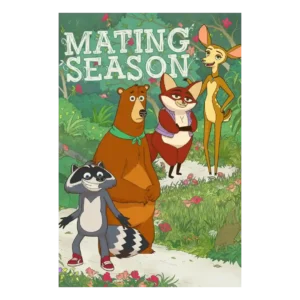

Mating Season, Season 1
Where It Has the Edge
No clear scored advantage over the other product.

Scorata scores summarize analyzed review evidence on a 1–5 scale; they are not laboratory measurements or a simple average of customer star ratings. Feature scores summarize the reviews covering that feature. The overall score averages feature scores within each review, then combines review averages. When both expert and customer evidence are available, those two groups receive equal weight. Products can have different review coverage, so small score gaps do not establish a winner.
Recommendations prioritize important features for the category, with a score of at least 3.5, a gap of at least 0.25 points and at least two supporting reviews per product. Features with widely varying scores or broad connectivity contexts are excluded from recommendations. These safeguards do not establish statistical significance.
Quick verdict
The available evidence supports the recommendation below, but does not establish an overall winner. Check the remaining features against your priorities.
There is not enough comparable review evidence to recommend Mating Season, Season 1 over the other product.
Choose Rooster, Season 1 for bingeability and main cast performance.
No clear scored advantage over the other product.
Scores are out of 5. Missing scores mean missing review evidence, not a missing feature.
The finale earns points for connecting earlier threads that once seemed disposable. That payoff makes the serialized elements feel more intentional for viewers who stuck with the season.
Archie’s shifting behavior is criticized for sacrificing continuity in characterization, moving between remorse and callousness as the plot requires.
Animal behavior details work well for viewers who want the characters to feel species-specific rather than merely human sitcom types in fur. That grounding helps the absurd premise feel more purposeful.
The emotional relationships can feel authentic, but the heightened campus world, loose consequences and vague academic details often strain credibility.
The animated staging gets credit for depth-of-field choices that highlight jealousy, competition, and physical comedy. Its visual composition does more than simply place animal characters on screen.
The visual execution draws criticism: one reviewer found the filming jarring, while another disliked the shallow-focus look that blurs the campus instead of giving it presence.
The premiere’s rapid pace works for viewers who like fast joke density, but harsher takes call the episodes slow or exhausting. The show is at its most divisive when it piles gags on top of relationship beats.
Individual episodes often move briskly and confidently, though one review says the series takes too long to fully establish its premise.
Character work is the main divider. Supporters like Penelope, Fawn, and the friend group as messy but lovable; critics say Josh, Ray, and some arcs stay underdeveloped or reset too easily.
The strongest arcs deepen Greg, Katie, Sunny and the wider ensemble beyond their initial comic types. Several reviewers praise the way later episodes let wounded, messy characters grow without losing the humor.
Writing quality is uneven across the response. Some praise the later-season voice and relationship dynamics, while critics complain about surface-level jokes, lazy lessons, and weak commentary.
The pilot’s scripts are praised as tight, quippy and efficient, helping familiar campus-comedy conventions feel fresher.
As adult animated sex comedy, the show satisfies viewers already tuned into Nick Kroll’s style. Others think it fails to balance raunch, romance, and commentary enough to stand out in the genre.
One reviewer calls it close to the ideal half-hour comedy: funny, lighthearted and more thoughtful than expected.
The core friendship chemistry works for many viewers, giving the raunchy premise a warmer hangout-sitcom feel. Negative reactions argue some romances and early group dynamics lack enough believable connection.
Chemistry is one of the clearest strengths, especially in Greg’s scenes with Katie and Dylan. Reviewers repeatedly say the relationships feel lived-in, warm and naturally funny.
The pilot sells the premise clearly, but reactions are split. Some praise the dumped-after-hibernation hook as strong and enticing; others think the first episode is too crude and too thin to invite more watching.
Opinions split sharply on the opening: some call the premiere rock solid or exceptional, while another finds it exposition-heavy and slow to lock in the show’s premise.
The series often uses a classic sitcom setup, splitting the friends into parallel romantic misadventures that meet back at the Watering Hole. Some praise the structure as tight and serialized, while negative viewers find certain episodes pointless.
Early episodes quickly branch beyond Greg to establish the ensemble, a choice praised for making the series feel more dynamic.
Interest in renewal is mixed but present. Fans and some critics see room for Josh, Penelope, and the world to grow, while harsh detractors actively hope it stops.
Reviewers who finished or enjoyed the season are eager to see more, especially after the ensemble and character arcs improve in the back half.
Sexual content is the defining trait, and approval depends on taste. Fans call the raunch bold or surprisingly balanced; detractors say it overwhelms story, humor, and comfort.
Sexual jokes, infidelity, kissing, pregnancy discussion and crude comments make the content level a poor fit for viewers wanting restrained family entertainment.
The show touches modern dating, identity, grief, loneliness, and queer community, but opinions differ on depth. Fans find realistic stings under the chaos; critics say it rarely reaches beyond sex jokes.
The show finds real material in divorce, loneliness, parenting and reinvention, but critics disagree on how deeply it explores those ideas. Some see meaningful emotional weight; others think the show stays too safe or shallow.
The season-ending surprises create some appetite for more Penelope drama, but the cliffhanger is not universally admired. Supporters see future potential; detractors call it predictable and manipulative.
Episode six ends on a promising cliffhanger that creates interest in how the remaining season will develop.
The series can surprise viewers with loneliness, insecurity, and friendship beats beneath the animal chaos. Still, several viewers feel the emotion is lighter than Big Mouth or gets punctured by jokes too quickly.
The father-daughter relationship and Greg’s loneliness give the comedy real feeling. Even skeptical reviewers acknowledge moments of tenderness, vulnerability and emotional payoff beneath the farce.
Humor is the show’s biggest split: fans call it hilarious, bold, and well-timed, while detractors find the sex jokes repetitive, lazy, or gross without enough payoff. Enjoyment depends heavily on tolerance for crude adult animation.
The comedy lands often through awkwardness, slapstick and deadpan ensemble work, but the political-correctness and generational jokes are much more divisive. Some call it laugh-out-loud funny; others find parts stale, hacky or dated.
The animal-world dating hook gives the series a memorable angle, but many writers feel it leans too hard on familiar rom-com and adult-cartoon formulas. The most positive takes credit the animal behavior twists for adding freshness.
Reviewers often recognize familiar Bill Lawrence and campus-comedy DNA, sometimes to the point of redundancy. A minority still finds the father-daughter angle or overall blend fresh enough to stand out.
The season has strong binge appeal for viewers who click with the premise. One skeptical viewer unexpectedly watched the whole thing, while another calls out binge potential for adult-animation fans.
Short episodes and an easygoing rhythm make the season especially easy to binge. Reviewers describe it as seamless, highly bingeable viewing.
Dialogue swings between polished, quick, and conversational for fans and gratingly crude for detractors. The best-liked lines are smaller throwaways, while the most disliked ones spell out jokes too aggressively.
At its best, the dialogue is sharp, funny and natural, with clever banter carrying character scenes. Other reviewers find the banter too chatty or stale when jokes crowd out emotion.
Profanity is frequent and strong enough to matter for content-sensitive viewers. The language reinforces the TV-MA tone rather than softening the adult material.
Harsh profanity is specifically flagged as a drawback for viewers seeking cleaner, family-friendly comedy.
The story works best when it turns animal dating into recognizable heartbreak, friendship, and romantic chaos. Detractors find too many arcs familiar, thin, or undercut by raunch before they can land.
Storytelling is the most consistent weakness. Reviewers repeatedly describe the season as scattered, overstuffed, thin, unfocused or lacking drive, even when they enjoy the characters.
This is plainly not family-friendly viewing. Content-focused reactions stress raunch, strong language, and sexual situations as central to the experience.
This is not positioned as family viewing; profanity, sexual jokes, infidelity and other adult material are cited as reasons many families will want to skip it.
Several reactions describe a rocky or repetitive start that improves in the back half. The stronger finale stretch helps some viewers forgive the early unevenness, while others never warm to the pacing.
The season’s momentum is uneven: several early reviews see scattered or stalled plotting, while full-season reactions say the back half grows richer and more assured.
The finale lands well for at least one critic because it ties earlier pieces together and leaves a stronger aftertaste than the early episodes. It suggests the season had more structure than first impressions implied.
A full-season reviewer felt the show had found its more comfortable hangout-comedy identity by the finale, leaving a positive impression and interest in more.
The closing episodes are among the better-liked parts of the season, especially for viewers who wanted serialized payoff. They bring the character arcs together more coherently than the setup initially promises.
By the end of the season, the show is described as having settled into a more confident hangout-comedy groove than it had at the start.
The forest world is most praised when animal instincts shape dating, flirting, and social rituals. Criticism rises when the rules of clothing, jobs, species behavior, and civilization feel inconsistent.
Ludlow works best as a populated hangout space, with students, faculty and recurring oddballs making the campus feel connected and lived-in.
The look is highly divisive. Some praise the bright forest backgrounds, expressive animation, and eventual charm of the designs; others call the style corporate, ugly, or uninspired.
The autumnal campus atmosphere adds cozy appeal even when the broader visual execution is not universally admired.
Guest voices add fun when they create memorable romantic obstacles or oddball animal personalities. Less impressed viewers find some supporting characters too thin and sitcom-functional.
Deadwyler is the standout most often singled out, but the broader ensemble also earns repeated praise for scene-stealing comic work. Even negative reviews tend to admire the depth of the supporting cast.
The opening theme stands out positively for at least one viewer. The music gives the season a stronger adult-rom-com identity than some of the individual musical material.
The music generally helps the cozy, nostalgic mood through alt-rock and period-flavored needle drops, though one reviewer finds the self-consciously cool choices more edgy than the show itself.
Zach Woods and Sabrina Jalees draw the warmest praise among the leads. Their anxious, specific voice work makes Josh and Penelope feel more human than the show’s premise might suggest.
Carell is almost universally praised, with Clive also drawing strong notices as the emotional counterweight. The leads give the show warmth and credibility even when the writing gets scattered.
Voice acting is one of the clearest strengths. Even mixed reviewers repeatedly single out the ensemble, especially Zach Woods, June Diane Raphael, Sabrina Jalees, and Nick Kroll, as energetic and well cast.
The ensemble is the show’s safest bet, with reviewers repeatedly praising the performances even when the material wobbles. Carell, Deadwyler, Clive and the supporting players often keep weaker storylines afloat.
Audience fit is narrow but clear. Big Mouth fans and adult-animation viewers are the likeliest match; people turned off by crude sex comedy or familiar sitcom tropes should be cautious.
Its warm, easygoing tone makes it a strong comfort-watch for many adults, though cringe-heavy campus humor and mature content narrow the fit for some viewers.
The content is firmly adult. Sexual situations, profanity, violence, and crude discussion make it unsuitable for younger viewers despite the cartoon format.
The content is framed as a poor fit for younger viewers, with profanity, sexual material and messy adult relationships pushing it toward an older audience.
Overall enjoyment ranges from must-watch enthusiasm to total rejection. Positive viewers enjoy the cast, pace, and weird relationship comedy; negative viewers find it boring, repetitive, or not worth the time.
Most reviewers find the show easy to watch and often charming, but enthusiasm ranges from must-see praise to outright dismissal. The cast and warmth carry it further than the uneven plotting does.
Several reviewers are distracted by how readily Greg’s boundary-crossing mistakes and disciplinary trouble are excused. The light treatment of consequences can make the campus satire feel evasive rather than sharp.
Animation draws both praise and criticism. Supporters see polish, expressive movement, and improved design compared with related shows, while harsher viewers find the characters stiff, bland, or unattractive.
Characterization can wobble, especially early on and around Archie and some female characters. A full-season review found the writing steadier once the show settled into its groove.
Queer and relationship representation is a notable bright spot for several viewers. Penelope’s lesbian self-discovery and the show’s open treatment of varied sexualities receive strong praise.
The serious material can be surprisingly effective when comedy and melancholy are balanced, but tonal shifts and occasional over-sentimentality keep the dramedy blend from working consistently.
The half-hour format is a strong fit: episodes are described as quick, easy to watch and just long enough.
The Big Mouth connection sets expectations and helps sell the show to existing fans. It feels spiritually related rather than a direct replacement, which helps some viewers and disappoints others.
Campus-culture satire is one of the most disputed elements. Some reviewers appreciate its light, non-preachy touch, while others find it superficial, timid, dated or too eager to excuse Greg.
The central father-daughter thread can be easy to follow, but several critics say the show struggles to decide which of its many possible stories should drive the season.
The first episode’s sudden gross-out turn works for at least one viewer as a hook rather than empty shock. The surprise helped distinguish the show from generic adult animal cartoons for that audience.
The weekly Sunday rollout is viewed as an easy fit for the show’s light half-hour format.
The score receives limited but positive notice. It is not a major talking point, but one viewer specifically calls it quite good.
The ten-episode season is enough for the premise to build arcs, but the length can also expose repetition. One critic felt the half-hour episodes made the formula wear thin.
Archie works as an unusually entertaining antagonist because his arrogance and selfishness make him fun to hate without reducing him to a simple cartoon villain.
The pilot includes graphic cartoon violence that some content-focused viewers flag as harsh. The violence is played for shock comedy, but it can be too much for sensitive viewers.
Early critical reception appears respectable rather than glowing. The consensus leans toward a watchable but imperfect successor with strong characters and humor but less depth.
Animal facts and mating behaviors add a lightly educational layer to the jokes. The trivia is framed as funny rather than instructional, but it gives the premise extra texture.
At least one reviewer found the funniest and most emotional moments strong enough to rewind and immediately watch again.
The liberal-arts campus is praised as an inviting locale that gives the ensemble a cozy, distinctive place to interact.

Best for sharp adult humor, magnetic chemistry and a deeply satisfying farewell. Skip it if familiar will-they-won’t-they plotting or deliberately messy leads are dealbreakers.
Pros: humor, writing quality

Choose Widow’s Bay for its dark laughs, richly haunted island and memorable ensemble. Skip it if you need straightforward scares, rapid answers to every mystery or a completely resolved finale.
Pros: humor, genre satisfaction
Cons: ending satisfaction, season pacing

Choose Season 15 for warm, character-driven comedy, meaningful growth, and a finale that rewards longtime fans. Skip it if the short binge format, uneven replacement voices, or occasional clumsy commentary...
Pros: franchise connection, character development

Best for sharply acted, compassionate, high-pressure hospital drama. Skip it if graphic procedures unsettle you or you need a neatly resolved season finale.
Pros: character development, acting performance
Cons: character consistency, dialogue quality