
World War II with Tom Hanks, Season 1
Where It Has the Edge
No clear scored advantage over the other product.

Scorata scores summarize analyzed review evidence on a 1–5 scale; they are not laboratory measurements or a simple average of customer star ratings. Feature scores summarize the reviews covering that feature. The overall score averages feature scores within each review, then combines review averages. When both expert and customer evidence are available, those two groups receive equal weight. Products can have different review coverage, so small score gaps do not establish a winner.
Recommendations prioritize important features for the category, with a score of at least 3.5, a gap of at least 0.25 points and at least two supporting reviews per product. Features with widely varying scores or broad connectivity contexts are excluded from recommendations. These safeguards do not establish statistical significance.
Quick verdict
The available evidence supports the recommendation below, but does not establish an overall winner. Check the remaining features against your priorities.
There is not enough comparable review evidence to recommend World War II with Tom Hanks, Season 1 over the other product.
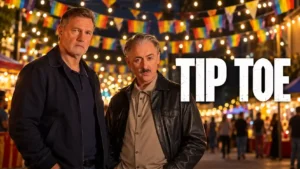
Choose Tip Toe for episode structure and theme depth.
No clear scored advantage over the other product.
Scores are out of 5. Missing scores mean missing review evidence, not a missing feature.
One critic feels the season cannot fully contain the war’s scale, making the overall arc feel compressed. The concern is less about slowness than about a subject too vast for even 20 episodes.
The compact season maintains expertly built tension and avoids the slackness that a longer run might have introduced.
The episode format is mixed: one critic finds the clip-narration-talking-head rhythm monotonous, while another calls the outline standard but serviceable. The structure is clear, but not always distinctive.
Repeated flashes of Leo’s fate turn each episode into a countdown, creating a fatalistic structure that keeps the focus on how the tragedy develops rather than what happens.
Episode pacing draws criticism from The Guardian, which says major events can zip by too quickly. Viewers wanting deep treatment of every turning point may feel some sections move in broad strokes.
The short run mostly keeps tension taut, though speech-heavy stretches can interrupt the momentum when the drama pauses to underline its politics.
The emotional response is mixed but meaningful. Some critics wanted a grander sense of awe, while others say the veteran accounts and personal perspectives make the war’s human cost land.
The show is consistently described as harrowing, heartbreaking, disturbing, and deeply affecting. Its anger and dread leave a strong impression even on viewers who resist its lack of subtlety.
Theme depth is the central tradeoff: supporters praise the moral urgency, civilian focus, and links to modern responsibility, while skeptics say the analysis can stay basic. It is strongest as a broad ethical framing of the war.
The series digs into masculinity, queer visibility, prejudice, online radicalization, found family, resentment, and personal responsibility. Its strongest moments let those ideas emerge through character rather than speeches.
The editing has at least one clever strength: cycling through propaganda responses from different sides of the conflict. Even a skeptical review credits that technique with giving events a wider snapshot.
The premiere’s cross-cut montage is a standout construction, combining sexuality, loneliness, and radicalized media consumption into one bravura sequence.
The 20-episode length divides critics. Some say it still is not enough for the war’s scale, but more positive reviews say the length finally lets the series go deep across campaigns, fronts, and consequences.
Five episodes is judged an ideal length, keeping the story concentrated before its dread has time to become exhausting or repetitive.
The documentary earns praise for factual grounding, especially its no-reenactment approach and use of a documentary format over dramatization. It aims for authenticity rather than cinematic invention.
Realism is mixed at the plot level: the social-media radicalization and cultural climate feel frighteningly believable, but some character decisions and the final escalation strain credibility.
The score is praised for reinforcing the wartime narrative with force. The music is treated as part of the show’s epic, dramatic presentation.
Sam Watts’ scoring is singled out alongside the direction as haunting and note-perfect, strengthening the sustained atmosphere of dread.
The storytelling is generally praised for organizing huge wartime events into a coherent, serious narrative. A few writers call it familiar rather than groundbreaking, but most still find the retelling clear and purposeful.
The neighbor feud is widely praised as a gripping vehicle for fear, resentment, prejudice, and radicalization. The story remains compelling even when its mechanics become deterministic or overtly symbolic.
Freshness is one of the more debated strengths. Some writers say the series gives a new perspective on an over-covered war, while others value how it widens the lens beyond famous battles.
Revealing the central death up front is treated as a bold structural choice, and the broader storytelling is praised as daring and distinctive rather than routine.
The opening episode made a strong impression in at least one review, with praise for its visceral storytelling and historical insight. It appears to set up the series’ tone effectively.
The premiere makes a strong first impression by revealing the tragedy immediately and closing with a bravura montage; the unconventional opening is specifically praised as improving the show.
As a WWII documentary, it satisfies viewers looking for a broad, serious, modern treatment of the conflict. Its global scope and comprehensive structure are repeatedly presented as reasons to watch.
The psychological-thriller approach is highly effective, generating horror-level fear without functioning as a conventional horror series.
The series is praised for broadening WWII beyond a narrow battlefield or American-only lens. Its attention to civilians, continents, home fronts, and the war’s human cost gives the history a wider cultural frame.
Queer and trans life is portrayed as a lived community rather than a backdrop, with the bar, found-family bonds, and generational fears giving the story breadth beyond the central feud.
Modern relevance is one of the show’s defining choices. Reviewers and interviews repeatedly connect the war to present-day moral choices, political fragility, and the danger of forgetting.
The series is unapologetically about the present moment, tying radicalization, anti-LGBTQ rhetoric, misinformation, and social polarization to intimate neighbor conflict. Most find that urgency powerful even when the messaging is blunt.
The series is framed around moral responsibility rather than detached chronology. Hanks’s comments emphasize that viewers should not treat past atrocities as safely distant from present choices.
Clive’s habit of blaming everyone but himself is treated as a key part of his radicalization. The story makes his refusal to self-examine feel dangerous rather than excusable.
Hanks’s narration is repeatedly treated as a major asset: grave, authoritative, humanizing, and backed by a long personal connection to WWII stories. One critic notes his presence is not overwhelming, which may be a plus or minus depending on expectations.
Cumming and Morrissey dominate the series, with their performances described as phenomenal, revelatory, riveting, and at times career-best work.
Audience fit is clear: this is especially appealing to newcomers, younger viewers, at-home historians, and anyone wanting the war in one accessible package. Several sources also point to growing interest and strong viewing appeal.
The series is repeatedly positioned as urgent, essential, and worth seeking out, especially for viewers drawn to intense social drama. Its confrontational style may narrow the audience, but enthusiasm is still high.
Most positive reviewers find the series engaging, informative, and worth streaming. Even when the subject is grim, the stronger reviews describe it as compelling television rather than dry history.
Despite the punishing subject matter, the strongest recommendations call it must-watch television and argue that its tension and performances make the experience compelling.
The performances are the clearest strength, with Alan Cumming and David Morrissey repeatedly singled out for rich, frighteningly human work. Even the supporting ensemble receives strong praise.
The supporting ensemble is a genuine strength, with several younger performers singled out and the queer and trans cast given room to make strong impressions.
Cumming and Morrissey’s chemistry gives the central feud exceptional heat, shifting convincingly between hostility, uneasy connection, and outright menace.
Cumming describes Leo as an unusually fitting role for his age, background, and dramatic strengths, reinforcing the sense that the lead casting is especially well matched.
Leo and Clive emerge as flawed, layered people rather than simple symbols. Clive’s flashes of vulnerability and Leo’s warmth, carelessness, anger, and fear make the tragedy more persuasive.
The original talking-head footage is one of the weaker visual elements, with a critic calling it plainly filmed and lit. The show’s visual power comes much more from archive material than studio presentation.
The dialogue is one of the clearest tradeoffs: it can be urgent, thoughtful, and nuanced, but several assessments find the speeches blunt, preachy, or too eager to spell out the message.
Peter Hoar’s direction earns particular praise for a bravura premiere montage and a haunting, tightly controlled sense of dread.
As drama, the series lands hard: tense, emotionally forceful, and frequently described as essential or top-tier. Its bluntness rarely erases the impact of the performances and central conflict.
The climax can deliver a stomach-churning payoff, but the ending is still a notable split point: some find the final escalation hard to believe and the postscript titles clumsy.
The two leads receive deep, nuanced treatment, while some supporting characters—especially Zee—are left thinner or more functional than the central pair.
The series often handles prejudice with unusual care, refusing to require Leo to be flawless before deserving safety. One weakness is Stephanie’s bigotry being left insufficiently addressed, and a viewer also found some sensitive material gratuitous.
Dark and playful humor gives the story some breathing room, especially around Leo and the bar community. Still, one assessment finds the show too serious and occasionally strident rather than genuinely funny.
Archive footage, expert commentary, and historical accounts are the most consistently praised ingredients. The main caveat is that some critics miss the irreplaceable force of veteran testimony and first-hand witnesses.
The series is easy to follow even when it covers massive events and shifting alliances. Reviewers especially recommend it for viewers who want WWII history explained without getting tangled in specialist detail.
The climax has real stomach-churning impact, yet the final escalation and postscript execution leave some viewers unconvinced or dissatisfied.
As the limited-series ending, the climax is powerfully disturbing for some but unconvincing for others, especially in its final escalation and postscript wrap-up.
Knowing Leo’s fate does not reduce the tension; it intensifies it. Ordinary encounters become threatening, and the series sustains a slow-motion-train-wreck sense of dread.
The series holds onto its anxious, threatening atmosphere with unusual discipline, rarely allowing the tension to fully break even during lighter or more intimate scenes.
The bleak material is often praised for confronting violence without simply wallowing in it, but at least one viewer felt the trauma became excessive and existed for its own sake.
Clive works because he is not reduced to a cartoon monster: flashes of vulnerability, ordinariness, and possible decency make his slide into hatred more frightening.
The series includes graphic images of death and destruction. That realism may be appropriate for the subject, but it is not positioned as soft viewing.
The scripts have urgency and purpose, but conspicuous speechifying and overlong monologues sometimes make the writing feel more instructional than dramatic.
Leo’s charm, generosity, humor, and instinct to help vulnerable people make him easy to care about even when he misjudges situations or pushes too far.
The show arrives with exceptionally strong critical momentum, with existing U.K. coverage framed as suggesting it could rank among Davies’ best work.
Several writers say the series works as a learning tool, with even seasoned WWII followers finding surprises. It is strongest when turning familiar history into a clear, teachable overview.
One reviewer singles out the combination of video, audio, and imagery as unusually effective. The sound contributes to the show’s visual storytelling rather than standing apart as a flashy element.
Visual presentation is one of the strongest areas. Reviewers praise the restored footage, colorized stills, and unusually vivid use of video and imagery to make WWII feel immediate.
The grounded world-building is strongest around Spit & Polish, where ordinary work, gossip, friendship, and safety make the queer community feel lived-in rather than merely symbolic.

Best for sharp adult humor, magnetic chemistry and a deeply satisfying farewell. Skip it if familiar will-they-won’t-they plotting or deliberately messy leads are dealbreakers.
Pros: humor, writing quality

Choose Widow’s Bay for its dark laughs, richly haunted island and memorable ensemble. Skip it if you need straightforward scares, rapid answers to every mystery or a completely resolved finale.
Pros: humor, genre satisfaction
Cons: ending satisfaction, season pacing

Choose Season 15 for warm, character-driven comedy, meaningful growth, and a finale that rewards longtime fans. Skip it if the short binge format, uneven replacement voices, or occasional clumsy commentary...
Pros: franchise connection, character development

Best for sharply acted, compassionate, high-pressure hospital drama. Skip it if graphic procedures unsettle you or you need a neatly resolved season finale.
Pros: character development, acting performance
Cons: character consistency, dialogue quality