
The American Experiment, Season 1
Where It Has the Edge
- production design is 5.0 vs 4.6. Museum-like typography, restrained graphics and carefully staged scenes create a refined, consistently polished historical presentation.

Scorata scores summarize analyzed review evidence on a 1–5 scale; they are not laboratory measurements or a simple average of customer star ratings. Feature scores summarize the reviews covering that feature. The overall score averages feature scores within each review, then combines review averages. When both expert and customer evidence are available, those two groups receive equal weight. Products can have different review coverage, so small score gaps do not establish a winner.
Recommendations prioritize important features for the category, with a score of at least 3.5, a gap of at least 0.25 points and at least two supporting reviews per product. Features with widely varying scores or broad connectivity contexts are excluded from recommendations. These safeguards do not establish statistical significance.
Quick verdict
The review evidence points to a tradeoff: production design versus audience appeal and genre satisfaction. Choose according to which strengths matter more to you; the overall score alone does not settle that choice.
Choose The American Experiment, Season 1 for production design.
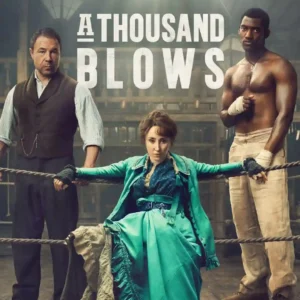
Choose A Thousand Blows, Season 2 Review for audience appeal and genre satisfaction.
Scores are out of 5. Missing scores mean missing review evidence, not a missing feature.
Smooth motion between artworks and clear visual transitions give historical episodes a satisfying rhythm.
One major action set-piece is criticized for confusing editing that turns the sequence into muddled visual chaos.
Maps, clear visual transitions and a largely straightforward chronology keep a crowded founding-era story understandable.
The plotting is a mixed point: some praise a more streamlined story, while others find parts muddled, convenient, or slow to establish their purpose.
This earnest, classroom-like documentary works best for committed history viewers; those after distinct visual flair may find it conventional.
Fans of historical crime drama are especially well served, with the period setting, underworld politics, and boxing giving the season a distinctive flavor.
The chronological development is easy to follow, but some episodes postpone the core argument or hurry from one complicated idea to another.
One sharply negative take finds the premiere poorly structured, with many scenes but too little meaningful progress.
The historical material and earnest presentation revisit territory covered by other documentaries, offering fewer fresh insights to experienced viewers.
Season 2 still has inventive ideas, but multiple reviewers think it feels less fresh, less surprising, or more conventional than the first season.
Connections between revolutionary debates and today’s democratic instability are often thought-provoking. Repeated political montages and guest appearances strike some as heavy-handed.
The season’s ideas about colonialism, racism, gender, and class are presented as part of the drama rather than detached commentary, giving the period story contemporary resonance.
The filmmaking is praised for finding human moments amid weighty political history.
The direction is praised for confident atmosphere, grounded physicality, and attention to what violence leaves behind rather than spectacle alone.
The documentary maintains an earnest, dignified style, though some find its careful political balance overly wholesome or too cautious.
The darker second season keeps the rough charm of the first while making grief and consequence feel heavier, a shift one reviewer calls an ideal progression.
A large cast of speakers nonetheless builds a clear, compelling account of the country’s formation.
The season is broadly viewed as strong, darker, and more character-driven, though not always as fresh as the debut. The biggest criticisms are conventional choices, thin stretches, and a few too-neat resolutions.
Opinions vary between lucid momentum and compressed information overload, with the central argument arriving later than some would like.
The episode-to-episode rhythm is uneven: several reviews cite a slow or dragging start, but many say the pace improves sharply once the season gets moving.
The five-part format is brisk and engrossing for some, but other viewers find the extended lessons exhausting or their transitions too hurried.
The overall pace divides opinion: some enjoy the more patient, character-led approach, while others find the opening slow or the season overly setup-heavy.
Democracy’s uncertain survival, the founders’ contradictions and imperfect compromises provide the strongest ideas. A few critics think the tidy presentation softens the harder debates.
Reviewers repeatedly praise the move beyond simple boxing drama into grief, moral ambiguity, colonialism, racism, class, gender, and survival.
Its refusal to end with a simple patriotic triumph fits the series’ idea that democracy remains unfinished.
The ending is generally seen as satisfying and offers useful closure, even while leaving room for more story.
Some admire how dozens of interviewees blend into a clear narrative; others think famous voices crowd out difficult ideas.
The ensemble balance is uneven. Some reviewers like how the season spreads attention across its trio, while others think Mary dominates and Sugar, Treacle, or the boxing side get shortchanged.
Washington’s progression from ambitious youth to president receives satisfying attention, while glimpses into other founders’ private lives humanize them.
Season 2 generally earns praise for pushing its damaged characters through grief, recovery, ambition, and consequence. A few reviews still find some arcs underdeveloped or too functional.
The period battle scenes are singled out for their high-quality reconstructions, giving the war sequences particular impact.
The fights and gang clashes land hard, with several reviewers calling them brutal, visceral, and thrilling. Even with less boxing overall, the action that remains is consistently well received.
The documentary acknowledges slavery, voting exclusion, racial inequality and Indigenous perspectives, although some want even bolder reinterpretation.
The season’s treatment of colonialism, racism, class, and immigrant experience adds weight beyond the crime and boxing plot. Reviewers especially respond to Hezekiah’s Jamaican history and the power dynamics around him.
At its best, the five-part series is engrossing enough to finish in a single day despite its dense subject matter.
The six-episode run is easy to burn through in a weekend, with one reviewer explicitly recommending it as a binge.
A late reflection on Capitol paintings provides a surprisingly touching payoff to the carefully curated images.
The season repeatedly lands hard emotionally, from heartbreaking storylines to character breakdowns and confrontations that reviewers found genuinely moving.
The five-plus-hour season is a substantial commitment, and slower passages can make it feel even longer.
Six episodes is the clearest recurring structural complaint. Multiple reviewers feel the season ends before all of its storylines have enough room to develop.
History-documentary enthusiasts have the clearest reason to tune in. Some find it approachable for general audiences, while others warn that its academic form can be tiring.
The season broadens its reach beyond boxing devotees, and reviewers say its historical-crime focus should especially appeal to viewers who value character, atmosphere, and moral ambiguity.
Founders such as Washington and Adams emerge as recognizably flawed people rather than distant national monuments.
Mary Carr is a major draw for some viewers but a serious irritant for at least one critic, making character appeal unusually polarized.
One commentator considers this among the strongest historical documentaries in Netflix’s crowded catalog.
Early critical reception is described as very strong, with the season reported as matching or slightly exceeding the first season’s acclaim.
Often an engaging, polished civics lesson, especially for interested viewers. Dense passages and lecture-like stretches can make the experience less lively.
Most reviewers find the season highly watchable, gritty, and fun despite its darker mood. A small minority find parts of it shallow or weak.
Martin Sheen’s readings of Washington’s writings add presence and gravity. A few other voice performances are mentioned with more qualified enthusiasm.
The cast is the season’s clearest strength, with the leads repeatedly praised as commanding, convincing, and emotionally layered. Even more critical takes say the performances keep the drama gripping.
Museum-like typography, restrained graphics and carefully staged scenes create a refined, consistently polished historical presentation.
The East End streets, pubs, and interiors are widely praised as richly realized and atmospheric. The only notable complaint is that some digital-looking backgrounds undercut the otherwise strong sets.
Paintings, archival images and art-gallery-like graphic treatments lend elegance to what could have been a static talking-head documentary.
The show remains striking to look at, from foggy cobblestones to ornate interiors and Halloween-lit streets.
Erin Doherty’s natural cockney-adjacent speech is presented as an excellent fit for Mary Carr, helping the character feel convincing rather than performed.
The ensemble is praised for working as a true collaborative unit, helping the central trio and surrounding cast feel connected rather than isolated.
Choosing knowledgeable historians and relatable performers over wall-to-wall celebrity reenactors makes the documentary feel more grounded.
One reviewer repeatedly notices green-screen work, saying it weakens the otherwise convincing period sets.
The camera work is repeatedly singled out as a strength, especially the close, punishing boxing coverage and foggy East End imagery.
The back-to-back production pays off in a transition that feels unusually seamless, with Sugar’s characterization in particular reading as a genuine continuation rather than a reset.
The sharpest dialogue is praised for giving the women’s-rights material extra bite and depth.
The strongest drama comes from the characters’ battles outside the ring, where grief, guilt, family damage, and survival carry real weight.
Hour-plus installments pack in information but can feel demanding and still leave important history unexplored.
The strongest sections confront slavery and unequal rights rather than glorifying the founders uncritically. Some modern connections remain underdeveloped.
Accounts differ sharply: detailed scholarship and political nuances impress many, while some find the abbreviated treatment superficial beside longer histories.
Battle and political reconstructions add vivid drama, with several critics praising their staging and production polish.
The season is much darker overall, but the Forty Elephants still provide some welcome levity.
Native scholars and references to exclusion from founding negotiations broaden the standard Revolutionary War narrative.
A deep bench of historians and political figures brings expertise, vivid detail and conflicting perspectives. The scholarly voices draw the most consistent praise; celebrity politicians can be distracting.
Battlefield maps are highly effective at explaining military movement and the geography of the revolutionary campaigns.
Most reviews praise the grime, costumes, sets, and historical texture as immersive and authentic. One reviewer is less convinced, arguing that visible green-screen work weakens the illusion.
One episode-one review finds the premiere merely okay, criticizing how little it seems to accomplish.
The late-season twist earns direct praise as a strong payoff even from a reviewer who prefers Season 1 overall.
The bipartisan guest roster impresses some with its civility and range, but others find the attempt at balance contrived or distracting.
The boxing is especially convincing, with blood, fatigue, and physical wear rendered in grounded detail. Historical dramatization is more flexible, though most reviewers accept the license.
The relatively quick one-year turnaround is welcomed, especially in a streaming landscape where long gaps between seasons are common.
Interest in another season is high, with several reviewers explicitly saying they would return for a third round.
Federico Jusid’s score is praised for its propulsive, mechanical pulse and for keeping tension moving forward.
The season closes its central saga in style, giving the ending a satisfying sense of resolution without completely sealing off the future.
The boxing itself is praised, but several reviewers miss the heavier ring focus of Season 1. For some, the reduced boxing opens space for richer character drama; for others, it leaves the sports side undercooked.
The best episodes create real white-knuckle tension, especially during sieges, gang clashes, and escalating schemes. Even critics of the pacing often acknowledge the season becomes gripping.
A malicious, sexist gang leader is singled out as an effective supporting antagonist, giving the early conflict extra bite.
The script is mostly solid, but one review criticizes it for skipping over details too conveniently.
The period costumes are consistently praised as sumptuous and convincing, helping sell the Victorian setting.
The Victorian East End feels increasingly lived-in, with rivalries, streets, institutions, and social pressures forming a convincing world around the characters.
Historians, political figures and lively reconstructions communicate a large amount of American founding history. Viewers frequently find it informative, even when the density becomes exhausting.
The lead trio are repeatedly identified as the heart of the show, with reviewers praising their chemistry, intensity, and emotional conviction.
The supporting cast receives strong notices, with several secondary performances singled out as standouts rather than filler.
Martin Sheen’s Washington narration is an especially well-liked element, bringing force to the founders’ writings.

Best for sharp adult humor, magnetic chemistry and a deeply satisfying farewell. Skip it if familiar will-they-won’t-they plotting or deliberately messy leads are dealbreakers.
Pros: humor, writing quality

Choose Widow’s Bay for its dark laughs, richly haunted island and memorable ensemble. Skip it if you need straightforward scares, rapid answers to every mystery or a completely resolved finale.
Pros: humor, genre satisfaction
Cons: ending satisfaction, season pacing

Choose Season 15 for warm, character-driven comedy, meaningful growth, and a finale that rewards longtime fans. Skip it if the short binge format, uneven replacement voices, or occasional clumsy commentary...
Pros: franchise connection, character development

Best for sharply acted, compassionate, high-pressure hospital drama. Skip it if graphic procedures unsettle you or you need a neatly resolved season finale.
Pros: character development, acting performance
Cons: character consistency, dialogue quality