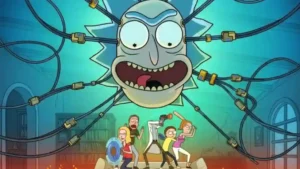

Rick and Morty, Season 9
Where It Has the Edge
- season pacing is 4.9 vs 2.7. The ten-episode run balances breakneck outings and more patient chapters, creating a coherent rhythm even when the overarching...

Scorata scores summarize analyzed review evidence on a 1–5 scale; they are not laboratory measurements or a simple average of customer star ratings. Feature scores summarize the reviews covering that feature. The overall score averages feature scores within each review, then combines review averages. When both expert and customer evidence are available, those two groups receive equal weight. Products can have different review coverage, so small score gaps do not establish a winner.
Recommendations prioritize important features for the category, with a score of at least 3.5, a gap of at least 0.25 points and at least two supporting reviews per product. Features with widely varying scores or broad connectivity contexts are excluded from recommendations. These safeguards do not establish statistical significance.
Quick verdict
The review evidence points to a tradeoff: season pacing versus ending satisfaction and dialogue quality. Choose according to which strengths matter more to you; the overall score alone does not settle that choice.
Choose Rick and Morty, Season 9 for season pacing.
Choose Adults, Season 2 for ending satisfaction and dialogue quality.
Scores are out of 5. Missing scores mean missing review evidence, not a missing feature.
Rapid invention of worlds, civilizations and scientific gimmicks makes the far-fetched stakes feel coherent enough to enjoy on their own terms.
The eight-episode format limits how far the sitcom universe can expand through longer guest arcs and recurring side characters.
The distinctive 2D look stretches from huge cosmic combat to elegant transformations and surreal creature designs without losing its identity.
The visual presentation earns praise for sequences such as Anton’s workplace montage, which felt more assured and thoughtfully assembled.
The ten-episode run balances breakneck outings and more patient chapters, creating a coherent rhythm even when the overarching Rick theme feels excessive.
The broader season can feel rushed and slow at the same time: key romances could be seeded earlier, while the short run crowds story into the edges.
At least one viewer finds the premiere’s story beats smoother and more streamlined than the show’s earlier, more self-consciously complicated writing.
The premiere’s anything-goes comic confidence sometimes comes at the expense of coherence, although the chaos can still work in the episode’s favor.
An accent prompts a quick discussion of whether it is racially insensitive; the response is guarded rather than a clear endorsement of the portrayal.
Season 2’s Gen Z voice is widely praised as more specific, authentic, and less stereotyped, including sexual-fluidity representation that feels natural to the characters.
The show questions Rick’s casual exploitation of other beings, especially in its nature-focused adventure. Some viewers are unsettled when equally dark acts are played simply for laughs.
The sexual-fluidity representation is praised for feeling organic and for not reducing characters to a single identity trait.
The focus on Evil Morty as Rick’s jealous companion divides opinion, with some finding it a regression and others an intriguing contradiction. Rick’s limited change is also contentious.
The new origin episode creates some friction with established character logic, especially where earlier traits and choices do not fully line up.
Comic absurdity, cosmic violence and genuine feeling often work well together, although abrupt or exceedingly bleak moments can disrupt the balance.
The season is notably assured and consistent, balancing edginess, heart, cringe, and rapid comedy without losing its identity.
The foul-mouthed, deliberately tasteless dialogue is a key part of the offbeat comic identity and appeals to viewers comfortable with sharp adult humor.
The show’s handling of the C-word and a censored slur prompted a mixed reaction: the joke worked, but the difference in treatment also felt jarring.
Rick’s trauma and self-loathing receive sustained attention, while Morty and other family members occasionally find genuine growth. Some consider the introspection repetitive or insufficiently transformative.
Season 2 is widely praised for giving the ensemble clearer wants, more vulnerability, and deeper individual arcs, with Anton and Paul Baker receiving especially noticeable growth.
Opinions are sharply split: some appreciate the renewed focus on the core family, but others miss fuller stories for Summer, Beth and Space Beth.
Varied pairings help the ensemble feel broad and connected, though Samir and Billie sometimes slip behind the heavier Paul Baker-Issa-Anton focus.
Long-running story threads can pay off satisfyingly, and the first episode finds an amusing resolution to its Rick–Evil Morty deadlock.
The final minutes landed very well for viewers who liked the romantic payoffs and the way the ending positioned the group for another season.
Rapid-fire mayhem is mixed with slower, more deliberate departures that can deepen immersion. A few jokes linger too long and some installments feel less tightly constructed.
Most episodes move briskly and stay focused, with fast stories and sharp timing. One corporate C-word plot was the notable exception, criticized for running out of steam.
Repeated household jokes and pointedly absurd exchanges are praised for turning small domestic details into effective punchlines.
Sharp dialogue and careful wordplay are singled out, with jokes landing through punch lines, rhythm, and character-specific verbal habits.
Short installments are a strength, packing surprisingly elaborate science-fiction ideas into roughly a half-hour or less without demanding a feature-length commitment.
The roughly half-hour, get-in-get-out format can work extremely well, keeping compact continuing arcs focused and energetic.
Self-aware gags and jokes about the show’s own presentation remain playful rather than condescending, with a cheeky production-reference joke particularly well received.
The meta and fourth-wall touches are viewed as a strength when they push the familiar hangout-sitcom premise into something more self-aware and distinctive.
The plots are typically creative, clever and cohesive, even when the season’s greater interest in Rick’s turmoil undercuts individual character arcs.
Season 2 makes its messier, escalating storylines land while adding a more emotionally involving through-line across the season.
The premiere suggests that Evil Morty’s imprisonment may be temporary, giving the rivalry an unsettling sense of unfinished business.
Raccoon turns a comedy premise into an effective ticking-clock setup, using the approaching acid trip to create genuine countdown tension.
The recurring pool joke, dark domestic absurdities and precise timing deliver plenty of laughs. Some darker developments and action-heavy sequences are less consistently funny.
The season is consistently very funny, mixing physical comedy, cringe, wordplay, escalating farce, and rapid-fire jokes that repeatedly land.
Inventive standalone setups and contrasting A/B plots are a strength, although the recurring Rick-focused theme and heavy continuity can sometimes feel overdetermined.
Episode construction is a major strength, especially the real-time Raccoon countdown and other classic sitcom setups that escalate simple problems into layered ensemble chaos.
The extreme science-fiction concepts maintain persuasive internal logic through speed and confident storytelling, even though their events are intentionally impossible.
The emotional and social behavior often feels highly relatable and lived-in, even when plots become absurd. The recurring realism complaint is visual: Toronto does not always convincingly pass for Queens.
The opener delivers spectacle, a memorable multiversal adversary and major Evil Morty developments, although his changed motivation divides opinion.
The added origin episode improves on the original pilot and can be very effective, but its character logic is inconsistent and its laughs are lighter than the season’s best material.
Callbacks, returning adversaries and consequences of earlier arcs create a stronger connective thread, while many installments still work as standalone excursions.
Season 2 is praised for building naturally and consistently on the foundation established in the first season.
Individual episodes remain punchy, and recurring household jokes and thematic links reward consecutive watching. One newcomer found the entire season compelling without first catching up.
One viewer watched the entire season in a single late-night session, a strong sign that the short run and momentum make it easy to consume at once.
Several assessments describe a creative comeback and renewed excitement for future seasons, particularly for viewers disappointed by the middle run.
Appetite for more episodes is extremely strong, with repeated calls for Season 3 and, in some cases, several more seasons beyond it.
Interpersonal humiliation, guilt and Rick’s self-destructive impulses give the absurd adventures unexpectedly serious weight, with some scenes landing as genuinely sad.
The quieter relationship material works because the show can slow down just enough to make emotional distance and awkwardness feel recognizable without abandoning the comedy.
The season returns repeatedly to self-hatred, grief and the emotional costs of power. Some find that deeper focus compelling, while others consider the conclusions repetitive.
Beneath the farce is thoughtful material about quarter-life uncertainty, friendship, avoidance, work, aging, and the fear of growing into an unstable future.
Season 9 stays true to the show’s adult sci-fi comedy identity while turning up action and character introspection. A few viewers miss the more purely comedic emphasis.
Season 2 settles confidently into hangout-sitcom form and is repeatedly positioned among the strongest current TV comedies.
The two lead voice replacements have settled in so naturally that the transition scarcely distracts. Their individual interpretations increasingly feel like established characters rather than impressions.
Raven Simone’s casting was singled out as an especially inspired match for Anton’s family storyline.
Surprising reversals in the Evil Morty confrontation and the broader mythology give the season more consequential turns than an ordinary collection of one-off adventures.
The Billie-Samir turn still lands as a surprise even when the pairing has been suspected, giving the finale an effective jolt.
Alongside the carnage and nihilistic comedy are surprising moments of regret, connection and hard-won resolve. The darker emotion can sometimes overshadow the fun.
The season’s heart registers alongside the jokes: breakups, vulnerability, and character growth can be unexpectedly moving and even tear-inducing.
The scripts earn praise for inventive high-concept setups, clever domestic jokes and effective emotional moments, but can occasionally overexplain familiar character problems.
The scripted material is described as stellar, with comedy and character beats working together rather than competing for attention.
Fresh premises, surreal new environments and lavish action setups make the ninth season feel unusually inventive for such a long-running show. A few psychological ideas feel familiar.
Familiar sitcom devices get fresh twists, from the drug-trip countdown to meta flourishes and strong episode hooks. The season feels inventive even when it borrows classic structures.
Rick’s unexpectedly fluent partnership with Evil Morty brings fresh tension, while more affectionate exchanges with regular Morty add warmth to the dysfunction.
This is the clearest point of agreement: the ensemble’s rapport, warmth, and ability to bounce off one another are repeatedly described as the show’s secret sauce.
At least one assessment welcomes the move away from the more extreme sex and incest premises associated with weaker previous episodes.
The raunchiness works best when it supports candid, realistic conversations instead of feeling glossy or sanitized.
Longstanding fans can pick up callbacks, recurring jokes and self-referential details that add another layer beyond the first viewing.
The season inspires immediate repeat viewing, with full rewatches starting soon after finishing and clear interest in returning again.
The exuberant mix of surreal sci-fi, outsize spectacle and fast jokes makes Season 9 highly enjoyable for most viewers, despite disagreements about its central storyline.
Across critics and fan-style reviews, Season 2 is described as fun, sharply improved, and highly entertaining, with several calling it among the best current comedies.
The voice ensemble is repeatedly praised for maintaining its energy through the cast transition. The main duo now sound comfortable rather than like imitations.
One review calls the performances excellent across the board, emphasizing how well the actors complement one another.
The central voices feel assured and seamless after the recasting, with especially strong praise for how distinctly Morty and Evil Morty are performed.
The core five are repeatedly described as having no weak link, with confident comic timing, natural interplay, and performances that make heightened stories feel lived-in.
Evil Morty remains a magnetic rival, and some viewers especially welcome a more recognizably childish regular Morty. The ensemble still offers oddball favorites and unpredictable comic turns.
Season 2 makes the group much easier to love and root for, even while preserving the cringey, selfish, or frustrating behavior that drives the comedy.
Praise comes from returning fans, newcomers and critics reporting a substantial rebound. Its deliberately offensive, manic sensibility remains an acquired taste.
The available audience signals are very strong, including near-perfect audience scoring and reported viewing growth in the second season.
Early critics responded very enthusiastically to the season’s renewed comic and creative energy, though the cited early ratings were based on a limited number of reviews.
Critical reception is exceptionally strong, including a perfect Rotten Tomatoes critic score at the time it was cited.
A character accent drew a cautious reaction as racially ambiguous rather than clearly offensive, but it was not singled out as a highlight.
The provocative, coarse adult-cartoon approach fits a mature audience; viewers looking for material suitable for younger children should look elsewhere.
Guest voices help add variety, although at least one assessment felt that certain guest stars were underused.
Anton’s workplace mistake and apology are treated as a comic accountability arc that one viewer found funny without losing the point that he had to make amends.
Space-god battles, kung-fu showdowns and sharply different fight climaxes provide major spectacle. Even viewers less taken with certain stories admire how far the action pushes the animation.
Rick’s increasingly drunken recklessness carries some of the season’s darkest moments. The resulting distress is striking, although the behavior can feel repetitive and upsetting.
Detailed action, smooth movement and an especially beautiful evolution sequence earn some of the most consistent praise. Season 9 still looks distinctively like the series, but more ambitious.
The cycle of dying, regeneration and returning in new forms is imaginative but also disquieting, even within the series’ familiar grotesque style.
The animated animal effects look surprisingly strong, with a favorable comparison to creature effects in a much larger film production.
The Rick-heavy design can reduce Beth, Summer and Space Beth to brief comedic sidelines, although other assessments welcome the extra attention given to the Smith household.
The season looks more polished than before, with filming choices that make the visual presentation feel like a clear step up.
The ending is praised for leaving the relationships in a place that creates immediate interest in a third season.
The editing is credited with selecting strong takes and helping preserve the show’s frenetic, ad-lib-like comic energy.
Despite all the family-centric stories, the profanity, sex jokes and violent dark humor make this adult animation rather than easy viewing for children.
The bonds between Rick, Morty and the wider Smith family supply both warmth and toxicity. The season alternates between sweet understanding and neglect, jealousy and cruelty.
Rick’s unresolved loss continues to inform his current psychological turmoil, but revisiting that fallout does not always lead to convincing new development.
Evil Morty’s return, lingering Rick Prime consequences and references to earlier episodes reward invested viewers without eliminating one-off absurdity.
The progressive framing lands without feeling preachy or lazy, keeping social awareness inside the comedy rather than above it.
The mix of practical animals, puppetry, and other creature techniques in Raccoon was noticed positively and helped the episode’s chaos feel tactile.
The romantic material is mostly a strength, especially the sexually fluid Anton-Paul Baker arc and the amicable Issa-Paul breakup. The main criticism is that some payoff arrives too late or with too little buildup.
The finale is one of the more uneven episodes: the HOA plot is comparatively weak, though the character and relationship payoffs improve the closing stretch.
Eight episodes are the season’s most repeated structural limitation, leaving less room for romance, side characters, and low-stakes hanging out. The counterpoint is that the tighter order keeps episodes focused.
From remote wilderness to outlandish worlds and cosmic confrontations, the setting changes keep the show’s familiar multiverse fresh and unpredictable.
The creature work in Raccoon holds up unusually well for a streaming sitcom and supports the episode’s escalating chaos.
A visually striking life-cycle episode makes Morty’s decision to evolve and fight for survival feel satisfying and meaningful.
Rick’s spiraling emotional turmoil brings genuine darkness but risks retreading familiar distress without resolving it.
The Collective provides a gleefully oversized threat, while Evil Morty fascinates as an adversary whose newfound dependence on Rick remains divisive.
Large-scale brutality is integral to the action, but at least one reaction objects to extremely dark harm being turned too casually into a joke.
Wardrobe reactions are mixed: Anton’s more glamorous looks draw praise, while a leather club outfit comes across as impractical and distracting.
The sets are described as more inviting in Season 2, helping the production feel richer without changing the show’s basic housebound identity.
The censor-beep choice in the workplace episode was judged to make the joke funnier, giving the audio gag a clear comic payoff.
Guest stars are mostly a strong addition and often used very effectively, though the cameo quality is not uniformly successful.

Best for sharp adult humor, magnetic chemistry and a deeply satisfying farewell. Skip it if familiar will-they-won’t-they plotting or deliberately messy leads are dealbreakers.
Pros: humor, writing quality

Choose Widow’s Bay for its dark laughs, richly haunted island and memorable ensemble. Skip it if you need straightforward scares, rapid answers to every mystery or a completely resolved finale.
Pros: humor, genre satisfaction
Cons: ending satisfaction, season pacing

Choose Season 15 for warm, character-driven comedy, meaningful growth, and a finale that rewards longtime fans. Skip it if the short binge format, uneven replacement voices, or occasional clumsy commentary...
Pros: franchise connection, character development

Best for sharply acted, compassionate, high-pressure hospital drama. Skip it if graphic procedures unsettle you or you need a neatly resolved season finale.
Pros: character development, acting performance
Cons: character consistency, dialogue quality