
Life, Larry, and the Pursuit of Unhappiness, Season 1
Where It Has the Edge
- cast chemistry is 5.0 vs 4.3. The old improvisational rhythms, particularly with J.B. Smoove, are responsible for some of the liveliest exchanges.

Scorata scores summarize analyzed review evidence on a 1–5 scale; they are not laboratory measurements or a simple average of customer star ratings. Feature scores summarize the reviews covering that feature. The overall score averages feature scores within each review, then combines review averages. When both expert and customer evidence are available, those two groups receive equal weight. Products can have different review coverage, so small score gaps do not establish a winner.
Recommendations prioritize important features for the category, with a score of at least 3.5, a gap of at least 0.25 points and at least two supporting reviews per product. Features with widely varying scores or broad connectivity contexts are excluded from recommendations. These safeguards do not establish statistical significance.
Quick verdict
The review evidence points to a tradeoff: cast chemistry versus cultural representation and pilot episode quality. Choose according to which strengths matter more to you; the overall score alone does not settle that choice.
Choose Life, Larry, and the Pursuit of Unhappiness, Season 1 for cast chemistry.
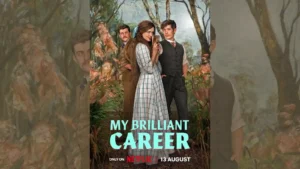
Choose My Brilliant Career for cultural representation and pilot episode quality.
Scores are out of 5. Missing scores mean missing review evidence, not a missing feature.
The history is mainly a comic backdrop; critics who expect substantive instruction instead find superficial treatment of events.
The series can spark curiosity about Australian literature and history; one viewer specifically said it pushed them to learn more about Australian writing.
Reactions range from delighted chuckling to disappointment; the strongest material cannot persuade everyone that the full season is worthwhile.
Most takes find the series lively, fun, and highly watchable, even when they criticize its romance-heavy or modernized choices.
One critic doubts that seven episodes can sustain the limited comic premise without extensive padding.
Six episodes is widely seen as the right size: compact, filler-free, and short enough not to overstay its welcome.
Satire about race and gender generates different reactions, including concerns that certain jokes pull their punches or punch down.
First Nations, Chinese-Australian, gay, and female perspectives expand the period setting in ways many critics found thoughtful and resonant, though a few wanted some side stories developed further.
The opener contains a notable presidential introduction, but its lengthy, repetitive gags leave some critics unimpressed.
The premiere makes a strong impression through Sybylla’s personality, plot reversals, and modern feminist direction, even with some structural roughness.
The recurring premise becomes tiring when sketches pile up, making this a less compelling show to watch in one long sitting.
The six-episode run is easy to keep watching, helped by strong relationships, lively pacing in the most positive takes, and a compact format.
Tighter cutting might have rescued sluggish sketches that continue long after the first punchline.
Editing draws mixed reactions: early time jumps can feel jarring, while the finale is praised for a nuanced, show-don’t-tell construction.
Several sketches linger after their central gag has landed, and drawn-out scenes or transitions sap the comic momentum.
Pacing is often praised as brisk and engaging, though the premiere’s rhythm and some structural choices receive occasional criticism.
Sharp improvisational exchanges and a few clever setups compete with thin gags, repeated routines and sketches that struggle to develop.
The writing is often praised as sharp, witty, polished, and thematically smart, though occasional exposition and reduced subtlety draw criticism.
Short setups lack the layered, converging stories that made Curb memorable, although a handful of vignettes find unexpected ideas.
The coming-of-age story is usually praised as witty, bold, and satisfying, though detractors argue the romance can dilute the sharper ambition-and-independence focus.
A small set of gags repeated across episodes leads to growing fatigue, especially among less forgiving viewers.
Opinions split on pace. Some find the progression brilliant and thematically intentional, while others complain of sluggish stretches or a finale that drags.
A familiar stream of petty grievances produces genuine laughs in standout sketches, but plenty of critics find the punchlines predictable or simply unfunny.
Its irreverent comedy and Sybylla’s chaotic energy give the period setting a light, modern pulse that several viewers found refreshing.
Tonal consistency receives qualified attention, with different reactions to how it works within the historical sketch format.
At its best, the show balances intelligence, lightness, and messy youthful energy; the syrupier finale and heightened modern touches can make the tone feel less controlled for some viewers.
Improvised exchanges sometimes sparkle, but nagging complaints can get reiterated without adding a fresh comic turn.
The language often lands as sharp, witty, authentic, and restrained, but one episode review criticizes moments that over-explain characters instead of trusting the subtext.
The foul language is significant enough that one appraisal explicitly rules out younger audiences.
The language is not universally family-friendly; suggestive phrasing and TV-14 content warnings prompted caution from family-focused outlets.
Historical satire occasionally opens a pointed window onto current politics, but some critics call its contemporary attacks blunt or overly cautious.
The show’s overt feminist framing will not suit every viewer; one values-based review found its celebration of rebellion too forceful and at odds with that outlet’s worldview.
A few sequences take genuinely unexpected turns, though critics also complain that many other sketches are easy to predict.
The premiere’s romantic revelations and family betrayal are praised for keeping the story moving and entertaining.
Self-contained historical sketches permit a range of eras, but repeating the same Larry-versus-everyone scenario can flatten entire episodes.
The premiere’s format feels organic and engaging overall, but its time jumps are a noticeable source of friction.
Believable costumes and visual environments anchor the absurd stories in distinct periods of American life.
Sets, costumes, landscapes, and much of the dialogue create a convincing Australian period world, while anachronistic music and deliberately modern sensibilities make the authenticity selective rather than strict.
The old improvisational rhythms, particularly with J.B. Smoove, are responsible for some of the liveliest exchanges.
Several pairings click immediately, especially Sybylla’s key relationships and the Nell-Charlie dynamic, though one mixed review found some chemistry forced or underdeveloped.
The historical subjects do not make the show child-friendly: explicit language limits its suitability for younger viewers.
Family-oriented sources advise caution, mainly because of sexual material, suggestive language, substances, and the show’s adult themes.
Transporting Larry David into famous events is a playful hook, yet the recycling of familiar bits makes the premise feel old quickly.
The Australian setting and heroine give the series personality, but several critics think the love triangle and familiar modern-period-drama formulas blunt its originality.
The comedy ensemble is a major attraction, with a wealth of recognizable guest stars, even when the material underserves them.
Casting is widely praised, from Philippa Northeast’s central performance to Anna Chancellor and a strong ensemble that fits the heightened period tone.
An irreverent appraisal of America’s strengths and flaws sometimes offers perspective beyond the running joke.
Ambition, independence, gender expectations, money, race, and creative identity give the series substantial thematic material, though a few critics think the feminist message is either too blunt or overshadowed by romance.
Larry David occasionally shows more acting range than his expected persona, surprising at least one skeptical critic.
Performances are a major strength, with the ensemble repeatedly described as excellent, luminous, or all-in; even otherwise negative takes praise the acting.
Historical sets and locations look surprisingly polished; even some negative assessments concede the considerable work in the period recreations.
The locations and interiors are repeatedly praised as gorgeous, vibrant, and richly differentiated, with the library and estates standing out as especially considered spaces.
Elaborate, convincing period costumes help sell the absurdity of seeing familiar comedy faces in important historical situations.
The period wardrobe is a standout: lavish, beautiful, and carefully balanced between historical silhouettes and a slightly modern edge.
For fans, Larry’s reliably prickly personality carries even weaker segments, though that familiarity will not win everyone over.
The cast of characters is easy to become attached to, with Sybylla, Nell, and the broader women’s ensemble singled out as especially appealing.
The finale leaves a small accountability gap around Sybylla’s father: one critic wanted a clearer acknowledgment or thank-you after she helps resolve his debt.
Inclusive casting is treated as part of the story rather than decoration, with race and social position meaningfully shaping characters’ lives.
Larry remains recognizably petty and argumentative in every century; that constancy is a delight to some and a tiresome limitation to others.
Sybylla and many supporting characters gain meaningful nuance, although a few critics find the suitors comparatively shallow or wish the heroine’s internal insecurity were explored more deeply.
One ending-focused critique finds a small timeline/continuity problem in how Sybylla’s completed writing and her decision about marriage are presented.
The coming-of-age journey earns strong emotional investment, with the gradual relationships and Sybylla’s self-discovery repeatedly described as moving.
The ending is broadly seen as purposeful and satisfying, but not unanimously: some find it syrupy, bittersweet, or slowed by its structure.
The ensemble often gets meaningful side stories and distinct motivations, but some critics wanted more room for Nell, other marginalized characters, and secondary plots to develop.
Half-hour installments can hold multiple different periods, although one critic argues the sketches could be edited into far less time.
The adaptation preserves the novel’s rebellious core for many critics while freely modernizing characters, romance, and tone; a minority argues those changes weaken the original feminist emphasis.
The unofficial continuation of the Curb persona pleases some longtime fans but feels like self-recycling to critics wanting a fresh direction.
For viewers who like period romance and coming-of-age drama, the series is frequently described as a standout, including by some critics who normally dislike the genre.
The idea of dropping a modern curmudgeon into foundational American moments sounds amusing, but critics disagree about how much mileage it has.
Historical preservation receives qualified attention, with different reactions to how it works within the historical sketch format.
Period hair, wigs and makeup contribute convincingly to the historical recreations and support the visual jokes.
Despite its hopeful tone, the story’s economic pressures and difficult tradeoffs are praised for giving Sybylla’s choices a practical grounding.
The slow-burn connections can be charming and convincing, but the expanded love triangle is also the adaptation’s most divisive choice and can overshadow Sybylla’s ambition.
The final episode is singled out as a reason to check back in despite the earlier formula fatigue.
Expanding the familiar persona across centuries supplies an appealingly larger playground, without necessarily changing Larry’s behavior.
Reactions depend heavily on expectations: family-oriented sources dislike the suggestive and explicit material, while other critics think the show is comparatively restrained and usefully frank.
The visual effects help create plausible historical backdrops and are treated as part of the polished presentation.
Family-focused coverage cautions that the series’ sex, substances, language, and smoking make it a questionable choice for younger teens.
The show is positioned as highly accessible to modern period-drama fans, with strong recommendations and a contemporary tone that several critics expect younger viewers to embrace.
Critical reception is described as exceptionally strong, with one article explicitly calling the series a hit with critics.
Recognizable former collaborators and new guests bring anticipation and occasional sparks; several critics wish the cameos had better jokes.
Philippa Northeast is the clearest consensus strength, repeatedly called magnetic, radiant, convincing, high-voltage, and perfectly suited to Sybylla.
The anachronistic pop soundtrack is one of the clearest taste splits—often praised as energetic and cleverly reworked, but sometimes called jarring or damaging to period immersion.
The ensemble is consistently strong, with Anna Chancellor, Kate Mulvany, Christopher Chung, Jake Dunn, Sherry-Lee Watson, and others adding warmth, humor, and texture.
A rewatch can deepen appreciation of the finale’s editing and nuance, and one critic said the ending made them want to start the series again immediately.
Australian landscapes, sun-drenched estates, and bold period styling make the series visually striking, even for critics who find some modern flourishes excessive.
Distinct homes, landscapes, class spaces, and color palettes give the series a vivid sense of place, especially across Possum Gully, Caddagat, and Five Bob Downs.

Best for sharp adult humor, magnetic chemistry and a deeply satisfying farewell. Skip it if familiar will-they-won’t-they plotting or deliberately messy leads are dealbreakers.
Pros: humor, writing quality

Choose Widow’s Bay for its dark laughs, richly haunted island and memorable ensemble. Skip it if you need straightforward scares, rapid answers to every mystery or a completely resolved finale.
Pros: humor, genre satisfaction
Cons: ending satisfaction, season pacing

Choose Season 15 for warm, character-driven comedy, meaningful growth, and a finale that rewards longtime fans. Skip it if the short binge format, uneven replacement voices, or occasional clumsy commentary...
Pros: franchise connection, character development

Best for sharply acted, compassionate, high-pressure hospital drama. Skip it if graphic procedures unsettle you or you need a neatly resolved season finale.
Pros: character development, acting performance
Cons: character consistency, dialogue quality