
Life, Larry, and the Pursuit of Unhappiness, Season 1
Where It Has the Edge
No clear scored advantage over the other product.

Scorata scores summarize analyzed review evidence on a 1–5 scale; they are not laboratory measurements or a simple average of customer star ratings. Feature scores summarize the reviews covering that feature. The overall score averages feature scores within each review, then combines review averages. When both expert and customer evidence are available, those two groups receive equal weight. Products can have different review coverage, so small score gaps do not establish a winner.
Recommendations prioritize important features for the category, with a score of at least 3.5, a gap of at least 0.25 points and at least two supporting reviews per product. Features with widely varying scores or broad connectivity contexts are excluded from recommendations. These safeguards do not establish statistical significance.
Quick verdict
The available evidence supports the recommendation below, but does not establish an overall winner. Check the remaining features against your priorities.
There is not enough comparable review evidence to recommend Life, Larry, and the Pursuit of Unhappiness, Season 1 over the other product.
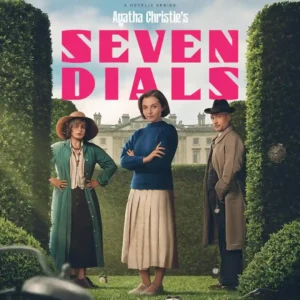
Choose Agatha Christie’s Seven Dials, Season 1 for production design.
No clear scored advantage over the other product.
Scores are out of 5. Missing scores mean missing review evidence, not a missing feature.
The foul language is significant enough that one appraisal explicitly rules out younger audiences.
Strong language is very limited, with virtually no profanity beyond a few mild religious exclamations. The restrained language helps the show remain relatively approachable.
Satire about race and gender generates different reactions, including concerns that certain jokes pull their punches or punch down.
The dinner-table material around colonialism and war adds poignancy and gives Dr. Matip’s story greater weight. Its broader political handling is more divisive, but this specific thread landed emotionally for one critic.
The historical subjects do not make the show child-friendly: explicit language limits its suitability for younger viewers.
Compared with many streaming murder mysteries, the content is relatively restrained. Blood and peril remain, but limited sex and language make it more approachable for cautious households.
Believable costumes and visual environments anchor the absurd stories in distinct periods of American life.
The 1920s setting is visually convincing in places, but modern behavior, dialogue, styling, and faux-English touches repeatedly break the illusion. When the production leans on lived-in period detail rather than overt modernization, it fares much better.
The recurring premise becomes tiring when sketches pile up, making this a less compelling show to watch in one long sitting.
The three-part format is widely seen as easy to binge, with several critics describing it as a one-sitting watch. Even a negative review conceded that its short runtime gives it some background-viewing appeal.
Several sketches linger after their central gag has landed, and drawn-out scenes or transitions sap the comic momentum.
Pacing varies noticeably by reviewer and episode. The show can feel brisk and propulsive, but the opener and middle stretch are repeatedly criticized for filler, exposition, or sluggishness.
Self-contained historical sketches permit a range of eras, but repeating the same Larry-versus-everyone scenario can flatten entire episodes.
The three-part structure works well for some viewers because it gives the mystery room without losing momentum. Others note that the episodes still behave like sections of a single feature film.
One critic doubts that seven episodes can sustain the limited comic premise without extensive padding.
Three episodes sounds ideal on paper, but reviewers split on whether the story justifies all three hours. Some call the length perfect for a binge, while others insist the material belongs in a much shorter film.
A few sequences take genuinely unexpected turns, though critics also complain that many other sketches are easy to predict.
Twists are a major weakness in many reviews because suspects or reveals can be spotted too early. A few critics enjoy the final surprises, but predictability is one of the most repeated complaints.
The opener contains a notable presidential introduction, but its lengthy, repetitive gags leave some critics unimpressed.
The opener has a promising setup but uneven execution. Some critics like its initial mystery and atmosphere, while others find Bundle underdeveloped or the pacing too slow.
The unofficial continuation of the Curb persona pleases some longtime fans but feels like self-recycling to critics wanting a fresh direction.
The explicit push toward a larger Seven Dials universe lands badly with the critic who focuses on it, who sees the franchise setup as intrusive rather than exciting.
A small set of gags repeated across episodes leads to growing fatigue, especially among less forgiving viewers.
At the season level, pacing is more often criticized than praised. Even where the story moves quickly, detractors feel the overall three-hour shape is stretched, while one positive review credits the expeditious pace for keeping weaker plotting entertaining.
Tighter cutting might have rescued sluggish sketches that continue long after the first punchline.
Editing contributes to the show’s modernized feel in ways that do not always suit the 1920s material. One critic specifically disliked how the visual editing pulled the period piece toward a contemporary look.
Half-hour installments can hold multiple different periods, although one critic argues the sketches could be edited into far less time.
Hour-long episodes can make the material feel stretched, with one critic arguing the same story would have worked better as a tighter feature.
Improvised exchanges sometimes sparkle, but nagging complaints can get reiterated without adding a fresh comic turn.
Dialogue is a major split point: some critics enjoy the witty, old-fashioned banter, while others find it plot-heavy or jarringly modern. The best exchanges add charm; the weakest feel like exposition.
A familiar stream of petty grievances produces genuine laughs in standout sketches, but plenty of critics find the punchlines predictable or simply unfunny.
The dry British wit and character banter can be genuinely funny, especially around Battle and Bundle. Slapstick and overly snarky comedy are more divisive, with some critics saying they drain menace or clash with the story’s darker turns.
Sharp improvisational exchanges and a few clever setups compete with thin gags, repeated routines and sketches that struggle to develop.
The screenplay draws opposite reactions: one critic praises how clearly it motivates Bundle, while another faults it for lacking narrative discipline. The script’s character focus works better than its mystery construction for some viewers.
Tonal consistency receives qualified attention, with different reactions to how it works within the historical sketch format.
Tone is the show’s most consistent criticism. The mixture of cozy comedy, grief, espionage, modern attitudes, and melodrama often feels uneven or off-kilter, even to reviewers who otherwise enjoy the series.
Historical satire occasionally opens a pointed window onto current politics, but some critics call its contemporary attacks blunt or overly cautious.
The added political material sharply divides critics. Some welcome the contemporary themes of empire, war, and gender, while others find the 21st-century framing forced and out of place in Christie’s lighter story.
The final episode is singled out as a reason to check back in despite the earlier formula fatigue.
Episode three is often considered the strongest installment, with several critics saying it restores momentum or redeems the mystery. A harsh outlier found the finale disastrous, so praise for the episode does not always extend to the ending itself.
Transporting Larry David into famous events is a playful hook, yet the recycling of familiar bits makes the premise feel old quickly.
The show’s effectiveness is not credited to originality; one favorable reviewer explicitly says the story itself is not what makes it work.
The old improvisational rhythms, particularly with J.B. Smoove, are responsible for some of the liveliest exchanges.
Chemistry is a standout, especially around Bundle’s pairings with Gerry, Battle, and Lady Caterham. The ensemble’s playful back-and-forth gives the mystery extra warmth even when the plot falters.
Short setups lack the layered, converging stories that made Curb memorable, although a handful of vignettes find unexpected ideas.
The central story is the biggest structural weakness in the overall response. Admirers find enough character-driven entertainment to enjoy, but many critics call the mystery dull, minor, poorly shaped, or simply not strong enough for three hours.
An irreverent appraisal of America’s strengths and flaws sometimes offers perspective beyond the running joke.
Themes of war, grief, modernity, gender, and empire give the adaptation more weight than a simple cozy caper. Some critics admire that ambition, while others feel there are too many ideas for three episodes to explore properly.
Reactions range from delighted chuckling to disappointment; the strongest material cannot persuade everyone that the full season is worthwhile.
Overall enjoyment is mixed but leans watchable: admirers call it a treat, fun escapism, or a satisfying quick mystery, while detractors find it dull, pedestrian, or lifeless. The cast and visuals often keep it afloat when the mystery does not.
Elaborate, convincing period costumes help sell the absurdity of seeing familiar comedy faces in important historical situations.
Costumes range from immaculate and whimsically period-styled to disappointingly modern or generic. The strongest praise goes to the overall lavishness, while detractors feel Bundle’s styling weakens the 1920s illusion.
Historical sets and locations look surprisingly polished; even some negative assessments concede the considerable work in the period recreations.
The production design is one of the strongest consensus wins: mansions, country estates, nightclubs, trains, and landscapes are repeatedly described as beautiful, sumptuous, or stunning.
Larry David occasionally shows more acting range than his expected persona, surprising at least one skeptical critic.
The cast is one of the show’s most consistent strengths, with several critics calling the ensemble excellent, pitch-perfect, or worth watching on its own. A smaller group found the younger performances uneven or underpowered.
For fans, Larry’s reliably prickly personality carries even weaker segments, though that familiarity will not win everyone over.
Bundle is consistently described as feisty, curious, determined, and easy to root for. Even mixed reviews often treat her personality as the main reason to keep watching.
The series stays comparatively restrained for a murder mystery, avoiding explicit material while still showing death and some blood. That makes it more approachable for viewers who want a milder crime drama.
Appeal is sharply split: some coverage describes viewers devouring the series, while other reception reporting points to a much colder audience response. Even critics questioning the target audience acknowledge the show’s easygoing accessibility.
Critical reception trends positive but not enthusiastic. Coverage frames the show as broadly liked by critics, while still highlighting substantial reservations about story and execution.
Recognizable former collaborators and new guests bring anticipation and occasional sparks; several critics wish the cameos had better jokes.
The comedy ensemble is a major attraction, with a wealth of recognizable guest stars, even when the material underserves them.
Green-screen work is a recurring visual weakness in the harshest reviews, where it is described as obvious enough to break immersion in the period setting.
Larry remains recognizably petty and argumentative in every century; that constancy is a delight to some and a tiresome limitation to others.
Bundle’s more emotional, grief-driven characterization gives her stronger motivation, but not everyone likes the tradeoff. One critic found the character writing weak, while another saw the added emotional focus as a meaningful improvement.
The photography divides opinion more than the production design: Ronda, Chimneys, trains, and period interiors can look gorgeous, but some critics dislike flat yellow lighting, portrait-style blur, or other modern visual choices.
The cliffhangers work extremely well for viewers who click with the series, pushing one episode directly into the next and strengthening its binge appeal.
The harshest reviews blame the direction for frustrating or inexplicable creative choices, especially when potentially interesting framing gives way to more mundane execution.
At its best, the show balances grief, danger, comedy, and family tension without losing its caper energy. Positive reviews especially like the heart and high-stakes drama around Bundle and Lady Caterham.
Adding grief and family trauma gives the mystery more emotional weight, but the effect is divisive. Some find the added depth moving, while others think it makes a light Christie story unnecessarily angry or tragic.
The ending is one of the most divisive elements. Some viewers find the payoff satisfying, but many critics dislike the changed reveal, unresolved threads, or franchise setup and see the finale as a major weakness.
The ensemble often feels overcrowded or unevenly used. Several critics found semi-prominent characters forgotten, blurred together, or introduced without enough time to matter.
The adaptation takes substantial liberties, and reactions depend on whether those changes feel purposeful. Some praise the emotional depth and Christie spirit, while purists and harsher critics think the changes undermine the novel’s tone or ending.
As a cozy or light mystery, the series often works better than it does as a demanding whodunit. Fans of breezy Christie-style entertainment may enjoy it, but critics seeking a sharper puzzle or more menace are less satisfied.
The idea of dropping a modern curmudgeon into foundational American moments sounds amusing, but critics disagree about how much mileage it has.
Historical preservation receives qualified attention, with different reactions to how it works within the historical sketch format.
The Seven Dials organization is an intriguing idea that never feels fully developed. Its buildup suggests a weightier secret society than the eventual explanation provides.
Period hair, wigs and makeup contribute convincingly to the historical recreations and support the visual jokes.
The central mystery is frequently criticized as either overcomplicated, choppy, or too loosely connected. A few critics appreciate the streamlined adaptation, but the overall pattern points to clarity problems.
Some filmmaking choices weaken immersion, including portrait-style blur and the lead’s very youthful appearance. Other unusual camera techniques add charm, so the realism concerns are noticeable rather than universally damaging.
Despite mixed opinions on season one, many reviewers want another Bundle adventure. Enthusiasm for a continuation is driven largely by the lead character and cast, though one critic questions whether this first case is strong enough to sustain a franchise.
Expanding the familiar persona across centuries supplies an appealingly larger playground, without necessarily changing Larry’s behavior.
Sexual content is restrained, with promiscuity kept to a minimum. That restraint contributes to the show feeling more approachable than many streaming murder mysteries.
The visual effects help create plausible historical backdrops and are treated as part of the polished presentation.
Suspense works well for viewers who respond to the atmosphere, sound, and brisk stretches, but multiple critics say the low stakes, obvious culprit, or heavy comedy reduce tension. The result is more intriguing than consistently gripping.
The master-villain material is a low point for the harshest critic, who finds the reveal melodramatic, cartoonish, and far too predictable.
Violence includes onscreen deaths, corpses, and some blood, but the camera generally avoids dwelling on gore. The restraint keeps the murder-mystery content from becoming excessively graphic.
The history is mainly a comic backdrop; critics who expect substantive instruction instead find superficial treatment of events.
Rewatch interest is polarized. One enthusiastic critic wanted to start again immediately, while negative reviewers describe the series as forgettable and easy to move on from.
The principal cast is a major selling point, with the lead performances repeatedly singled out as engaging and high quality. Mia McKenna-Bruce in particular anchors the show’s appeal.
Supporting performances are unevenly served by the material. Several critics praise the ensemble and individual scene-stealers, while others feel good actors are sidelined, blurred together, or wasted.
Ticking clocks, dripping water, and other small effects create a chilling atmosphere and strengthen the mystery mood.
The show can be gorgeous, whimsical, and richly atmospheric, especially in its estates and period settings. At the same time, flat lighting, modern blur, and inconsistent visual choices keep the style from winning universal praise.

Best for sharp adult humor, magnetic chemistry and a deeply satisfying farewell. Skip it if familiar will-they-won’t-they plotting or deliberately messy leads are dealbreakers.
Pros: humor, writing quality

Choose Widow’s Bay for its dark laughs, richly haunted island and memorable ensemble. Skip it if you need straightforward scares, rapid answers to every mystery or a completely resolved finale.
Pros: humor, genre satisfaction
Cons: ending satisfaction, season pacing

Choose Season 15 for warm, character-driven comedy, meaningful growth, and a finale that rewards longtime fans. Skip it if the short binge format, uneven replacement voices, or occasional clumsy commentary...
Pros: franchise connection, character development

Best for sharply acted, compassionate, high-pressure hospital drama. Skip it if graphic procedures unsettle you or you need a neatly resolved season finale.
Pros: character development, acting performance
Cons: character consistency, dialogue quality