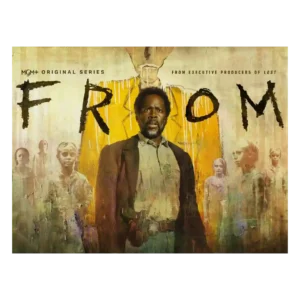

From, Season 4
Where It Has the Edge
No clear scored advantage over the other product.

Scorata scores summarize analyzed review evidence on a 1–5 scale; they are not laboratory measurements or a simple average of customer star ratings. Feature scores summarize the reviews covering that feature. The overall score averages feature scores within each review, then combines review averages. When both expert and customer evidence are available, those two groups receive equal weight. Products can have different review coverage, so small score gaps do not establish a winner.
Recommendations prioritize important features for the category, with a score of at least 3.5, a gap of at least 0.25 points and at least two supporting reviews per product. Features with widely varying scores or broad connectivity contexts are excluded from recommendations. These safeguards do not establish statistical significance.
Quick verdict
The available evidence supports the recommendation below, but does not establish an overall winner. Check the remaining features against your priorities.
There is not enough comparable review evidence to recommend From, Season 4 over the other product.
Choose The Gentlemen, Season 2 for ending satisfaction and visual style.
No clear scored advantage over the other product.
Scores are out of 5. Missing scores mean missing review evidence, not a missing feature.
Critic appeal is mixed. Scores and verdicts range from near-raves calling it the best season yet to harsh dismissals labeling it the weakest or worst so far.
Coverage notes that critics responded more favorably to Season 2 than Season 1, with strong aggregate scores and repeated praise for the darker character work.
Audience appeal is polarized but durable. The show clearly keeps a dedicated theory-driven audience engaged, while some critics say they are fed up or nearly ready to quit.
Audience response is mixed in the numbers: Season 2 rebounded strongly in week two and topped charts, but several writers flagged a steep decline from Season 1.
The drama can be moving, but not every emotional beat earns the same investment. Underdeveloped characters make some deaths land with less force than the season intends.
The move toward straighter, darker drama works for many reviewers, who find the higher stakes and character consequences more compelling than before.
A few character choices strain credibility, especially people trusting Sophia too easily or Tabitha resisting revelations after everything she has seen. Some characters also flatten into repetitive arguing.
Costume choices and performance details are used to keep evolving characters visually coherent with their worlds. Eddie’s transformation is especially praised for feeling gradual rather than abrupt.
The finale lands as exciting but uneven. Some enjoyed the set pieces and setup for the final season, while disappointed voices felt it ended abruptly or played more like a mid-season pause.
The finale earns strong approval for completing a major stage of Eddie’s transformation while delivering a memorable, violent setup for what comes next.
Episode structure gets mixed reactions. A few viewers point to focused A/B plotting as a strength, while others say the finale and several arcs feel padded, abrupt, or unresolved.
The best episodes are praised for making separate threads serve the larger plot, and late turns can elevate otherwise merely solid chapters.
The season keeps delivering shocking turns, especially around the Man in Yellow, Fatima, and the finale. That unpredictability remains a core part of the show’s appeal.
Betrayals and shocks add momentum, but some reviewers feel major turns arrive before enough emotional groundwork is laid.
Bingeability may help the season. One viewer who watched week to week says the pacing issues would be less noticeable as a binge, while another recommends waiting to binge if Season 5 repeats the same pattern.
Multiple reviewers describe the eight-episode run as easy to tear through in a weekend. Even critics of the plotting expect viewers to keep watching quickly.
Episode length comes up mainly around the finale. One viewer wanted the final episode to run longer so it could deliver a bigger conclusion.
Hour-long episodes divide opinion: one review finds the series overlong, while another calls the overall commitment manageable for a weekend binge.
Season length feeds the broader pacing concern. Ten episodes can feel stretched when the strongest material seems concentrated into fewer hours.
Eight episodes feel manageable to some viewers, but one critic argues the season is still longer than its material needs because several side quests drag.
Acting is one of the clearest strengths. Harold Perrineau, Julia Doyle, Chloe Van Landschoot, Kaelen Ohm, and the wider ensemble are repeatedly described as strong or exceptional.
Acting is a major strength overall, though one dissenting review found several performances wooden or one-note. Most praise centers on the leads and a deep supporting bench.
Emotional impact is strong when the season focuses on grief, sacrifice, father-son pain, and goodbye scenes. Specific deaths and reunions come through as heartbreaking or visceral.
The season lands harder emotionally than its predecessor, with betrayal, grief and Eddie’s moral decline adding weight. Some rushed relationships, however, blunt moments that might otherwise hit harder.
Character work is one of the season’s strongest positives when it focuses on arcs like Jade, Donna, Victor, Boyd, Sophia, and Fatima. The main complaint is that some favorites are sidelined or given less satisfying follow-through.
Eddie’s evolution from reluctant participant to ambitious crime boss is one of the most consistently praised elements. Reviewers also note stronger growth for several supporting characters.
Individual episodes can work very well when they move with urgency, especially the premiere and standout horror installments. Complaints focus on episodes that pack the excitement at the edges and let the middle sag.
Individual episodes vary sharply. Some action-heavy chapters fly, while the falcon side quest and a few middle episodes are criticized as slow or meandering.
Cliffhangers remain effective at keeping people talking and anticipating the final season. Some viewers enjoy the watchability they create, while others wish the ending had shown more immediate panic or consequence.
The season-ending cliffhanger is described as massive and shocking, creating strong forward momentum into the already confirmed third season.
Dialogue is sharply split. At its best, the exchanges feel unusually strong for modern TV; at worst, they turn into repetitive arguing, exposition, and momentum-draining conversations.
Dialogue is divisive: some praise its clipped, zippy confidence, while harsher reviews call it clumsy, over-written or trailer-like rather than natural.
The camera work stands out in panic-heavy sequences, especially close, claustrophobic scenes that put viewers inside the chaos. Some broader criticism says cinematography is not always matched by script discipline.
The season is widely praised for lush, beautiful photography, from English estates to northern Italy and Lake Maggiore. Several reviewers rank the visual presentation among its strongest assets.
Season 4 is highly divisive as a story: the strongest responses praise its darker, more purposeful mythology, while detractors say too many plots stall, pile up, or go nowhere.
Story reactions range from ecstatic to sharply negative. The strongest consensus is that Eddie’s darker arc works, while the sprawling criminal web and side quests can make the season feel uneven.
Interest in the final season remains high despite frustration. Even critics who are skeptical often say they will keep watching to see how the endgame resolves.
Interest in more episodes is high: several reviewers say they cannot wait for Season 3, and news coverage treats the early renewal as reassuring and deserved momentum.
The season finale delivers danger, deaths, and big visual moments, earning praise as a strong closer from some. Others liked pieces of it but felt the larger season made the ending carry too much weight.
The final episode is praised for violent payoff, a major character transformation and a provocative setup for the next season.
The season still has bold ideas, from Fatima’s transformation to new mythology possibilities. Some viewers find those swings exciting, while one sharply negative take argues the premise has not been used imaginatively enough.
The season earns praise for reinventing itself into something darker and more focused, though one harsh review sees it as too derivative of Ritchie’s familiar formula.
Screenplay criticism centers on missed efficiency and imbalance. The finale has strong moments, but the script is faulted for not matching the care put into music and atmosphere.
The screenplay draws the harshest criticism from negative reviewers, who call it over-written and under-revised. Positive coverage focuses more on character arcs than script polish.
As horror-mystery television, Season 4 satisfies many fans with darker scares, bigger mythology, and an ambitious late-series escalation. The harshest dissenters still question whether the genre promise is paying off.
Fans of stylish British gangster drama are likely to find plenty to enjoy. Enthusiastic reviews call it a refreshing and highly satisfying return to Guy Ritchie’s crime territory.
Lore expansion is a consistent hook. Cycles, reincarnation, the Man in Yellow, town architecture, and monster origins all add intrigue, though they are not always fully resolved.
New mythology and mysticism around Bobby and Stanley add unusual lore to the crime story. One positive review finds that weirdness surprisingly effective in clarifying the season’s larger vision.
The score is used effectively in emotional and tense scenes. The piano-backed goodbye and the music’s bigger moments are called out as highlights.
The score is used effectively to intensify tense scenes, with one review highlighting its droning presence under volatile action.
The season’s themes of hope, despair, humanity, and survival receive strong praise. Its quieter character-driven material works best when it connects the town’s horror to emotional endurance.
Season 2 goes deeper into ambition, class, power, legacy and moral corrosion. Even reviewers who miss the lighter comedy often acknowledge the richer thematic intent.
Answers are the biggest fault line. Season 4 finally delivers major revelations in places, but too many core mysteries still feel cloudy this late in the series.
Clarity is uneven: some reviewers find the season easier to follow than Season 1, while others say the many deals, factions and MacGuffins overload the story.
The veteran ensemble chemistry is a bright spot, especially in pressure-heavy scenes. Boyd and Jade’s dynamic earns particular praise as a pairing that gives the season fresh energy.
Eddie and Susie are repeatedly called the show’s beating heart, with Theo James and Kaya Scodelario praised for charged, layered chemistry. Reviews are most enthusiastic when the pair share the screen.
The horror and tension still work strongly for many viewers, especially when the season leans into darkness, tunnels, monsters, and dread. A minority feel the fear factor has faded outside the biggest set pieces.
Suspense is a consistent strength once the season gets moving, especially in the forest action, the home assault and the back half’s betrayals. Several reviewers describe late episodes as tense or heart-pounding.
The finale raises the violence level with major deaths and disturbing monster incidents. The bloodshed is treated as a meaningful escalation rather than background gore.
The season is much bloodier, with beheadings, torture and brutal finales. Positive reviewers say the gore remains exciting rather than over-the-top, while mature-audience warnings are consistent.
Pacing is the most repeated concern. The season can feel relentless and coherent at its best, but it also drags, spins in circles, or saves too much momentum for the end.
Pacing is one of the clearest fault lines: many praise the strong back half, while several reviews criticize a tentative first half, meandering detours or rushed subplots.
Direction is praised when the season misleads viewers, stages shocks, and moves toward reveals. The premiere earns especially strong approval for how its direction handles the Sophia twist.
Direction is praised for retaining Guy Ritchie’s kinetic visual grammar while allowing darker material to breathe. Eran Creevy and Nick Rowland are also credited with fitting smoothly into that style.
Editing receives a narrow but positive note for the premiere’s reveal, though another viewer thinks simple editing fixes could improve flow elsewhere.
Editing is praised for playful energy and feverish momentum, particularly when events spiral quickly or the show shifts into heightened action.
Rewatch value is especially strong for the premiere. Knowing the Sophia reveal changes how earlier scenes play, making at least that episode rewarding to revisit.
The darker, more brutal tone makes Season 2 less immediately rewatchable for at least one reviewer, especially compared with the lighter first season.
Entertainment value remains high for fans who enjoy chaos, theories, and big reveals. Even with flaws, the show’s momentum and addictive quality keep people engaged.
Most reviewers find Season 2 highly entertaining despite structural complaints. The mix of crime, absurdity, style and escalation keeps even uneven episodes watchable.
The visual style is strongest when the town itself turns hostile: black skies, red-light dread, and deliberate framing make the supernatural threat feel immediate.
The season’s glossy, tailored visual identity remains a major draw, with lush landscapes, stately interiors and expressive wardrobe choices carrying much of the atmosphere.
The show’s environments still create a disturbing, claustrophobic atmosphere. The production design helps the town feel oppressive and tied to the mystery rather than like a generic horror backdrop.
Production design is a standout, pairing manor houses, villas, wine, art and criminal spaces with a polished old-money aesthetic. Reviewers repeatedly praise the sets and locations.
World-building continues to deepen through cycles, rituals, systems, and town mythology. Fans of the mystery-box side find plenty to chew on, even when the rules remain incomplete.
The story expands across Italy, politics and new criminal factions with mixed results. Many find the growth organic and exciting, while others think the international scale spreads the show too thin.
The core cast remains a major reason to watch, with Boyd, Jade, and Tabitha receiving especially strong attention. Harold Perrineau’s work as Boyd is repeatedly singled out as intense and compelling.
The central performances are a major consensus strength, especially Theo James’s darker Eddie and Kaya Scodelario’s controlled Susie. Ray Winstone also draws repeated praise for Bobby’s authority.
The supporting bench is widely praised, especially Scott McCord, Julia Doyle, Chloe Van Landschoot, and Elizabeth Saunders. Their work often stands out even when the writing around them frustrates.
The supporting cast is a major asset, with Vinnie Jones, Hugh Bonneville, Daniel Ings, Ray Winstone and others repeatedly singled out for memorable turns.
Action is consistently praised as propulsive, nerve-wracking and well staged, especially the chase and late-season home assault. The violence-heavy set pieces rarely feel monotonous to positive reviewers.
The tight focus on Eddie, Susie and Bobby can keep the story clear, but several critics dislike how Season 2 sidelines Susie or beloved comic supporting players for long stretches.
Susie and Geoff attract especially warm responses, with Susie called iconic and Geoff a secret weapon. Their competence, loyalty and humanity make them standouts even in a morally compromised ensemble.
Strong language, drug-related crime, beheadings, torture and adult themes make this a poor fit for family viewing, even when the comedy is playful.
The dry, absurd humor remains a strength, but the darker shift means there is less comic energy than in Season 1. Several critics specifically miss Freddy and Jimmy’s lighter chaos.
Crude British slang and strong language are part of the show’s identity. Some reviewers enjoy that texture, while the mature language helps keep the season firmly adult-oriented.
Makeup feedback is mostly absent, but one viewer sharply criticizes a wig. That isolated complaint makes this a narrow negative rather than a broad pattern.
The House of Lords and legalization storyline gives the show room for sharp class-and-power commentary. One episode recap especially praises how criminal money collides with inherited political privilege.
Practical creature work gets a narrow positive note through the life-sized puppets, which come across as menacing. There is not enough detail to judge the whole season’s practical effects broadly.
Luxury watches and rare wines are integrated with unusual attention to character and setting rather than simply dropped in as prestige labels.
The show remains heightened and occasionally implausible, but its best episodes preserve immersion even when graphics, mysticism or outrageous criminal logistics enter the frame.
The roughly two-and-a-half-year wait is widely treated as a problem, with writers linking it to weaker launch viewership and welcoming plans for a shorter gap before Season 3.
The Eddie-Bella romance is a recurring weakness, often described as rushed, underdeveloped or unconvincing. A minority view finds Bella a fitting match, but Eddie and Susie’s connection draws far stronger enthusiasm.
One negative review finds the season oddly sexless despite its macho fantasy tone. Sexual material is otherwise not a major focus in the supplied reviews.
The season’s creature and horror imagery can still hit hard. Scarecrow and monster moments are described as brutal, terrifying, and a welcome return of missing horror energy.
One enthusiastic review considers Season 2 not only better than Season 1 but also an improvement over the original film, strengthening the television spin-off on its own terms.
The darker tone is mostly welcomed as a meaningful evolution, though some miss Season 1’s breezier comedy. The best reviews praise how seriousness and absurdity still coexist.
The new Italian threat works better for some reviewers than others. Marco brings menace and scale, but one critic finds the season’s new kingpin far less intriguing than earlier antagonists.
The season is clearly aimed at mature viewers comfortable with strong language, drug crime, violence and adult themes. Its content is presented as appropriate for that audience rather than younger viewers.
Wardrobe remains a signature strength, using tailoring, watches and accessories to communicate rank, confidence and changing identity. Season 2 is described as an elevation of an already distinctive look.
The soundtrack is praised for helping exposition and action keep moving without overwhelming the show’s darker moments.
Value for money appears only in one strongly negative subscription comment. It suggests frustration with the season’s payoff, but there is not enough broader pricing discussion to treat this as a major pattern.

Best for sharp adult humor, magnetic chemistry and a deeply satisfying farewell. Skip it if familiar will-they-won’t-they plotting or deliberately messy leads are dealbreakers.
Pros: humor, writing quality

Choose Season 15 for warm, character-driven comedy, meaningful growth, and a finale that rewards longtime fans. Skip it if the short binge format, uneven replacement voices, or occasional clumsy commentary...
Pros: franchise connection, character development

Choose The Pitt Season 2 for a gripping, realistic medical drama with superb acting and emotional depth. Skip it if graphic procedures, unresolved arcs, or slower character-driven pacing bother you.
Pros: realism, emotional impact

Best for powerhouse performances, thorny character work, and a tense revenge mystery that grows richer as it goes. Skip it if abuse, trafficking, graphic violence, or deliberately messy moral questions...
Pros: main cast performance, character development
Cons: pilot episode quality