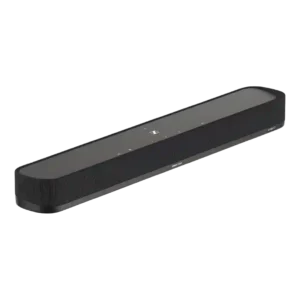
Sennheiser Ambeo Soundbar Mini
Where It Has the Edge
No clear scored advantage over the other product.

Scorata scores summarize analyzed review evidence on a 1–5 scale; they are not laboratory measurements or a simple average of customer star ratings. Feature scores summarize the reviews covering that feature. The overall score averages feature scores within each review, then combines review averages. When both expert and customer evidence are available, those two groups receive equal weight. Products can have different review coverage, so small score gaps do not establish a winner.
Recommendations prioritize important features for the category, with a score of at least 3.5, a gap of at least 0.25 points and at least two supporting reviews per product. Features with widely varying scores or broad connectivity contexts are excluded from recommendations. These safeguards do not establish statistical significance.
Quick verdict
The available evidence supports the recommendation below, but does not establish an overall winner. Check the remaining features against your priorities.
There is not enough comparable review evidence to recommend Sennheiser Ambeo Soundbar Mini over the other product.
Choose Marshall Heston 60 for Music performance and Subwoofer performance.
No clear scored advantage over the other product.
Scores are out of 5. Missing scores mean missing review evidence, not a missing feature.
Wired connectivity is the clearest hardware limitation. Reviewers repeatedly complain that the Mini has only basic physical inputs and no HDMI input or broader legacy connectivity.
The analog input and sub output make the Heston 60 unusually flexible for a compact bar, including turntable use and third-party subwoofers.
The Mini creates more width and depth than its size suggests, but height is the weak axis. Reviewers repeatedly say it sounds wider than it sounds tall.
The Heston 60 can create useful vertical scale, but height is less consistent and less expansive than its impressive horizontal width.
Virtual surround is the Mini’s headline strength. Reviewers often praise its room-filling, immersive presentation for a compact bar, while also noting it cannot fully replace discrete speakers or larger Atmos systems.
Horizontal width and motion are often excellent, but full wraparound immersion is inconsistent. Without rear speakers or dedicated height channels, some listeners still hear the action as coming mainly from the front.
TV sync can be finicky, but at least one owner was able to resolve a syncing problem after resetting the HDMI cable connection with support.
A/V sync is adjustable in the app, but one tester had to correct the delay manually at the start of a movie.
Stereo imaging and separation are mixed. Some reviewers praise width, imaging, and instrument separation, while another finds the stage only about as wide as the bar.
Spatial positioning and imaging are precise, with movement across the screen and individual elements placed clearly within the soundstage.
Bass is surprisingly strong for the size, but reviewers split on whether the bar alone is enough. The Ambeo Sub can transform movie impact, though it is expensive and creates some customer reliability complaints.
The Heston 60 has enough bass to work well alone, while the optional Heston Sub 200 adds deeper cinematic impact. The matching sub is useful but expensive, and a few testers wanted even more power.
Low-volume use is a good fit for bedrooms and apartments. Reviewers like its full-bodied sound at bedroom volumes, voice enhancement, and night-mode tools for late viewing.
Voice mode helps keep speech intelligible at lower listening levels or in tricky rooms without requiring high overall volume.
Format support is a major strength: reviewers repeatedly praise Dolby Atmos, DTS:X, MPEG-H, Sony 360 Reality Audio, and codec visibility. Customers who care about spatial music particularly like that Sennheiser includes more than just Dolby Atmos.
Support for both Dolby Atmos and DTS:X is a meaningful strength, especially against compact rivals that omit DTS:X.
Bluetooth works, but codec quality is a limitation for serious listening. One reviewer says SBC is the most compressed option and that wireless Bluetooth audio is not as crisp as eARC.
Broad Bluetooth codec support adds flexibility and helps the Heston 60 stand out from more limited compact rivals.
Smart assistant support is broad, with Alexa built in and Google Assistant support through compatible devices. Reviewers treat it as a convenience rather than the main reason to buy.
There is no built-in voice assistant. Some testers see that as a minor omission, while others simply consider it something to know before buying.
Most reviewers like the Smart Control app, calling it logical, stable, comprehensive, and easy to use. Customer feedback is sharply mixed because one subwoofer user says the app broke the calibration experience.
The Marshall app is capable but inconsistent. Some testers found it stable and responsive, while others hit pairing failures, slow reconnects, loading delays, freezes, and small bugs.
Music performance is more divisive than movie sound. Several reviewers and customers enjoy music clarity and spatial tracks, while others say stereo upmixing can become vague or that the bar is not ideal for music lovers.
Music performance is a standout strength, with strong energy, clear vocals and engaging instrument separation. Spatial mixes tend to fare better than plain stereo in the most critical listening.
Smart features are broad for a compact soundbar, including app control, streaming services, calibration, voice support, format feedback, and sound modes. They add real flexibility when the app behaves well.
A strong mix of connectivity, streaming options, room tuning and app controls gives the Heston 60 more flexibility than a basic TV-only soundbar.
EQ and sound-mode customization are well liked. Reviewers point to presets, adjustable Ambeo levels, center controls, and per-mode tuning as useful without becoming overwhelming.
The five-band EQ and mode-specific tuning give useful control over tonal balance and let owners work around some of the preset limitations.
On-device controls cover the essentials and add convenience alongside the remote, app, and voice options. The only real concern is the feel of touch-sensitive buttons.
The top-panel controls are tactile, clearly labeled and intuitive, giving useful access to core functions without opening the app.
Bluetooth is appreciated as a convenient connection option, and customers like using the bar with phones and tablets. Reviewers still tend to prefer Wi-Fi, AirPlay, Chromecast, or HDMI for best quality.
Bluetooth phone hookup is easy and adds a convenient alternative to Wi-Fi and wired playback.
Review contexts may differ, so use caution when interpreting the score gap.
Wi-Fi streaming is a strength, with reviewers praising stable wireless options and better-quality paths than Bluetooth. It supports multi-room use through AirPlay, Chromecast, Spotify Connect, and Tidal Connect.
Wi-Fi streaming is generally easy and dependable, especially with direct services, though individual casting paths can behave differently.
Touch controls are available, but one reviewer disliked the capacitive buttons and wished Sennheiser had used physical controls. The complaint is about feel and accidental operation rather than missing functions.
The physical buttons are simple, responsive and effective, even if some testers miss the larger Heston 120’s knobs.
Subwoofer integration is a mixed point. Expert reviews often like the optional wireless sub, but one customer reports wake and enable problems between the bar and subwoofer.
Wireless subwoofer linking can be easy and stable once established, but some setups experienced initial pairing friction. Marshall’s broader speakers also do not integrate with the soundbar as a unified ecosystem.
Atmos support is impressive for a compact virtualized bar, but height is the repeat caveat. Reviewers often praise immersion and width while saying overhead effects are modest or less convincing than dedicated up-firing systems.
Atmos height performance is the most divisive part of the sound. Some tests heard convincing overhead motion and surprising vertical reach, while others found height effects limited and short of truly enveloping.
HDMI eARC setup is usually simple and effective. The single-port approach works well with compatible TVs, but it also concentrates the whole wired setup around the TV.
HDMI eARC makes basic TV use convenient, including volume control from the television’s existing remote.
Voice clarity is a strength across both dialogue reproduction and the voice enhancement feature. Reviewers say speech becomes clearer and easier to hear without overwhelming the rest of the mix.
Voices are clean and natural, with music vocals in particular described as smooth, detailed and highly intelligible.
When the Mini is at its best, reviewers describe the presentation as organized, coherent, and unified rather than gimmicky. That cohesiveness is strongest with good movie or Atmos content.
Complex soundtracks stay impressively unified, with effects and voices presented as parts of one coherent performance rather than disconnected elements.
AirPlay is treated as a valuable higher-quality streaming path, especially compared with Bluetooth. One owner also warns that some casting paths may not process formats the same way, so setup choices can matter.
AirPlay playback is straightforward and, where directly tested, reliable and good-sounding.
Room calibration is often described as easy and useful, helping the small bar create a more convincing surround field. One owner had the opposite experience when adding the Ambeo Sub, saying calibration would not run with the subwoofer connected.
Room calibration is inconsistent: it made the soundstage more immediate in one room and produced a clear improvement in another, but made no audible difference in a third.
Detail retrieval is one of the strongest sound traits. Reviewers repeatedly mention clear detail across voices, bass texture, treble, and movie effects.
Fine details come through clearly, helping subtle effects, textures and small soundtrack cues remain audible in busy scenes.
Gaming-related HDMI passthrough is a weakness. Reviewers wanted HDMI 2.1/4K120 passthrough, especially at this price, but the Mini relies on a single TV eARC connection.
There is no HDMI passthrough for consoles or other HDMI-reliant devices, so gaming setups may lose a convenient connection path.
The Mini works best as a bedroom, apartment, or small-room upgrade rather than the centerpiece of a larger home theater. Several reviewers say bigger rooms call for the Ambeo Plus, Max, or a sub-equipped system.
The Heston 60 works well as a compact one-box TV solution, but its home-theater ecosystem is less expandable than rivals because rear channels are not supported.
For its size, the Mini gets loud and feels more powerful than expected. Reviewers still frame that output as better suited to small and mid-sized spaces than large rooms.
For its size, the bar gets impressively loud and can fill small or medium rooms with substantial output.
The Mini generally stays clean at high volume, with reviewers praising loud playback without distortion. One customer reports popping sounds after a month, so durability-related noise is a risk in the small review set.
The Heston 60 generally stays controlled at high volume, but one Bluetooth music test produced audible distortion and muddiness.
The included remote is useful and full-featured, but impressions are mixed. Reviewers like having tactile controls, while some note lag, small lettering, or missing backlighting.
Remote-free control divides opinion. TV-remote and app control are convenient for many users, but several testers still wanted a dedicated physical remote.
The tonal balance is generally controlled and detailed, with smooth integration from bass through treble. Some reviewers still find the standalone bar thin in larger rooms or without the subwoofer.
Tonal balance is generally strong, with clear mids and detailed highs, but some listening exposed a bass-to-midrange gap or sharper, more sibilant treble in Atmos music.
Dynamic headroom is praised by multiple reviewers. The Mini can jump from quiet moments to action scenes with more scale and control than its size suggests.
Dynamic range is strong, with smooth transitions from quiet dialogue to loud action and plenty of headroom for big moments.
The strongest recurring use-case pattern is small-room suitability. Reviewers and customers repeatedly say it shines in bedrooms, apartments, offices, and smaller living spaces where a full home-theater setup is impractical.
This is particularly well suited to small and medium rooms, where its compact footprint still produces surprisingly full, powerful sound.
The Mini’s compact size is a major advantage for bedrooms, apartments, and smaller TV stands. Reviewers like that it sounds larger than it looks without blocking many screens.
At roughly six pounds, the Heston 60 is light enough to reposition or mount without much hassle.
Dialogue clarity is very strong, especially with voice enhancement engaged. Reviewers and customers say voices become clearer, more intelligible, and easier to follow than TV speakers.
Dialogue is usually crisp, well separated and easy to follow, even in dense action. A few tests found speech could become muddied when background activity became especially busy.
Chromecast is valued alongside AirPlay as a better-quality wireless path than Bluetooth. It also helps with multi-room and spatial audio use cases when the source app supports it.
Google Cast is generally a strong high-quality streaming route, though one tester encountered a source-specific low-volume quirk.
Spotify Connect is normally quick and responsive in reviews, but one customer reports wake problems through Spotify Connect. It is a useful feature with some reliability concern.
Spotify Connect is a reliable, great-sounding direct streaming option and avoids some of the quirks seen with other casting paths.
Setup is usually one of the easiest parts of the product. Expert reviewers describe app-guided TV, Wi-Fi, subwoofer, and calibration setup as quick or seamless, though one customer complained about poor instructions.
Basic setup is one of the easiest parts of ownership: HDMI hookup is quick, and most testers were up and running with little effort.
Value is the most common caveat. Reviewers like the performance but repeatedly call the Mini expensive, especially once the optional subwoofer or stronger competitors enter the comparison.
Value is the toughest tradeoff. The Heston 60 feels premium and some testers think it earns the price, but many note that cheaper compact rivals or full soundbar-and-sub packages can cost less.
Video passthrough support is limited by the single HDMI eARC design. Reviewers repeatedly wanted extra HDMI inputs or HDMI 2.1 passthrough for players and consoles.
The lack of HDMI passthrough is a recurring practical limitation for owners who want to connect source devices through the soundbar.
Build quality is a clear strength, with reviewers calling the bar solid, premium, robust, and unusually well built for the size. Customers also describe it as a high-quality Sennheiser product.
Build quality matches the premium styling, with solid construction, tight finish and a durable feel that several testers ranked among the best in the compact class.
The Mini earns consistent praise for its clean, compact, premium-looking design. Reviewers like the understated black fabric look, though there is little choice in styling.
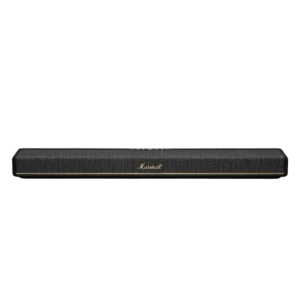
Design is a major selling point. The amp-inspired grille, gold accents, cream option and magnetic details make this one of the most distinctive compact soundbars around.
Day-to-day operation is mostly easy thanks to intuitive controls and a well-organized app, though app delays and bugs can interrupt the experience.
Reviewers note that the compact bar has enough amplifier muscle to feel surprisingly powerful for its size, with one video calling out the 250-watt output positively.
Cable management is mixed: the rear cover can keep ports and wiring tidy on a stand, but one wall-mounted setup left the power and TV cables awkwardly exposed.
The built-in microphones are useful for calibration and voice control. Reported voice-input behavior is positive, with no struggles processing Alexa commands in one review.
The Heston 60 earns strong overall praise as a stylish, compact and capable soundbar. Its premium price, software quirks and limited expansion keep it from being an automatic choice for everyone.
Rear-speaker expansion is a clear weakness: there are no matching rear channels, so owners cannot build the same kind of wraparound system available from Sonos and some other rivals.
Status indicators are helpful in theory, especially for codec confirmation, but placement can make them hard to see from a seated position.
Repairable and replaceable parts are a genuine long-term strength, giving the Heston 60 a stronger durability and sustainability story than many sealed soundbars.
TV connection stability is a real customer concern. Some owners report standby, HDMI wake, or reboot issues even though others resolve sync problems through support.
Bass is one of the Heston 60’s biggest surprises, with unusually strong punch and weight for such a small bar. Deep sub-bass still benefits from an added subwoofer.
Overall sound quality is consistently strong, especially for a compact bar, with punchy bass, clear mids and convincing scale for movies and music.
Sound elevation can be remarkably convincing for a compact bar, with several tests hearing clear overhead movement, though the effect varies by room and content.
Bluetooth playback was reliable in direct testing, though one separate Bluetooth music test also exposed some muddiness that was scored under distortion rather than connection stability.
Multi-speaker/sub pairing is the biggest customer reliability complaint. One owner could not run calibration with the Ambeo Sub connected, and another reports the bar and sub would not wake properly.
Alexa responsiveness is reported positively where tested. One reviewer says voice input worked as expected without processing struggles.
Alexa voice recognition worked smoothly where it was tried, with no reported trouble hearing commands or processing requests.
Legacy optical connectivity is a miss. Reviewers call out the absence of optical or coaxial input as a tradeoff for older TVs and simpler wired setups.
Wall mounting is unusually thoughtful, with reversible magnetic branding and controls plus compact proportions that keep the installation neat.
The 73cm-wide chassis works especially well with smaller TVs and narrow stands, while remaining easy to wall mount. It can look undersized beneath very large screens.
The USB-C port is of limited appeal in this compact setup; one tester was unsure what practical use it offered.
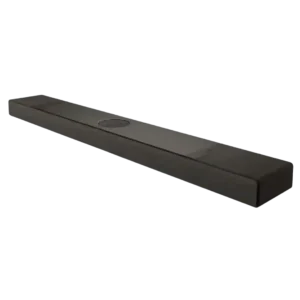
Choose it if you want unusually hi-fi music, deep standalone bass, clear dialogue, and convincing Atmos from one premium bar. Skip it if you need multiple HDMI inputs, a mature...
Pros: Overall product quality, Overall sound quality
Cons: Value for money, Video passthrough support
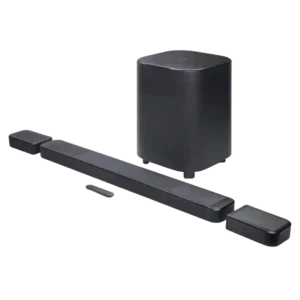
Best for room-filling Atmos, hard-hitting bass and genuinely useful detachable rears. Skip it if 4K/120 passthrough, a compact footprint or consistently polished app control matters more.
Pros: Rear speaker versatility, Overall product quality
Cons: Size and TV fit, Gaming HDMI passthrough
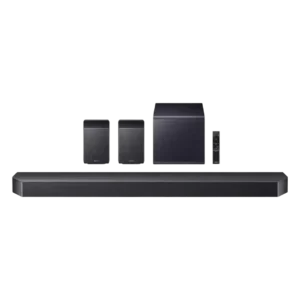
Choose the Samsung HW-Q990F if you want a premium, easy Atmos system with huge surround, strong bass, and Samsung TV perks. Skip it if price, a four-piece setup, music purity,...
Pros: Value for money, Surround sound simulation
Cons: Status indicators, Wi-Fi streaming reliability
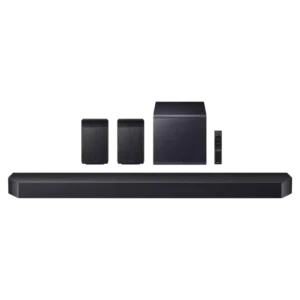
Best for class-leading Atmos immersion, clear dialogue, compact but forceful bass, and a complete rear-speaker package. Skip it if you own the Q990F, need a compact one-bar setup, or cannot...
Pros: Home theater integration, Bass performance
Cons: Value for money, Design and aesthetics