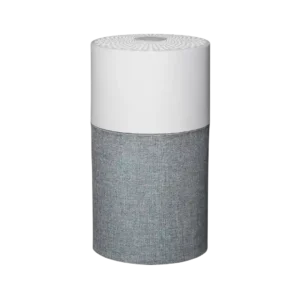
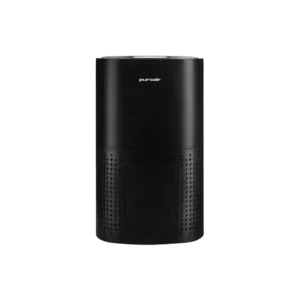
Blueair Blue Pure 511
Where It Has the Edge
No clear scored advantage over the other product.

Scorata scores summarize analyzed review evidence on a 1–5 scale; they are not laboratory measurements or a simple average of customer star ratings. Feature scores summarize the reviews covering that feature. The overall score averages feature scores within each review, then combines review averages. When both expert and customer evidence are available, those two groups receive equal weight. Products can have different review coverage, so small score gaps do not establish a winner.
Recommendations prioritize important features for the category, with a score of at least 3.5, a gap of at least 0.25 points and at least two supporting reviews per product. Features with widely varying scores or broad connectivity contexts are excluded from recommendations. These safeguards do not establish statistical significance.
Quick verdict
The available evidence supports the recommendation below, but does not establish an overall winner. Check the remaining features against your priorities.
There is not enough comparable review evidence to recommend Blueair Blue Pure 511 over the other product.
Choose PuroAir 240 for air purification performance and noise level.
No clear scored advantage over the other product.
Scores are out of 5. Missing scores mean missing review evidence, not a missing feature.
Most reviewers say the Blue Pure 511 noticeably freshens small rooms and improves air quality, often within hours or days. A few found the effect marginal or too slow for broader room coverage.
Most owners say rooms feel cleaner or fresher, and several report fast visible improvements. The main split comes from one independent test and one neighbor-smoke owner who felt performance did not match the hype.
Quiet operation is the product's standout strength, particularly on low or sleep settings. Complaints mostly involve higher-speed noise, isolated whines, or a newer unit that seemed louder.
Noise feedback is mostly positive on low, auto, and sleep modes, where owners often call it quiet enough for bedrooms. High or max speed can be noticeably loud.
Filter cost divides reviewers: some consider Blueair's replacements reasonable, while others complain they are not cheap or have risen sharply. Heavy users should budget for ongoing filter purchases.
Filter cost divides reviewers. Some find replacements reasonable or discounted, while others call them expensive or feel the purifier pushes filter purchases.
The lack of auto mode is a repeated expert drawback. Buyers who want the purifier to respond automatically to changing air quality should look elsewhere.
Auto mode is widely liked when it ramps up for smoke, cooking, dust, or poorer air, then settles back down. It is one of the product's most appreciated convenience features.
Sensor feedback is mostly negative because this model largely lacks built-in air-quality sensing. Several users specifically missed being able to see or trust real-time air readings.
Sensor reactions are split. Some tests show fast, accurate color changes, while several owners say the light stayed green or failed to reflect real conditions.
Replacement availability is a small positive where mentioned. Owners appreciated being able to buy filters with the unit or find replacements easily.
Replacement filters are easy to find according to one tester, including Amazon availability.
Listing accuracy caused frustration for a few buyers, especially around color options, app compatibility, dimensions, and ionizer-related expectations. These are purchase-expectation issues rather than performance failures.
Listing accuracy is a concern in the most critical review, mainly around the advertised room coverage versus certified room-size guidance.
The carbon layer is described as helpful for light gases and household odors. Reviews do not present it as a heavy-duty odor or VOC specialist.
Activated carbon is a real strength when reviewers discuss cooking smells, mustiness, smoke, VOCs, and general freshness. One lab-style review still criticizes broader value, but hands-on tests and owners often say odor absorption works well.
The fabric pre-filter is loved by some because it visibly catches dust and can extend the main filter's life. Others dislike that it sits outside, collects visible debris, and adds a washing step.
Pre-filter feedback is mixed: reviewers like that it catches hair and larger debris, but the critical expert dislikes that it is not easy to clean separately.
Filter life is acceptable for many users at roughly five to six months, but it varies with pets, incense, dust, and continuous use. Some buyers replaced filters sooner than expected.
Filter life is mixed. Some owners get several months or longer, while others complain the indicator asks for replacement after only two or three months.
Reliability has both strong praise and notable failures. Many units keep running for years, but a small set of owners reported power, motor, or early-life problems.
Reliability is a strength in long-term owner videos and reviews, with several units running for months or years. One replaced unit tempers that with an early sensor problem.
Customer support receives unusually positive mentions, especially when Blueair sent replacements or resolved warranty problems. That support helped rescue otherwise negative product failures.
Customer support is a bright spot. Owners describe helpful, fast, thorough service for replacements, filter-light resets, and issue resolution.
Condition-on-arrival concerns are limited but real. One buyer suspected a returned unit based on plain, heavily taped packaging and internal plastic.
Packaging and arrival condition are generally positive, with buyers reporting secure boxes, safe arrival, and no damage.
Warranty coverage is strongest when tied to registration or filter subscriptions. Reviews describe extended coverage and good company follow-through when a unit failed.
Warranty coverage and the warranty process are described positively, including a 2-year warranty mention and an easy company process.
Value is a strong theme when the unit is bought around the budget price point. Reviewers call it worth the money when used in the right small-room setting.
Value is sharply split. Many customers call it a good deal or worth the money, while the most critical tester says it is overpriced for its measured performance.
Replacement experiences are positive when Blueair steps in, with customers describing quick no-charge replacements. This is more about service recovery than routine filter replacement.
Replacement experiences are generally smooth when discussed, including easy filter installation and helpful support for replacement-filter indicators.
Reviewers discuss ease of use in practical use, with feedback tied to the Blue Pure 511's small-room, simple-control design.
Setup and controls are repeatedly described as easy, simple, intuitive, or no-brainer. Even first-time purifier owners usually found it approachable.
Experts consider the CADR strong for the price and footprint, though less powerful than larger or smarter Blueair models. It is best understood as small-room performance, not whole-house cleaning.
CADR is a major criticism in the toughest expert review, which says the measured rating is low for the price and room-size claims.
Air-change comments support strong circulation in small rooms, including repeated references to multiple exchanges per hour. Larger-space claims are more qualified.
Air-change claims are a weak point. The harshest tester argues the advertised large-room claim amounts to too few hourly air changes for genuinely clean air in a large space.
Scheduling is not part of the appeal here. Experts describe the unit as manual and simple, without timer or schedule controls.
Timer and scheduling controls are basic but appreciated. Reviewers mention 2, 4, 6, and 8 hour shutoff options rather than full smart scheduling.
Air dryness appears in one mixed review that found the room became too dry. That same buyer thought the effect could be useful in humid spaces.
Humidity did not appear to be disturbed in one hands-on test, which is a useful comfort note for buyers worried about dry air.
VOC feedback is limited and mixed. Expert copy and one owner mention carbon/VOC capture, while another buyer worried the thin filters might miss some VOCs without added charcoal.
VOC and gas reduction are supported by video tests and carbon-filter discussion, though odor and gas cleanup takes longer than particle removal.
Temperature mixing is only lightly supported. One owner liked that the purifier freshened and cooled a bedroom enough to avoid using the air conditioner.
One owner says a closed room gets hot while the unit runs, so heat buildup may matter in smaller bedrooms.
Maintenance is usually described as easy, especially filter changes and wiping or washing the cover. Negative comments focus on the fabric sleeve being awkward to remove, wash, dry, and reinstall.
Maintenance is usually described as straightforward, especially filter swaps and basic vacuuming. A few filter-alert and reset situations still required attention or support.
The three fan speeds are useful and simple in theory, but the control interface can make it hard to know which speed is active. Higher settings add more audible airflow.
Fan-speed options are useful for matching noise and cleaning needs. Reviewers like having multiple strengths, timer choices, and quiet modes.
Real-time monitoring is not a strength of this version. Reviewers who wanted PM levels, air-quality data, or automatic feedback were disappointed.
Real-time monitoring is helpful when it reflects cooking or changing air, but some customers distrust the always-green reading.
Expert sources describe Blueair's HEPASilent particle filtration as effective for very small particles. The product is framed more around Blueair's hybrid filtration than a traditional true-HEPA pitch.
HEPA filtration is mostly praised for fine-particle capture, smoke, pollen, allergens, and pet dander. One expert questions the H14 marketing, but most hands-on comments are positive.
The purifier is easy to move because it is light and compact. The main caveat is that expert reviewers wished it had a built-in carry handle.
Portability is a plus because the unit is light enough to move and compact enough to shift between rooms.
Dust reduction is one of the most repeated wins, especially in bedrooms, offices, garages, nurseries, and pet homes. A few heavier-dust homes still found it could not eliminate dust completely.
Dust removal is one of the clearest wins. Many owners say there is less dust on furniture, fewer floating particles, or visible dust captured by the filter.
Pollen relief comes up mostly from allergy-focused buyers who wanted help with particles carried indoors. Reviews describe less pollen-related irritation rather than a complete cure.
Pollen relief appears in both expert and owner comments, especially from allergy-sensitive buyers dealing with seasonal pollen.
Documentation feedback is mixed. One owner found the filter-reset instructions clear after rereading them, while another thought the instructions were too minimal.
Documentation is inconsistent. Some reviewers found the guide clear and easy, while one owner complained there were no usable instructions.
Power draw is low in expert testing and buyer comments. The tradeoff is that some users still need to manage it manually because the purifier does not adjust itself.
Power consumption looks low in hands-on measurements, with reviewers comfortable running it continuously.
Breathing comfort is a repeated customer benefit, especially for allergies, pet exposure, nighttime stuffiness, coughing, and gritty eyes. Owners often describe practical relief rather than measured medical results.
Breathing relief comes through strongly in customer reviews, including asthma, congestion, cough, and stuffy-nose improvements. Several owners describe the change as immediate or life-changing.
Expert testing found fast PM2.5 reductions for a compact purifier. This support comes from lab-style review data rather than broad customer measurement.
PM2.5 testing is positive in the main video review, where readings dropped quickly during a controlled particle test.
Odor control is a major positive for pet smells, litter boxes, stale rooms, cooking odors, and musty spaces. A minority wanted faster odor removal or stronger default carbon performance.
Odor reduction is a strong everyday-use theme for cooking smells, pets, litter boxes, mustiness, and stale rooms. Strong neighbor smoke is the major odor case where it disappointed.
Experts praise the Blue Pure 511's low energy use for continuous small-room operation. It is efficient enough to leave running, though the lack of auto mode may increase runtime.
Energy efficiency is praised by reviewers who saw low wattage or no noticeable change in their power bill, especially in auto mode.
Expert testing and filter checks point to strong particle capture for a compact purifier. Several owners use dirty filters as proof that it is pulling fine debris from the air.
Particle removal performs well in many hands-on accounts, from floating particles to PM2.5 and PM10 tests. The dissent is mainly about price-adjusted performance.
Allergy relief is one of the clearest shopper benefits, with many owners reporting less sneezing, stuffiness, sinus irritation, and pet-related reactions. Results are strongest in bedrooms and smaller workspaces.
Allergy relief is one of the strongest customer themes. Many owners mention fewer symptoms, less congestion, easier breathing, and better mornings.
Sleep mode performs well for many bedroom users because it is very quiet and dims distractions. Some owners use higher settings as white noise, but low mode is almost silent.
Sleep mode is a consistent positive because it runs quietly and turns off lights. Bedroom owners often connect it with better sleep.
Smoke and incense performance is mixed but generally useful at this size. It can help with match, incense, and indoor pollution, though one incense-heavy owner said filters wore out quickly.
Smoke removal is mixed by source: controlled tests and some owners report strong results, while a neighbor-smoke buyer says it did not solve marijuana odor.
Indicator lights are mixed: sleepers like that lights turn off, while filter-reset and status-light behavior confused some owners. The interface favors darkness over always-visible status.
Indicator lights are useful for air quality and filter reminders, though one customer found the lights too bright and another questioned accuracy.
Pet owners often praise it for cat hair, dog odor, litter dust, and pet dander. The strongest comments come from small rooms where pets sleep or use a litter box.
Pet dander relief is a major reason buyers like the PuroAir 240. Cat and dog owners repeatedly report less dander, cleaner rooms, or easier breathing.
Reviewers discuss overall satisfaction in practical use, with feedback tied to the Blue Pure 511's small-room, simple-control design.
Overall satisfaction is high among customers, with many buying another unit or recommending it. Dissatisfaction clusters around sensor trust, smoke limits, and filter costs.
Room-fit feedback is strongest for bedrooms, nurseries, dorm rooms, offices, and other smaller spaces. A few reviewers said it was too slow or underpowered for larger rooms.
Room coverage is the most contested claim. Many owners are happy in bedrooms, apartments, and open rooms, but the critical tester says the large-room marketing is overstated.
Air circulation is praised for a purifier this small, with owners noticing solid airflow and experts describing useful small-room air exchange. It is not positioned as a large-room mover.
Air circulation is usually praised, especially by reviewers who felt strong airflow or better room movement. One smoke-focused apartment owner felt suction was weak, so room layout and expectations matter.
Remote control is not a meaningful strength here. Experts mention the lack of remote or connected controls as part of the product's stripped-back design.
Remote control is a miss for buyers who want app, Bluetooth, or remote-style operation. The unit relies on its top controls instead.
Durability is mixed: several owners report years of use, while others had failures around one to two years. Replacement support softened some of the negative reliability experiences.
Durability is supported by long-term reviewers who kept the unit running for months or years. Reports of constant use without issues are reassuring.
Design opinions are mostly positive, with many calling it sleek, simple, elegant, or decor-friendly. The fabric sleeve and touch controls create the main style-versus-function complaints.
Design feedback is mostly favorable: shoppers like the clean black look, compact styling, and unobtrusive shape. One reviewer wished there were more color options.
Sleep use is a strong fit because low mode is quiet and lights do not stay on. Several buyers use it overnight in bedrooms, nurseries, and allergy-prone spaces.
Sleep benefits show up in bedroom reviews, especially from people waking less congested, sleeping better, or enjoying quiet night mode.
The compact footprint is consistently praised for bedrooms, offices, shelves, dorm rooms, and small apartments. Size is one of the reasons owners buy this model.
The size is generally a plus: compact, easy to place, and suitable for bedrooms, offices, apartments, and counters. A few buyers still found it large or tall.
Build quality is generally seen as solid for the price, though a few customers suspected returned packaging or preferred older control revisions. Experts also noted it feels more basic than pricier Blueair models.
Build quality is mixed. Some owners describe a high-quality feel, while the most critical expert found cheaper-feeling filter materials compared with competitors.
Smart features are intentionally sparse. Reviewers like the simplicity when they want plug-and-play cleaning, but shoppers expecting sensors, timers, Wi-Fi, or app controls may be disappointed.
Smart features are limited. Auto mode is useful, but buyers wanting Wi-Fi, app control, or deeper smart-home features may be disappointed.
App connectivity is confusing in buyer feedback: one review praises app control, while several say the 511 does not connect to the app. The safer takeaway is to verify the exact variant before buying.
App support is a drawback because reviewers repeatedly note that the PuroAir 240 does not include Wi-Fi or mobile-app control.
Voice control is mentioned only as something this simple model lacks. It is not a fit for smart-home voice routines.
Voice-assistant compatibility is not a strength. A long-term reviewer says Alexa-style scheduling and away-from-home checking are features buyers might miss.
The child lock is treated as a useful practical feature in setup walkthroughs, especially for keeping kids from changing settings.
Controls are the most repeated usability complaint. The top touch button can feel unclear, overly sensitive, or unresponsive, even though a few users find the basic controls simple.
Cord length gets a small but positive note from one tester who found it longer than some competing models.
Formaldehyde-related gas reduction appears in one controlled burnt-toast test, where levels dropped back to a healthier range after a longer run.
Initial smell is rarely mentioned, but the comments are mostly reassuring for this unit. One buyer said a new-filter smell faded quickly, while another contrasted it favorably against other purifiers with lingering plastic odor.
Ionization is a concern for one buyer who objected to the electrostatic element. Most other reviewers do not discuss it.
Mold-related feedback is limited but mildly positive, with one test noting small decreases and one owner viewing it as useful for suspected mold.
Ozone feedback is split between certification-style reassurance and one buyer's concern about the electrostatic element. It is not a recurring customer complaint, but sensitive shoppers may notice it.
Pet hair capture is mentioned less often than dander, but the clearest customer example reports much less fur on furniture.
Certification-related comments are positive where experts mention them, including energy, quietness, AHAM, and ozone-related testing. These points support confidence more than daily-use excitement.
UV-C is not a strength here; a buyer wished the unit included a UV light. No one described actual UV-C cleaning performance from this model.
Display readability is a recurring complaint because users cannot always tell the active mode, power state, or setting. Momentary lights help some, but not enough for everyone.
The three-stage filter stack is a recurring positive, with reviewers pointing to the pre-filter, HEPA layer, and activated carbon as a useful combination.
The H14/true-HEPA claim is controversial. Some reviewers repeat fine-particle capture claims, but the toughest expert could not verify the third-party H14 documentation.
The washable outer sleeve is a practical plus for many dust-focused buyers. The tradeoff is that washing, drying, and refitting the fabric can feel like extra work.
Handle design is weakly supported and mostly negative. Experts noted that the light body is movable, but a dedicated handle would have improved portability.
Wi-Fi is mostly discussed as absent on this model. Buyers who want connected control should consider a different Blueair variant.
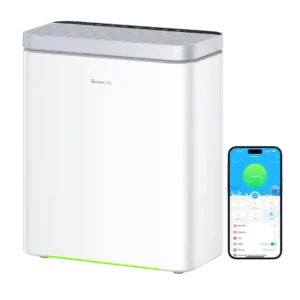
Choose the H7124 if you want a quiet smart purifier for odors, dust, pets, and app control. Skip it if you need foolproof Wi-Fi, wall-facing intake, UV light, or strong...
Pros: air purification performance, noise level
Cons: control placement
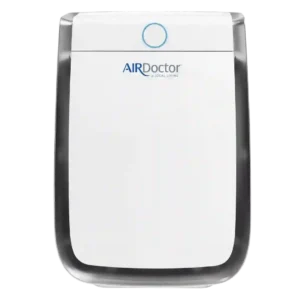
Best for strong room cleaning, allergy relief, odor control, and simple operation. Skip it if high filter costs, a larger footprint, or possible nighttime fan noise would bother you.
Pros: air purification performance, overall satisfaction
Cons: filter replacement cost
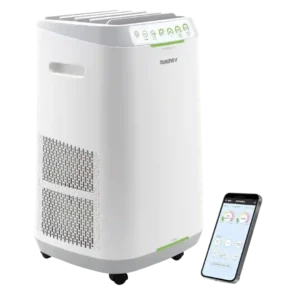
Choose this if you want strong odor, dust, smoke, and pet-air cleanup with washable filters. Skip it if turbo noise, Wi-Fi setup, or a high upfront price will bother you.
Pros: overall satisfaction, air purification performance
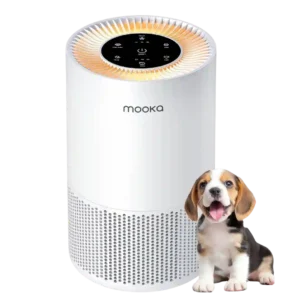
Best for a quiet, compact purifier that helps with dust, pet odors, and allergies. Skip it if you need verified smart sensing, strong aromatherapy, or guaranteed large-room coverage.
Pros: noise level, air purification performance
Cons: reliability