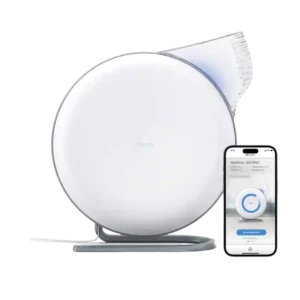
IQAir Atem Desk
Where It Has the Edge
No clear scored advantage over the other product.

Scorata scores summarize analyzed review evidence on a 1–5 scale; they are not laboratory measurements or a simple average of customer star ratings. Feature scores summarize the reviews covering that feature. The overall score averages feature scores within each review, then combines review averages. When both expert and customer evidence are available, those two groups receive equal weight. Products can have different review coverage, so small score gaps do not establish a winner.
Recommendations prioritize important features for the category, with a score of at least 3.5, a gap of at least 0.25 points and at least two supporting reviews per product. Features with widely varying scores or broad connectivity contexts are excluded from recommendations. These safeguards do not establish statistical significance.
Quick verdict
The available evidence supports the recommendation below, but does not establish an overall winner. Check the remaining features against your priorities.
There is not enough comparable review evidence to recommend IQAir Atem Desk over the other product.
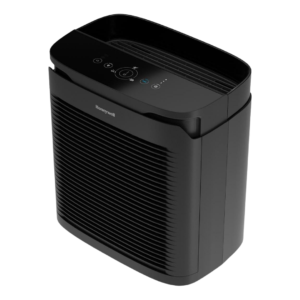
Choose Honeywell HPA3100 for air purification performance and filter availability.
No clear scored advantage over the other product.
Scores are out of 5. Missing scores mean missing review evidence, not a missing feature.
Most reviewers say the Atem Desk noticeably improves the air around them, especially in offices, bedrooms, and close-range use. Negative comments usually involve heavy smoke, larger areas, or possible defective units.
Most owners say the purifier makes rooms feel cleaner, fresher, or noticeably improved, with several using it continuously in bedrooms and living areas. A few less enthusiastic reviews still say it works, though one questioned whether it was doing much.
Filter cost is a recurring downside, with customers calling replacements expensive. The cost matters most when filters need changing sooner than expected.
Filter cost is split. Some buyers like cheap generic replacements or reasonable supplies, while others find replacements expensive enough to be the main downside.
Quiet operation is one of the strongest positives, especially on low and medium. Noise complaints usually involve high speed, rattles, or defective fan behavior.
Noise is the most divided trait. Many call it quiet or pleasant white noise, but a sizable group reports hum, buzz, rattling, high pitch, or loud operation even on low.
Replacement-filter availability is the most repeated practical complaint. Many buyers say filters are hard to find, backordered, or unavailable on Amazon.
Filter availability is a recurring advantage. Owners like that filters are easy to find, shared across Honeywell sizes, and available from multiple vendors.
Filter life depends heavily on use. Light-use and expert comments are more optimistic, while high-speed daily users report much shorter life.
Filter life varies with conditions. Some users stretch life by vacuuming or get several months, while dusty or pet-heavy settings can require weekly or more frequent attention.
One buyer felt misled because the unit required a separate filter to operate. This is isolated but severe for that customer.
Listing accuracy is inconsistent. One buyer said the item matched the description, while another found a major square-footage mismatch between the listing and the box.
Reliability is a meaningful risk in customer reviews. Complaints include stopped units, broken plugs, weak connectors, and stand problems.
Reliability is often praised by owners who run the unit nonstop or have used Honeywell purifiers for years. The strongest negative reliability notes involve noise developing after use or early motor failure.
Customer support draws repeated criticism in problem cases. Complaints mention disorganized replies, closed cases, and limited help after failures.
Support feedback is mixed. One buyer was frustrated by being asked to return the whole unit for a missing filter, while another said warranty support handled a motor failure quickly.
Replacement experiences are poor in several defect cases. Buyers mention returns, no replacement, or difficulty getting help.
Replacement experiences are mixed. One replacement fit and worked well, but another owner had the same rattling problem after receiving a replacement unit.
Value is split: some buyers feel the premium price is worth it, while others cite filter costs, failures, small coverage, or support problems.
Value is generally favorable, with many calling it well priced, a good value, or a cost saver. A few buyers felt filter costs, discontinuation pricing, or rapid problems weakened the value.
Arrival condition varies, with some buyers reporting broken or poorly packed units and others noting smooth delivery. Damaged arrivals are uncommon but serious.
Arrival and order accuracy had a couple of problems. One buyer was missing a filter, and another received unrelated car armrests along with the purifier.
Warranty coverage is mentioned positively in one video review. Broader warranty outcomes are not well represented.
Warranty coverage receives a strong positive note from an owner whose motor failed after three months. They called the warranty excellent.
Setup and daily use are usually easy, though not always instantly intuitive. Some users struggled with controls, cord connection, or assembly details.
Ease of use is a consistent strength. Owners describe simple operation, easy setup, intuitive controls, and easy filter installation.
Smoke removal may be limited for heavy smoke. One reviewer said strong moxibustion smoke still left the room smelling bad even after running the purifier on maximum.
Smoke-related feedback is favorable, including wildfire season, cooking smoke, cigarettes, and a small smoking room. Owners using smoke or forest-fire situations describe it as working well or even fantastic.
VOC feedback is negative in the one detailed sensitivity review. That buyer hoped for chemical-smell relief and felt the Atem made the problem worse.
VOC and vapor comments are mixed by setup. One buyer did not expect the basic filters to remove VOCs, while another praised the carbon layer for chemical vapors from nail products.
Reviewers like the focused stream of clean air around the face. It works best as a personal bubble rather than as general room circulation.
Air movement is mostly praised for moving a lot of air and freshening stagnant rooms. A few owners found it weak or worried debris buildup could block airflow.
Odor experiences are split: some users report clean air with no off-gassing, while chemically sensitive or unhappy buyers describe unpleasant smells.
Initial smell is mixed. Some owners report no nasty aroma, while another says the unit kept giving off an unpleasant plastic odor for weeks.
The blue indicator light is useful for status but bothers some bedroom users. Light sensitivity is a real caveat for sleep setups.
Indicator-light feedback is split but specific. Some like dimmable or barely noticeable lights, while others dislike a light that cannot be turned off or a design with no light.
Coverage is context-dependent: the Atem Desk suits personal zones and small spaces, not whole-room expectations. Several reviewers warn about limited reach.
Room fit is generally positive for bedrooms, medium rooms, large rooms, and multi-room use. The main caveats are a listing mismatch on square footage and noise making some living spaces less comfortable.
Dust feedback is mostly positive, with users seeing less dust on desks, in rooms, or around allergy triggers. One reviewer found dust capture only modest.
Dust control is one of the clearest strengths, with owners seeing less dust on surfaces and dusty filters after use. It also gets praise for nail dust and general household dust in pet-heavy homes.
Pet-related allergy comments are favorable, especially for cat and dog triggers. The Atem Desk helped some users tolerate pet-heavy rooms more comfortably.
Pet-dander comments are strongly positive where allergies are involved. Owners with birds or cats describe the purifier as helping them tolerate pet allergens better.
Odor performance is mixed, with everyday stale or sweat smells improving for some users while smoke and chemical odors disappoint others.
Odor control is mostly positive for cat smell, cooking odors, candle scent, and fresh-smelling air. One owner had the opposite experience, saying the unit itself gave off an unpleasant odor.
The touch control is simple once learned, but the hidden side interaction can confuse some users. Minimalist controls work best for buyers who like a clean design.
Control improvements are called out positively by one repeat Honeywell buyer. Better controls and multiple light settings made the newer unit more convenient.
Fan-speed control is generally liked, especially where the app allows finer adjustment. A few users wanted stronger output or more top-end range.
Speed options are useful for matching noise and cleaning needs. Owners mention three speeds and using lower ranges at home while turning it up when away.
Allergy relief is one of the strongest patterns, with buyers reporting less sneezing, clearer sinuses, fewer headaches, or easier breathing. The praise is strongest when the purifier sits close to the user.
Allergy relief is a major bright spot, with owners reporting less medicine, less sneezing, and better tolerance around pets. Several asthma or seasonal-allergy users describe meaningful daily comfort gains.
Maintenance is mostly straightforward, but filter replacement and cleaning questions can frustrate owners. Long-term users pay close attention to filter upkeep.
Maintenance is mostly easy when it comes to accessing, vacuuming, or installing filters. The one sharp complaint is debris collecting in an unreachable top area.
Several users describe easier breathing from asthma, allergies, sinus issues, or stale air. These benefits are usually tied to close-range placement.
Breathing relief is one of the product's strongest shopper-facing benefits. Asthma, allergy, coughing, sneezing, and stuffy-nose comments repeatedly describe noticeable improvement.
HEPA filtration is mentioned positively by users looking for a medically recommended filter. It supports allergy-focused use, though only a small number of reviews discuss it directly.
HEPA filtration is viewed positively by buyers who rely on Honeywell HEPA filters for pollution or regular use. Comments focus more on practical confidence than technical testing.
Phone-based smart on/off is praised as convenient, but it depends on Bluetooth/app behavior. It is useful but not universally reliable.
The timer is appreciated as a simple convenience. Owners like being able to set auto-off intervals or have it shut itself off.
Portability is widely liked for offices, hotels, bedrooms, and travel. Some users still note it needs power and can take up luggage or desk space.
Portability gets a positive mention from a wildfire-area buyer using multiple units. The medium size was considered easier to move and not heavy.
Overall satisfaction leans positive thanks to clean-feeling air, quiet operation, design, and portability. Dissatisfaction clusters around filters, smell, failures, and support.
Overall sentiment is mostly positive, with many owners saying it works well, they would recommend it, or they would buy again. Negative overall reactions are usually tied to noise, odor, or early reliability trouble.
Particle-removal feedback is strong where reviewers measured PM or particle reduction. It supports the Atem Desk's role as a close-range purifier.
Customers credit it with capturing fine household and project particles, from soot near traffic to nail dust and visible debris. Several point to dust or buildup on filters as proof that particles are being pulled from the air.
Pollen-sensitive users often report meaningful relief. The product is praised most when aimed directly at the user.
Pollen feedback is limited but positive. One owner specifically says it seems to help with dust and pollen particles.
Many reviewers like the compact footprint, but size expectations vary. Some find it desk-perfect while others say it is too large.
Owners generally find the unit compact and bedroom-friendly. It is described as small enough for a dresser and not taking up much space.
Design is a clear strength: reviewers call it stylish, modern, attractive, and office-friendly. Even several mixed reviews still like the look.
Appearance is mostly liked when owners mention it, especially the new look and compact design. One unhappy buyer disliked the grille and thought the design looked cheap.
Sleep feedback is mostly positive, with users reporting cleaner breathing and better rest. Blue-light and filter-life issues are the main sleep-use drawbacks.
Sleep-quality benefits show up when breathing improves at night. Owners mention cleaner nighttime air and being able to sleep better.
Build quality is mixed: experts and many buyers praise premium construction, while some owners report cheap plastic, glue, plugs, or quality failures.
Build quality ranges from sturdy and well made to cheap-feeling in the most negative reviews. A safety complaint about a sharp rim also weighs on this attribute.
Durability concerns are limited but real, including a broken air guide. The product may still function, but fragile pieces hurt confidence.
Durability is mixed. Some owners cite years of service, while others report motor failure, sound deterioration, or doubts after a short time.
Smart features are useful when they work, especially pairing and automatic on/off. Bluetooth range, software updates, and lack of airplane mode hold them back.
Smart-feature feedback is modest and mixed. Some like the basic features, but others note the lack of an air-quality sensor or say extra monitor features were not useful to them.
The adjustable airflow is a major desk-use advantage because reviewers can aim clean air at their face or workspace. A few users wanted smoother adjustment or broader airflow.
Carbon-filter feedback is strong when owners add or use the carbon layer. Reviewers say it helps with cooking odors, chemical vapors, and general smells.
The lack of true air-quality-based auto mode is a drawback for reviewers expecting automatic adjustments. The Atem Desk is more manual than sensor-driven.
Filter staging is praised in a nail-work setup where the three-filter arrangement handles dust and vapors. The layered design is treated as useful rather than just a spec.
The pre-filter gets practical praise for catching dust before it reaches deeper filters. One buyer finds it coarse but useful, and another likes that it can be cleaned.
HyperHEPA and HEPA-style filtration are treated as core strengths, especially in expert and travel-focused reviews. Reviewers connect the filtration with cleaner personal air and particle capture.
The washable or rinseable pre-filter gets a small but enthusiastic mention. A project user liked being able to vacuum and rinse it rather than discard it immediately.
Dryness appears as a comfort tradeoff for overnight use. One reviewer liked the clean breeze but suggested lip balm or humidity support.
Pet-hair capture gets a lukewarm mention. One owner felt the unit could be stronger for pet hair.
Real-time monitoring is a weakness for buyers who want sensor feedback. One owner still liked the cleaning performance but called out the missing air-quality sensor.
The focused airflow can feel cooling, sometimes pleasantly and sometimes too chilly. This matters most when the purifier is aimed directly at the user.
One reviewer says the unit was approved for onboard use by an electrical team. Broader safety-certification experience is not discussed much.
Safety concerns are rare but serious. One buyer reported cutting tendons after falling onto a sharp rim around the top.
Settings retention is a requested improvement rather than a strength. One owner wanted it to restart with the same settings after a power outage.
Sleep use depends heavily on the specific sound. Some owners like the low setting for sleeping, while others say hum, pitch, or rattling makes it a poor bedroom choice.
Virus-related confidence comes mainly from expert and COVID-era use cases around HyperHEPA filtration. Reviewers do not prove medical protection.
The Bluetooth app is useful for controls and convenience, but not perfect. Some reviewers liked it, while others reported connection or behavior quirks.
The built-in handle earns positive feedback from a long-time Honeywell user. It makes the redesigned unit easier to handle.
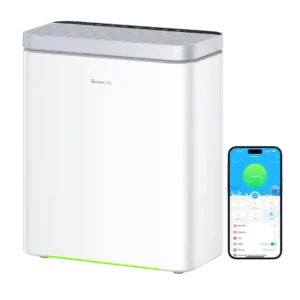
Choose the H7124 if you want a quiet smart purifier for odors, dust, pets, and app control. Skip it if you need foolproof Wi-Fi, wall-facing intake, UV light, or strong...
Pros: air purification performance, noise level
Cons: control placement
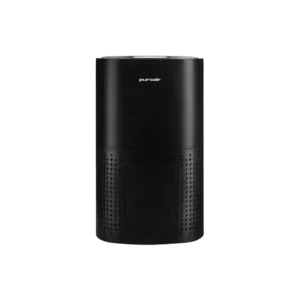
Best for quiet, simple cleaning in bedrooms or apartments. Skip it if you need verified large-room CADR value, app control, or guaranteed neighbor-smoke removal.
Pros: noise level, air purification performance
Cons: filter replacement cost, air quality sensor accuracy
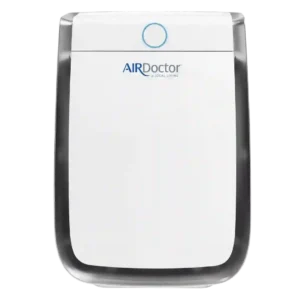
Best for strong room cleaning, allergy relief, odor control, and simple operation. Skip it if high filter costs, a larger footprint, or possible nighttime fan noise would bother you.
Pros: air purification performance, overall satisfaction
Cons: filter replacement cost
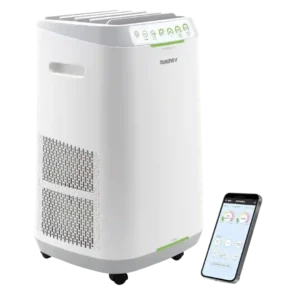
Choose this if you want strong odor, dust, smoke, and pet-air cleanup with washable filters. Skip it if turbo noise, Wi-Fi setup, or a high upfront price will bother you.
Pros: overall satisfaction, air purification performance