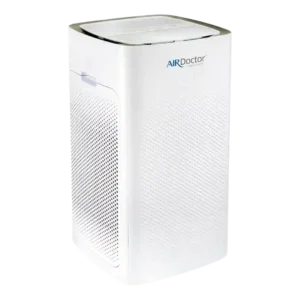
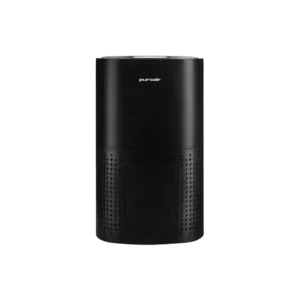
AirDoctor AD5000
Where It Has the Edge
No clear scored advantage over the other product.

Scorata scores summarize analyzed review evidence on a 1–5 scale; they are not laboratory measurements or a simple average of customer star ratings. Feature scores summarize the reviews covering that feature. The overall score averages feature scores within each review, then combines review averages. When both expert and customer evidence are available, those two groups receive equal weight. Products can have different review coverage, so small score gaps do not establish a winner.
Recommendations prioritize important features for the category, with a score of at least 3.5, a gap of at least 0.25 points and at least two supporting reviews per product. Features with widely varying scores or broad connectivity contexts are excluded from recommendations. These safeguards do not establish statistical significance.
Quick verdict
The available evidence supports the recommendation below, but does not establish an overall winner. Check the remaining features against your priorities.
There is not enough comparable review evidence to recommend AirDoctor AD5000 over the other product.
Choose PuroAir 240 for reliability and ease of use.
No clear scored advantage over the other product.
Scores are out of 5. Missing scores mean missing review evidence, not a missing feature.
The AD5000 is consistently described as a strong purifier, with lab-style testing and owners both saying it cleans air very well. A few comments are broad rather than technical, but even the critical filter-cost review still says the unit works well.
Most owners say rooms feel cleaner or fresher, and several report fast visible improvements. The main split comes from one independent test and one neighbor-smoke owner who felt performance did not match the hype.
Replacement-filter cost is the biggest recurring complaint. One expert calculated a higher annual cost for official filters, and an owner called the replacement filters outrageous.
Filter cost divides reviewers. Some find replacements reasonable or discounted, while others call them expensive or feel the purifier pushes filter purchases.
Noise feedback is mostly positive from owners, who often call it quiet or almost silent. Expert testing adds nuance: low speed is sleep-friendly, but higher settings can get loud.
Noise feedback is mostly positive on low, auto, and sleep modes, where owners often call it quiet enough for bedrooms. High or max speed can be noticeably loud.
The air-quality sensor impressed reviewers when it reacted to dust, toxins, and cooking smoke. Its color changes and automatic response made the pollution changes visible.
Sensor reactions are split. Some tests show fast, accurate color changes, while several owners say the light stayed green or failed to reflect real conditions.
Filter availability appears workable, with the reviewer noting holiday deals on AirDoctor and replacement filters.
Replacement filters are easy to find according to one tester, including Amazon availability.
The pre-filter looked visibly loaded after dusty renovation use, which made its particle-catching role feel tangible.
Pre-filter feedback is mixed: reviewers like that it catches hair and larger debris, but the critical expert dislikes that it is not easy to clean separately.
Auto mode is praised for reacting to changing air conditions without much user attention. Reviewers liked that it increases power when the air gets worse and settles down afterward.
Auto mode is widely liked when it ramps up for smoke, cooking, dust, or poorer air, then settles back down. It is one of the product's most appreciated convenience features.
Filter life looks acceptable in long-use comments, with replacement indicators appearing after months of use. Heavy dust or renovation conditions may shorten the practical interval.
Filter life is mixed. Some owners get several months or longer, while others complain the indicator asks for replacement after only two or three months.
The activated carbon filter earns praise in the context of fumes and renovation smells. The reviewer was glad to have that layer when paint and chemical odors were present.
Activated carbon is a real strength when reviewers discuss cooking smells, mustiness, smoke, VOCs, and general freshness. One lab-style review still criticizes broader value, but hands-on tests and owners often say odor absorption works well.
The multi-stage filtration setup is viewed positively by the owner who liked that the purifier covered larger contaminants, gas/VOC filtration, and ultra-fine particle capture.
The three-stage filter stack is a recurring positive, with reviewers pointing to the pre-filter, HEPA layer, and activated carbon as a useful combination.
Reliability has one repeated caveat: after a power outage, the purifier may stay off until manually restarted. Otherwise, long-use comments do not raise broader failure complaints.
Reliability is a strength in long-term owner videos and reviews, with several units running for months or years. One replaced unit tempers that with an early sensor problem.
Customer support receives a strong positive mention. The reviewer found the support team helpful enough to recommend contacting them before DIY troubleshooting.
Customer support is a bright spot. Owners describe helpful, fast, thorough service for replacements, filter-light resets, and issue resolution.
Warranty coverage is somewhat cautious. The reviewer learned that disassembling the unit could invalidate the warranty, so owner troubleshooting should be limited.
Warranty coverage and the warranty process are described positively, including a 2-year warranty mention and an easy company process.
Value is mixed. Reviewers often feel the performance is worth paying for, but the high purchase price and replacement-filter cost make it less appealing for budget buyers.
Value is sharply split. Many customers call it a good deal or worth the money, while the most critical tester says it is overpriced for its measured performance.
Filter replacement is fairly easy in hands-on use. Ribbon pulls, quick reinstallation, and simple reset steps make the process manageable.
Replacement experiences are generally smooth when discussed, including easy filter installation and helpful support for replacement-filter indicators.
Ease of use is a consistent bright spot. Setup, controls, and filter access are repeatedly described as simple, intuitive, or straightforward.
Setup and controls are repeatedly described as easy, simple, intuitive, or no-brainer. Even first-time purifier owners usually found it approachable.
Air changes per hour are a standout for large spaces. Reviewers liked that it can cycle air repeatedly in roughly 1,001 square feet or cover a larger area with fewer changes.
Air-change claims are a weak point. The harshest tester argues the advertised large-room claim amounts to too few hourly air changes for genuinely clean air in a large space.
CADR is framed as part of the AD5000’s large-room strength. The measured airflow capacity supports its role as a high-output purifier.
CADR is a major criticism in the toughest expert review, which says the measured rating is low for the price and room-size claims.
One owner liked that the purifier also blows cool air, adding a small comfort benefit beyond purification.
One owner says a closed room gets hot while the unit runs, so heat buildup may matter in smaller bedrooms.
Real-time air-quality feedback is useful and easy to understand. Reviewers liked seeing the front light show air status and guide how hard the unit was working.
Real-time monitoring is helpful when it reflects cooking or changing air, but some customers distrust the always-green reading.
Documentation and guidance are viewed positively. Owners mention easy setup instructions and useful education about home air quality.
Documentation is inconsistent. Some reviewers found the guide clear and easy, while one owner complained there were no usable instructions.
Filter indicator lights are appreciated because they remove guesswork from replacement timing. Owners liked knowing when carbon or HEPA filters needed attention.
Indicator lights are useful for air quality and filter reminders, though one customer found the lights too bright and another questioned accuracy.
Mold-spore coverage is inferred from the buyer’s contaminant-size reasoning and confidence in the purifier’s very small particle capture.
Mold-related feedback is limited but mildly positive, with one test noting small decreases and one owner viewing it as useful for suspected mold.
Sleep-friendly use is helped by quiet mode and dimmable lights. Reviewers liked being able to turn off the display at night while the purifier kept running.
Sleep mode is a consistent positive because it runs quietly and turns off lights. Bedroom owners often connect it with better sleep.
VOC and chemical-smell handling is treated as a meaningful advantage, especially around paint, caulking, and gas-trap filtration. The carbon/VOC layer is seen as useful for renovation and household odors.
VOC and gas reduction are supported by video tests and carbon-filter discussion, though odor and gas cleanup takes longer than particle removal.
The fan-speed range gives users more manual control when they want faster cleanup. One reviewer specifically noted six speed levels.
Fan-speed options are useful for matching noise and cleaning needs. Reviewers like having multiple strengths, timer choices, and quiet modes.
Smoke and wildfire use are recurring positives. Owners mention cooking smoke, wildfire season, and California air as situations where the purifier made them more comfortable.
Smoke removal is mixed by source: controlled tests and some owners report strong results, while a neighbor-smoke buyer says it did not solve marijuana odor.
Maintenance is generally straightforward. Reviewers describe simple filter access, easy one-handed handling, and routine cleaning or replacement steps.
Maintenance is usually described as straightforward, especially filter swaps and basic vacuuming. A few filter-alert and reset situations still required attention or support.
Room coverage is a major reason to buy this model, especially for open living areas, offices, and large rooms. The downside is that one owner returned it because the unit did not fit the intended area.
Room coverage is the most contested claim. Many owners are happy in bedrooms, apartments, and open rooms, but the critical tester says the large-room marketing is overstated.
Air circulation is strong for a household purifier. Expert airflow testing and owner comments both point to high air movement for large volumes.
Air circulation is usually praised, especially by reviewers who felt strong airflow or better room movement. One smoke-focused apartment owner felt suction was weak, so room layout and expectations matter.
Dust performance comes up in renovation, apartment, and contaminant-size comments. Reviewers saw dirty filters and cleaner air as signs that the unit was pulling dust from the space.
Dust removal is one of the clearest wins. Many owners say there is less dust on furniture, fewer floating particles, or visible dust captured by the filter.
Pet-related confidence is tied mostly to litter-box and cat-allergy use. The purifier reacted to cat-area air changes and was viewed as helpful in a pet household.
Pet dander relief is a major reason buyers like the PuroAir 240. Cat and dog owners repeatedly report less dander, cleaner rooms, or easier breathing.
HEPA filtration is central to the positive performance story. Expert reviewers point to the tall HEPA filters as a major reason the unit cleans so effectively.
HEPA filtration is mostly praised for fine-particle capture, smoke, pollen, allergens, and pet dander. One expert questions the H14 marketing, but most hands-on comments are positive.
Pollen is mentioned as one of the contaminants the buyer wanted protection from, and the tiny-particle filtration was a major reason for choosing the purifier.
Pollen relief appears in both expert and owner comments, especially from allergy-sensitive buyers dealing with seasonal pollen.
Portability is better than the size suggests. Wheels are repeatedly praised, and several reviewers say it is easy to roll between rooms or across floors.
Portability is a plus because the unit is light enough to move and compact enough to shift between rooms.
Breathing-relief comments are strong and personal. Reviewers mention reduced morning cough, sinus congestion, headaches, allergy symptoms, and noticeable help for an allergic family member.
Breathing relief comes through strongly in customer reviews, including asthma, congestion, cough, and stuffy-nose improvements. Several owners describe the change as immediate or life-changing.
Overall satisfaction is high across owner reviews. Customers repeatedly say they are happy, recommend it, or call it their favorite purifier.
Overall satisfaction is high among customers, with many buying another unit or recommending it. Dissatisfaction clusters around sensor trust, smoke limits, and filter costs.
Particle cleanup is one of the clearest strengths. Testers reported steep reductions in particulates and PM2.5, while owners liked its ability to capture very small airborne particles.
Particle removal performs well in many hands-on accounts, from floating particles to PM2.5 and PM10 tests. The dissent is mainly about price-adjusted performance.
Allergy relief is one of the strongest owner-reported benefits. Reviewers mention improved allergies, sinus congestion, morning cough, and headache or allergy symptoms.
Allergy relief is one of the strongest customer themes. Many owners mention fewer symptoms, less congestion, easier breathing, and better mornings.
Odor control is praised for both everyday smells and mildew. One owner says it eliminated mildew odor in a cabinet, while another highlights toxic-odor reduction.
Odor reduction is a strong everyday-use theme for cooking smells, pets, litter boxes, mustiness, and stale rooms. Strong neighbor smoke is the major odor case where it disappointed.
Remote control is a missing convenience. Expert reviewers call out that all adjustments must be made directly on the purifier.
Remote control is a miss for buyers who want app, Bluetooth, or remote-style operation. The unit relies on its top controls instead.
Build quality is a strength in both expert and owner comments. The unit is described as sturdy, well built, and made with durable-feeling plastic.
Build quality is mixed. Some owners describe a high-quality feel, while the most critical expert found cheaper-feeling filter materials compared with competitors.
Size is the most obvious tradeoff. Many reviewers accept the big footprint because of the coverage, but one owner returned it because it was too large for the space.
The size is generally a plus: compact, easy to place, and suitable for bedrooms, offices, apartments, and counters. A few buyers still found it large or tall.
Sleep benefit is tied to low noise rather than a dedicated sleep outcome. One reviewer preferred the AD5000 over the smaller model for a noise-sensitive bedroom.
Sleep benefits show up in bedroom reviews, especially from people waking less congested, sleeping better, or enjoying quiet night mode.
Durability impressions are positive from the expert build check, which found the plastic sturdy and durable-feeling.
Durability is supported by long-term reviewers who kept the unit running for months or years. Reports of constant use without issues are reassuring.
The design is simple and clean rather than flashy. Reviewers liked the slick look, plain controls, and the way it blends into a room.
Design feedback is mostly favorable: shoppers like the clean black look, compact styling, and unobtrusive shape. One reviewer wished there were more color options.
Smart features are limited. The purifier focuses on raw performance and simple controls rather than connected app-based convenience.
Smart features are limited. Auto mode is useful, but buyers wanting Wi-Fi, app control, or deeper smart-home features may be disappointed.
App connectivity is a clear weakness. Expert reviewers repeatedly note that the AD5000 has no app control.
App support is a drawback because reviewers repeatedly note that the PuroAir 240 does not include Wi-Fi or mobile-app control.
Humidity did not appear to be disturbed in one hands-on test, which is a useful comfort note for buyers worried about dry air.
The child lock is treated as a useful practical feature in setup walkthroughs, especially for keeping kids from changing settings.
Cord length gets a small but positive note from one tester who found it longer than some competing models.
Energy efficiency is praised by reviewers who saw low wattage or no noticeable change in their power bill, especially in auto mode.
Formaldehyde-related gas reduction appears in one controlled burnt-toast test, where levels dropped back to a healthier range after a longer run.
The ionization feature is mentioned positively by one owner, who included it among the things they loved about the unit.
Ozone output tested well in the expert review, with no measurable ozone produced during the purification test.
Pet hair capture is mentioned less often than dander, but the clearest customer example reports much less fur on furniture.
PM2.5 testing is positive in the main video review, where readings dropped quickly during a controlled particle test.
Power consumption looks low in hands-on measurements, with reviewers comfortable running it continuously.
Timer and scheduling controls are basic but appreciated. Reviewers mention 2, 4, 6, and 8 hour shutoff options rather than full smart scheduling.
Virus-reduction confidence comes from the purifier’s tiny-particle claims and ultra-fine filtration. Owners mention viruses and bacteria when explaining why they felt comfortable buying it.
Packaging and arrival condition are generally positive, with buyers reporting secure boxes, safe arrival, and no damage.
The front LED air-quality display is described as useful because it clearly shows air status while the purifier runs.
Listing accuracy is a concern in the most critical review, mainly around the advertised room coverage versus certified room-size guidance.
The H14/true-HEPA claim is controversial. Some reviewers repeat fine-particle capture claims, but the toughest expert could not verify the third-party H14 documentation.
The washable pre-filter is easy to clean, with one reviewer saying it can simply be washed off.
The side holder design helps offset the purifier’s weight. The reviewer liked being able to grip and transport it despite the heavy body.
Voice-assistant compatibility is not a strength. A long-term reviewer says Alexa-style scheduling and away-from-home checking are features buyers might miss.
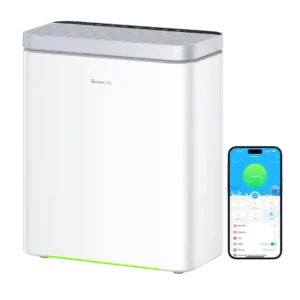
Choose the H7124 if you want a quiet smart purifier for odors, dust, pets, and app control. Skip it if you need foolproof Wi-Fi, wall-facing intake, UV light, or strong...
Pros: air purification performance, noise level
Cons: control placement
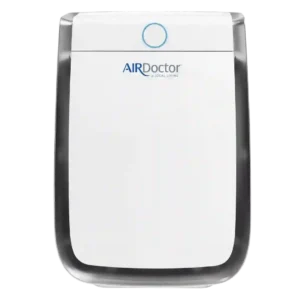
Best for strong room cleaning, allergy relief, odor control, and simple operation. Skip it if high filter costs, a larger footprint, or possible nighttime fan noise would bother you.
Pros: air purification performance, overall satisfaction
Cons: filter replacement cost
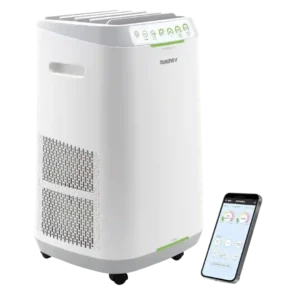
Choose this if you want strong odor, dust, smoke, and pet-air cleanup with washable filters. Skip it if turbo noise, Wi-Fi setup, or a high upfront price will bother you.
Pros: overall satisfaction, air purification performance
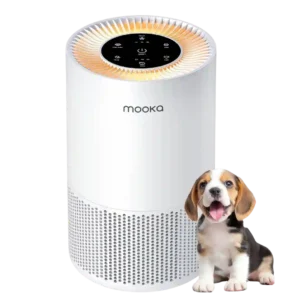
Best for a quiet, compact purifier that helps with dust, pet odors, and allergies. Skip it if you need verified smart sensing, strong aromatherapy, or guaranteed large-room coverage.
Pros: noise level, air purification performance
Cons: reliability