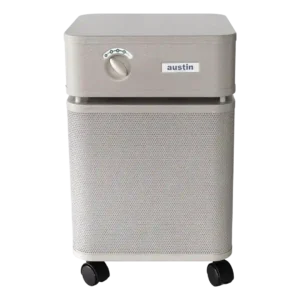
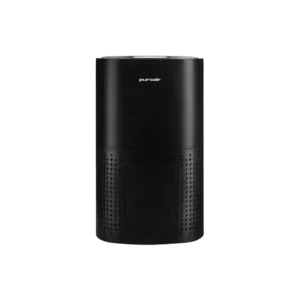
Austin Air HealthMate
Where It Has the Edge
- mold spore reduction is 4.5 vs 4.0. Mold-related evidence is limited but favorable, with one expert-style claim and one mold-allergy owner endorsement.

Scorata scores summarize analyzed review evidence on a 1–5 scale; they are not laboratory measurements or a simple average of customer star ratings. Feature scores summarize the reviews covering that feature. The overall score averages feature scores within each review, then combines review averages. When both expert and customer evidence are available, those two groups receive equal weight. Products can have different review coverage, so small score gaps do not establish a winner.
Recommendations prioritize important features for the category, with a score of at least 3.5, a gap of at least 0.25 points and at least two supporting reviews per product. Features with widely varying scores or broad connectivity contexts are excluded from recommendations. These safeguards do not establish statistical significance.
Quick verdict
The review evidence points to a tradeoff: mold spore reduction versus ease of use and replacement experience. Choose according to which strengths matter more to you; the overall score alone does not settle that choice.
Choose Austin Air HealthMate for mold spore reduction.
Choose PuroAir 240 for ease of use and replacement experience.
Scores are out of 5. Missing scores mean missing review evidence, not a missing feature.
Most reviewers say the unit improves air quality or works well, but a minority report no benefit, defects, or even worse air.
Most owners say rooms feel cleaner or fresher, and several report fast visible improvements. The main split comes from one independent test and one neighbor-smoke owner who felt performance did not match the hype.
Noise is the most repeated drawback, especially on medium and high, though low speed is acceptable or quiet for some.
Noise feedback is mostly positive on low, auto, and sleep modes, where owners often call it quiet enough for bedrooms. High or max speed can be noticeably loud.
Replacement-filter cost is a recurring concern despite some expert arguments that long life softens the annual cost.
Filter cost divides reviewers. Some find replacements reasonable or discounted, while others call them expensive or feel the purifier pushes filter purchases.
Auto mode is not present, and the evidence is a wish for that feature rather than praise.
Auto mode is widely liked when it ramps up for smoke, cooking, dust, or poorer air, then settles back down. It is one of the product's most appreciated convenience features.
Pre-filter evidence is mixed, with one defective filter complaint and one improperly installed pre-filter complaint.
Pre-filter feedback is mixed: reviewers like that it catches hair and larger debris, but the critical expert dislikes that it is not easy to clean separately.
Listing accuracy is a concern in complaints about wrong color, overpromised filter life, and unclear expectations.
Listing accuracy is a concern in the most critical review, mainly around the advertised room coverage versus certified room-size guidance.
Filter life is praised when it lasts years, but several owners report short life or early saturation.
Filter life is mixed. Some owners get several months or longer, while others complain the indicator asks for replacement after only two or three months.
The large activated-carbon/zeolite filter is repeatedly praised, though some owners report saturation or odor problems.
Activated carbon is a real strength when reviewers discuss cooking smells, mustiness, smoke, VOCs, and general freshness. One lab-style review still criticizes broader value, but hands-on tests and owners often say odor absorption works well.
Reliability is polarized: many long-term owners report trouble-free use, but some units break early or have unbalanced fans.
Reliability is a strength in long-term owner videos and reviews, with several units running for months or years. One replaced unit tempers that with an early sensor problem.
Support is mixed, ranging from responsive and helpful service to no reply or poor manufacturer remedy.
Customer support is a bright spot. Owners describe helpful, fast, thorough service for replacements, filter-light resets, and issue resolution.
Replacement and return experience is poor in the few reviews that discuss it.
Replacement experiences are generally smooth when discussed, including easy filter installation and helpful support for replacement-filter indicators.
Condition on arrival is a recurring concern, including dents, soot, black dust, used-looking units, and broken filters.
Packaging and arrival condition are generally positive, with buyers reporting secure boxes, safe arrival, and no damage.
Value is highly split: many call it worth the money for serious needs, while others object to the unit and filter prices.
Value is sharply split. Many customers call it a good deal or worth the money, while the most critical tester says it is overpriced for its measured performance.
Warranty evidence is positive for the unit and filter, though not enough to erase support and replacement complaints.
Warranty coverage and the warranty process are described positively, including a 2-year warranty mention and an easy company process.
Ease-of-use evidence is mostly positive because setup and controls are simple, though this simplicity also means few features.
Setup and controls are repeatedly described as easy, simple, intuitive, or no-brainer. Even first-time purifier owners usually found it approachable.
Scheduling evidence is limited to one owner wishing it had a schedule.
Timer and scheduling controls are basic but appreciated. Reviewers mention 2, 4, 6, and 8 hour shutoff options rather than full smart scheduling.
Air-change evidence suggests usable but not class-leading coverage at five ACH only in modest room sizes.
Air-change claims are a weak point. The harshest tester argues the advertised large-room claim amounts to too few hourly air changes for genuinely clean air in a large space.
Power consumption is criticized in expert testing, though intermittent home use can feel affordable.
Power consumption looks low in hands-on measurements, with reviewers comfortable running it continuously.
Expert CADR evidence is modest for the price, making particle-speed performance a limitation.
CADR is a major criticism in the toughest expert review, which says the measured rating is low for the price and room-size claims.
The three fan speeds are simple and adequate, but reviewers frame them as basic.
Fan-speed options are useful for matching noise and cleaning needs. Reviewers like having multiple strengths, timer choices, and quiet modes.
Dust reduction is often praised by owners, though a few say dust still appears or exits the unit.
Dust removal is one of the clearest wins. Many owners say there is less dust on furniture, fewer floating particles, or visible dust captured by the filter.
Odor reduction earns the broadest praise, covering cooking, mustiness, pets, smoke, furniture, and chemical smells, with some failures and odor-emitting units.
Odor reduction is a strong everyday-use theme for cooking smells, pets, litter boxes, mustiness, and stale rooms. Strong neighbor smoke is the major odor case where it disappointed.
Energy evidence is mixed: experts criticize efficiency, while several owners report little bill impact.
Energy efficiency is praised by reviewers who saw low wattage or no noticeable change in their power bill, especially in auto mode.
Particle results are split: expert tests criticize performance for the price, while several owners report cleaner air and less fine residue.
Particle removal performs well in many hands-on accounts, from floating particles to PM2.5 and PM10 tests. The dissent is mainly about price-adjusted performance.
Maintenance is mostly easy and low-touch, though filter access and repairability can be awkward.
Maintenance is usually described as straightforward, especially filter swaps and basic vacuuming. A few filter-alert and reset situations still required attention or support.
Owners and reviewers appreciate the lack of bright indicator lights for bedrooms.
Indicator lights are useful for air quality and filter reminders, though one customer found the lights too bright and another questioned accuracy.
VOC and gas removal is the clearest expert-backed strength, especially because of the large carbon and zeolite filter, though defective units can perform poorly.
VOC and gas reduction are supported by video tests and carbon-filter discussion, though odor and gas cleanup takes longer than particle removal.
Documentation quality has one mixed signal: the manual helped but also confused the owner about internal filters.
Documentation is inconsistent. Some reviewers found the guide clear and easy, while one owner complained there were no usable instructions.
Many owners report allergy, sinus, breathing, pollen, and pet-allergy relief, while a few saw no relief.
Allergy relief is one of the strongest customer themes. Many owners mention fewer symptoms, less congestion, easier breathing, and better mornings.
Mold-related evidence is limited but favorable, with one expert-style claim and one mold-allergy owner endorsement.
Mold-related feedback is limited but mildly positive, with one test noting small decreases and one owner viewing it as useful for suspected mold.
Caster wheels make the heavy unit easier to move, and several owners praise portability.
Portability is a plus because the unit is light enough to move and compact enough to shift between rooms.
Air circulation is praised when users mention strong output, all-side intake, and fresh-air movement.
Air circulation is usually praised, especially by reviewers who felt strong airflow or better room movement. One smoke-focused apartment owner felt suction was weak, so room layout and expectations matter.
Overall satisfaction is broadly positive among owners, but several strongly negative reviews pull the consensus back from unanimous.
Overall satisfaction is high among customers, with many buying another unit or recommending it. Dissatisfaction clusters around sensor trust, smoke limits, and filter costs.
Formaldehyde removal is supported by expert discussion of zeolite bonding to formaldehyde.
Formaldehyde-related gas reduction appears in one controlled burnt-toast test, where levels dropped back to a healthier range after a longer run.
HEPA filtration is described positively, with owners and reviewers emphasizing true particle filtration capability.
HEPA filtration is mostly praised for fine-particle capture, smoke, pollen, allergens, and pet dander. One expert questions the H14 marketing, but most hands-on comments are positive.
Pet-related evidence is positive, especially for cat dander and cat-allergy relief.
Pet dander relief is a major reason buyers like the PuroAir 240. Cat and dog owners repeatedly report less dander, cleaner rooms, or easier breathing.
Coverage is context-dependent: open spaces and moderate rooms fare better than divided spaces or oversized claims.
Room coverage is the most contested claim. Many owners are happy in bedrooms, apartments, and open rooms, but the critical tester says the large-room marketing is overstated.
Smoke removal is a major strength for many users, especially lingering cigarette, cigar, wildfire, and neighbor smoke, but active heavy smoke can overwhelm it.
Smoke removal is mixed by source: controlled tests and some owners report strong results, while a neighbor-smoke buyer says it did not solve marijuana odor.
Remote-control evidence is limited to one owner saying a remote would make the unit more convenient.
Remote control is a miss for buyers who want app, Bluetooth, or remote-style operation. The unit relies on its top controls instead.
The unit is large and heavy, though one owner found it not too large and another liked corner placement.
The size is generally a plus: compact, easy to place, and suitable for bedrooms, offices, apartments, and counters. A few buyers still found it large or tall.
Appearance is utilitarian rather than decorative, with some owners liking the color or acceptable look.
Design feedback is mostly favorable: shoppers like the clean black look, compact styling, and unobtrusive shape. One reviewer wished there were more color options.
Build quality is usually praised for metal sturdiness, but several owners report dents, poor machining, loose screws, or quality-control misses.
Build quality is mixed. Some owners describe a high-quality feel, while the most critical expert found cheaper-feeling filter materials compared with competitors.
Sleep benefit is positive where users connect the purifier with better sleep or easier nighttime breathing.
Sleep benefits show up in bedroom reviews, especially from people waking less congested, sleeping better, or enjoying quiet night mode.
Durability evidence is strong from experts and long-term owners, with multiple reports of years or decades of use.
Durability is supported by long-term reviewers who kept the unit running for months or years. Reports of constant use without issues are reassuring.
Smart-feature evidence is mostly negative or tradeoff-driven because the unit is intentionally no-frills.
Smart features are limited. Auto mode is useful, but buyers wanting Wi-Fi, app control, or deeper smart-home features may be disappointed.
Voice assistant evidence is limited to a complaint that Alexa-style connectivity is absent.
Voice-assistant compatibility is not a strength. A long-term reviewer says Alexa-style scheduling and away-from-home checking are features buyers might miss.
Humidity did not appear to be disturbed in one hands-on test, which is a useful comfort note for buyers worried about dry air.
Breathing relief comes through strongly in customer reviews, including asthma, congestion, cough, and stuffy-nose improvements. Several owners describe the change as immediate or life-changing.
The child lock is treated as a useful practical feature in setup walkthroughs, especially for keeping kids from changing settings.
Cord length gets a small but positive note from one tester who found it longer than some competing models.
Pet hair capture is mentioned less often than dander, but the clearest customer example reports much less fur on furniture.
PM2.5 testing is positive in the main video review, where readings dropped quickly during a controlled particle test.
Pollen relief appears in both expert and owner comments, especially from allergy-sensitive buyers dealing with seasonal pollen.
Real-time monitoring is helpful when it reflects cooking or changing air, but some customers distrust the always-green reading.
One owner says a closed room gets hot while the unit runs, so heat buildup may matter in smaller bedrooms.
Sleep mode is a consistent positive because it runs quietly and turns off lights. Bedroom owners often connect it with better sleep.
Virus-confidence evidence is limited and based on filtration-size reasoning rather than direct clinical proof in these reviews.
Sensor reactions are split. Some tests show fast, accurate color changes, while several owners say the light stayed green or failed to reflect real conditions.
Replacement filters are easy to find according to one tester, including Amazon availability.
The three-stage filter stack is a recurring positive, with reviewers pointing to the pre-filter, HEPA layer, and activated carbon as a useful combination.
The H14/true-HEPA claim is controversial. Some reviewers repeat fine-particle capture claims, but the toughest expert could not verify the third-party H14 documentation.
Washable or cleanable pre-filter evidence is limited but positive from one owner describing vacuuming or washing to extend life.
App support is a drawback because reviewers repeatedly note that the PuroAir 240 does not include Wi-Fi or mobile-app control.
Handle evidence is limited and mildly negative because an expert notes the lack of a handle.
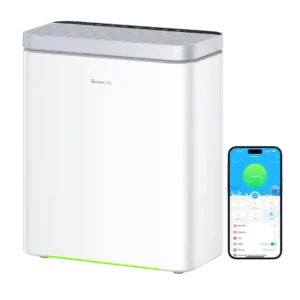
Choose the H7124 if you want a quiet smart purifier for odors, dust, pets, and app control. Skip it if you need foolproof Wi-Fi, wall-facing intake, UV light, or strong...
Pros: air purification performance, noise level
Cons: control placement
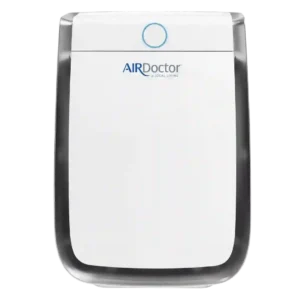
Best for strong room cleaning, allergy relief, odor control, and simple operation. Skip it if high filter costs, a larger footprint, or possible nighttime fan noise would bother you.
Pros: air purification performance, overall satisfaction
Cons: filter replacement cost
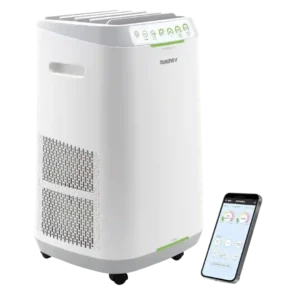
Choose this if you want strong odor, dust, smoke, and pet-air cleanup with washable filters. Skip it if turbo noise, Wi-Fi setup, or a high upfront price will bother you.
Pros: overall satisfaction, air purification performance
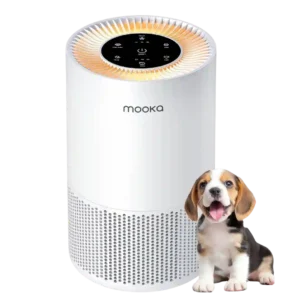
Best for a quiet, compact purifier that helps with dust, pet odors, and allergies. Skip it if you need verified smart sensing, strong aromatherapy, or guaranteed large-room coverage.
Pros: noise level, air purification performance
Cons: reliability