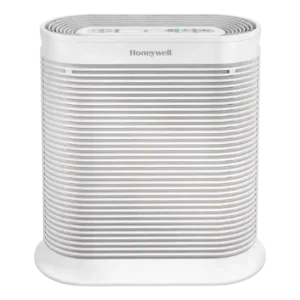
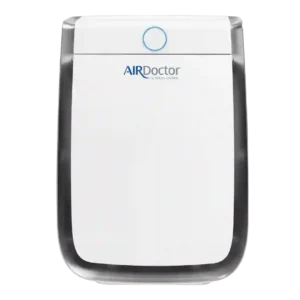
Honeywell AllergenPlus HPA304
Where It Has the Edge
No clear scored advantage over the other product.

Scorata scores summarize analyzed review evidence on a 1–5 scale; they are not laboratory measurements or a simple average of customer star ratings. Feature scores summarize the reviews covering that feature. The overall score averages feature scores within each review, then combines review averages. When both expert and customer evidence are available, those two groups receive equal weight. Products can have different review coverage, so small score gaps do not establish a winner.
Recommendations prioritize important features for the category, with a score of at least 3.5, a gap of at least 0.25 points and at least two supporting reviews per product. Features with widely varying scores or broad connectivity contexts are excluded from recommendations. These safeguards do not establish statistical significance.
Quick verdict
The available evidence supports the recommendation below, but does not establish an overall winner. Check the remaining features against your priorities.
There is not enough comparable review evidence to recommend Honeywell AllergenPlus HPA304 over the other product.
Choose AirDoctor AD3000 for ease of use and build quality.
No clear scored advantage over the other product.
Scores are out of 5. Missing scores mean missing review evidence, not a missing feature.
Reviewers consistently describe the purifier as effective at cleaning room air, often noticing cleaner or fresher air quickly.
Testing and most owners describe strong cleaning, with fast particle reductions and fresher-feeling rooms. A small set of customers say it made little difference or did not clean as expected.
Filter cost sentiment is mixed: some find replacements reasonable, while many customers call genuine filters expensive or awkwardly packaged.
Filter cost is the clearest recurring complaint: many owners call replacement filters pricey or expensive. A few accept the cost because genuine filters work or generic options exist.
Noise is the main tradeoff: low settings are often acceptable or sleep-friendly, while higher and turbo settings are frequently loud.
Noise feedback is mixed but leans positive at low settings: many owners sleep with it on or call it quiet, while several find it too loud for bedrooms or high speed.
Auto-mode evidence is negative or absent; reviewers point out that this model lacks true automatic air-quality adjustment.
Auto mode is one of the most praised traits, with reviewers saying it ramps up for smoke, perfume, cooking, and poor air, then settles back down. One negative customer felt the unit reacted but still failed to clear odor.
Review evidence supports filter life with the listed review IDs.
Filter life is mixed. Some users confirm the carbon filter lasted about as expected, while others complain filters need frequent replacement.
Review evidence supports filter availability with the listed review IDs.
Availability looks better than the cost: experts and users point to genuine yearly sets and generic filter options.
The activated carbon layer is credited with odor/VOC reduction, but one expert calls the bonded sheet flimsy.
The carbon filter earns praise for using pelleted carbon, though expert context notes it is smaller than heavy-carbon specialty units.
True HEPA mentions support the purifier’s credibility and cleaning outcomes in both expert and customer evidence.
HouseFresh liked that AirDoctor uses HEPA-certified filters with more activated carbon than some budget alternatives.
Display lighting is generally liked because the blue lights can be dimmed or turned off.
The air-quality display is easy to see from across the room, and one owner liked that it gets bright enough when needed.
Pre-filter feedback is mixed: it captures dust and hair well, but some users dislike fit, frequency, or carbon-sheet quality.
The outer pre-filter appears useful for pet households, with one owner amazed by how much pet hair it collected.
Filter stage opinions are mixed because reviewers like the multi-filter setup but some compare it unfavorably with three-stage designs.
Expert reviews describe a straightforward multi-stage setup using pre-filter, carbon, HEPA, and ionization, and they connect that configuration with strong performance.
Washable pre-filter evidence is limited to owners vacuuming or rinsing pre-filter material as part of maintenance.
Breathe Quality highlights the reusable washable pre-filter as a practical way to capture larger particles before they reach the main filters.
Reliability skews positive across long-term reviews, despite a cluster of defective or arrival-damaged experiences.
Reliability is mixed: some owners report years of satisfaction or no problems, but several received units with dead fans or early shutdowns.
Customer support sentiment is mixed but includes strong praise for replacement handling in one customer review.
Customer service is split: one long-term owner calls it top notch, one expert says it is dedicated, but problem cases describe weak support or slow refund handling.
Replacement experiences range from simple successful replacements to returns due to defects or damaged filters.
Filter reset is described as easy once the user manually holds the right buttons.
Arrival condition is mixed, with many fine deliveries but several reports of broken parts, damaged filters, or defective units.
Arrival condition is a notable risk in a few reviews, with customers reporting nonfunctional or possibly used units out of the box.
Value is usually praised because performance is strong for the price, offset by recurring filter and operating costs.
Value depends heavily on price. Many owners call it worth the money, while experts and dissatisfied customers warn that high purchase price and filters can sting.
Controls are generally simple, but touch sensitivity, filter access, and cleaning access create usability complaints for some owners.
Ease of use is a consistent strength, from clear controls and simple setup to straightforward button operation and assembly.
The only lock-related evidence is negative, from a pet-owner wishing the controls had a lockout feature.
HouseFresh liked the control lock because it can prevent kids or pets from changing settings.
Scheduling is weak: the basic timer helps some, but several owners want clock-based or preset automation.
Scheduling feedback is positive where mentioned: the timer can shut the unit off, and one owner pairs timer use with sleep mode.
Indicator-light feedback is mostly positive for dimming and filter reminders, with a few complaints about reminder logic.
Indicator-light feedback is split: an expert liked the dimmer, while one customer wished the lights could be dimmed.
Power consumption is a repeated expert concern, especially on turbo or 24-hour operation.
Power use is not the lowest, but expert estimates frame operating costs as manageable relative to its cleaning output.
Remote-control feedback is limited; one reviewer notes the absence but does not personally need it.
The lack of a remote is a downside in expert testing, especially for buyers expecting connected convenience.
Particle removal earns strong expert and customer support, including lab PM reductions and visible soot or particulate capture.
Expert tests measured sharp particulate drops, and users point to visible filter buildup as proof it captures fine debris. One expert thought the smallest-particle marketing overreaches but still called the trapping performance good.
Documentation evidence is limited but positive for the useful quick reference guide.
Documentation feedback is mixed. One user liked simple step-by-step instructions, while another criticized missing dB operating levels.
Energy efficiency is mixed to negative: Energy Star helps, but expert tests call out high power use.
Energy use is a mild expert caveat, with HouseFresh noting it draws a little more than a comparable EverestAir.
Portability is mixed: handles help, but experts call it heavy and some owners buy smaller units to avoid moving it.
Portability is a plus for a purifier this size, with handles, reasonable weight, and easy movement mentioned.
Maintenance is often described as simple, especially filter replacement, but pre-filters may need frequent vacuuming or cleaning.
Maintenance is widely described as easy, from filter replacement to vacuuming the outer filter and cleaning dust out of filters.
Smoke-related evidence is strong for wildfire smoke, incense, and household smoke events, with weaker results for harsh smoke odor.
Smoke performance is mostly praised for cooking, wildfire, chemical-treatment, and cigarette smells, with expert smoke testing also strong. Two customers said it failed with cigarette or cooking smoke.
Coverage is praised for large rooms, though some users say realistic room sizing matters and low settings can feel localized.
Reviewers generally find it well suited to bedrooms, living rooms, kitchens, and other medium-to-large areas. One expert frames coverage more conservatively than manufacturer claims, but still sees it as strong.
Sleep suitability depends on setting: low speed works for many sleepers, but there is no true sleep/silent mode.
Sleep and dimming controls are appreciated for turning off lights and keeping rooms darker at night. One owner wished dimming worked better.
Multiple speeds and turbo are useful, but some reviewers dislike the naming, loud upper speeds, or lack of smarter scheduling.
HouseFresh liked the spread between fan speeds because it lets users balance cleaning power and sound.
Air circulation and airflow are praised by owners who say the unit moves air well and circulates through rooms.
One critical customer still acknowledged that the unit had strong power to move air.
Dust removal is one of the most repeated positives, with filters visibly collecting dust and some owners dusting less often.
Many pet and remodel households saw less dust, cleaner air, and filters catching debris. One dissatisfied owner said it did not pick up dust in their room.
Allergy-focused reviewers repeatedly report less sneezing, easier breathing, improved sinuses, or reduced asthma/allergy symptoms.
Allergy comments are consistently positive, including fewer stuffy mornings, fewer sinus problems, and relief for households with pets or dusty rooms.
Pet owners frequently mention reduced dander, fur, cat hair, dog hair, or pet-related airborne mess.
Pet households often report less dog hair, dander, and airborne particles, especially on outer filters. One cat owner felt it was not sensitive enough to catch cat hair.
VOC evidence is positive in expert testing and filter descriptions, although the carbon media is not viewed as premium.
VOC feedback comes from a remodel user who liked having filtration aimed at renovation dust, allergens, and VOCs during poor indoor-air conditions.
HEPA filtration is central to positive cleaning outcomes and is repeatedly associated with dust, allergens, and particulate capture.
Experts like the UltraHEPA concept and filter size, but one customer reported a harsh chemical odor from the HEPA filter.
Odor results are generally positive for musty, stale, pet, litter, and household smells, though smoke odor is more challenging.
Odor control is a major strength for cooking, pets, weed, litter boxes, and basements. A few owners had the opposite experience, including weak odor improvement or a chemical smell from a filter.
CADR is a standout expert strength, repeatedly described as unusually high for the price and room class.
CADR is a clear expert strength: HouseFresh said the AHAM report matched testing, and ModernCastle measured 373 CFM for medium-to-large spaces.
Overall satisfaction is mostly positive, with many owners recommending it or calling it a great purchase despite a few tradeoffs.
Overall sentiment is strongly positive, with many customers calling it great, the best, or worth recommending. Negative satisfaction appears when units arrive defective, smell chemically, or fail to clean as expected.
Air-change evidence is limited but positive where reviewers describe meaningful room cycling capacity.
Breathe Quality says the ACH is strong enough to refresh an appropriately sized room about every 12 minutes.
Build quality is mixed, with praise for sturdiness but complaints about flimsy filters, panels, latches, or defective construction.
Build quality is mostly praised, with comments about sturdy construction, tight sealing, and a well-made feel. One expert preferred the internal build more than the exterior design.
Many long-term owners report years of continuous use, but several negative reviews cite defective or failed units.
Durability concerns come from a customer whose unit shut down after three months.
Handle design is a small positive because recessed or side handles make moving the large unit easier.
ModernCastle specifically praised the side handles as a thoughtful carrying aid.
Design is practical rather than stylish; some like the plain look, while others call it bulky or budget-looking.
Looks are mixed but mostly favorable from owners, who call it sleek, stylish, or nice-looking. One expert disliked the stubby appliance-like design.
The unit is often described as large or bulky, although some owners say it still fits their rooms or furniture well.
Size opinions vary. Experts like that it saves floor space for its power, but others call it stubby, bulky, or not small.
Smart features are a weak area because reviewers repeatedly note the lack of app, smart controls, and modern automation.
The standard AD3000 is intentionally basic. Experts mark it down for lacking bells and whistles, while one customer liked the automatic smart cleaning behavior.
Connectivity evidence is limited and negative because reviewers note there is no internet or app control.
Experts consistently note that the AD3000 lacks app or Wi-Fi connectivity, so buyers wanting phone controls should look elsewhere or consider a different model.
One owner noticed they no longer woke up with a dry throat, suggesting a more comfortable-feeling sleep environment.
Several owners use it around smoke, pets, or breathing-related issues and say it helped them breathe more comfortably, though these are personal outcomes rather than medical proof.
The control panel is considered well-designed and clear enough to use without relying heavily on the manual.
One owner specifically appreciated that the purifier filters formaldehyde and said it refreshed bedroom air.
Mold-related feedback is negative and limited to one owner who hoped it would help after mold toxicity but said it did not.
HouseFresh’s ozone check stayed around 0 to 0.1 PPM with ionization running, and the ionizer can be left off for sensitive users.
Pollen feedback is limited but positive, with one owner saying their home had no pollen and felt like clean air.
Owners appreciate seeing air-quality changes through front lights or quality-monitor indicators, especially when fires or room conditions worsen.
One owner complained that the purifier blows cold air, making lower-speed use more comfortable than higher settings.
Safety/certification evidence is limited but positive where Energy Star certification appears in pro lists.
Sensor accuracy is polarizing: many owners trust it when it responds to fires, smoke, hairspray, or particles, while others say it stays blue or is not sensitive enough.
Sleep-related feedback is positive: owners mention less stuffiness, fewer coughing wake-ups, soothing sound, or better sleep with the unit running.
Warranty impressions are mixed. One customer praised it, while others complained about Amazon warranty registration, a simple one-year term, or slow refund handling.
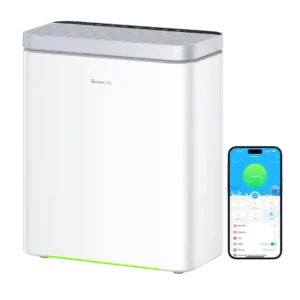
Choose the H7124 if you want a quiet smart purifier for odors, dust, pets, and app control. Skip it if you need foolproof Wi-Fi, wall-facing intake, UV light, or strong...
Pros: air purification performance, noise level
Cons: control placement
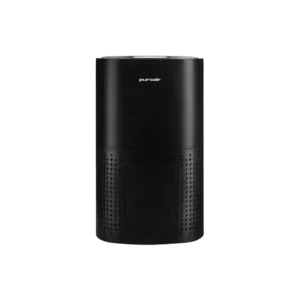
Best for quiet, simple cleaning in bedrooms or apartments. Skip it if you need verified large-room CADR value, app control, or guaranteed neighbor-smoke removal.
Pros: noise level, air purification performance
Cons: filter replacement cost, air quality sensor accuracy
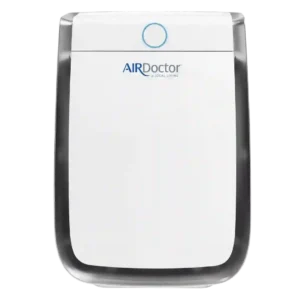
Best for strong room cleaning, allergy relief, odor control, and simple operation. Skip it if high filter costs, a larger footprint, or possible nighttime fan noise would bother you.
Pros: air purification performance, overall satisfaction
Cons: filter replacement cost
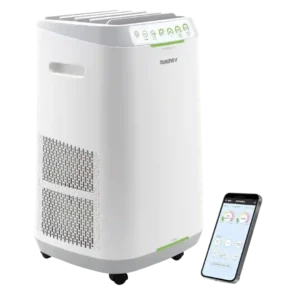
Choose this if you want strong odor, dust, smoke, and pet-air cleanup with washable filters. Skip it if turbo noise, Wi-Fi setup, or a high upfront price will bother you.
Pros: overall satisfaction, air purification performance