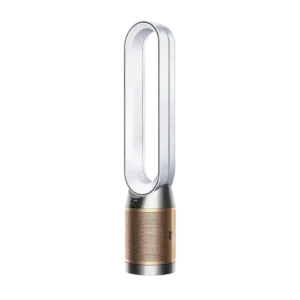
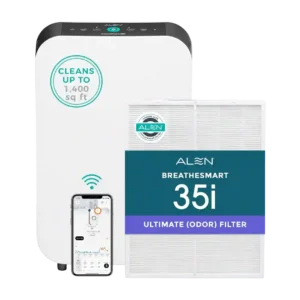
Dyson Purifier Cool Formaldehyde TP09
Where It Has the Edge
- room coverage is 4.1 vs 3.3. Room coverage evidence is positive in expert reviews and one customer’s whole-house foyer placement, though not universal.

Scorata scores summarize analyzed review evidence on a 1–5 scale; they are not laboratory measurements or a simple average of customer star ratings. Feature scores summarize the reviews covering that feature. The overall score averages feature scores within each review, then combines review averages. When both expert and customer evidence are available, those two groups receive equal weight. Products can have different review coverage, so small score gaps do not establish a winner.
Recommendations prioritize important features for the category, with a score of at least 3.5, a gap of at least 0.25 points and at least two supporting reviews per product. Features with widely varying scores or broad connectivity contexts are excluded from recommendations. These safeguards do not establish statistical significance.
Quick verdict
The review evidence points to a tradeoff: room coverage versus ease of use and smart features. Choose according to which strengths matter more to you; the overall score alone does not settle that choice.
Choose Dyson Purifier Cool Formaldehyde TP09 for room coverage.
Choose Alen BreatheSmart 35i for ease of use and smart features.
Scores are out of 5. Missing scores mean missing review evidence, not a missing feature.
Purification performance draws the strongest positive evidence from expert tests and many customers, but a smaller group reports no noticeable clean-air improvement.
Most reviewers say the purifier improves air quality or works well, though one customer reported poor cleaning performance.
Noise level is the most repeated concern: some find it quiet, but many report loud, high-pitched, whistling, or screeching sounds.
Noise feedback is strongly positive overall, but a few customers report weird sounds or rattling.
Filter replacement cost is a common caveat, usually described as pricey, though one related review considered longer filter life cost-effective.
Filter replacement cost is one of the clearest concerns, though a few customers accept it because replacements are less frequent.
Filter availability has limited but negative evidence from a customer who could not find filters available.
Filter availability is supported by long-term brand availability and subscription mentions.
Sensor accuracy is praised when it reacts to pollutants, but criticized in reviews describing flat-lined, inconsistent, or nonresponsive readings.
Experts and customers consistently praise the sensor as responsive, precise, and aligned with external measurements.
Activated carbon evidence is mixed: one customer valued it for general use, while another associated the carbon-style smell with an unpleasant odor concern.
Optional carbon filtration is appreciated for odor and gas coverage, but expert evidence says the carbon amount is limited for serious VOC problems.
Auto mode is generally praised for reacting to changing air quality, with isolated concern tied to noise or reliability.
Auto mode is praised when the laser sensor responds quickly, but one customer reported a defective unit that did not ramp up.
The display and monitor are consistently liked for readable air quality information and useful on-unit feedback.
Light and display feedback is positive, especially color-coded air quality and auto-dimming for bedrooms.
Filter-stage evidence is positive, emphasizing sealed HEPA, carbon, and catalytic filtration systems.
Filter customization and multiple filter types are praised by expert reviewers.
Reliability is a major weakness in customer reviews, with repeated reports of early failure, error messages, broken oscillation, and defective units.
Reliability evidence is negative where customers report odd noises, defects, or quitting use.
Customer support is one of the weakest recurring areas, with many warranty, return, repair, and response complaints.
Customer support evidence is mixed, with one defective-unit response but another customer calling AI support useless.
Value is sharply mixed: fans praise premium capability when discounted, while critics call the price excessive for weak airflow, noise, or failures.
Value is mixed: many think it is worth buying, while experts and one customer stress high upfront and ownership costs.
Ease of use is a strength, with setup, controls, and operation repeatedly described as easy or intuitive.
Setup and controls are repeatedly described as easy, intuitive, or plug-and-use.
Indicator evidence is mixed: readable alerts are useful, but one customer had persistent red filter alerts after replacing filters.
The filter indicator is praised because it reduces guessing about replacement timing.
Remote control is a recurring gap: reviewers like the magnetic remote when present, but missing, broken, or unsupported remotes hurt the experience.
Remote control is viewed positively through app and Wi-Fi control evidence.
The only child-lock evidence is a customer wishing the swivel had one, making this a small negative gap.
Child lock is liked by reviewers who want to prevent accidental control changes.
Sleep mode is mixed: some slept easily with it, while others say night mode is too weak or noise prevents sleep.
Sleep mode and bedroom use are reviewed positively because the unit is quiet and can dim lights.
Dust removal evidence is positive where reviewers describe the unit catching a remarkable amount or capturing ultrafine dust.
Dust evidence is mixed: experts measured dust-related removal, while one customer said dust buildup did not improve.
Odor reduction is mixed, with strong praise for removing cooking, musty, and off-gassing smells, but repeated complaints about chemical odors from the unit itself.
Odor reduction is one of the strongest customer-backed benefits, especially for pets, smoke odor, cooking, and basement smells.
Scheduling evidence is mixed: some users like scheduling controls while one expert notes the lack of a true scheduling system.
Scheduling is praised in app-focused expert/video reviews.
Maintenance is mostly easy, especially filter installation and replacement, though some customers struggle with clipping filters or compare other units unfavorably.
Maintenance is praised for easy filter access, low-maintenance use, and a strong filter-lock design.
VOC reduction is usually positive in expert evidence and formaldehyde/off-gassing use, though odor outcomes do not always follow.
VOC evidence is mixed: monitoring and some detection are praised, while experts warn carbon is limited for serious VOC issues.
Pollen evidence is limited but positive, centered on detecting pollen counts and allergy comfort.
Pollen evidence is mixed, with expert/customer positives but one customer saying spring pollen did not improve.
Real-time air quality monitoring is a major strength, repeatedly praised through the display and app data.
Real-time monitoring is a major strength, with repeated praise for alerts, app graphs, and color feedback.
Room coverage evidence is positive in expert reviews and one customer’s whole-house foyer placement, though not universal.
Room coverage is best for small rooms; reviewers repeatedly caution against expecting large-room performance.
Portability is mixed: one related review says the unit is easy to move, while TP09 owners note no handles and awkward handling.
Portability is repeatedly praised because the unit is light and easy to move.
Overall satisfaction is split between enthusiastic repeat-buy praise and disappointment from noise, failures, or value concerns.
Overall satisfaction is high across experts and most customers, offset by a few sharp negative experiences.
Smoke and combustion-particle evidence is positive in expert testing and cooking/smoke-related particle responses.
Smoke evidence is strong in expert testing and a customer fire-smoke odor account, but one defective-unit review is negative.
PM2.5 detection is supported by expert testing showing quick detection and response to particle spikes.
PM2.5 monitoring is praised through app data and sensor feature evidence.
Allergen-related evidence is strongly positive, with customers reporting better allergies, asthma, and less congestion.
Allergy-related feedback is strongly positive, including customer relief and third-party asthma/allergy suitability evidence.
Fan speed options are appreciated when they provide control, though some evidence says useful cooling requires high, louder speeds.
Fan-speed evidence is factual but positive enough in expert context because four speeds support usable control.
Particle removal is supported by expert PM testing and broad particle-capture evidence, though customer evidence is less specific.
Particle removal is strongly supported by expert test results, including near-complete removal in timed tests.
HEPA filtration evidence is positive where reviewers describe H13 HEPA as effective or part of the sealed filter system.
HEPA filtration is evaluated positively in expert discussion of particle and allergy coverage.
Handle design is weak because customers and experts note awkward movement and lack of easy grip points.
Handle design is praised because it helps make the unit easy to move.
Size and footprint are mixed, with praise for saving space and complaints that the unit is large for smaller rooms.
Customers and experts like the compact footprint, especially for bedrooms, studios, and unobtrusive placement.
Build quality gets strong expert praise for sturdy design, but some customers describe cheap materials, gaps, or declining brand quality.
Build quality is split: HouseFresh praises it, while Live Science and customers cite plastic, cheap feel, or rattling.
Design and appearance are widely praised as modern, stylish, compact-looking, and visually premium.
Design feedback is mostly positive for compact, unobtrusive looks, with one expert less impressed by the plastic body.
Durability is a major concern in customer reviews, with repeated early failures, bearing issues, and noise developing after weeks or months.
Durability concerns center on rattling after months and flimsier plastic housing.
Smart features are a strong differentiator, especially data tracking and app controls, though some advanced details are seen as nonessential.
Smart features are a major strength, especially app control, sensors, and auto behavior.
The app is usually valued for control and air data, but a few customers report unusable app access or pairing issues.
The app is usually praised for control and monitoring, but one expert/customer thread flags setup or registration friction.
Adjustable airflow, oscillation, and backflow/diffused modes are usually praised, though a few customers reported broken rotation or weak practical benefit.
Filter life is polarized: experts cite 6-12 months, some customers like long life, and others saw dirty filters in four months.
True HEPA evidence is positive, especially around H13 sealed filtration and pollutant capture.
VOC sensor accuracy is positive in some expert tests and mixed in customer skepticism around NO2/VOC response.
Expert testing supports useful air changes only in smaller rooms, with quiet-speed coverage falling below average bedroom sizing.
Air circulation is polarizing: several reviewers like the smooth breeze and room movement, while many customers say it barely cools or moves enough air for the price.
CADR evidence supports capable small-room performance, not large-space strength.
Documentation receives limited negative evidence, mostly around unclear assembly/app instructions or instructions not matching the returned unit.
Efficiency evidence is moderate: experts place energy cost mid-pack, while one customer calls it quiet and efficient.
Pet dander and animal-related feedback is positive, especially in homes with dogs and cats.
Power consumption is acceptable in expert testing but one customer complains it raises the bill.
Safety certification evidence is positive but limited to one expert discussion.
Arrival condition is inconsistent, ranging from excellent condition to damaged, broken, or poorly packed units.
Replacement and repair experiences are mostly negative, although one customer reports Dyson eventually made the issue right.
Warranty coverage is praised, especially the lifetime warranty tied to OEM filter use.
Sleep benefits are strongly positive in the few reviews that mention better sleep or breathing at night.
Voice assistant support is useful but uneven; Alexa and Siri support works for some controls but can be limited or wordy.
Wi-Fi reliability is mixed, with easy pairing for some and pairing/disconnect complaints for others.
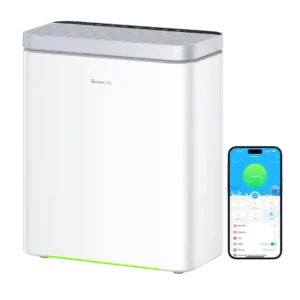
Choose the H7124 if you want a quiet smart purifier for odors, dust, pets, and app control. Skip it if you need foolproof Wi-Fi, wall-facing intake, UV light, or strong...
Pros: air purification performance, noise level
Cons: control placement
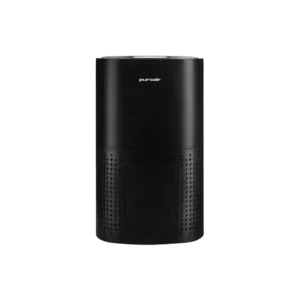
Best for quiet, simple cleaning in bedrooms or apartments. Skip it if you need verified large-room CADR value, app control, or guaranteed neighbor-smoke removal.
Pros: noise level, air purification performance
Cons: filter replacement cost, air quality sensor accuracy
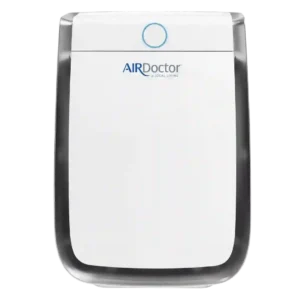
Best for strong room cleaning, allergy relief, odor control, and simple operation. Skip it if high filter costs, a larger footprint, or possible nighttime fan noise would bother you.
Pros: air purification performance, overall satisfaction
Cons: filter replacement cost
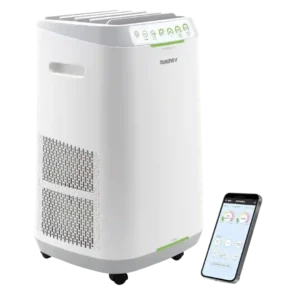
Choose this if you want strong odor, dust, smoke, and pet-air cleanup with washable filters. Skip it if turbo noise, Wi-Fi setup, or a high upfront price will bother you.
Pros: overall satisfaction, air purification performance