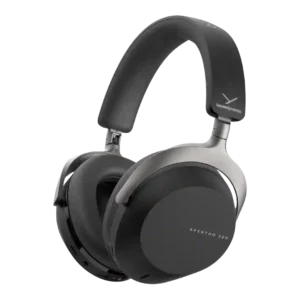
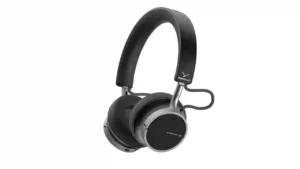
Beyerdynamic Aventho 300 Wireless Headphones
Where It Has the Edge
No clear scored advantage over the other product.

Scorata scores summarize analyzed review evidence on a 1–5 scale; they are not laboratory measurements or a simple average of customer star ratings. Feature scores summarize the reviews covering that feature. The overall score averages feature scores within each review, then combines review averages. When both expert and customer evidence are available, those two groups receive equal weight. Products can have different review coverage, so small score gaps do not establish a winner.
Recommendations prioritize important features for the category, with a score of at least 3.5, a gap of at least 0.25 points and at least two supporting reviews per product. Features with widely varying scores or broad connectivity contexts are excluded from recommendations. These safeguards do not establish statistical significance.
Quick verdict
The available evidence supports the recommendation below, but does not establish an overall winner. Check the remaining features against your priorities.
There is not enough comparable review evidence to recommend Beyerdynamic Aventho 300 Wireless Headphones over the other product.
Choose Beyerdynamic Aventho 100 for Weight comfort and Microphone noise reduction.
No clear scored advantage over the other product.
Scores are out of 5. Missing scores mean missing review evidence, not a missing feature.
Reviewer sentiment on sound quality is sharply split: several praise clear, rich, spacious sound, while SoundGuys-style measurements and one YouTube reviewer strongly criticize the tuning.
Most reviewers describe the sound as enjoyable, clear, and engaging, with especially strong praise from Tom’s Guide, HiFi Oasis, and HeadphoneCheck. A minority found the stock tuning merely average or dull, so EQ can make a meaningful difference.
LE Audio appears in praised codec-support evidence, but comments focus on the broader codec package rather than LE Audio alone.
Bluetooth LE support is absent, which one reviewer flagged as a disappointing omission from an otherwise modern wireless implementation.
ANC's effect on the sound signature is disputed: one review reports major tonal changes, while another says it barely interferes.
One reviewer found that engaging ANC left the core sound signature essentially unchanged, which makes switching noise cancellation on and off less disruptive.
Microphone noise reduction is a recurring weakness, with reviewers noting background noise, windy-condition issues, or processed-sounding voice pickup.
The microphone system does a good job suppressing background noise while keeping speech intelligible. Reviewers found it useful for calls in busier indoor and outdoor settings.
Most soundstage comments are positive, emphasizing width, space, and immersive placement, with wired USB-C also noted as improving space and clarity.
Soundstage is the most consistent acoustic limitation: several reviewers call it narrow, closed-in, or intimate because of the on-ear form factor. A few still found respectable depth or width, and wired listening can open it up somewhat.
ANC is mixed: some reviewers call it impressive or very good, while others say it trails premium Bose, Sony, and Apple-level cancellation.
ANC is one of the most widely praised features, cutting cafe, transit, office, and steady engine noise surprisingly well for an on-ear design. It still trails the very best flagship over-ear systems, and fit can affect both comfort and effectiveness.
ANC sound impact is split: one reviewer says ANC changes the music too much, while another finds minimal impact.
ANC’s effect on sound is mixed. One reviewer heard virtually no tonal change, while another found the sound more compressed and unnatural with ANC engaged.
Wind handling for calls is a weakness, with reviewers describing windy calls as difficult or only usable in limited conditions.
Wind handling is a recurring weakness outdoors, with crackling or audible wind noise reported in both ANC and transparency modes.
Passive isolation receives modestly positive evidence, helped by fit, but one review still notes ambient sound passing through.
Passive isolation is consistently good for an on-ear headphone and helps before ANC is even enabled. Reviewers still note that over-ear designs can seal more completely.
Immersive audio is mostly positive, with reviewers describing precise imaging, three-dimensional placement, or enveloping presentation.
One reviewer found the stereo presentation highly immersive, with sounds moving convincingly around the listener despite the compact on-ear design.
Bass is consistently described as prominent and powerful, with some reviewers enjoying the punch and others calling it boomy or excessive.
Bass is generally a strength: powerful, full-bodied, and clean enough for pop, hip-hop, and electronic music. Some reviewers found the default low end overemphasized or muddy, while others thought it was too restrained for true bass-head impact.
One review praises the lack of noticeable white noise in transparency/ambient behavior.
ANC itself adds very little objectionable background noise in most testing. One reviewer heard no disturbing hiss at all, while another described only a subtle ambient 'air' rather than a true hiss.
Frequency-response judgments are highly divided: some hear clear, competent tuning, while lab-focused reviews call the response inaccurate or disappointing.
One measurement-focused review found the default response noticeably uneven and in need of EQ. It became much more natural after correction, but stock accuracy was not a strength there.
Wear-detection auto-pause is praised for making interruption handling convenient.
Automatic wear-detection pause is missing, and the reviewer who called it out viewed that omission negatively.
Included accessories receive positive attention because of the unusual mix of hard case, soft pouch, and cables.
The accessory bundle is functional but not premium. Reviewers criticized the charging-only USB cable in one package and the dated USB-A termination in another.
Headband comfort is mixed: one reviewer praised crown comfort, while others felt top-of-head pressure or soreness.
The headband padding is generous and distributes pressure well. One reviewer reported no hot spots even during extended wear.
One review positively notes the ear cups' ability to swivel and lay flat.
Earcup swivel is functional but not universally intuitive. One reviewer disliked the direction the cups rotate when worn around the neck.
The case and carrying options are praised for protection, premium feel, and consumer-friendly flexibility.
The included soft pouch earns mixed reactions. Some reviewers liked its material and cable pocket, while others wanted a proper hard case or felt the bag looked too basic for the price.
Feature completeness is generally positive, with reviewers calling the product well featured and polished.
The feature set is deliberately streamlined rather than maximal, trading spatial-audio extras and other flagship features for a lower price and simpler experience.
Ear cup padding and fit draw mixed reactions, with praise for soft/deep cups offset by complaints about stiffness, shallow space, and pressure.
The memory-foam earpads are soft, thick, and comfortable in the positive fit case. Their cushioning helps offset the pressure inherent to an on-ear design.
Foldability helps travel use, though one comparison review notes that lack of folding versus some rivals can make packing harder.
The folding on-ear design makes the Aventho 100 exceptionally portable and much easier to bag than many over-ear alternatives. Even reviewers who disliked the fit still praised the compact footprint.
Overall recommendations are mixed: some reviewers love or recommend the Aventho 300, while others strongly advise against it at full price.
Overall recommendations are strongly positive but often conditional on fit. Reviewers repeatedly advise buying for the styling, portability, battery life, and enjoyable sound, while warning that on-ear comfort should be tested if possible.
One review praises the headband adjustment ratchets as high quality.
Headband adjustment works, but the range and mechanism are not perfect. Larger heads may reach the end of the extension, and one reviewer found even adjustment a little stiff.
Treble gets praise for clarity and controlled sparkle in some reviews, but other reviewers report sibilance, roll-off, or harshness.
Treble is mostly smooth and non-fatiguing, with several reviewers praising its clarity and lack of harshness. Others found the top end slightly dull, soft, or occasionally edgy, making this one of the more taste-dependent parts of the tuning.
Midrange impressions vary from warm, natural, and detailed to recessed or obscured, especially in critical measurement-focused reviews.
Midrange reproduction is usually clear, natural, and easy to follow, especially for vocals. A few reviews note some recession or resonance in the lower mids, particularly before EQ.
Sidetone is serviceable to good, with one review finding a natural setting and another calling it competent.
Sidetone can make calls feel more natural by feeding back enough of the wearer’s voice to reduce the sealed-off sensation.
The 3.5mm analog input is treated positively as part of flexible wired listening options.
The 3.5mm input is widely appreciated because it allows passive listening, airplane use, and continued playback when the battery dies. Several reviewers see the wired fallback as a major usability advantage.
Fit stability gets positive evidence from secure clamping that keeps the headphones in place.
The headphones stay securely in place during normal movement despite their light weight. Reviewers generally found the clamp sufficient to prevent slipping.
One comparison review notes that the product made a top wireless headphones list, reflecting positive recognition.
The 2025 Red Dot Design Award is repeatedly highlighted, and reviewers who discussed it generally felt the visual design deserved the recognition.
The integrated microphones can work well in quiet calls, but broader call-quality evidence suggests they are not consistently strong.
The integrated microphone array performs reliably for calls and computer meetings. It captures speech clearly without requiring a boom microphone.
Travel friendliness is positive thanks to durable build, foldability, and travel accessories.
Travel friendliness is a core strength: light weight, folding hinges, long battery life, and wired fallback all make the Aventho 100 easy to live with on the move.
Connectivity options are a strength, with reviewers praising wired and wireless flexibility.
Connection flexibility is excellent, spanning Bluetooth, analog 3.5mm, and USB audio in supported setups. Reviewers liked being able to choose the best connection for each device.
Instrument separation and detail are often praised, though one critical reviewer says the tuning undermines clarity.
Instrument separation is usually strong enough to keep individual parts distinct, even in busy tracks. The main exception comes from reviewers who heard congestion or weaker separation when mixes became especially dense.
Android compatibility is positive in testing that found Android and iOS pairing/features equally smooth.
Android support is excellent thanks to Google Fast Pair. Reviewers reported quick recognition, one-tap setup, and reliable behavior on compatible phones.
Multi-platform compatibility is positive, with smooth performance across iOS and Android devices.
The headphones work smoothly across phones and computers, including hassle-free use for video calls and everyday device switching.
Repairability gets positive evidence from replaceable pads and headband components.
Repairability is unusually strong for wireless headphones, with replaceable parts and even published disassembly guidance. Reviewers specifically praised this long-term ownership approach.
aptX support is treated as a meaningful advantage for listeners prioritizing lossless or high-quality Bluetooth audio.
aptX playback receives excellent marks, including praise for clean wireless sound with no obvious compression artifacts. Compatible devices can take good advantage of the headphone’s higher-quality wireless modes.
One reviewer strongly praised the discreet, professional look as one of the best-looking headphone designs they had encountered.
The Aventho 100 can look distinctive without becoming flashy. One reviewer specifically praised its understated styling as a good match for buyers who want something stylish but restrained.
Replaceable earpads are praised as a longevity benefit.
Earpads are easy to replace and lock securely back into place. That improves both longevity and the potential for future customization.
Preset EQ profiles are not strongly praised; reviewers using measurements found preset options unable to fully solve tuning problems.
At least one preset disappointed, with the bass mode described as dull and overly blunt. Custom EQ is the safer route for listeners who want to fine-tune the sound.
Replaceable pads and headband parts are praised as good for longevity.
The ear pads and headband pad can be replaced, which supports longer service life and easier maintenance.
Premium feel is consistently praised through comments about luxury, heft, materials, and a more premium impression than plastic rivals.
The Aventho 100 usually feels premium thanks to metal accents, refined styling, and solid construction. One reviewer thought the molded plastic sections kept it from fully matching its upscale appearance.
One reviewer found wireless volume output very strong, with no practical volume issues.
The headphones can play loudly with plenty of headroom. Reviewers who tested output level found them strong without obvious strain.
Transparency mode is generally usable and sometimes praised, though it is not consistently described as class-leading.
Transparency mode is generally useful and natural enough for conversations or situational awareness. Some reviewers heard muffling or wind interference outdoors, so performance is better in calm environments.
Weight comfort is mostly negative, with multiple reviewers calling the headphones hefty or heavy on the head.
At roughly 220 grams, the Aventho 100 feels notably light and easy to carry. Reviewers repeatedly connect the low weight with better everyday and travel comfort.
Clamping force is a repeated complaint, often described as tight or heat-inducing, even where reviewers acknowledge the secure fit.
Clamping force is the product’s biggest fit wildcard. Some reviewers found it secure and comfortable, while others experienced severe pressure that made extended listening difficult.
Design sentiment is strongly positive, with reviewers describing the look as sleek, premium, simple, and ergonomic.
The retro styling is one of the product’s most universal strengths, with reviewers repeatedly praising its 1970s or radio-operator aesthetic. The aluminum accents, compact proportions, and multiple finishes help it stand apart from generic wireless headphones.
Build quality is a consistent strength, with repeated praise for sturdy materials, premium construction, and solid engineering despite comfort tradeoffs.
Build quality is consistently excellent, with sturdy metal components, robust plastics, and little creaking. Reviewers often cite construction as one of the reasons the Aventho 100 feels worth its price.
Durability expectations are positive, with reviewers citing sturdy construction and longevity-oriented design.
Durability impressions are strong thanks to robust hinges, solid materials, and improved braided wiring. The foldable frame still feels capable of everyday commuting and travel abuse.
Hinge durability is praised for metal construction and confidence-inspiring feel.
Hinge construction inspires confidence, with metal structure and robust surrounding parts contributing to a durable folding mechanism.
Comfort is one of the most divided areas: some find the headphones comfortable, but many report tightness, weight, heat, or long-session discomfort.
Comfort is highly fit-dependent. Several reviewers wore the Aventho 100 for long stretches without fatigue, while others experienced sore ears, heat, or pressure after one to three hours.
Voice assistant support is mentioned positively as part of the control feature set.
Voice assistant integration has one notable software quirk: one reviewer found the assistant toggle behaved in the opposite way expected. The feature works, but that implementation was confusing.
Button usability is mixed: physical controls add reliability for some, but others find placement, feel, or access frustrating.
Physical buttons are a consistent usability strength: easy to find, responsive, and more reliable than touch controls for many reviewers. A short learning period may be needed because several buttons sit close together.
Call microphone quality ranges from good and natural to merely okay or unsuitable for noisy meetings.
Call quality is a strong point overall, with voices repeatedly described as clear, full, and easy to understand. One reviewer found it merely ordinary, but most testing was distinctly positive.
EQ customization is praised for usefulness, but critical reviewers say the five-band design is not granular enough to fix tuning issues.
EQ customization is one of the most useful features because multiple reviewers improved the stock sound with it. The five-band layout is simple and effective, though a few listeners wanted finer control.
Advanced features are considered competitive for the class, though not always ahead of Sony or Bose.
Software features are practical rather than extravagant, covering the adjustments most people are likely to use. Reviewers liked the range, though one wanted more button-mapping flexibility for ANC controls.
Software and setup are generally easy, with simple pairing and clear settings layout.
Initial setup is very easy, with quick recognition and straightforward firmware handling. Reviewers describe the onboarding process as essentially frictionless.
The app is usually seen as good, smooth, or easy to use, though one review calls it ordinary and another says its EQ is insufficient.
The companion app is broadly praised for being clean, fast, and easy to navigate. It covers ANC, transparency, EQ, button mapping, updates, and other practical settings without becoming overly complicated.
Bluetooth performance is a strength, with easy setup, newer Bluetooth support, and few reported connection problems.
Bluetooth performance is consistently stable, quick to pair, and reliable across normal room or office distances. No major dropouts or connection problems were reported in hands-on testing.
Voice prompts receive positive evidence because reviewers liked codec/status feedback and selectable prompt behavior.
Voice prompts are generally clear, pleasant, and useful for battery and mode feedback. One review noted that the spoken battery percentage could differ slightly from the app.
Value is mixed: some reviewers call the product a worthy or solid buy, while others think the price is hard to justify against stronger rivals.
Value is generally considered good to excellent for the combination of styling, battery life, ANC, build, and connectivity. A few reviewers still called the price high, especially when comfort or stock tuning did not suit them.
Codec support is widely praised for aptX Lossless, aptX Adaptive, AAC, and LE Audio options.
Codec support is unusually strong for this class, with AAC, SBC, aptX Adaptive, and aptX Lossless repeatedly highlighted. Reviewers see this as a meaningful advantage for compatible sources.
Multipoint works reliably in several reviews, though one reviewer disliked the inability to manage connected devices from the app.
Multipoint works well and is usually seamless between two devices. One review found that media had to be paused on the first device before the second would play, but the broader consensus is very positive.
Charging earns positive comments for modern USB-C charging and useful fast-charge performance.
Fast charging is outstanding, with about 15 minutes repeatedly translating into roughly 15 hours of playback. Reviewers see this as especially valuable for travel and last-minute charging.
Battery life is one of the strongest areas, repeatedly praised as excellent, exceptional, or standout versus competitors.
Battery life is the clearest point of consensus: reviewers repeatedly praise the roughly 60-hour ANC-off and 40-hour ANC-on endurance. Several testers went days or a full week without needing a charge.
Video sync is very good, especially with the low-latency option available when needed. Reviewers reported little to no lag after enabling the appropriate mode.
Transient and dynamic performance is good overall, with sharp articulation in one review. Another heard some smearing when very dense, heavily layered tracks became demanding.
Mechanical noise while worn is extremely low. One reviewer specifically praised the near absence of creaking or frame noise when moving the jaw.
Gaming support is solid thanks to low-latency mode and versatile multimedia performance. One reviewer still suggested Beyerdynamic’s MMX 200 Wireless as the smarter gaming-specific choice.
Idle noise is usually very low, but the experience depends on mode. One reviewer heard virtually no hiss or hum, while another noticed audible hiss in ANC or transparency with nothing playing.
Spatial audio is mixed: some enjoy the added space, while others find head tracking rough or the effect thin and distracting.
Wear detection performance is criticized in one review for resuming playback unexpectedly.
Auto-play and wear detection are described as easy to use in one review.
Wired hi-res playback is viewed positively through USB-C or wired lossless listening comments, though reviewers do not dwell on the DAC itself.
Cable quality is mixed: the exposed braided wiring on the headphone is praised for improved durability, while one reviewer thought the included analog cable felt cheap.
Channel separation is clear enough to give instruments and effects distinct left-right positioning. That helps the stereo image feel organized and precise.
Detail retrieval is good but not universally class-leading. Some reviewers heard impressive fine information, while others wanted more articulation and resolution from a Beyerdynamic headphone.
The Aventho 100 is easy to drive in normal use, with its active electronics handling amplification so a powerful source is not required.
Google account integration adds useful convenience on Android by remembering the headphones for quick reconnects across compatible devices.
Glasses can worsen clamp pressure for some users. One reviewer with thin frames became uncomfortable after roughly half an hour.
Imaging is a strength, with convincing depth, stable positioning, and clear spatial movement. Even when stage width is limited, placement within that space remains precise.
Clarity remains impressively intact at very high volume, with little muddiness or distortion reported. That makes the Aventho 100 unusually composed when pushed hard.
Overall satisfaction is high, with multiple reviewers calling the Aventho 100 fantastic, very good, or among their favorites. Negative reactions are driven mainly by fit and stock tuning rather than by basic functionality.
Sensor features are broader than basic wear detection, though one review notes implementation quirks.
Smudge resistance is mixed: one reviewer noticed smudges, while another praised the matte finish for avoiding fingerprints.
Touch controls are mostly considered reliable and responsive, although accidental activation and occasional misfires are noted.
USB-C is valued for charging and, in several reviews, wired or direct audio use.
The IP53 rating gives useful reassurance against dust, light rain, and some sweat. Reviewers still treat it as splash resistance rather than true waterproofing.
Bluetooth version is praised as up-to-date premium wireless technology.
Smart feature control is viewed positively where reviewers discuss fine-tuning features and multipoint-style convenience.
Smart Pause is praised for automatically handling playback when the headphones are removed or worn.
Dolby Atmos with head tracking is highly mixed, ranging from effective and low-latency to rough, thin, or not worth using.
Long sessions can make ears hot for listeners who struggle with on-ear designs. Two reviewers specifically reported heat buildup becoming uncomfortable after extended wear.
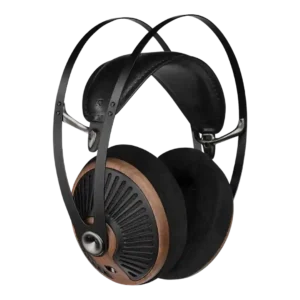
Choose the 105 Silva for beautiful, repairable construction, superb comfort, easy driveability, and an engaging spacious sound. Skip it if you need isolation, balanced connectivity, heavy sub-bass, or consistently smooth...
Pros: Volume output, Carry case quality
Cons: Connectivity options, Noise isolation (passive)
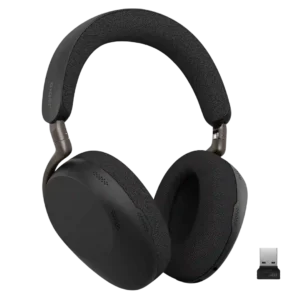
Choose it if your workday revolves around calls and you want exceptional mic isolation, huge battery life, all-day comfort, and a slim travel-friendly design. Skip it if music fidelity, class-leading...
Pros: Frequency response accuracy, Clamping force comfort
Cons: Volume output, aptX
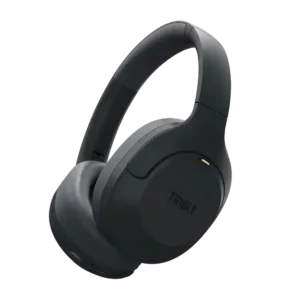
Best for exceptional battery life, useful ANC, flexible EQ, and strong budget value. Skip it if refined, detailed sound or polished controls matter more than price.
Pros: Maximum volume clarity, Microphone quality for calls
Cons: Idle static noise, Instrument separation
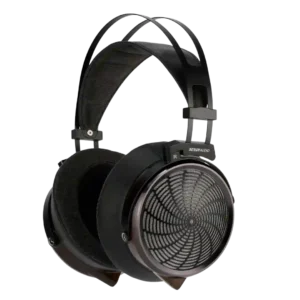
Best for spacious, detailed home listening, excellent comfort, and premium construction. Skip it for commuting, private shared-space use, built-in voice chat, or subwoofer-like bass impact.
Pros: Overall satisfaction, Glasses and hat compatibility
Cons: Travel friendliness, Sound leakage