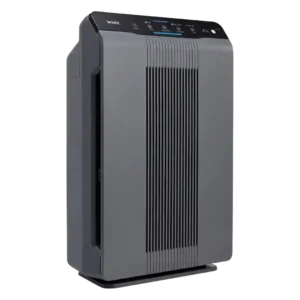
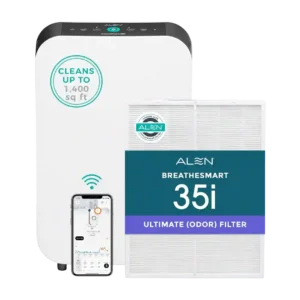
Winix 5300-2
Where It Has the Edge
- particle removal effectiveness is 5.0 vs 4.7. Review evidence for particle removal effectiveness is represented by the listed source reviews and reflects the scored praise,...

Scorata scores summarize analyzed review evidence on a 1–5 scale; they are not laboratory measurements or a simple average of customer star ratings. Feature scores summarize the reviews covering that feature. The overall score averages feature scores within each review, then combines review averages. When both expert and customer evidence are available, those two groups receive equal weight. Products can have different review coverage, so small score gaps do not establish a winner.
Recommendations prioritize important features for the category, with a score of at least 3.5, a gap of at least 0.25 points and at least two supporting reviews per product. Features with widely varying scores or broad connectivity contexts are excluded from recommendations. These safeguards do not establish statistical significance.
Quick verdict
The review evidence points to a tradeoff: particle removal effectiveness versus activated carbon filter and odor reduction. Choose according to which strengths matter more to you; the overall score alone does not settle that choice.
Choose Winix 5300-2 for particle removal effectiveness.
Choose Alen BreatheSmart 35i for activated carbon filter and odor reduction.
Scores are out of 5. Missing scores mean missing review evidence, not a missing feature.
Reviewers broadly say the Winix 5300-2 improves air quality and cleans rooms effectively, though reduced output appears in a few failure reports.
Most reviewers say the purifier improves air quality or works well, though one customer reported poor cleaning performance.
Filter cost is split between praise for cheap third-party/yearly packs and complaints that OEM or frequent replacements are expensive.
Filter replacement cost is one of the clearest concerns, though a few customers accept it because replacements are less frequent.
Low and medium speeds are often quiet, while high/turbo can be loud and some older units develop whining, humming, or ticking.
Noise feedback is strongly positive overall, but a few customers report weird sounds or rattling.
Review evidence for filter life is represented by the listed source reviews and reflects the scored praise, criticism, or tradeoff in those transcripts.
Filter life is polarized: experts cite 6-12 months, some customers like long life, and others saw dirty filters in four months.
Auto mode is useful for hands-off cleaning, but some owners distrust it because sleep mode or low speeds can under-clean.
Auto mode is praised when the laser sensor responds quickly, but one customer reported a defective unit that did not ramp up.
The sensor often reacts to fumes, smoke, cooking, and odors, though several reviewers say it can miss smells or become less sensitive.
Experts and customers consistently praise the sensor as responsive, precise, and aligned with external measurements.
Review evidence for filter availability is represented by the listed source reviews and reflects the scored praise, criticism, or tradeoff in those transcripts.
Filter availability is supported by long-term brand availability and subscription mentions.
The carbon filter helps with light odors, but multiple reviewers consider it thinner or weaker than heavier charcoal filters.
Optional carbon filtration is appreciated for odor and gas coverage, but expert evidence says the carbon amount is limited for serious VOC problems.
Review evidence for display readability is represented by the listed source reviews and reflects the scored praise, criticism, or tradeoff in those transcripts.
Light and display feedback is positive, especially color-coded air quality and auto-dimming for bedrooms.
Review evidence for filter stages is represented by the listed source reviews and reflects the scored praise, criticism, or tradeoff in those transcripts.
Filter customization and multiple filter types are praised by expert reviewers.
Reliability is mixed: many units run for years, but repeated reviews report bearing noise, ticking, reduced output, or failure.
Reliability evidence is negative where customers report odd noises, defects, or quitting use.
Review evidence for customer support is represented by the listed source reviews and reflects the scored praise, criticism, or tradeoff in those transcripts.
Customer support evidence is mixed, with one defective-unit response but another customer calling AI support useless.
Value is a major strength, with reviewers calling it inexpensive, worth the money, and strong for the price.
Value is mixed: many think it is worth buying, while experts and one customer stress high upfront and ownership costs.
Review evidence for ease of use is represented by the listed source reviews and reflects the scored praise, criticism, or tradeoff in those transcripts.
Setup and controls are repeatedly described as easy, intuitive, or plug-and-use.
Review evidence for indicator lights is represented by the listed source reviews and reflects the scored praise, criticism, or tradeoff in those transcripts.
The filter indicator is praised because it reduces guessing about replacement timing.
Dust removal is one of the strongest themes, with many customers seeing less dust on surfaces and visible debris on the pre-filter.
Dust evidence is mixed: experts measured dust-related removal, while one customer said dust buildup did not improve.
Review evidence for fan speed options is represented by the listed source reviews and reflects the scored praise, criticism, or tradeoff in those transcripts.
Fan-speed evidence is factual but positive enough in expert context because four speeds support usable control.
Review evidence for pollen removal is represented by the listed source reviews and reflects the scored praise, criticism, or tradeoff in those transcripts.
Pollen evidence is mixed, with expert/customer positives but one customer saying spring pollen did not improve.
Review evidence for power consumption is represented by the listed source reviews and reflects the scored praise, criticism, or tradeoff in those transcripts.
Power consumption is acceptable in expert testing but one customer complains it raises the bill.
Review evidence for VOC reduction is represented by the listed source reviews and reflects the scored praise, criticism, or tradeoff in those transcripts.
VOC evidence is mixed: monitoring and some detection are praised, while experts warn carbon is limited for serious VOC issues.
Review evidence for room coverage is represented by the listed source reviews and reflects the scored praise, criticism, or tradeoff in those transcripts.
Room coverage is best for small rooms; reviewers repeatedly caution against expecting large-room performance.
Review evidence for air changes per hour is represented by the listed source reviews and reflects the scored praise, criticism, or tradeoff in those transcripts.
Expert testing supports useful air changes only in smaller rooms, with quiet-speed coverage falling below average bedroom sizing.
Review evidence for portability is represented by the listed source reviews and reflects the scored praise, criticism, or tradeoff in those transcripts.
Portability is repeatedly praised because the unit is light and easy to move.
Review evidence for real-time air quality monitoring is represented by the listed source reviews and reflects the scored praise, criticism, or tradeoff in those transcripts.
Real-time monitoring is a major strength, with repeated praise for alerts, app graphs, and color feedback.
Odor reduction is often strong for cooking, pets, litter, smoke smell, and stale rooms, but weaker for heavy VOCs or weed smoke.
Odor reduction is one of the strongest customer-backed benefits, especially for pets, smoke odor, cooking, and basement smells.
Review evidence for CADR rating is represented by the listed source reviews and reflects the scored praise, criticism, or tradeoff in those transcripts.
CADR evidence supports capable small-room performance, not large-space strength.
Review evidence for smoke removal is represented by the listed source reviews and reflects the scored praise, criticism, or tradeoff in those transcripts.
Smoke evidence is strong in expert testing and a customer fire-smoke odor account, but one defective-unit review is negative.
Allergy and asthma users are highly positive, often reporting less sneezing, clearer sinuses, easier breathing, and better sleep.
Allergy-related feedback is strongly positive, including customer relief and third-party asthma/allergy suitability evidence.
Review evidence for particle removal effectiveness is represented by the listed source reviews and reflects the scored praise, criticism, or tradeoff in those transcripts.
Particle removal is strongly supported by expert test results, including near-complete removal in timed tests.
Review evidence for maintenance ease is represented by the listed source reviews and reflects the scored praise, criticism, or tradeoff in those transcripts.
Maintenance is praised for easy filter access, low-maintenance use, and a strong filter-lock design.
Review evidence for sleep mode is represented by the listed source reviews and reflects the scored praise, criticism, or tradeoff in those transcripts.
Sleep mode and bedroom use are reviewed positively because the unit is quiet and can dim lights.
Review evidence for energy efficiency is represented by the listed source reviews and reflects the scored praise, criticism, or tradeoff in those transcripts.
Efficiency evidence is moderate: experts place energy cost mid-pack, while one customer calls it quiet and efficient.
Review evidence for overall satisfaction is represented by the listed source reviews and reflects the scored praise, criticism, or tradeoff in those transcripts.
Overall satisfaction is high across experts and most customers, offset by a few sharp negative experiences.
Review evidence for pet dander removal is represented by the listed source reviews and reflects the scored praise, criticism, or tradeoff in those transcripts.
Pet dander and animal-related feedback is positive, especially in homes with dogs and cats.
Review evidence for HEPA filtration is represented by the listed source reviews and reflects the scored praise, criticism, or tradeoff in those transcripts.
HEPA filtration is evaluated positively in expert discussion of particle and allergy coverage.
Review evidence for safety certifications is represented by the listed source reviews and reflects the scored praise, criticism, or tradeoff in those transcripts.
Safety certification evidence is positive but limited to one expert discussion.
Review evidence for scheduling options is represented by the listed source reviews and reflects the scored praise, criticism, or tradeoff in those transcripts.
Scheduling is praised in app-focused expert/video reviews.
Review evidence for durability is represented by the listed source reviews and reflects the scored praise, criticism, or tradeoff in those transcripts.
Durability concerns center on rattling after months and flimsier plastic housing.
Review evidence for build quality is represented by the listed source reviews and reflects the scored praise, criticism, or tradeoff in those transcripts.
Build quality is split: HouseFresh praises it, while Live Science and customers cite plastic, cheap feel, or rattling.
Review evidence for handle design is represented by the listed source reviews and reflects the scored praise, criticism, or tradeoff in those transcripts.
Handle design is praised because it helps make the unit easy to move.
Review evidence for size and footprint is represented by the listed source reviews and reflects the scored praise, criticism, or tradeoff in those transcripts.
Customers and experts like the compact footprint, especially for bedrooms, studios, and unobtrusive placement.
Review evidence for design and appearance is represented by the listed source reviews and reflects the scored praise, criticism, or tradeoff in those transcripts.
Design feedback is mostly positive for compact, unobtrusive looks, with one expert less impressed by the plastic body.
Review evidence for smart features is represented by the listed source reviews and reflects the scored praise, criticism, or tradeoff in those transcripts.
Smart features are a major strength, especially app control, sensors, and auto behavior.
The app is usually praised for control and monitoring, but one expert/customer thread flags setup or registration friction.
Child lock is liked by reviewers who want to prevent accidental control changes.
Review evidence for mold spore reduction is represented by the listed source reviews and reflects the scored praise, criticism, or tradeoff in those transcripts.
Ozone/PlasmaWave evidence is mixed: some reviewers notice no ozone, while others worry about trace ozone, smell, or irritation.
PM2.5 monitoring is praised through app data and sensor feature evidence.
Remote control is viewed positively through app and Wi-Fi control evidence.
Review evidence for UV-C light effectiveness is represented by the listed source reviews and reflects the scored praise, criticism, or tradeoff in those transcripts.
Review evidence for pre-filter quality is represented by the listed source reviews and reflects the scored praise, criticism, or tradeoff in those transcripts.
Review evidence for true HEPA filter is represented by the listed source reviews and reflects the scored praise, criticism, or tradeoff in those transcripts.
Review evidence for VOC sensor accuracy is represented by the listed source reviews and reflects the scored praise, criticism, or tradeoff in those transcripts.
Review evidence for washable pre-filter is represented by the listed source reviews and reflects the scored praise, criticism, or tradeoff in those transcripts.
Sleep benefits are strongly positive in the few reviews that mention better sleep or breathing at night.
Warranty coverage is praised, especially the lifetime warranty tied to OEM filter use.
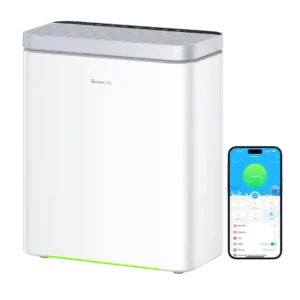
Choose the H7124 if you want a quiet smart purifier for odors, dust, pets, and app control. Skip it if you need foolproof Wi-Fi, wall-facing intake, UV light, or strong...
Pros: air purification performance, noise level
Cons: control placement
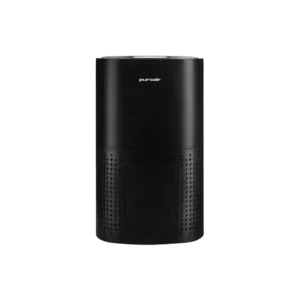
Best for quiet, simple cleaning in bedrooms or apartments. Skip it if you need verified large-room CADR value, app control, or guaranteed neighbor-smoke removal.
Pros: noise level, air purification performance
Cons: filter replacement cost, air quality sensor accuracy
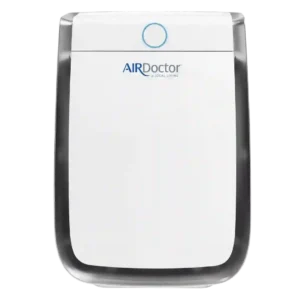
Best for strong room cleaning, allergy relief, odor control, and simple operation. Skip it if high filter costs, a larger footprint, or possible nighttime fan noise would bother you.
Pros: air purification performance, overall satisfaction
Cons: filter replacement cost
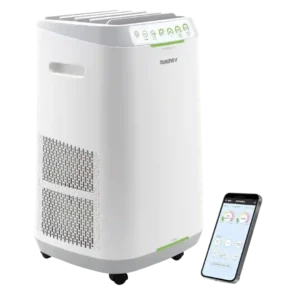
Choose this if you want strong odor, dust, smoke, and pet-air cleanup with washable filters. Skip it if turbo noise, Wi-Fi setup, or a high upfront price will bother you.
Pros: overall satisfaction, air purification performance