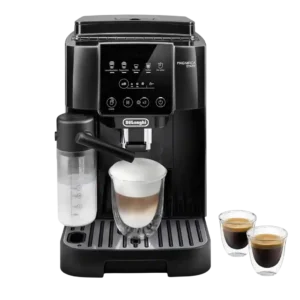
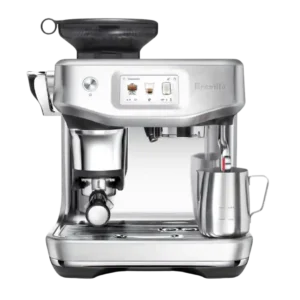
De’Longhi Magnifica Start Automatic Espresso Machine
Where It Has the Edge
- Value and Price is 4.1 vs 3.6. Value is generally strong at the right price, but some reviewers warn that competing or related models may...

Scorata scores summarize analyzed review evidence on a 1–5 scale; they are not laboratory measurements or a simple average of customer star ratings. Feature scores summarize the reviews covering that feature. The overall score averages feature scores within each review, then combines review averages. When both expert and customer evidence are available, those two groups receive equal weight. Products can have different review coverage, so small score gaps do not establish a winner.
Recommendations prioritize important features for the category, with a score of at least 3.5, a gap of at least 0.25 points and at least two supporting reviews per product. Features with widely varying scores or broad connectivity contexts are excluded from recommendations. These safeguards do not establish statistical significance.
Quick verdict
The review evidence points to a tradeoff: Value and Price versus Grinder, hopper and dosing system and Capacity. Choose according to which strengths matter more to you; the overall score alone does not settle that choice.
Choose De’Longhi Magnifica Start Automatic Espresso Machine for Value and Price.
Choose Breville Barista Touch Impress Espresso Machine for Grinder, hopper and dosing system and Capacity.
Scores are out of 5. Missing scores mean missing review evidence, not a missing feature.
Iced drink evidence is limited but negative: one reviewer indicates iced-coffee drinkers may be better served by the Evo instead.
Cold and iced drink evidence is positive but limited: cold extraction is described as working well, and iced latte/Americano use is praised by one reviewer.
Used-puck handling is mostly convenient because the machine ejects pucks automatically, though frequent emptying remains a drawback for heavy users.
Used-puck disposal has a notable negative datapoint: one reviewer found pucks unusually hard to knock out compared with another Breville model.
Pump performance is adequate for normal espresso but struggles at the finest grind settings and cannot match more advanced pressure-control systems.
One reviewer’s pressure testing found the machine reaching nine-bar shot pressure, supporting a positive but limited score for pump-pressure behavior.
The grinder system is praised for steel burrs and consistency, but its loud, shrill sound and freshness/dosing compromises lower the overall score.
The Baratza/Etzinger burr grinder, hopper, and dosing system receive strong praise for consistency, responsiveness, and beginner-friendly dose correction.
Carafe and cup handling are mostly convenient, especially the detachable and dishwasher-safe milk carafe, but tall mugs and some drink workflows create friction.
Cup, tray, and storage handling are praised in one detailed review, especially the robust, well-finished drip tray and hidden storage.
Capacity is a recurring compromise, with comments about the small hopper, small tank, frequent emptying and limited dosing capacity.
Capacity is generally adequate to good for the hopper and water tank, but the machine itself is large and one reviewer emphasizes counter-space demands.
Hot water functionality is useful for tea or Americanos, with one reviewer preferring the panarello version for frequent hot-water use.
Hot-water performance is sharply split: one detailed review finds it badly designed for Americanos, while others like automatic Americano water dispensing.
The overall experience is easy and convenient, but the evidence also points to a basic, compromise-heavy machine rather than a premium one.
Overall user experience is the clearest win: all reviews frame the machine as intuitive, enjoyable, approachable, and especially strong for beginners or shared households.
Heating is mixed: some reviewers praise fast warmup and steaming-hot drinks, while others find the first cup not warm enough.
Heating performance is mostly praised for rapid ThermoJet warmup and high temperature capability, though one review notes the practical preheating workflow is slower than advertised readiness suggests.
One reviewer says the machine does not require many extras, while still suggesting a filter and fresh beans as useful add-ons.
Accessories are generally strong, with several reviewers describing a comprehensive kit or unusually generous accessory bundle, despite missing a knock box in some comments.
Espresso and drink quality are strongly positive overall, with reviewers praising balanced espresso, crema, good flavor and strong results after dialing in.
Reviewers consistently praise the espresso and beverage output, from world-class-leaning shots and rich body to satisfying Americanos and milk drinks, with only minor taste-tuning caveats.
Milk performance is one of the strongest areas when equipped with LatteCrema, though manual steaming and milk temperature draw more mixed reactions.
Milk and steaming are a major strength overall, especially manual steaming and many automatic results, but Auto-MilQ and alternative-milk results are mixed across reviewers.
Maintenance is mostly manageable thanks to removable parts, rinsing and descaling routines, but some reviewers note more frequent or thorough cleaning needs.
Maintenance is mostly easy, with guided cleaning, auto purge behavior, filter benefits, and descaling prompts, although one reviewer notes higher water and drip-tray usage.
Reviewers like the quick, one-touch workflow and fast warmup, though the speed praise centers on convenience rather than advanced performance.
Speed is generally praised thanks to quick heating, queuing, and fast workflows, though some milk steaming and preheating steps still take time.
Reviewers consistently value the automatic workflow, including one-touch brewing, remembered settings and hands-off grinding, compacting and extraction.
Automation is the product’s defining strength: reviewers praise adaptive dosing, guidance, sensors, and workflow simplification, while acknowledging some guidance is basic.
Reviewer evidence is mixed: one sees the lack of app or touchscreen as unnecessary, while another says missing app and scheduling features separate it from premium models.
Connectivity is a weakness: reviewers criticize the lack of WiFi, USB, and firmware-update paths on a software-heavy appliance.
Warranty and support evidence is mixed, with one reviewer noting basic warranty confidence and another reporting mixed customer-service experiences.
Warranty and support evidence is limited but positive, with one reviewer calling the two-year Breville warranty excellent.
Setup and programming range from easy once understood to held back by weak documentation; reviewers liked the straightforward controls but disliked the manual.
Setup and onboarding are repeatedly described as easy, guided, and beginner-friendly, often reducing the need for a manual.
Value is generally strong at the right price, but some reviewers warn that competing or related models may make more sense depending on pricing.
Value depends heavily on price: reviewers like the quality/convenience blend and sale pricing, but several consider MSRP expensive.
Filters are viewed as useful for reducing descaling or extending machine life, though they also add recurring cost in the broader ownership discussion.
Filter evidence is limited but favorable, with the Claris-style water filter described as better than many espresso-machine systems.
Brewing performance is generally praised after dialing in, with reviewers noting consistency, depth, good extraction and solid coffee output for the class.
Brewing consistency is a core strength once dialed in, with reviewers noting repeatable shots, stable dosing, and quality that holds despite the simplified workflow.
Marketing and positioning drew skepticism: reviewers said the drink count includes hot water and that the machine is not fully plug-and-play despite that impression.
Marketing-claim accuracy is mixed, with one reviewer specifically calling the non-dairy milk settings a sales gimmick despite liking the machine overall.
Build quality is split: some reviewers say it feels well-made and heavy, while others criticize the plastic-forward construction and budget feel.
Build quality is mostly positive, with high-end feel and solid metal construction, though some reviewers call internal build merely adequate or dislike plastic trim.
Reviewers generally like the compact footprint and simple look, though one comparison reviewer finds the interface merely functional rather than special.
Design and ergonomics are widely praised for screen quality, intuitive interface, and wipeable curves, balanced by concerns about footprint and height.
The loud grinder, sensitive touch buttons and non-true double shot are the clearest design flaws reviewers call out.
Design flaws recur around hot-water behavior, limited software/connectivity, plastic inserts or trim, missing cold milk foam, and removed or weak expert-control features.
The single-heater design is a mixed tradeoff: it enables fast heatup, but reviewers note cold-start limitations and inability to brew and steam simultaneously.
Consumables are a cost concern because the review evidence points to proprietary descaling requirements adding to ownership costs.
Packaging sustainability scores poorly because one reviewer strongly criticizes the heavy styrofoam packaging despite praising newer Breville packaging approaches elsewhere.
The guided tamping system earns broad praise for tactile feel, calibrated pressure, reduced mess, and beginner-friendly consistency.
Popularity evidence is positive, with reviewers calling the Touch/Touch Impress line best-selling and the model a staple seller in Breville’s lineup.
Recognition evidence is limited to one review outlet naming this model its new best-overall winner, but that is a strong external endorsement.
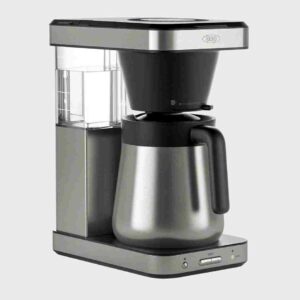
Choose the OXO Brew 8-Cup if you want fast, consistent drip coffee in small or full batches. Skip it if you need programming, app controls, a larger pot, or the...
Pros: Brewing performance and consistency, Overall user experience
Cons: Design flaws
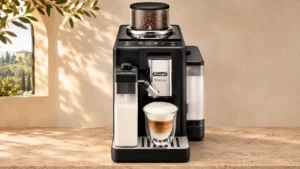
Swappable bean hoppers, intuitive controls and silky automatic milk foam make the Rivelia unusually convenient for varied coffee routines. The premium price, grinder-clearing step and optional cold-foam upgrade are worth...
Pros: Grinder, hopper and dosing system, Espresso and beverage quality
Cons: Iced / cold-brew function quality, Capacity
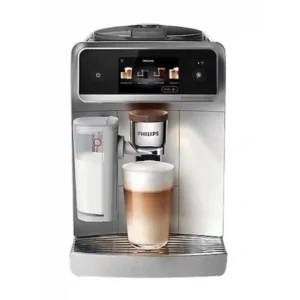
Best for effortless, highly personalized hot and cold coffee in a busy multi-drinker home. Skip it if counter space is tight, you demand silky adjustable microfoam, or the premium price...
Pros: Automation and sensors, Overall user experience
Cons: Design flaws, Mess-free used-puck disposal
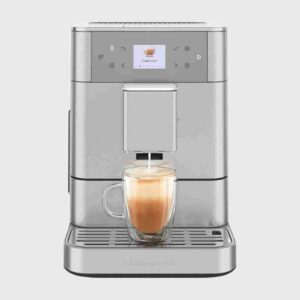
Choose the KitchenAid KF6 for rich espresso, quiet operation, easy cleaning, and strong value in a super-automatic. Skip it if dense cappuccino foam, plant-milk presets, touchscreen controls, or an included...
Pros: Water system, maintenance and descaling, Overall user experience
Cons: Accessories, Design flaws