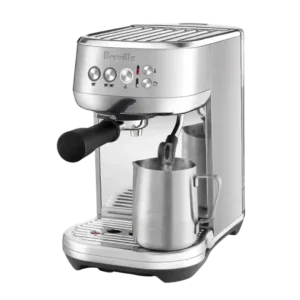
Breville Bambino Plus Espresso Machine
Where It Has the Edge
No clear scored advantage over the other product.

Scorata scores summarize analyzed review evidence on a 1–5 scale; they are not laboratory measurements or a simple average of customer star ratings. Feature scores summarize the reviews covering that feature. The overall score averages feature scores within each review, then combines review averages. When both expert and customer evidence are available, those two groups receive equal weight. Products can have different review coverage, so small score gaps do not establish a winner.
Recommendations prioritize important features for the category, with a score of at least 3.5, a gap of at least 0.25 points and at least two supporting reviews per product. Features with widely varying scores or broad connectivity contexts are excluded from recommendations. These safeguards do not establish statistical significance.
Quick verdict
The available evidence supports the recommendation below, but does not establish an overall winner. Check the remaining features against your priorities.
There is not enough comparable review evidence to recommend Breville Bambino Plus Espresso Machine over the other product.
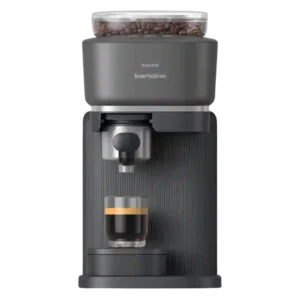
Choose Philips Baristina for Design, ergonomics and footprint.
No clear scored advantage over the other product.
Scores are out of 5. Missing scores mean missing review evidence, not a missing feature.
Packaging sustainability is a clear weak point in the evidence because one reviewer criticized the continued use of styrofoam and non-biodegradable plastic.
One expert praised the sturdy, fully recyclable packaging as compact, protective, and thoughtfully presented.
The 9-bar pressure/OPV setup is consistently praised as appropriate for espresso and helpful for producing better-tasting shots.
Pressure is strong and crema-rich on healthy units, but many failed machines lose pressure and produce watery shots or leaks.
Milk steaming is one of the strongest points, with auto and manual modes often producing impressive microfoam, though a few reviewers found auto foam imperfect.
There is no built-in steam wand. The optional frother can make enjoyable, thick foam, but it costs extra and offers less milk-texture control than a steam wand.
Hot water exists and can be convenient, but reviewers repeatedly call the button combination awkward or less ideal for frequent Americano use.
There is no dedicated hot-water outlet, so Americano drinkers must work around the machine rather than dispense clean hot water directly.
Accessory coverage is generally generous and compatible with many 54mm add-ons, though some reviewers dislike the stock portafilter or tamper.
The optional milk frother broadens the setup, but several reviewers dislike paying extra for it or finding key add-ons unavailable; others appreciate the matching accessory options.
Overall user experience is praised for speed, ease, compactness, and quality results, although one user found the espresso workflow finicky.
Short-term ownership is often delightful: fast, simple, compact, and low-fuss. The experience turns sharply negative for owners whose units leak, jam, or stop brewing after a few months.
Portability evidence is limited, but one long-term reviewer liked it enough to take the machine to a hotel.
One reviewer considered the compact machine small enough to take camping, suggesting unusual travel potential for an espresso maker with an integrated grinder.
Only one reviewer raised a cable-related concern, noting the separate grinder setup changed a single power cord into two.
Cord and plug placement gets minor but consistent criticism, with the rear cord or protruding plug making placement less tidy on crowded counters.
Auto purge, cleaning reminders, easy descaling/backflush steps, and reservoir guidance are positives, although one long-term user found routine cleaning confusing.
Daily cleaning is generally simple, but long-term maintenance is clouded by leaks, clogs, hard-to-access grinder areas, and cases where cleaning or descaling does not resolve failures.
Reviewers repeatedly say the Bambino Plus can make very good to cafe-quality espresso, especially with fresh beans, a capable grinder, and appropriate prep.
Most reviewers enjoy smooth, flavorful espresso with crema when the machine is working well. Technical critics and failed-unit owners describe lighter, watery, or under-extracted shots, especially with the fixed grind.
The drip tray and cup area draw the most criticism because the tray fills quickly, though some reviewers liked the float indicator and easy cleaning.
The removable tray helps with some taller cups, but reviewers flag limited mug clearance and a drip tray that can miss drips or feel undersized.
Reviewers stress that the machine needs a capable separate grinder to shine; that improves espresso but can undermine the compact setup.
Fresh automatic grinding is convenient and can work well, but the fixed grind size is a major enthusiast limitation. Customer reports of clogging, weak dosing, or grinder failure are frequent.
Water capacity is repeatedly praised as generous for such a small machine and capable of handling multiple drinks without refilling.
The compact tank and hopper are adequate for light daily use, and some owners go days between refills. Heavier users are more likely to notice the limited hopper or reservoir size.
Sensors and automation reduce errors through features like low-water detection, auto frothing, auto purge, and maintenance safeguards.
The automatic grind-tamp-brew swipe workflow is one of the clearest strengths, taking most technique out of the process. Sliding-mechanism and sensor failures are the main automation caveat.
Reviewers strongly praise the very fast heat-up and quick brew-to-steam workflow, often emphasizing the roughly three-second readiness.
Speed is a standout strength across sources, with many reviewers describing espresso in roughly 30–60 seconds or under a minute with very little preparation.
The 3-way solenoid and related workflow earn praise for drier pucks, reduced portafilter mess, and cleaner puck knockouts.
The puck-release button and exposed portafilter make daily grounds disposal exceptionally easy for most reviewers, though one technical tester found the button ineffective.
Build quality opinions are mixed: fit, finish, and long-term reliability get praise, while lightweight construction, plastic parts, and repair concerns draw criticism.
Durability is the biggest risk: many customers report leaks, broken grinders, stuck mechanisms, or total failure within months. A smaller group reports reliable use for a year or longer.
Repeated design flaws include the very small drip tray, cheap or plastic-heavy portafilter, janky group head, and overly light body.
Leaks, spilled grounds, stuck portafilters, and faults in the sliding mechanism dominate design complaints. These problems are often tied to failures after a few months.
The compact footprint and attractive design receive broad praise, especially for small kitchens, with the tradeoff that the light body can move during use.
Its slim footprint and clean, modern styling win near-universal praise, especially in small kitchens. The main aesthetic drawback is the lightweight, plastic-heavy feel.
Support evidence is mixed: one reviewer criticized repair fees and parts availability, while another praised Breville's warranty situation against cheaper rivals.
A few owners praise quick replacements and helpful phone support, but many report long waits, no response, unresolved claims, or difficult refund and warranty experiences.
Setup is described as approachable enough that users do not need to spend long with the manual before starting.
Physical setup is usually straightforward, yet the missing paper manual or starter guide repeatedly sends buyers online. Several reviewers still found the controls intuitive enough to start quickly.
Value is generally seen as strong for frequent espresso or milk-drink users, but less compelling for occasional drinkers or buyers needing extra gear.
Value is polarized. Fans see savings versus cafés or pods and strong simplicity for the price; early failures make the same purchase feel wasteful, especially when support stalls.
Filter and basket evidence is mixed: pressurized baskets help beginners, but missing water-filter or single-wall-basket inclusions frustrate some reviewers.
The pressurized basket helps create crema and forgive grind variation, but its integrated, non-removable design and plastic-heavy construction draw criticism.
PID control, stable extraction, and repeatable water delivery support consistent results, though preheating and workflow can affect first and second shots.
Healthy units often deliver repeatable crema and balanced shots, but a sizeable group reports watery or inconsistent extraction when pressure, dosing, or the mechanism begins to fail.
Marketing accuracy is mixed: the three-second heat claim is supported, but dose, preinfusion, and ThermoJet improvement claims receive pushback.
The simplicity promise largely rings true, but claims around “real espresso” and dependable performance draw sharp pushback from technical testers and owners whose machines failed.
The single ThermoJet-style setup delivers dual-boiler-like speed for some users, but reviewers still note thermal-control tradeoffs versus true dual boilers.
Reviewers strongly like using fresh beans instead of capsules, citing less pod waste, lower ongoing coffee cost, and pod-like convenience without single-use capsules.
Delivery condition is uneven: some machines arrive clean and well packed, while several buyers report opened, damaged, dirty, or apparently previously used units.
Automatic tamping is a major convenience on healthy units, yet several owners report wet pucks, failed compaction, or tamping and mechanism faults over time.
The ThermoJet system earns strong speed praise, but reviewers also note limits with long shots, cold metal parts, and thermoblock-like behavior.
The machine body can stay cool, but a few reviewers describe drinks or leaking water as uncomfortably hot and raise burn concerns.
Popularity evidence is limited to one review, but it explicitly frames the Bambino Plus as a best-selling espresso machine.
Recognition evidence is limited but positive, with one review noting the machine as a Test Kitchen favorite.
Espresso or lungo volume and the intensity boost cover basic needs, but grind size and temperature are fixed and drink variety is narrow. That simplicity suits beginners more than tinkerers.
Most reviewers find the grinder quieter than expected or perfectly acceptable for mornings, with only a few calling the machine noisy.
Plastic is one of the most criticized material choices. Reviewers often call the machine or portafilter cheap-feeling, and some specifically dislike plastic contacting hot coffee.
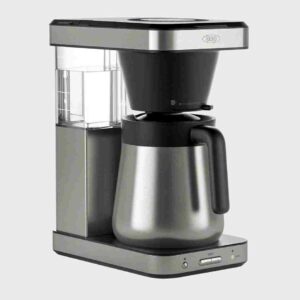
Choose the OXO Brew 8-Cup if you want fast, consistent drip coffee in small or full batches. Skip it if you need programming, app controls, a larger pot, or the...
Pros: Brewing performance and consistency, Overall user experience
Cons: Design flaws
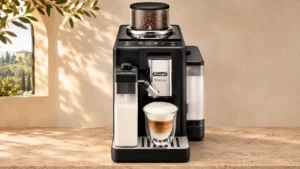
Swappable bean hoppers, intuitive controls and silky automatic milk foam make the Rivelia unusually convenient for varied coffee routines. The premium price, grinder-clearing step and optional cold-foam upgrade are worth...
Pros: Grinder, hopper and dosing system, Espresso and beverage quality
Cons: Iced / cold-brew function quality, Capacity
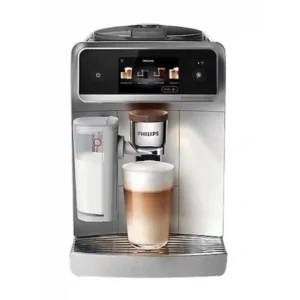
Best for effortless, highly personalized hot and cold coffee in a busy multi-drinker home. Skip it if counter space is tight, you demand silky adjustable microfoam, or the premium price...
Pros: Automation and sensors, Overall user experience
Cons: Design flaws, Mess-free used-puck disposal
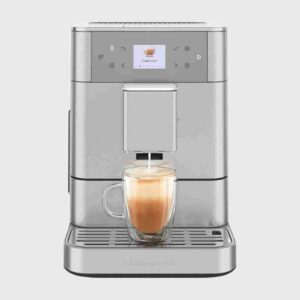
Choose the KitchenAid KF6 for rich espresso, quiet operation, easy cleaning, and strong value in a super-automatic. Skip it if dense cappuccino foam, plant-milk presets, touchscreen controls, or an included...
Pros: Water system, maintenance and descaling, Overall user experience
Cons: Accessories, Design flaws