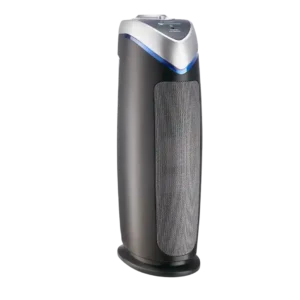
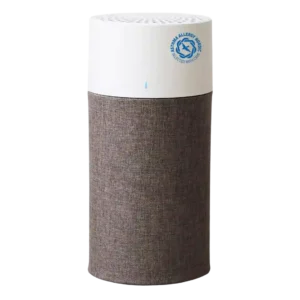
GermGuardian AC4825
Where It Has the Edge
- true HEPA filter is 4.3 vs 1.5. The true HEPA filter is a recurring strength, though one review called its quality merely fair and others...

Scorata scores summarize analyzed review evidence on a 1–5 scale; they are not laboratory measurements or a simple average of customer star ratings. Feature scores summarize the reviews covering that feature. The overall score averages feature scores within each review, then combines review averages. When both expert and customer evidence are available, those two groups receive equal weight. Products can have different review coverage, so small score gaps do not establish a winner.
Recommendations prioritize important features for the category, with a score of at least 3.5, a gap of at least 0.25 points and at least two supporting reviews per product. Features with widely varying scores or broad connectivity contexts are excluded from recommendations. These safeguards do not establish statistical significance.
Quick verdict
The review evidence points to a tradeoff: true HEPA filter versus air purification performance and noise level. Choose according to which strengths matter more to you; the overall score alone does not settle that choice.
Choose GermGuardian AC4825 for true HEPA filter.
Choose Blueair Blue Pure 311 Auto for air purification performance and noise level.
Scores are out of 5. Missing scores mean missing review evidence, not a missing feature.
Air cleaning results range from weak against newer rivals to excellent in several small-room tests, so performance is best viewed as solid but space-dependent.
Reviewers consistently found the purifier effective, with lab and home-use evidence describing fast room cleaning, strong airflow, and noticeable air-quality improvement.
Noise feedback is mixed: many found it quiet or acceptable, but several noted high-speed or low-speed optimization problems and bedroom caveats.
Noise was a major strength across reviews, with most calling it quiet or virtually silent; one user still noticed slight buzzing.
Filter replacement cost varies by reviewer, from fairly cheap compared with some rivals to expensive when annual maintenance is considered.
Filter cost opinions were mixed, ranging from fair or cheap long-term costs to criticism that replacement filters raise ownership cost.
The lack of a washable pre-filter is a repeated drawback because users must replace rather than wash the carbon/pre-filter layer.
The washable pre-filter was praised for easy cleaning, immediate contaminant removal, and helping extend primary filter life.
The true HEPA filter is a recurring strength, though one review called its quality merely fair and others praised true HEPA at the budget price.
True HEPA evidence was a common caveat, with critical reviews saying the unit lacks a conventional HEPA filter despite some positive HEPA-language claims elsewhere.
Filter life is mixed to negative: some users can maintain filters with vacuuming, but several reviewers criticized short life or clogging of the carbon/pre-filter.
Filter-life evidence was generally positive, with twice-yearly replacement described as manageable and one user finding the filter still clean after constant use.
Pre-filter quality is criticized because the carbon layer doubles as the pre-filter and is described as thin, low-carbon, or poorly made.
Pre-filter opinions were mixed: reviewers liked the attractive, washable fabric options, but some disliked visible dirt and wear.
Display readability evidence is limited but negative, with a tester finding the UV-C status hard to see in bright light.
Display readability was praised in the one review that evaluated it, saying the indicator was visible from a distance.
Activated carbon feedback is mostly negative from testing-oriented reviewers, who repeatedly called the treated or fibrous carbon layer low quality, though one review credited it with odor help.
Activated carbon feedback was divided, with some odor praise but repeated criticism that the carbon layer is thin or weak for gases.
Filter-stage evidence is mixed: one review liked the affordable four-stage setup, while another criticized the unit for having only three technologies.
Filtration-stage feedback was polarized, with praise for the system overall but criticism of lower filter quality and proprietary filtration.
Power consumption is a recurring concern, with reviewers citing high electricity costs, high monthly usage, or higher draw than rivals.
Power consumption was generally seen as low or efficient, with only operating costs affected by filter pricing rather than electricity use.
Sleep mode is a weakness because reviewers explicitly said the unit would benefit from one and called its absence a bedroom drawback.
Sleep use was supported by quiet low-speed operation and dim/no-light behavior in manual low mode.
Energy efficiency trends negative overall, especially against newer or higher-CFM models, despite one review rating it average in class.
Energy efficiency received strong agreement, with reviewers repeatedly praising low energy use and favorable efficiency ratios.
CADR-related evidence is negative, with reviewers saying measured performance or motor size disappointed relative to the CADR provided.
CADR and fan power were praised as strong for the price and segment, especially around the roughly 250 CFM class.
Real-time air quality monitoring is a weakness because reviewers noted the unit cannot detect air quality and leaves users guessing about fan speed.
Real-time monitoring was supported by the LED display keeping users updated about air quality.
Indicator lights are mixed: one reviewer warned the always-on light could bother dark-room users, while another found illumination not too bright.
Indicator lights were praised in one review for dimming fully in low/manual use, helping bedroom usability.
Odor reduction is the biggest split: some reviewers found odors improved, while several testing-focused reviews said the carbon stage is weak for gas and odor control.
Odor results were mixed: some reviews praised cooking-odor or basement-smell reduction, while one lab review said smoky odor removal was weak.
Room coverage is a clear limitation: the unit is mainly suitable for small rooms, with better results when kept near the recommended square footage.
Coverage evidence supports medium rooms, larger bedrooms, offices, and dens; the strongest guidance avoids treating it as a large-space purifier.
Particle removal is the AC4825's most credible strength, with several tests showing meaningful particulate reductions, though some reviewers found it slower or below the 99.97% promise.
Particle removal was one of the strongest areas, with multiple reviews reporting near-complete particulate reduction or fast clearing in controlled tests.
HEPA filtration is praised as an industry-standard particle approach, especially impressive at this price point.
HEPA-related evidence was mixed: HEPASilent performance was praised, while critical reviews disliked the nontraditional/proprietary filter approach.
Smoke removal is mixed: some testing and owner comments were positive, but carbon limitations made smoke or incense-related performance slower in other evidence.
Smoke-related evidence was positive for particle reduction and wildfire-smoke help, though odor/VOC performance remained a separate concern.
VOC reduction is consistently weak where tested or discussed, mainly because reviewers criticized the thin treated-carbon layer.
VOC reduction was a weak point in critical reviews because the carbon media was considered limited for volatile organic compounds.
Allergen reduction is a positive use case in the review set, especially for small rooms and users concerned about allergies.
Allergen-related evidence was positive, especially for households dealing with pollen, dust, and related allergy symptoms.
Fan speed options are simple and useful, with one review specifically praising the three-speed controls as easy to use.
Fan speed feedback was mixed: one reviewer disliked having only three speeds, while another found the speed interface intuitive.
Pet-related particle evidence is limited but positive, with one reviewer calling it great for a home with a dog.
Pet dander removal was supported by one review that grouped it with other pollutants the purifier effectively removes.
Maintenance is generally easy for filter access and replacement, though long-term upkeep still adds cost.
Maintenance opinions were split: some found filter changes very easy, while others found cleaning or replacing filters time-consuming and awkward.
Portability is a plus because reviewers repeatedly described it as light, easy to transport, or equipped with a usable handle.
Portability was praised because the unit is light and compact, though one review noted the lack of handles.
Dust removal receives positive owner-style and review evidence, with reviewers noting visible dust capture and cleaner air in homes with dust concerns.
Dust removal was described positively as part of broader allergen and particle reduction.
Pollen removal is supported by reviewer praise that the unit gets rid of pollen alongside dust in normal room use.
Pollen removal was described positively in allergy-focused and user-style reviews.
Ozone-free operation receives strong positive evidence from one reviewer who explicitly said the ozone-free claim is true.
One review strongly praised the lack of harmful ionizer-style features as a modern air purifier advantage.
Smart features are limited; reviewers described the unit as basic and lacking automatic or real-time functions.
Smart-feature evidence centered on the built-in sensor and auto behavior, which reviewers found useful rather than app-heavy.
Build quality is generally good for the price, with reviewers calling it well made or solid while recognizing its budget tier.
Build quality was mixed, with one review praising high-quality construction while another warned the plastic structure could be damaged by misalignment.
Design opinions vary from old-fashioned or obvious-looking to attractive and easy to fit into rooms.
Design feedback was mostly positive for its sleek, décor-friendly look, though one review noted the fabric exterior creates handling and purification tradeoffs.
Durability evidence is moderate: one review said it is not among the most durable, while another called the unit well made.
Durability evidence was mixed, with brand-quality praise offset by concern that the exposed fabric pre-filter can show wear.
Size and footprint are strong positives for small spaces, with reviewers praising the slim tower shape and small floor space.
Reviewers liked the compact footprint and room-friendly size, especially for bedrooms and home offices where the larger Blueair models may be too bulky.
Value is sharply context-dependent: it can be a good buy for simple small-room particle cleaning, but several reviewers prefer newer or higher-featured alternatives.
Value was mixed: several reviewers called it a strong deal for performance, while others downgraded it for filter quality, cost, or missing features.
Reliability evidence is limited and mixed, with one reviewer noting some reports of units burning out despite many positive owner reviews.
Auto mode was repeatedly praised for useful, responsive adjustment and for reducing the need for user intervention.
Filter availability is praised because replacement filters are easy to obtain from the product family and manufacturer ecosystem.
The only handle-specific evidence was a portability caveat that the unit lacks carrying handles.
Mold-related removal was supported by reviews that described effective pollutant reduction including mold or mold-related particles.
Safety certifications receive positive evidence from one reviewer who treated the certifications as a quality guarantee.
Scheduling was a clear weakness where reviewed, because the absence of a timer was criticized as a major downside.
Reviewers repeatedly criticized the optional UV-C stage as poorly implemented or minimally useful; only one test saw a tiny added air-quality improvement.
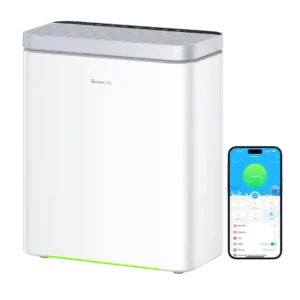
Choose the H7124 if you want a quiet smart purifier for odors, dust, pets, and app control. Skip it if you need foolproof Wi-Fi, wall-facing intake, UV light, or strong...
Pros: air purification performance, noise level
Cons: control placement
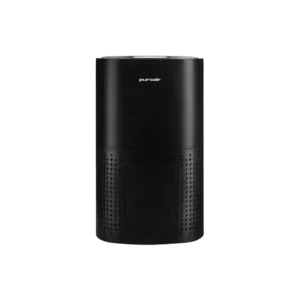
Best for quiet, simple cleaning in bedrooms or apartments. Skip it if you need verified large-room CADR value, app control, or guaranteed neighbor-smoke removal.
Pros: noise level, air purification performance
Cons: filter replacement cost, air quality sensor accuracy
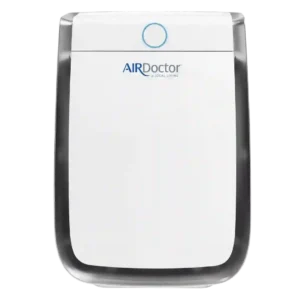
Best for strong room cleaning, allergy relief, odor control, and simple operation. Skip it if high filter costs, a larger footprint, or possible nighttime fan noise would bother you.
Pros: air purification performance, overall satisfaction
Cons: filter replacement cost
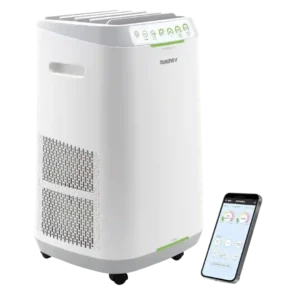
Choose this if you want strong odor, dust, smoke, and pet-air cleanup with washable filters. Skip it if turbo noise, Wi-Fi setup, or a high upfront price will bother you.
Pros: overall satisfaction, air purification performance